The direct answer
A roof insurance supplement is a written request asking your insurer to revise the estimate on a claim it has already opened, adding work or quantities the first estimate missed or could not see. Typical examples are damaged decking found during tear-off, more flashing or a second shingle layer than the adjuster counted, a measurement difference, or a code-required item. It is not a new claim, not a way to pay for upgrades you choose, and not a way to cover your deductible. On an Indian Trail roof claim, a supplement works when each added line item has a clear reason and proof behind it: photos taken before the area is covered, measurements, and the code section or manufacturer instruction that requires it.
What a supplement is, and what it is not
After a roof claim is inspected, the insurer issues an estimate: a list of line items, quantities, and prices it believes will repair or replace the covered damage. A supplement is a request to change that estimate because the real job needs something the list does not include.
North Carolina's Department of Insurance describes claim settlement as a process rather than a single transaction. Its storm-claim guidance says that if you believe there is additional damage that has not been addressed, you should contact the adjuster and ask for a reinspection, even if a check says final payment. A supplement is the documented version of that conversation.
It helps to separate a supplement from three things it gets confused with:
- A change order. A change order is an agreement between you and your roofer to change the contract scope or price. A supplement goes to the insurer. On a claim job you may need both: the insurer revises its estimate, and your contract is updated to match. Our guide to what a roof replacement change order should include covers the contract side.
- A new claim. Damage from a later storm is a different loss with its own date and, normally, its own deductible. It is reported as a new claim, not added to an old one.
- An upgrade. If you choose a heavier designer shingle, a metal roof, or a new color that requires more work, the insurer generally owes like kind and quality, not your upgrade. You can still upgrade; you just pay the difference.
Why first roof estimates miss items
Most supplements are not about anyone doing a bad job. An adjuster estimates what can be seen and measured during an inspection of an intact roof. Several things only show up once the work starts:
- Hidden layers. The decking, underlayment, and old flashing are under the shingles. Soft or delaminated decking, or a second layer of shingles, is often found only at tear-off.
- Flashing tucked behind other materials. Step flashing behind siding, chimney counterflashing, and the flashing around a framed chimney chase may need more work than the outside suggests. Our morning article on why a framed chimney chase leaks shows how many separate parts meet at one chase.
- Measurement and waste. Roof area, the number of hips, valleys, and ridges, and the waste factor for a cut-up roof can differ between an estimate and a measured report. Steep or tall slopes can also add labor items.
- Items left off the list. Starter course, hip and ridge cap, drip edge, ridge vent, pipe boots, and disposal are easy to omit on a long estimate.
- Code-driven work. Some items are required by the North Carolina Residential Code on a permitted reroof. Those can be paid differently from the rest of the claim, which we explain in how insurance handles roof code upgrades.
Common roof supplement items and the proof behind them
The strongest supplements tie every line item to a reason and evidence an adjuster can check without returning to the roof. This table shows typical examples. Whether any of them is covered on your claim depends on your policy and the cause of the damage.
| Item | Why it can be missed | What usually supports it |
|---|---|---|
| Decking replacement | Hidden until shingles come off | Dated photos before covering, sheet count, location on a roof diagram |
| Additional shingle layer | Not obvious from the ground or a single edge | Photos of the cut edge showing each layer, added tear-off and disposal quantities |
| Step flashing or counterflashing | Behind siding, trim, or masonry | Photos once exposed, linear feet, the reason reuse is not possible |
| Roof area, ridges, hips, valleys | Estimate quantities differ from a measured report | A measurement report or field measurements with a diagram |
| Code-required items | Handled under a separate, limited coverage | The code section, any inspector correction notice, and the permit record |
| Manufacturer-required components | Not always written into a generic estimate | The installation instructions for the exact shingle being installed |
For decking in particular, the cause matters. Decking damaged as part of a covered loss, or replaced because the new roof cannot be installed properly over it, is different from decking that rotted from years of a slow leak or wear. Our article on whether roof decking needs to be replaced with a new roof explains how that decision is made on the roof.
How the supplement process usually works
Carriers handle supplements differently, so ask your adjuster how they want to receive one. The general sequence on a roof claim looks like this:
- Get the insurer's estimate in writing. You cannot compare scopes from a check amount. Ask for the full line-item estimate.
- Compare it to the actual roof scope. Your roofer can mark which line items match, which quantities differ, and which items are missing, with a short reason for each.
- Document hidden conditions before they are covered. If tear-off exposes damaged decking or flashing, it should be photographed with enough context to show where it is. Some insurers want to see it or be notified before it is closed up, so ask in advance.
- Submit in writing. A clean supplement includes the claim number, the added or changed line items, photos, measurements, and any code or manufacturer reference. Keep a copy and the date you sent it.
- Expect a review. The insurer can approve the items, approve part, ask for more information, send someone to reinspect, or deny with an explanation.
Timing and payment depend on your policy. On a replacement cost policy, the widely used ISO HO-3 form pays no more than actual cash value until the repair or replacement is actually complete, except for small losses under the thresholds the form sets. Any held-back depreciation is then typically released after completion and documentation. Your policy type, ACV or RCV, shapes how roof claim payments arrive. Checks may also include your mortgage lender as a payee; NCDOI explains that the lender has an interest in making sure the home is repaired.
Who can do what on a supplement in North Carolina
You are the policyholder, so the claim is yours. Your roofer's role is the building: what the roof needs, how much of it, and the evidence for it. That documentation is what a supplement is built from.
Negotiating the claim itself is different. North Carolina defines a public adjuster as someone who, for compensation, acts on behalf of an insured in negotiating or effecting the settlement of a property claim, and requires a license to do it. Attorneys acting in their professional capacity are exempt. If your claim is large or complicated, NCDOI suggests you might consider hiring a licensed public adjuster or an attorney.
Kaliber's part is inspection, measurement, photos, roof line items, and sending that documentation to the adjuster when you ask us to, plus meeting the adjuster on-site when that is appropriate. We do not promise claim outcomes, act as a public adjuster, or negotiate coverage. You can read more about that on our insurance restoration page.
If a supplement is denied or ignored
A denial is not always the end of it, but the next step depends on why it was denied.
- Ask for the reason in writing. North Carolina lists failing to promptly provide a reasonable explanation of the policy basis for a claim denial, and failing to act reasonably promptly on claim communications, among unfair claim settlement practices when an insurer does them as a general business practice.
- Fix missing proof. If the issue is evidence, add the photo, measurement, or reference that was missing, or ask for a reinspection.
- Use appraisal for amount disputes. Standard homeowners forms such as the ISO HO-3, and North Carolina's standard fire policy provisions, include an appraisal process when you and the insurer disagree on the amount of loss. Each side picks an appraiser, an umpire breaks ties, and each side pays its own appraiser and shares the umpire cost. Appraisal is about value, not whether something is covered.
- Contact NCDOI. The Department's Consumer Services Division can forward a complaint to the insurer, require a response, and review it for compliance. It cannot set the value of your claim. Its toll-free number is 855-408-1212.
- Watch deadlines. Policies limit how long you have to sue. The sample ISO HO-3 form says two years after the date of loss, while North Carolina's standard fire policy provisions in G.S. 58-44-16 say three years after inception of the loss. Read your own policy and ask a North Carolina attorney if a deadline is close.
After a declared disaster, North Carolina can also activate a disaster mediation program for disputed residential claims. It is only available when the Commissioner issues an order for that event.
Red flags to avoid on a supplemented claim
- Anyone offering to cover or waive your deductible by adding work to the claim. Knowingly presenting false or misleading information in support of a claim, or helping someone do it, is unlawful under G.S. 58-2-161 and can bring criminal penalties.
- Line items for work that was not done, or quantities larger than what was installed.
- A contractor asking you to sign over your claim, a power of attorney, or a completion certificate before the work is finished.
- A contractor who presents themselves as your adjuster or promises a specific claim result.
A legitimate supplement should be something you would be comfortable having the insurer reinspect line by line.
What to do next
Before work starts on an Indian Trail roof claim, get the insurer's full estimate, ask how your carrier wants hidden damage reported, and make sure your contract explains how supplements and change orders will be handled. During the job, ask for dated photos of anything found under the old roof. After it, keep the final invoice, photos, permit record, and every written exchange with the insurer, the same records we suggest in how to document roof storm damage.
If you are not sure whether a claim estimate matches your roof, Kaliber offers same-day or next-day inspections across Indian Trail, Stallings, Monroe, Matthews, and nearby communities. You can also reach us through our contact page.
Related roof insurance guidance
Common questions
Is a roof supplement the same as filing a new claim?
No. A supplement asks the insurer to revise the estimate on a claim that is already open, for the same loss. Damage from a later storm is a different date of loss and is normally reported as its own claim, with its own deductible.
Will a supplement raise my deductible or my premium?
A supplement on the same claim generally does not add another deductible, because the deductible applies to the loss as a whole rather than to each revision of the estimate. How a claim affects future premiums depends on your insurer and policy, so ask your agent. A supplement should never be used to absorb or hide your deductible.
Can I get a supplement for rotted roof decking found during tear-off?
Sometimes. Decking damaged by the covered storm, or decking that must be replaced to install the new roof properly, is often submitted as a supplement with photos and a sheet count. Decking that was rotted from long-term leaks or wear may be treated differently under the policy. Photograph it before it is covered and let the insurer decide whether it wants to see it.
How long does an insurer have to respond to a supplement?
North Carolina treats failing to acknowledge and act reasonably promptly on claim communications, as a general business practice, as an unfair claim settlement practice, but it does not set one fixed number of days for every supplement. Send supplements in writing, keep the date, and follow up in writing if you do not hear back.
Can Kaliber negotiate my supplement with the insurance company?
Kaliber can inspect, measure, photograph, and prepare the roof line items and documentation for a supplement and send it to the adjuster when you ask us to. Kaliber is not a public adjuster and does not negotiate coverage on your behalf. In North Carolina, negotiating a property claim for a homeowner for pay requires a public adjuster license, and attorneys can also represent you.
Sources and editorial notes
- NC Department of Insurance, Claims and Adjuster Information (reinspection for unaddressed damage, partial payments, lender on checks, appraisal)
- NC Department of Insurance, Consumer Guide to Public Adjusters
- NC Department of Insurance, Assistance or File a Complaint
- NC Department of Insurance, Disaster Mediation
- N.C. Gen. Stat. 58-63-15(11), unfair claim settlement practices
- N.C. Gen. Stat. Chapter 58, Article 33A, public adjusters (58-33A-5 and 58-33A-10)
- N.C. Gen. Stat. 58-44-16, standard fire insurance policy provisions (appraisal and suit)
- N.C. Gen. Stat. 58-2-161, false statement to procure or deny benefit of insurance policy
- ISO Homeowners 3 Special Form HO 00 03 10 00 sample copy: Loss Settlement, Appraisal, Suit Against Us, Loss Payment, and Mortgage Clause conditions (published by the Oklahoma Insurance Department)
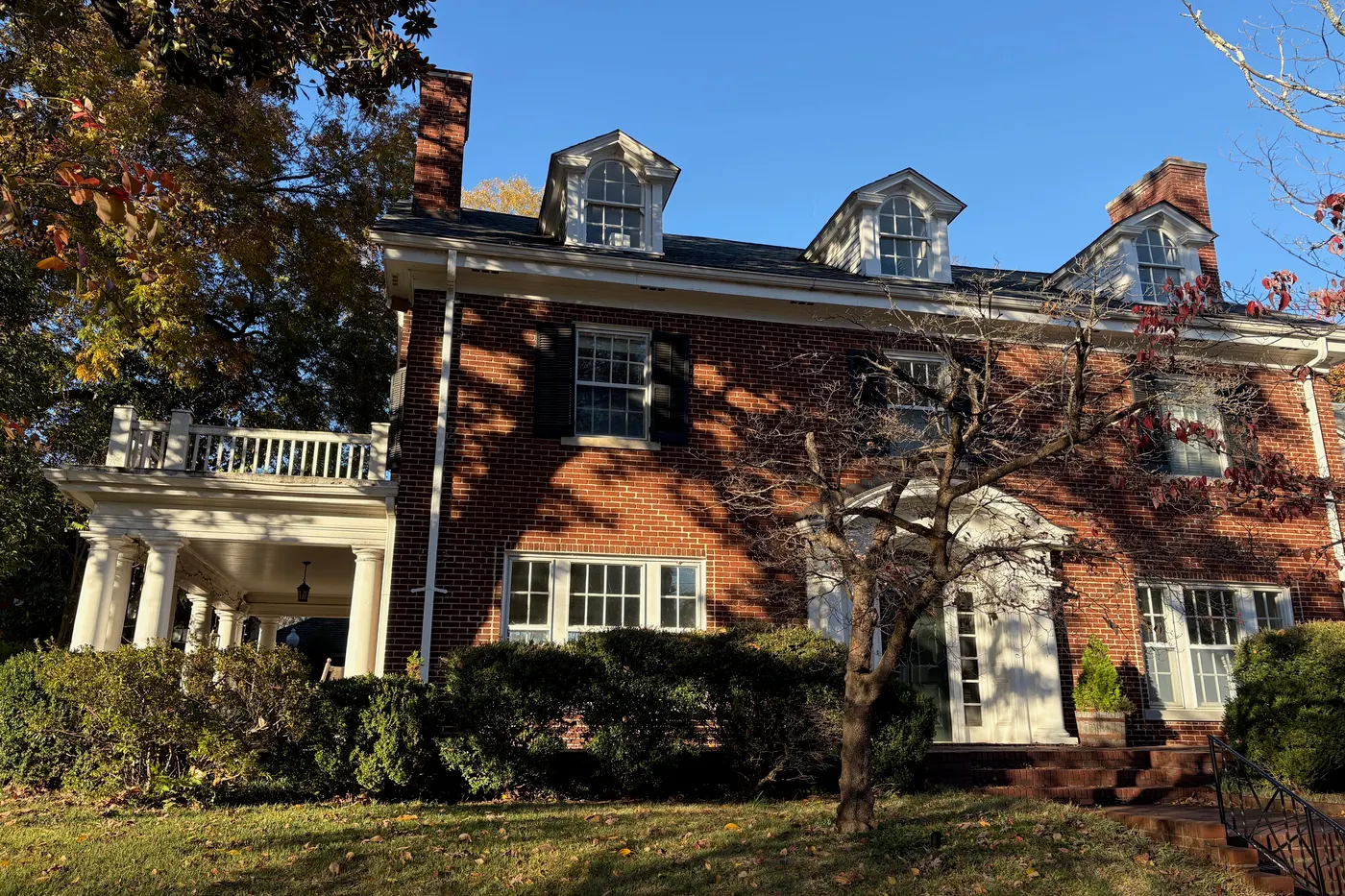
- Image source: "Bailey-Tucker House (1)" by Willthacheerleader18, CC0 public domain dedication, via Wikimedia Commons (cropped, resized, house number removed)
Prepared from North Carolina Department of Insurance guidance, North Carolina statutes, current sample policy form text, and Kaliber's verified service information. Written with AI assistance and editorially reviewed by Grok/AI. No human approval is claimed. General homeowner guidance; not insurance or legal advice and not a coverage determination. Your policy wording and your insurer's claim decision control.