File a roof insurance claim after storm damage in Indian Trail only when there is real, documented damage that is likely to exceed your deductible: missing shingles, hail bruising, lifted tabs, damaged flashing, interior leaks, or widespread wind damage. If the issue is small, old, or clearly under the deductible, a targeted roof repair may be smarter than opening a claim.
That is the part homeowners do not always hear. A claim is not a free roof button. It is a formal request under your policy, and it works best when the evidence is clean: storm date, photos, roof findings, and damage that lines up with wind or hail instead of normal wear.
Kaliber Roofing is based in Indian Trail and helps homeowners with storm damage roof inspections, insurance restoration documentation, roof repairs, and roof replacement across Union County, Stallings, Matthews, Monroe, Waxhaw, Weddington, Mint Hill, and nearby Charlotte-metro neighborhoods. If a storm just came through, the first move is simple: get the roof looked at before you guess.
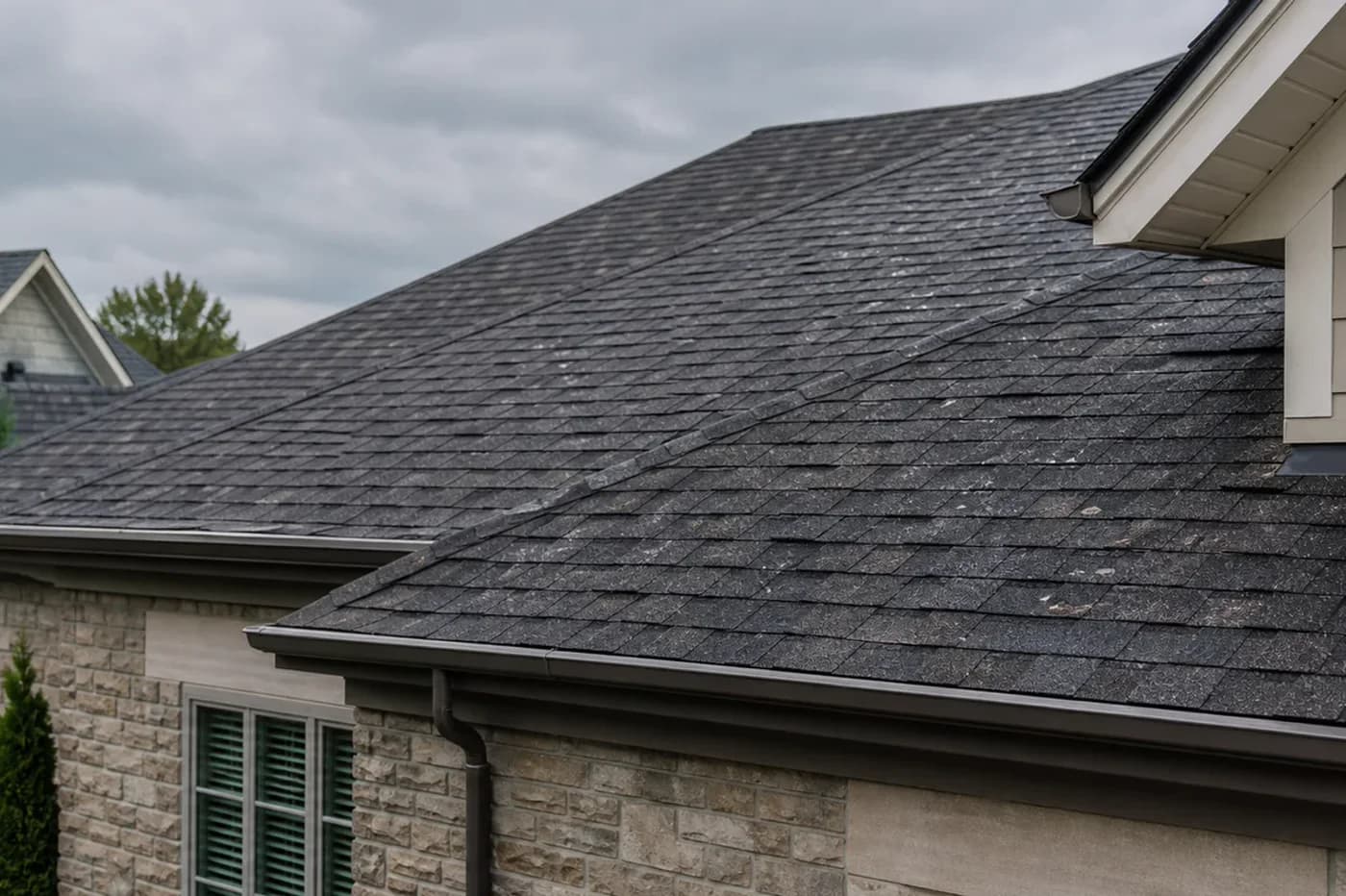
When a Storm Damage Claim May Be Worth It
A claim may make sense when damage is widespread, storm-related, and expensive enough to matter after your deductible. In Indian Trail, that often means missing shingles after a wind event, hail impact marks across multiple roof slopes, damaged ridge caps, bent or dented soft metals, torn flashing, or interior stains that showed up right after a storm.
Look for patterns, not one random mark. Hail damage usually tells a bigger story: bruising on shingles, fresh granule loss, dings on vents or gutters, and damage on slopes facing the storm. Wind damage can show up as creased shingles, lifted tabs, missing shingles, or seal strips that no longer hold.
Here is the thing. You do not need to diagnose every mark from the ground. You just need enough reason to get a professional inspection and start a clean documentation trail.
When Roof Repair May Be Smarter Than a Claim
Sometimes the best answer is not a claim. If the problem is one cracked pipe boot, a few exposed nails, a small flashing gap, one loose shingle, or an older leak that has nothing to do with the storm, a direct repair may be cleaner and faster.
That matters because a claim can still count as claim activity even if it does not pay out the way you hoped. Policies, deductibles, depreciation rules, and carrier decisions vary. So if the damage is clearly below your deductible, filing may only add paperwork and frustration.
Repair-first does not mean ignoring storm damage. It means separating small maintenance items from true covered loss. Big difference.
What to Document Before You File
Start with the date and approximate time of the storm. Write it down while you still remember it. Then take photos of anything you can safely see from the ground: missing shingles, gutter damage, loose pieces in the yard, ceiling stains, wet insulation, or water around light fixtures. Do not climb onto a wet roof. It is not worth it.
If temporary work is needed, keep receipts. Tarping, emergency dry-in, and interior water mitigation should be documented. Insurance companies usually care about whether you took reasonable steps to prevent further damage after you noticed the problem.
For roof photos, a roofer can usually capture the details better: shingle bruising, creases, flashing damage, ridge-cap issues, pipe boot damage, and roof slope patterns. Those pictures make the conversation less emotional. Less “I think.” More “Here is what is there.”
Storm came through Indian Trail and you are not sure if it is claim-worthy?
Schedule a Storm Damage InspectionWhy a Roof Inspection Should Come Before Guessing
A roof inspection gives you a practical next step. Maybe the roof needs a small repair. Maybe the damage is consistent with a recent wind or hail event. Maybe the roof is simply old and brittle. Each answer leads somewhere different.
Indian Trail and Union County homes see plenty of roof stress: summer thunderstorm wind, hard rain, hail pockets, humid attic conditions, and trees dropping debris near valleys and gutters. Not every roof issue is an insurance issue. But after a real storm, it is worth knowing what changed.
Kaliber can document the roof condition, explain what looks storm-related, and help you understand whether repair, replacement, or an insurance conversation is the right path. We do not need to make it dramatic. We just need to be accurate.
A Simple Next-Step Plan for Indian Trail Homeowners
First, stop active water if there is a leak. Second, take safe photos and save receipts. Third, schedule a roof inspection. Fourth, compare the findings to your deductible and policy before deciding whether to file.
If the roof damage is real and claim-worthy, move forward with better evidence. If it is a small repair, fix it and move on. Either way, you avoid making an insurance decision in the dark.
Honestly, that is the goal. Less panic after the storm. More facts.
Frequently Asked Questions
Should I call insurance or a roofer first after an Indian Trail storm?
If there is active leaking or obvious damage, protect the home first and call a local roofer for documentation. You can still contact insurance, but a roof inspection helps you understand whether the damage looks claim-worthy before you open a claim for a small repair.
What roof damage is usually worth documenting for a claim?
Document missing shingles, creased or lifted shingles, hail bruising, damaged ridge caps, dented vents, soft decking concerns, interior stains, and any active leak. Photos, storm date, and a roofer inspection are helpful because adjusters need evidence, not guesses.
Can I file a roof claim for an old roof in North Carolina?
You can file a claim when there is covered storm damage, but age and wear still matter. Insurance is meant for sudden covered loss, not normal aging. An inspection can help separate storm damage from old brittle shingles, granule loss, or maintenance issues.
Will a roof insurance claim raise my premium?
Premium decisions depend on the carrier, policy, claim history, location, and storm event. That is another reason to document the roof first and avoid filing a claim for damage that is clearly below the deductible or only needs a small repair.
Does Kaliber Roofing help with storm damage documentation in Indian Trail NC?
Yes. Kaliber Roofing inspects storm damage, photographs roof conditions, explains repair versus replacement options, and helps homeowners in Indian Trail, Union County, Stallings, Matthews, Monroe, Waxhaw, Weddington, Mint Hill, and nearby Charlotte-metro areas understand the next step.
Need storm damage documentation before you decide on a claim?
Kaliber Roofing can inspect your Indian Trail roof, photograph the damage, and help you understand whether repair, replacement, or insurance restoration makes sense.