Homeowners insurance may cover roof replacement in North Carolina when the damage is sudden and storm-related, like wind, hail, fire, lightning, falling debris, or a tree impact. It usually does not cover an old roof that simply wore out, a slow leak from poor maintenance, or shingles that failed from age. The cause of damage, your policy type, your deductible, and your documentation decide the answer.
That is the part that frustrates homeowners around Charlotte: two roofs can look similar from the driveway, but the insurance outcome can be totally different. One roof has hail bruising across several slopes. Another has brittle 22-year-old shingles and a long-term leak around a pipe boot. Both need attention. Only one may be an insurance claim.
Kaliber Roofing handles roof inspections and insurance restoration documentation across Charlotte, Huntersville, Cornelius, Matthews, Mint Hill, Indian Trail, Ballantyne, Pineville, Weddington, Stallings, Monroe, Waxhaw, Concord, Midland, and nearby communities. Here is the practical version before you open a claim.
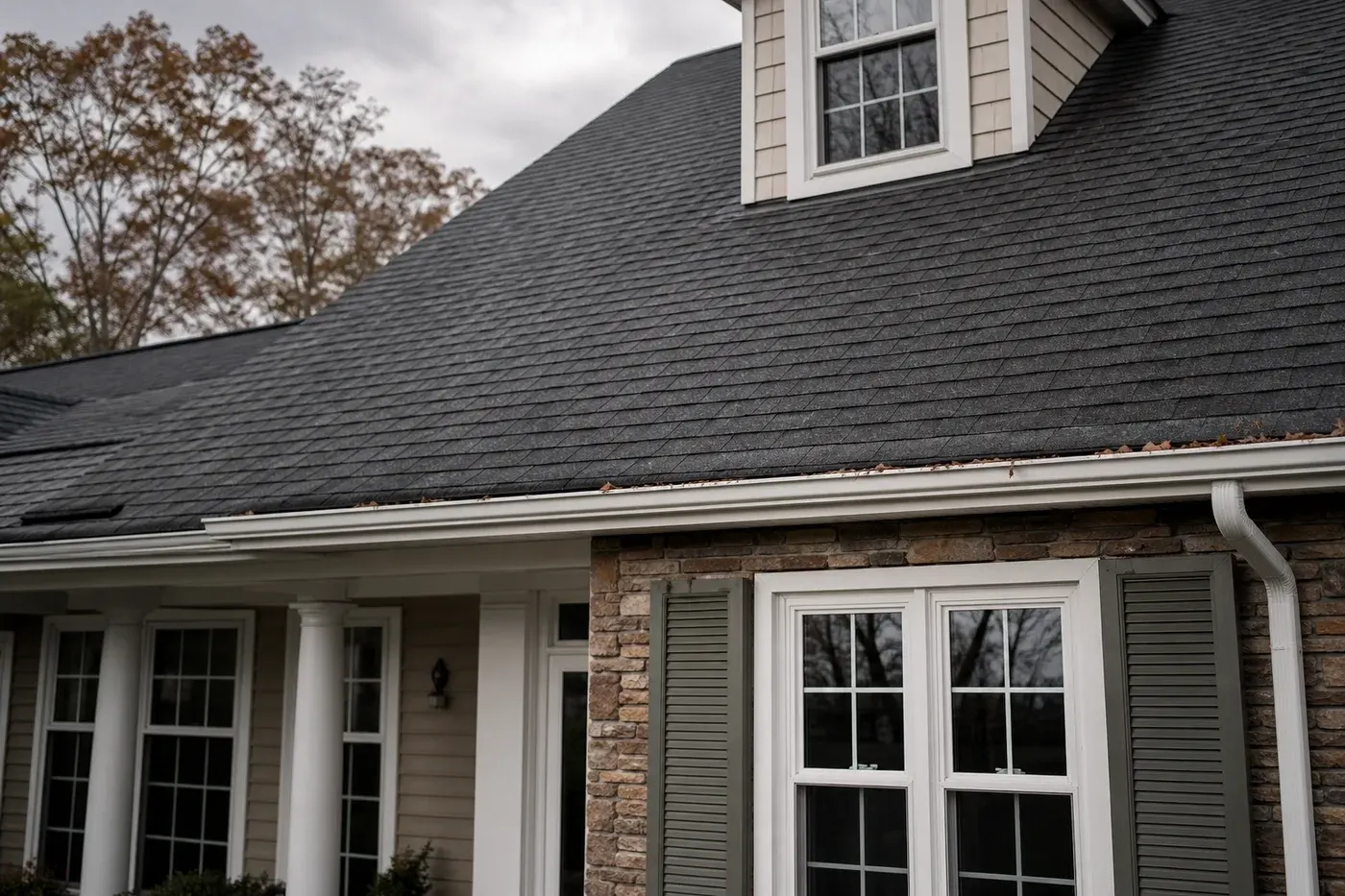
What Roof Damage Does Homeowners Insurance Usually Cover?
Most homeowners policies are built for sudden, accidental loss. For roofing, that usually means a specific event damaged the roof instead of the roof slowly wearing out. In the Charlotte area, the common covered-event conversations are wind, hail, tree limbs, falling debris, fire, and lightning.
A clean example: a spring hailstorm moves through Matthews and Mint Hill, dents gutters, bruises shingles on the west-facing slopes, knocks granules loose, and leaves fresh impacts on roof vents. That pattern points to storm damage. Another example: a tree limb falls during a summer storm in Waxhaw and punctures the roof deck. That is a direct event, not ordinary aging.
Insurance still has to review the policy and the facts. But the basic question is simple: did a covered event create direct physical damage? If yes, repair or replacement coverage may apply. If no, the homeowner usually owns the repair.
What Roof Problems Are Usually Not Covered?
Insurance is not a roof maintenance plan. It will not usually pay to replace a roof just because it is old, ugly, brittle, stained, or near the end of its service life. I know that is not the answer anyone wants to hear. Still, it is the line most carriers draw.
Common denials include long-term wear, granule loss from age, curled shingles, old nail pops, poor ventilation damage, previous bad repairs, slow flashing leaks, and damage from neglect. A 20-year-old roof can still have covered hail damage, but age changes the conversation. The adjuster is going to separate storm damage from pre-existing condition.
This is why guessing from inside the house gets expensive. A ceiling stain might come from a covered wind event, or it might come from a cracked pipe boot that should have been replaced years ago. A focused roof repair inspection helps separate the two before anyone promises a new roof.
Will Insurance Replace the Whole Roof If Only Part Is Damaged?
Not automatically. This is one of the biggest misconceptions in roof claims. The North Carolina Department of Insurance says a homeowners policy covers direct physical damage and that the company may only have to replace the damaged area, even if the original shingles are discontinued or the new shingles do not match perfectly.
That does not mean a full roof replacement is impossible. It means the roof has to justify it. Widespread hail bruising across multiple slopes, wind damage that compromises the system, code requirements, brittle shingles that cannot be repaired without creating more damage, or policy language around matching can all affect the scope.
Here is the plain version: insurance owes what the policy owes, not what a door knocker promises. Be careful with anyone who says, “We can get you a whole roof no matter what.” The better path is photos, slope-by-slope documentation, and a recommendation that matches the evidence.
Not sure if the damage is covered?
Request a Free InspectionACV vs RCV: The Policy Detail That Changes the Payout
Before you file, look at your declarations page. Two abbreviations matter more than almost anything else: ACV and RCV.
| Policy Type | What It Means | Why It Matters |
|---|---|---|
| ACV | Actual Cash Value pays the roof value after depreciation. | Older roofs may receive a smaller payout, even when damage is covered. |
| RCV | Replacement Cost Value can pay today's repair or replacement cost, minus deductible. | Recoverable depreciation may be released after the work is completed. |
On an RCV policy, the first check may not be the full amount. That surprises people. Often, the carrier holds back depreciation until the work is done and invoices are submitted. On an ACV policy, that depreciation may not be recoverable. Same storm, different policy, different check.
Deductibles, Wind/Hail Deductibles, and Red Flags
Your deductible is your part of a covered claim. In North Carolina, deductibles can be a fixed number or a percentage of the dwelling coverage. Some policies also have separate wind, hail, or named-storm deductibles. That detail matters after a hail event or tropical storm remnant.
Pull the declarations page and check the number before filing. If the repair is $1,400 and your deductible is $2,500, a claim may not make sense. If the damage is widespread and the replacement scope is $16,000, the conversation is different.
If a contractor says they will waive, cover, hide, or “eat” your deductible, slow down. That is a red flag, not a bonus.
Good contractors explain your options. They do not ask you to play games with the paperwork.
What Charlotte Homeowners Should Do Before Filing a Roof Claim
If a storm just moved through Charlotte, Indian Trail, Ballantyne, or Concord, do not rush into a claim without basic documentation. Take five minutes and collect the facts.
- Write down the storm date. Claims need a date of loss, not “sometime last month.”
- Photograph what you can safely see. Missing shingles, gutter dents, debris, ceiling stains, attic moisture, and granules near downspouts all matter.
- Check the deductible and policy type. Look for ACV, RCV, wind, hail, and named-storm deductible language.
- Get a roof inspection before guessing. A local contractor can document slopes, vents, flashing, ridge caps, and storm indicators.
- File only when the evidence supports it. Weak claims create frustration. Strong documentation creates clarity.
If water is actively coming in, handle the emergency first. Protect the room, avoid electrical hazards, and ask about emergency tarping. Claim strategy comes after the home is safe.
When Should You Call Kaliber?
Call Kaliber when you have storm signs but do not know whether it is a claim, a repair, or nothing. That is the honest inspection lane. We look at the roof system, document what is actually there, and explain whether the evidence points toward storm damage roof repair, insurance documentation, roof replacement, or a smaller maintenance repair.
Sometimes the answer is, “Your roof is fine.” Great. Sometimes it is, “You need one pipe boot and a few shingles.” Also great. And sometimes the damage pattern is broad enough that insurance needs to see it. The key is not forcing the answer before the roof has been inspected.
For homeowners in Charlotte, Huntersville, Cornelius, Matthews, Mint Hill, Indian Trail, Ballantyne, Pineville, Weddington, Stallings, Monroe, Waxhaw, Concord, and Midland, a free inspection is usually the simplest first step.
Frequently Asked Questions
Does homeowners insurance cover roof replacement in North Carolina?
It can, but only when the roof damage comes from a covered event such as wind, hail, fire, lightning, falling debris, or tree impact. Insurance usually does not cover replacement for age, wear, poor maintenance, or gradual leaks.
Will insurance replace my whole roof if only one area is damaged?
Not automatically. The North Carolina Department of Insurance says a policy covers direct physical damage and may only owe for the damaged area, even if shingles do not match. Your policy language, damage pattern, and documentation matter.
What is the difference between ACV and RCV roof coverage?
Actual Cash Value coverage subtracts depreciation based on roof age and condition. Replacement Cost Value coverage can reimburse the current cost to repair or replace covered damage, minus the deductible, often with recoverable depreciation after work is completed.
Should I call insurance or a roofer first after storm damage?
If the home is safe and water is not actively entering, many homeowners call a local roofer first for photo documentation. If water is active or the damage is severe, protect the home immediately and notify the carrier promptly.
Can a roofer waive my deductible in North Carolina?
No. Treat deductible-waiving promises as a red flag. Your deductible is your portion of a covered claim, and hiding or absorbing it can create insurance problems.
Does Kaliber help with roof insurance documentation near Charlotte?
Yes. Kaliber Roofing documents roof damage across Charlotte, Huntersville, Cornelius, Matthews, Mint Hill, Indian Trail, Ballantyne, Pineville, Weddington, Stallings, Monroe, Waxhaw, Concord, Midland, and nearby communities.
Need roof damage documented before you call insurance?
Kaliber Roofing will inspect the roof, photograph the evidence, and explain the next right move without pressure.