A roof can leak at the rake edge—the sloped edge along a gable—when wind-driven rain gets past loose edge shingles, a missing or poorly bonded starter strip, damaged drip-edge metal, exposed underlayment, weak fasteners, or an open trim joint. The stain may appear near a gable wall or ceiling corner, but that does not prove the entry point is directly above it. An Indian Trail roof-repair inspection should trace the first wet material, inspect the entire sloped edge from eave to ridge, and rebuild the affected layers instead of covering the outside edge with caulk.
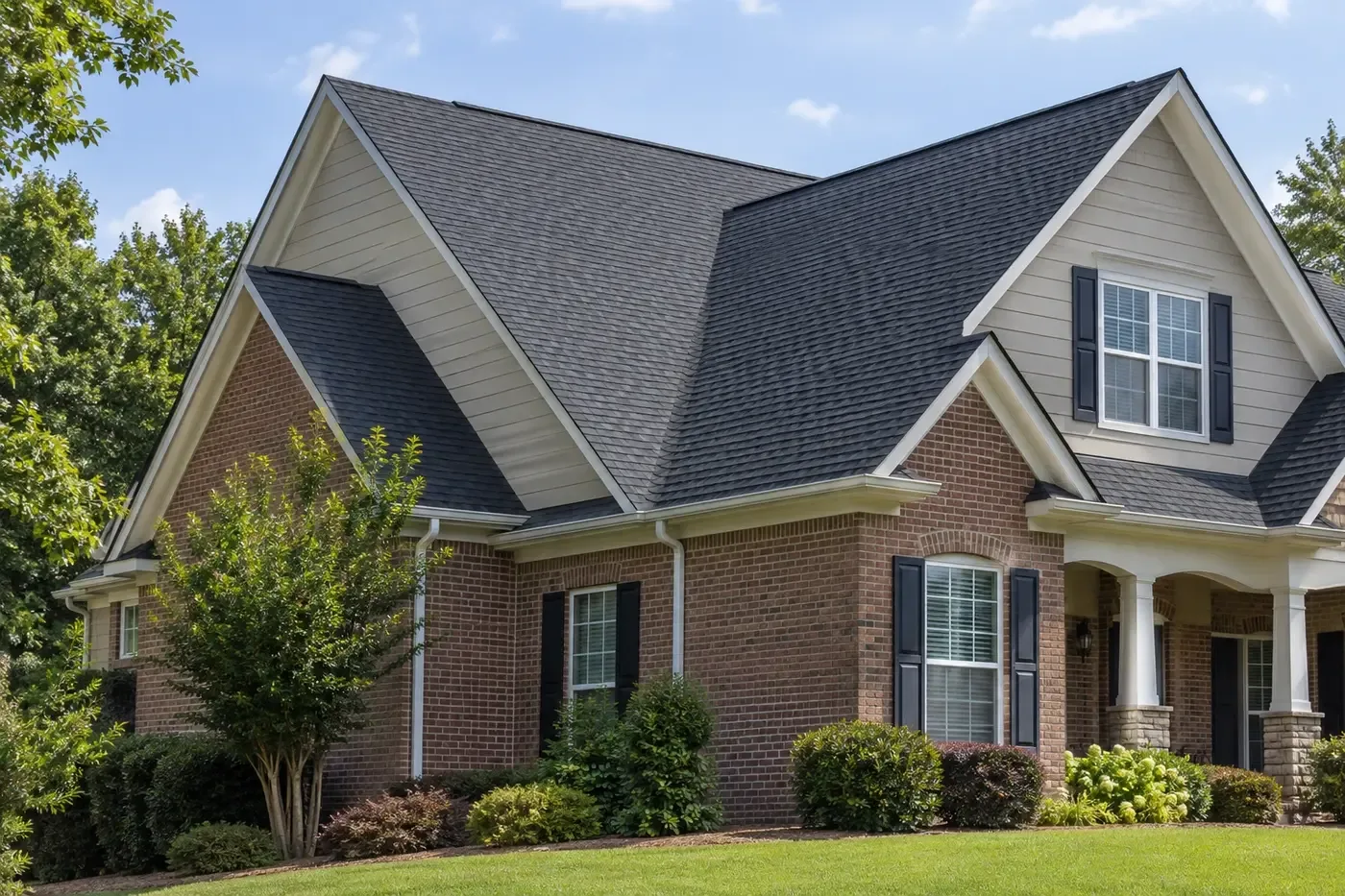
First confirm that the wet area is near a rake
The rake is the sloped roof edge that runs beside the triangular gable wall. It is not the horizontal eave where the gutter usually hangs. That distinction matters because the two edges manage water differently and use some of the same components in different orientations.
From dry ground, photograph the full gable and the roof plane beside it. Note whether the interior stain is near a gable wall, an upstairs ceiling corner, or the end of an attic bay. If attic access is safe, look for the highest damp point on the roof deck or framing rather than following only the final drip. Water can move downslope or sideways before it becomes visible indoors.
Do not climb the gable edge, lift shingles, or test the area with a garden hose. The rake is exposed, steep, and easy to damage during an improvised inspection. Ground photos, rain timing, and safe attic observations give a roofer a better starting map.
Why a rake edge can admit wind-driven rain
A field of asphalt shingles relies on overlap, fasteners, and sealed shingle-to-shingle bonds. At the rake, that field ends at an exposed side. Wind can press rain toward the edge while uplift works beneath any loose corner. A detail that stays dry in a straight, light shower may leak when rain arrives from the gable side.
GAF describes drip edge as the metal projecting past the rake to keep rain from curling around the shingles and back toward the house. The company also identifies starter strips at eaves and rakes as part of the shingle system. IBHS likewise explains that a rake-edge starter strip helps the first course resist water entry and wind uplift.
Those layers have to work together. Edge metal alone cannot hold down a loose shingle. Starter strip cannot correct rotten decking. Underlayment is secondary protection, not a substitute for a sound outer edge. The repair should identify which layer failed and whether the failure extends farther up or down the gable.
The most useful clues are at the edge and inside the attic
Outside clues can include raised shingle corners, a wavy or short overhang, exposed fasteners, bent or missing edge metal, separated trim, dark staining on the rake board, or a repaired patch that ends abruptly. Wind damage may affect only part of the edge, so one clean-looking section does not clear the entire run.
Inside, look for staining that begins at the deck edge, dark fastener tips, damp insulation close to the gable, or a water track on framing. Compare those clues with storm direction. Moisture that appears only when rain strikes one side of the home supports a wind-driven entry theory, but it still needs confirmation.
A nearby gable vent can create a similar symptom. Rain may enter through the vent frame, louvers, cladding, or trim even when the roof edge is sound. That is why the inspection should include the wall and vent below the rake rather than assuming every gable-side stain is a shingle leak.
What a documented rake-edge inspection should show
Start with overview photos identifying the affected gable, roof slope, eave, and ridge. Then document the shingle overhang, starter bond, drip-edge condition, fastener placement, underlayment termination where it can be observed, deck edge, rake trim, and any prior repair. Interior photos should mark the first moisture evidence and its distance from the edge.
The selected shingle system matters. Manufacturer instructions control details such as starter placement, acceptable overhang, fastening, and any required hand sealing. A repair method copied from another product may not fit the installed roof. When the product cannot be identified, the scope should say so rather than presenting a guess as a warranty-approved detail.
Ask the inspector to separate observed condition from possible cause. “Three lifted edge shingles and bent metal beside the rear gable” is an observation. Whether wind, age, installation, debris impact, or a combination caused it requires context. That distinction is especially important when insurance coverage may be discussed.
A focused repair may restore the edge
An isolated rake leak does not automatically require a new roof. If the neighboring shingles remain flexible, the deck edge is sound, and compatible materials are available, a roofer may be able to open a bounded section, replace damaged edge materials, restore the starter and shingle bond, and integrate the drip edge and underlayment correctly.
The written scope should state how much of the edge will be opened, which shingles and metal will be replaced, how concealed deck damage will be handled, and what happens if brittle material expands the repair boundary. Progress photos matter because the starter, underlayment, and deck edge disappear when the shingles go back down.
Broader work becomes reasonable when damage repeats along multiple rakes, the deck edge is soft, fasteners no longer hold, surrounding shingles crack during careful lifting, or the same roof has widespread wear and recurring leaks. The recommendation should follow those documented conditions—not the fact that the stain is near a roof edge.
What Indian Trail homeowners should do next
Record the date, rain intensity, wind direction, and room where moisture appeared. Take wide and close photos from safe ground. Move belongings away from the wet area, keep people clear of bulging drywall, and avoid electrical fixtures if water is nearby. Call the appropriate emergency service for smoke, sparking, or shock risk.
For the roof inspection, ask four questions: Is the entry point at the rake or somewhere upslope? Which layer failed? How far does the repair need to extend to reach sound material? What photos will document the concealed work before the edge is closed?
Kaliber Roofing serves Indian Trail first with documented, repair-first inspections. Same-day or next-day appointments are available subject to current scheduling. The goal is to restore the smallest responsible section while making sure a gable vent, wall detail, or upslope opening is not being mistaken for a rake-edge leak.
Related guidance
Common questions
What is the rake edge of a roof?
The rake is the sloped exposed edge along a gable, running between the eave and ridge. It is different from the horizontal eave, where gutters are commonly installed.
Can missing starter strip at the rake cause a leak?
It can increase vulnerability to wind uplift and water entry at the edge. The roofer should verify the actual starter, shingle bond, fasteners, drip edge, underlayment, and deck condition rather than diagnosing the leak from one visible gap.
Can I stop a rake-edge leak with caulk?
Caulk on the outside edge does not restore loose shingles, starter strip, underlayment, fasteners, damaged metal, or rotten decking. A durable repair should rebuild the affected water-shedding layers using details appropriate for the installed roof system.
Does a rake-edge leak mean the whole roof needs replacement?
No. A localized edge problem may support a focused repair when the surrounding roof and deck remain serviceable. Replacement becomes a broader discussion only when damage, brittleness, weak decking, or repeated failures make a durable local repair impractical.
Sources and editorial notes
- GAF overview of rake edges, drip edge, starter strips, and roof-system layers
- GAF WeatherBlocker starter-strip placement at eaves and rakes
- IBHS Roof 101 guidance on asphalt-shingle starter strips and manufacturer-specific installation
- IBHS research summary on shingle seals and wind uplift
Prepared with AI assistance and editorially reviewed by Sage. General homeowner guidance; not an on-site diagnosis, product-specific installation approval, code determination, insurance decision, or substitute for evaluation by the appropriate qualified professional.