Your Indian Trail NC roof may need drip edge repair if water is running behind the gutters, fascia boards are stained or soft, soffit panels are swelling, shingles are lifted at the roof edge, or leaks show up near exterior walls after wind-driven rain. Drip edge problems are easy to miss from the driveway, but they can quietly rot the roof edge if water keeps sneaking behind the gutter line.
Drip edge is not a flashy roof part. It is the thin metal detail at the edge of the roof that helps water leave the shingles cleanly instead of curling back toward the wood. When it is missing, bent, short, loose, or trapped behind a poorly set gutter, the roof can look fine from the street while the edge is taking a beating every time a Union County storm rolls through.
Kaliber Roofing is based in Indian Trail and handles roof repairs, leak tracing, storm damage inspections, and repair-first roof evaluations across Indian Trail, Stallings, Matthews, Monroe, Waxhaw, Weddington, Mint Hill, and nearby Charlotte-metro neighborhoods. If the issue is a roof-edge detail, we want to catch it before it turns into rotten decking or a bigger replacement conversation.
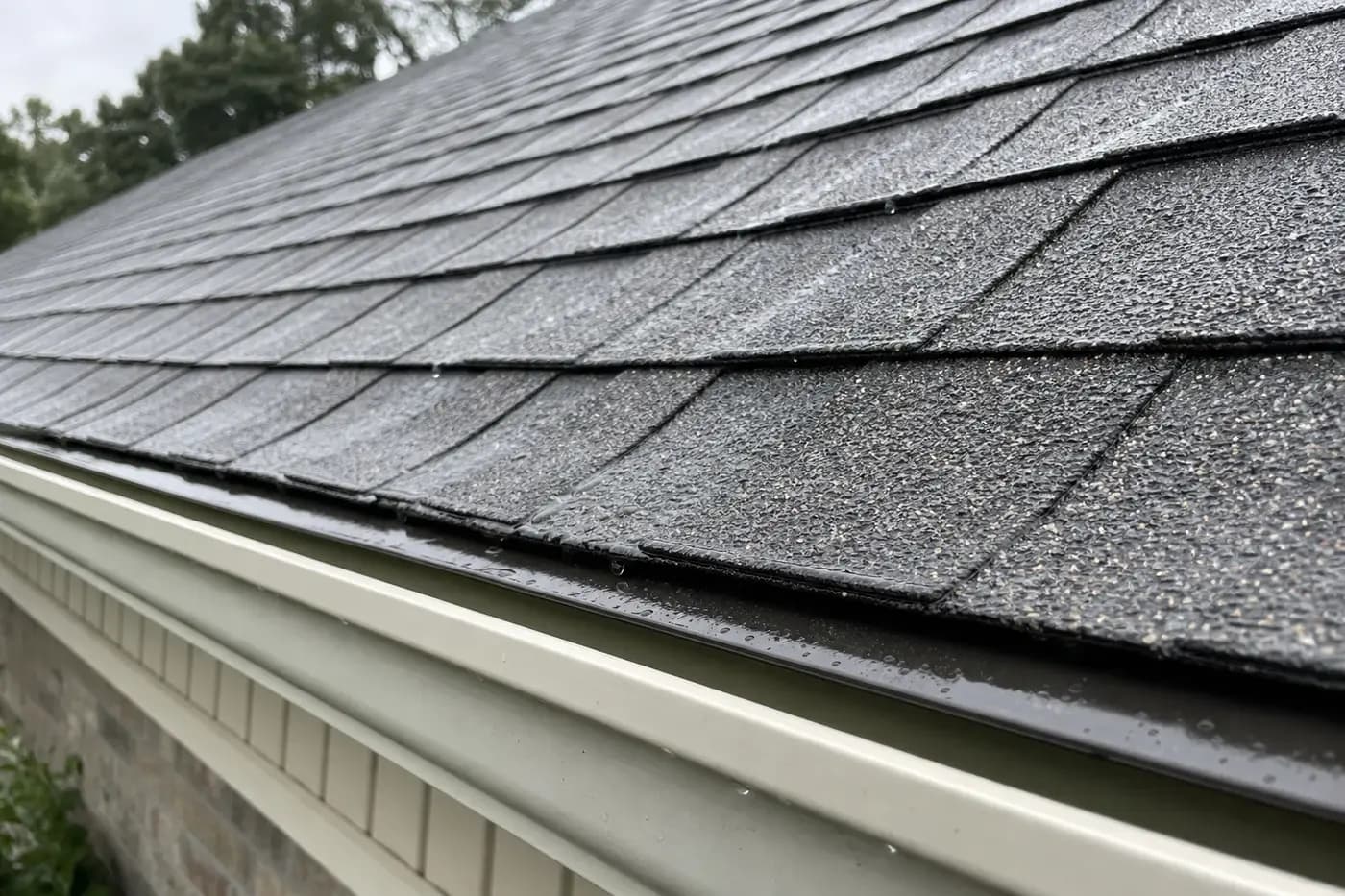
What Does Drip Edge Actually Do?
Drip edge is metal flashing that sits along the lower roof edges and rake edges. Its job is simple: guide water off the shingles and away from the wood parts of the home. Good roof-edge detailing helps protect fascia, soffits, decking, underlayment, and the first rows of shingles.
Think of it like the lip on a coffee pot. Without that little edge, liquid wants to curl around the surface and run where you did not intend. Roof water does the same thing, especially during sideways rain, heavy downpours, or storms with gusty wind.
On newer roof systems, drip edge is part of the whole assembly. On older Indian Trail homes, additions, detached garages, and past repair areas, the roof edge may not be detailed the same way everywhere. That mismatch is where small leaks can start.
Signs Your Drip Edge May Need Repair
The most obvious clue is water behind the gutter. If you stand safely on the ground during rain and see water sliding down the fascia instead of dropping into the gutter, the roof edge needs attention. It could be a gutter pitch problem. It could be clogged gutters. But drip edge should be on the suspect list.
Look for staining below the roof edge, peeling paint on fascia boards, sagging soffit panels, green or black mildew streaks under the eave, or little trails where water keeps taking the same path. Inside, you might notice damp insulation near an exterior wall or a ceiling stain close to the perimeter of the house.
Another clue is shingle behavior. If starter shingles are lifted, the first course is curled, the edge looks wavy, or the shingles barely overhang the gutter, water may not be shedding cleanly. Do not climb up to tug on anything. A roofer can check that detail without turning a small problem into a torn shingle.
Why Is Water Running Behind My Gutters?
Water behind gutters usually means the roof edge and gutter line are not working together. The gutter may be clogged, pitched wrong, pulled away from the fascia, or set too low. The drip edge may be missing, bent backward, too short, or installed in a way that lets water slip behind it.
Heavy rain makes the symptom louder. In Indian Trail and the broader Union County area, fast summer downpours can overwhelm weak roof-edge details that seemed fine during light rain. Wind can push water sideways too, which is why a leak may only happen during certain storms.
Here is the part homeowners miss: the water you see outside may not be the only water moving. Some of it can wet the fascia, wick into the roof deck, or run behind the soffit. That is why repeated gutter-back leaks should be inspected even if the ceiling has not stained yet.
Can Drip Edge Be Repaired, or Does the Roof Need Replacement?
Sometimes drip edge repair is targeted. A roofer may be able to reset a loose section, correct a small gutter alignment issue, replace damaged edge metal, seal a vulnerable transition, or repair a short run of fascia and roof-edge decking. That is the best-case scenario.
But not every roof edge can be fixed neatly from the outside. If the shingles are brittle, the starter course is failing, the decking edge is rotten, or the problem runs across multiple slopes, the repair may need to be tied into a larger roof replacement plan. The honest answer depends on shingle age, roof condition, and how far the damage has traveled.
Insurance can be part of the discussion when storm damage is involved, but drip edge by itself is not automatically an insurance claim. If wind, hail, fallen limbs, or sudden storm damage affected the roof edge, document dates, photos, and symptoms. Kaliber can inspect and explain what is visible without promising coverage that depends on the policy and adjuster.
Seeing water behind the gutters or staining at the roof edge in Indian Trail?
Request a Free InspectionWhat Kaliber Checks During a Roof-Edge Inspection
A good inspection does not stop at “the gutter leaks.” Kaliber looks at the shingle overhang, starter strip, drip edge placement, gutter attachment, fascia condition, soffit condition, roof decking edge, nearby valleys or rakes, and any interior stain pattern that might connect to the edge.
Photos matter. They help separate a gutter maintenance issue from a roof repair issue, and they make the conversation clearer if storm damage or insurance restoration needs to be discussed. Nobody should have to guess from a vague one-line estimate.
If you are waiting on an inspection, keep it simple: take ground-level photos during rain if it is safe, note which side of the house leaks, check the attic only if you can do it safely, and avoid temporary caulk jobs that hide the trail. The water path is evidence.
For Indian Trail homeowners, the move is straightforward. If water keeps showing up behind the gutters, around the fascia, or near exterior-wall ceilings, get the edge inspected before another storm cycle pushes the problem deeper into the roof system.
Frequently Asked Questions
How do I know if my roof needs drip edge repair?
Common signs include water running behind the gutters, stained fascia, soft soffit areas, rotten roof-edge decking, lifted starter shingles, repeated leaks near exterior walls, or gutter lines that do not catch roof runoff cleanly.
Can missing or bent drip edge cause a roof leak?
Yes. Drip edge helps guide water off the roof edge and away from fascia, soffits, and roof decking. If it is missing, bent, loose, buried behind the gutter, or installed poorly, wind-driven rain can move into places it should not go.
Is drip edge required on roofs in North Carolina?
Modern roof installations in North Carolina commonly include drip edge at eaves and rake edges as part of proper roof-edge detailing. Older homes around Indian Trail may have missing, short, damaged, or poorly integrated edge metal that deserves a closer look during repair or replacement planning.
Can I fix a drip edge problem by caulking the gutter?
Usually no. Caulk may slow a small nuisance drip for a short time, but it does not correct missing flashing, bad shingle overhang, loose gutters, rotten fascia, or water traveling under shingles. The roof edge needs to be inspected as a system.
Does Kaliber Roofing repair drip edge issues in Indian Trail NC?
Yes. Kaliber Roofing inspects roof-edge leaks, drip edge issues, fascia damage, gutter-related roof leaks, and storm damage concerns across Indian Trail, Union County, and nearby Charlotte-metro communities.
Want a roofer to check your drip edge before the next hard rain?
Kaliber Roofing will inspect the roof edge, gutters, fascia, and leak pattern, then explain whether a small repair or a bigger roof plan makes more sense.