A ceiling stain after rain in Indian Trail NC usually means water is getting through a roof, flashing, pipe boot, valley, vent, or wall transition before traveling through the attic and showing up on drywall. The spot on your ceiling is the symptom. The actual leak may be several feet away, especially after wind-driven rain or a long Union County downpour.
That is why guessing from the room below can get expensive. A small brown ring might be a cracked plumbing vent boot. It might be a lifted shingle from the last storm. It could also be a chimney, dormer, valley, siding joint, or old flashing detail that only leaks when rain hits from one direction.
Kaliber Roofing is based in Indian Trail and handles roof repairs, storm damage inspections, and photo-documented leak tracing across Indian Trail, Stallings, Matthews, Monroe, Waxhaw, Weddington, Mint Hill, and nearby Charlotte-metro neighborhoods. The goal is not to sell the biggest fix. It is to find the source before the stain turns into soaked insulation, soft decking, or repeat drywall work.
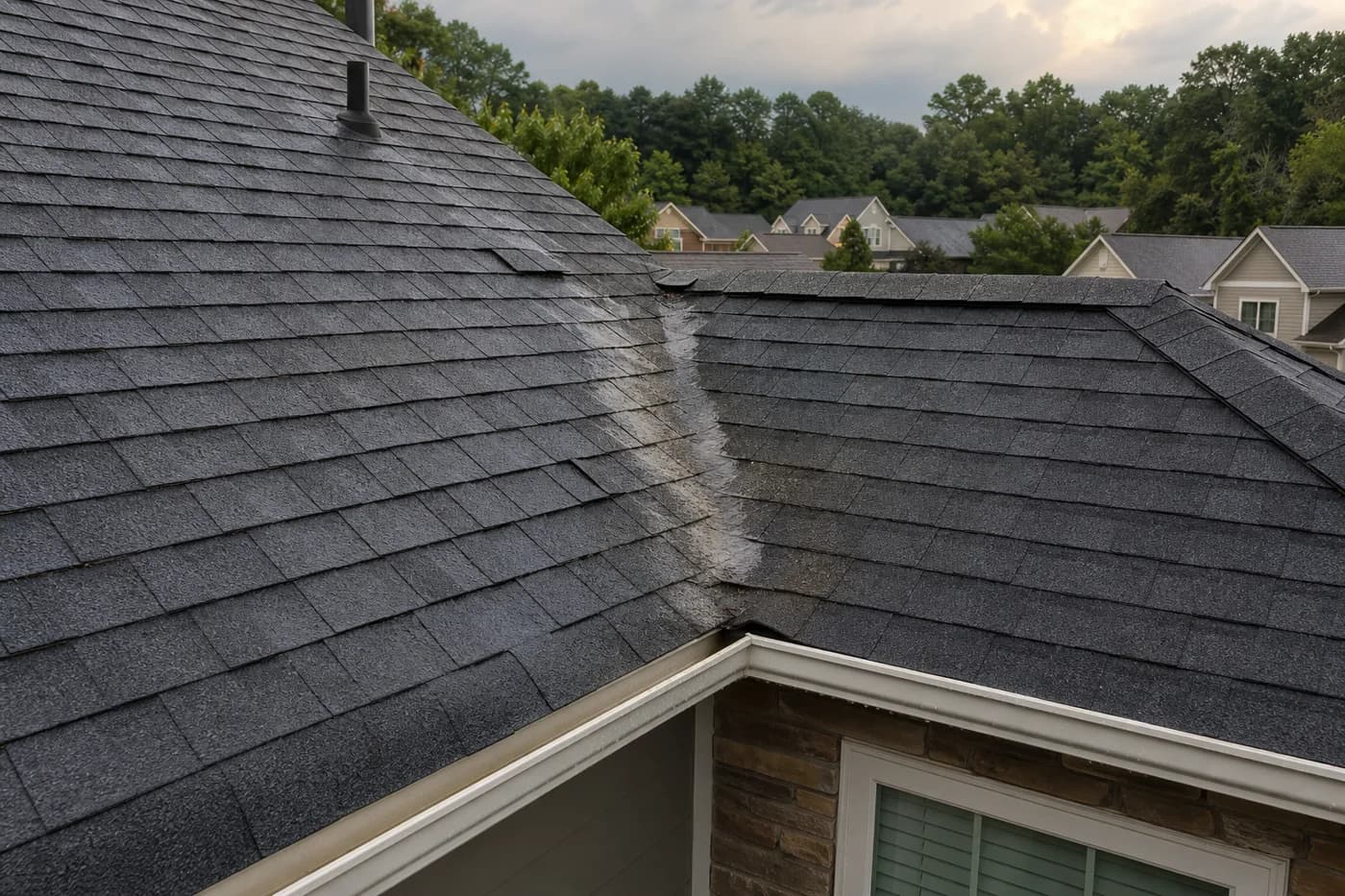
What Should You Check First?
Start indoors. Is the stain dry, damp, dripping, spreading, or soft to the touch? If drywall is sagging or bubbling, keep people away from the area. Water trapped above drywall can release suddenly. Also be careful around light fixtures, ceiling fans, outlets, and attic wiring. Water and electricity do not need a long explanation.
Next, write down when you noticed it. Did it show up after a fast thunderstorm? A full day of steady rain? Wind from one side of the house? Hail? A fallen limb? That timing gives the roofer a better search pattern than just saying, “there is a spot upstairs.”
If you can safely access the attic, look without stepping off the framing. Dark decking, wet insulation, rusty nails, daylight at a roof penetration, or damp wood near a vent pipe can all help narrow the source. No attic access? No problem. Photos from the room and a roof inspection are still useful.
Common Roof Leak Sources Behind Ceiling Stains
Pipe boots are one of the simple-but-common ones. The rubber collar around a plumbing vent can crack from sun, age, and heat. Once it opens up, rain follows the pipe into the attic and the ceiling stain may appear around a bathroom, hallway, laundry room, or closet.
Flashing is another big one. Chimneys, dormers, sidewalls, skylights, and roof-to-wall transitions need water to be directed out, not just sealed with caulk. Around Indian Trail homes, we often see older sealant repairs that bought time for a while. Then one hard rain exposes the underlying flashing problem again.
Valleys and gutter edges can cause stains too. Leaves, pine needles, heavy water volume, missing drip edge, worn underlayment, and clogged gutters can push water sideways or backward. If the stain appears after long rain rather than every shower, water volume may be part of the story.
Then there is wind damage. A shingle does not have to be missing in the yard to be damaged. Lifted tabs, creases, nail pops, cracked ridge caps, or bruised shingles can all create small entry points that get worse over time.
Does Storm Timing Matter for Insurance?
Yes, but timing alone is not proof. If the stain appeared right after wind, hail, or a limb impact, document everything before cleanup: the ceiling, exterior debris, damaged shingles if visible from the ground, and the date of the weather event. Good documentation helps separate sudden damage from a long-term maintenance issue.
In North Carolina, homeowners insurance may respond differently to storm damage than to age, old flashing, poor installation, or slow seepage. Kaliber can inspect the roof and explain what is visible. If the damage appears storm-related, the next conversation may involve insurance restoration. If it looks like a small maintenance repair, you should know that too.
Real talk: not every ceiling stain needs a claim. Some need a targeted repair. Some need monitoring after a small fix. Some reveal a roof that is old enough that another patch is not the best use of money.
Seeing a new stain after rain in Indian Trail?
Request a Free InspectionWhen Is a Ceiling Stain Urgent?
It is urgent if water is actively dripping, the stain is growing, drywall is sagging, the ceiling feels soft, insulation is soaked, or the stain is near electrical fixtures. In those cases, the priority is preventing more interior damage and keeping the area safe.
It is also urgent if another storm is coming. A tiny entry point can become a much bigger mess when the roof gets hit with more wind-driven rain. Temporary dry-in work or tarping may be needed, but a tarp is not a repair. It is a bridge until the roof can be fixed properly.
If the stain is old, dry, and not changing, you still should not ignore it before painting. Paint hides the warning sign. It does not fix the roof, replace wet insulation, or stop the next leak.
What Should a Good Leak Inspection Include?
A good inspection connects the indoor symptom to the exterior source. That usually means checking the ceiling stain, attic clues when accessible, roof penetrations, flashing, shingles, ridge caps, valleys, gutters, and nearby roof planes. Photos matter. You should not have to take someone's word for it.
The recommendation should also match the condition of the roof. If the roof is healthy and the leak source is isolated, a repair may be the honest answer. If the roof has brittle shingles, repeated leaks, soft decking, widespread storm damage, or age-related failure, a roof replacement conversation may save you from paying for the same leak twice.
For Indian Trail homeowners, the practical move is simple: document the stain, avoid unsafe ladder or ceiling work, and get the leak traced before the next heavy rain. The earlier you catch it, the more options you usually have.
Frequently Asked Questions
What does a ceiling stain after rain usually mean?
A ceiling stain after rain usually means water found a path through the roof system, flashing, pipe boot, attic ventilation detail, siding transition, or another exterior opening. The stain location is a clue, but it is not always directly below the roof damage.
Should I poke or cut open a wet ceiling stain?
Do not cut into drywall unless water is actively bulging and you can safely control the release with a bucket below it. If there is sagging drywall, electrical risk, or active dripping, keep people away from the area and call for help.
Can a ceiling stain dry out and still be a roof problem?
Yes. Some leaks only show up during wind-driven rain, heavy downpours, or storms from a certain direction. A dry stain can still point to a roof detail that needs inspection before the next hard rain.
Is a ceiling stain always covered by homeowners insurance in North Carolina?
Not always. Insurance may apply when the leak comes from sudden covered storm damage such as wind, hail, or a fallen limb. Age, wear, old flashing, long-term seepage, and maintenance issues are usually handled differently.
Can Kaliber inspect roof leaks in Indian Trail NC?
Yes. Kaliber Roofing is based in Indian Trail and inspects roof leaks, ceiling stains, storm damage, roof repairs, and replacement needs across Indian Trail, Union County, and nearby Charlotte-metro communities.
Need the stain traced before the next storm?
Kaliber Roofing will inspect the roof, document the likely source, and tell you whether repair, insurance review, or replacement makes the most sense.