Roof shingles slide down when their fasteners stop holding them in the position the roof system requires. A misplaced, overdriven, loose, or missed nail can let one shingle creep out of line; wind and deck movement can make the weakness more obvious. A slipped shingle should be repaired before exposed nail holes or course joints give rain a path beneath the roof covering.
Sometimes the first clue is small: one tab sits lower than every shingle beside it. Other times, a dark horizontal gap appears where the course moved. Either way, the shingle did not shift for no reason.
Indian Trail roofs take hot sun, humid stretches, sudden summer downpours, and gusty Union County storms. Weather can expose a poor attachment, but the repair still needs to answer a basic question: what failed beneath the visible shingle?
That matters because sliding a loose piece back uphill is not the same as fixing it.
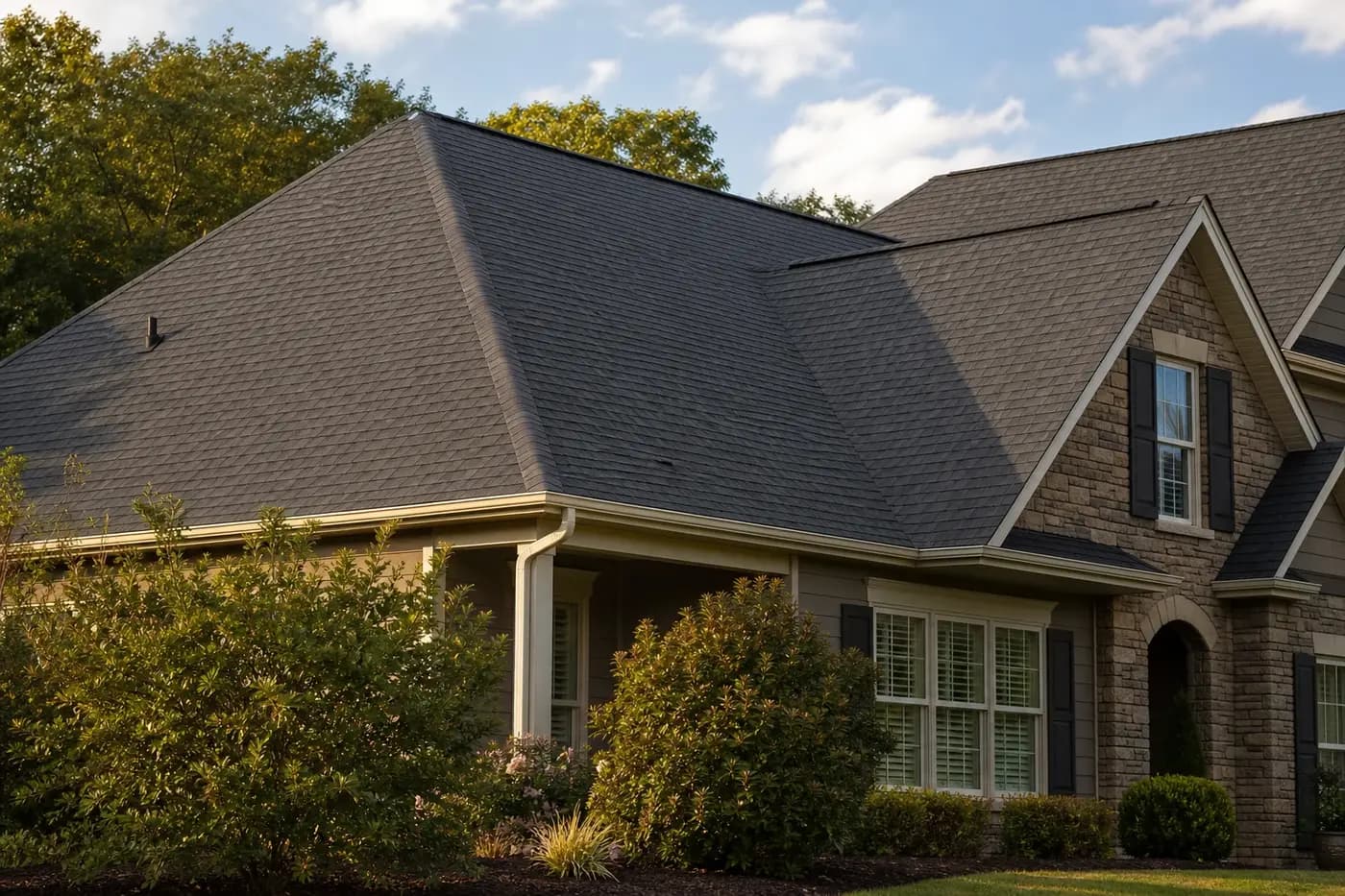
What Does a Slipped Roof Shingle Look Like?
A slipped shingle usually sits lower on the slope than the shingles beside it. You may see a tab hanging below the course, a dark line above it, or a patch where the pattern no longer lines up. If the shingle has moved far enough, nail heads or black underlayment may become visible.
Do not confuse that with a slightly uneven color blend. Architectural shingles use layered tabs and varied granules, so the surface is not supposed to look perfectly flat like sheet metal. The concern is a physical change in position.
Curling and buckling are different symptoms. Curling turns an edge upward; buckling creates a ridge or wave. If the course stays in place but the surface rises, see our guide to buckling roof shingles in Indian Trail.
Why Do Shingles Start Sliding?
Fastener placement is the first place to look. Each shingle design has a specified nailing area. A nail placed too high may not secure all the layers it needs to hold. A nail that misses solid decking cannot provide the same attachment as one seated correctly.
Nail depth matters too. An overdriven nail can cut too deeply into the shingle. An underdriven nail can keep the next course from lying and sealing correctly. Neither problem should be covered with surface caulk and forgotten.
Old repairs can loosen. A replacement shingle may have been tucked into place without restoring the full fastening pattern. Sealant can age, and a patch that looked acceptable from the yard may start moving after heat and wind work on it.
The deck can affect the hold. Soft, deteriorated, or uneven sheathing may not grip fasteners properly. A shingle that keeps slipping after repair deserves a look at the wood below it, especially if the attic shows stains or dampness.
Wind may reveal the weak point. Wind does not have to carry a whole shingle into the yard. It can lift an edge, break the seal, and work a poorly attached piece farther out of position. Our guide to shingles lifting after wind explains the related crease and seal clues.
Can a Slipped Shingle Cause a Leak?
Yes. Asphalt shingles work as overlapping courses, not as isolated waterproof tiles. When one piece moves down, it can uncover the top of the shingle below, a vertical joint, or the fasteners that should remain protected.
The underlayment may delay water entry, so the ceiling does not always stain right away. That is useful backup—not a reason to leave the opening through another storm. Wind-driven rain can move beneath a loose edge and reach nail holes or a vulnerable seam.
Check the attic below the area if access is safe. Damp decking, a fresh dark mark, wet insulation, rusty nail tips, or daylight through an opening all deserve attention. If water is already showing inside, review Kaliber's roof repair process for what a documented leak inspection should cover.
What Can You Check Safely From the Ground?
Use phone zoom or binoculars from more than one ground-level angle. Photograph the low shingle, then capture a wider view that shows which slope and roof feature it sits near. Look for an exposed nail line, a dark rectangle above the slipped piece, a crooked course, or nearby tabs that have also moved.
Write down when you first noticed it. If a storm recently passed through Indian Trail, Stallings, Matthews, or Monroe, save that date with the photos. Documentation is more useful before a repair changes the visible condition.
Do not climb up to push, glue, nail, or screw the shingle into place. Steep slopes, morning moisture, hot shingles, and loose roofing make a bad combination. An exposed face nail can also create a new water entry point if the underlying layers are not repaired correctly.
Can a Slipped Shingle Be Repaired?
Often, yes. When the problem is isolated and the nearby shingles remain flexible and sound, a roofer may be able to remove or lift the affected courses, check the deck, install a matching replacement, and restore the proper fastener placement and overlap.
The scope grows when shingles are slipping in a repeated pattern, fasteners do not hold in the deck, surrounding shingles crack during careful lifting, or moisture has softened the sheathing. At that point, treating each low tab as a separate cosmetic defect may miss the system problem.
Still, one slipped shingle does not automatically call for a new roof. A repair-first inspection should compare the local defect with the age and condition of the surrounding slopes. Roof replacement becomes the better conversation only when the attachment or material problem is broad enough that isolated repairs will not restore reliable performance.
When Should You Call Kaliber?
Schedule an inspection when the shingle has moved enough to expose nails or underlayment, when more than one course looks out of line, or when the condition appears with an attic mark or ceiling stain. It also makes sense to check the area promptly after strong wind, even if the shingle is still hanging on.
Kaliber Roofing serves Indian Trail first, along with Stallings, Matthews, Monroe, Waxhaw, Weddington, Mint Hill, and nearby Union County and Charlotte-metro communities. We inspect the attachment, surrounding shingles, roof deck, and interior clues where accessible, then explain whether the problem is a focused repair or part of a wider pattern.
Is one shingle sitting lower than the rest of your Indian Trail roof?
Have the fasteners, overlap, nearby shingles, and decking checked before the next hard rain.
Schedule a Free Roof InspectionFrequently Asked Questions
Why would an asphalt shingle slide down the roof?
A shingle can slip when its fasteners no longer hold it in the correct position. High or misplaced nails, overdriven nails, missed decking, damaged nail slots, deck movement, and prior repair errors are possible causes. Wind can expose a weak attachment that had not been obvious from the ground.
Can one slipped shingle cause a roof leak?
Yes. When a shingle moves, it can expose the nails or joints that the overlapping courses are meant to cover. Water may not enter during every shower, but hard or wind-driven rain can reach the underlayment and fastener openings.
Can I push a slipped shingle back into place?
Pushing it back does not restore the hidden fasteners, seal strip, or surrounding shingle pattern. Walking on the roof also adds fall risk and can damage warm or brittle shingles. A proper repair should identify why the shingle moved and then restore the water-shedding layers.
Does a slipped shingle mean the whole roof was installed incorrectly?
Not automatically. One isolated shingle may trace to a local fastening miss or an old repair. A repeated pattern across one or more slopes is more concerning because it may point to broader fastening, decking, or installation problems.
Will homeowners insurance cover slipped shingles?
Coverage depends on the policy and the cause. Sudden wind damage may be handled differently from installation defects, maintenance, or age-related wear. Photograph the condition from the ground, note any recent storm date, prevent further interior damage, and ask your insurer about the policy before assuming coverage.
When should an Indian Trail homeowner schedule a roof inspection?
Schedule an inspection promptly when a shingle has moved far enough to expose a dark gap, nail heads, underlayment, or a course joint; when more shingles are shifting; or when the condition follows wind and comes with attic moisture or a ceiling stain.