Roof shingles buckle when something underneath pushes or pulls them out of a flat, even plane. Common causes include wrinkled underlayment, moisture or movement in the roof deck, and installation or fastening problems. One isolated ridge may be repairable. Buckles that spread, lift shingle edges, or show up with attic moisture need a closer inspection because they can create a path for wind-driven rain.
From the lawn, buckling often looks like a raised line running up a roof slope. It may cross several shingle courses instead of affecting one tab. That pattern matters.
Indian Trail roofs go through hot sun, humid air, hard summer rain, and sudden storm wind. Those conditions do not automatically make shingles buckle. They can, however, expose damp materials, uneven decking, or installation details that were already under strain.
So, do not judge the roof from one shadow in a phone photo. Look at the line itself: where it starts, how far it travels, and whether it changes after warm, dry weather.
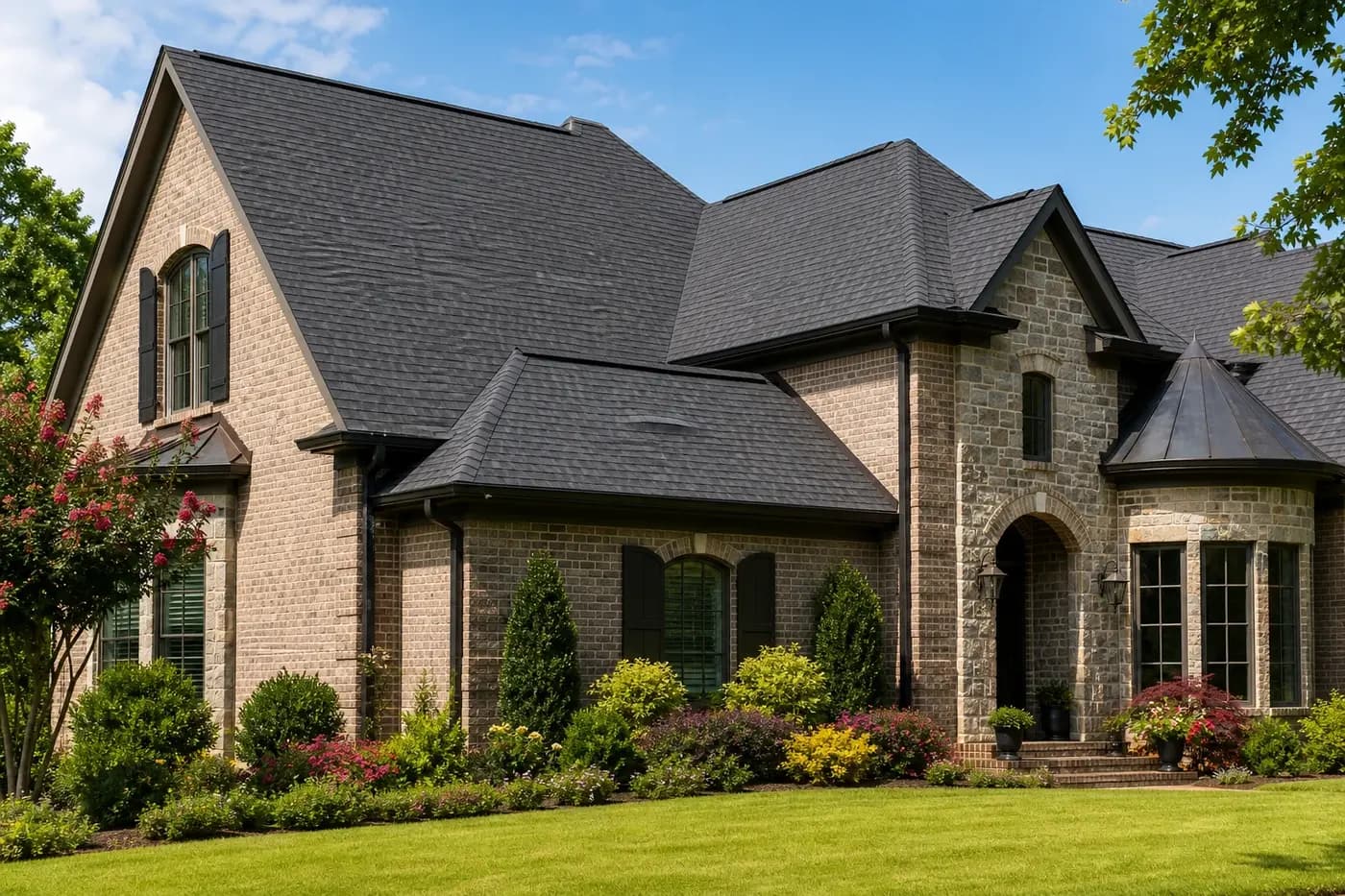
What Do Buckled Roof Shingles Look Like?
A buckle usually forms a hump, ridge, or wave through multiple shingles. It may run vertically up the slope, follow a seam in the decking, or appear in a shorter patch where material underneath has wrinkled.
That is different from curling. A curled shingle turns up at an edge or corner. Buckling changes the plane of a larger area. If the tabs themselves are cupped or clawed, our guide to curling shingles in Indian Trail covers that symptom.
Lighting can fool you. Early and late sun throws long shadows across normal shingle texture, while a true buckle tends to hold the same line when viewed from different ground-level angles.
What Causes Shingles To Buckle?
Wrinkled underlayment is a common suspect. If underlayment becomes damp, bunches during installation, or is not laid smooth, the wrinkle can telegraph through the shingles above it. Pressing on the shingle surface does not remove the wrinkle underneath.
The roof deck may be moving. Sheathing needs the right spacing and fastening so normal expansion does not force one panel against another. A raised line that tracks a panel joint can point below the shingles.
Moisture changes wood. Damp decking can swell. As it dries, the assembly may move again. The real question is where the moisture came from — rain entry, trapped construction moisture, or an attic condition — not simply how to flatten the visible ridge.
Fastening and alignment matter. Misaligned courses, high or misplaced nails, or shingles pulled too tight can keep the roof covering from lying naturally. Installing over an uneven surface can create the same result.
Ventilation belongs in the inspection. Poor attic airflow does not prove it caused a specific buckle, but heat and moisture below the deck can add stress. See our guide to North Carolina heat, humidity, and roof damage for the related attic clues.
Can Buckled Shingles Cause a Leak?
Yes, though a raised line does not mean water is already inside. The concern is geometry. Shingles are designed to overlap and lie flat enough to shed water down the slope. A buckle can lift an edge, loosen the seal between tabs, or put stress around fasteners.
Gentle rain may pass without a visible problem. Wind-driven rain is less forgiving because it can move sideways or uphill beneath a loose edge. Watch the attic for dark deck staining, damp insulation, rusty nail tips, or a musty smell. Inside the home, a ceiling spot that grows after rain deserves prompt attention.
If water is already showing, Kaliber's roof repair service explains how we trace the entry point instead of guessing from the indoor stain.
What Can You Check Safely?
Start from the ground with phone zoom or binoculars. Note whether the ridge crosses several shingle courses, follows a straight deck seam, appears near a valley or wall, or changes from one slope to the next. Take another photo after a few warm, dry days from the same spot.
Then check the attic only if you have safe access. Stay on framing, use a flashlight, and look below the visible roof area for stains, damp wood, protruding fasteners, or uneven sheathing. Never step on drywall.
Do not climb onto a hot, wet, steep, or storm-damaged roof to push the shingles flat. And do not drive exposed nails through the raised area. Both moves can create a leak while leaving the real cause untouched.
Can Buckled Shingles Be Repaired?
An isolated buckle often can be repaired. The roofer may need to lift a controlled section of shingles, smooth or replace wrinkled material, correct a deck edge or fastening issue, and then restore the courses so they shed water properly.
Broader work may make more sense when buckling appears across several slopes, the deck is uneven in many places, shingles have become brittle, or moisture has damaged a larger section of sheathing. The surrounding roof decides the scope — not the height of one ridge.
That does not make every buckle a replacement job. A repair-first inspection should show what is happening above and below the shingles, then compare a targeted fix with roof replacement only when the overall condition justifies it.
When Should You Call Kaliber?
Schedule an inspection when a raised line stays through warm weather, grows longer, lifts shingle edges, or appears with a stain or damp attic material. The same applies when buckling starts after a Union County wind or hail event. Write down the storm date and keep your ground-level photos.
Kaliber Roofing serves Indian Trail first, plus Stallings, Matthews, Monroe, Waxhaw, Weddington, Mint Hill, and nearby communities. We document the buckle pattern, check the roof deck and attic clues where accessible, and explain whether the problem calls for a focused repair or broader planning.
Seeing a raised line or wave across your Indian Trail roof?
Have the shingles, underlayment, deck, and attic clues checked before the next hard storm.
Schedule a Free Roof InspectionFrequently Asked Questions
What causes asphalt roof shingles to buckle?
Buckling can come from wrinkled underlayment, movement or unevenness in the roof deck, trapped moisture, fastening or alignment problems, or installing shingles over a damp surface. The pattern and timing help narrow down the cause.
Will buckled shingles flatten on their own?
Minor waviness on a new roof may settle as materials warm and dry, but a sharp ridge, growing buckle, loose tab, or repeated pattern should not be dismissed. If it remains after normal warm weather, have the roof checked rather than waiting through another storm season.
Can buckled shingles cause a roof leak?
Yes. A buckle can lift a shingle edge, strain a fastener, or open a path for wind-driven rain. Not every raised area is already leaking, but the roof is no longer shedding water as predictably as a flat, properly layered surface.
Is roof buckling the same as curling shingles?
No. Curling usually affects the edge or corners of individual shingles. Buckling often appears as a raised line or wave that crosses several shingles and may track a wrinkle, deck joint, or area of movement below the roof covering.
Can one buckled area be repaired?
Often, yes, when the problem is isolated and the surrounding shingles and decking remain sound. The repair may involve lifting shingles, correcting the material or deck issue underneath, and restoring the full shingle pattern rather than simply pressing the ridge down.
When should an Indian Trail homeowner schedule an inspection?
Schedule one when the buckle is growing, appears on more than one slope, follows a storm, sits near flashing or a roof penetration, or comes with loose shingles, attic moisture, or a ceiling stain. A prompt inspection can separate a small repair from a broader deck or moisture problem.