Curling roof shingles in Indian Trail usually mean the shingle is no longer lying flat because of age, heat, trapped attic moisture, poor ventilation, installation problems, or earlier storm/wind stress. One or two curled shingles may be repairable. Curling across several slopes usually points to an aging roof that needs a full inspection before the next Union County storm finds the weak spots.
It is easy to miss from the driveway at first. Then one afternoon the sun hits the roof just right and you notice edges lifting, corners turning up, or tabs that look slightly clawed. Not dramatic. Still worth paying attention to.
Curled shingles shed water worse than flat shingles. They also give wind a place to grab. Around Indian Trail, Stallings, Monroe, Matthews, and Waxhaw, that combination matters because spring and summer storms can bring hard rain, sudden gusts, and fast temperature swings.
Kaliber Roofing helps homeowners with roof repair inspections, roof replacement planning, and storm damage roof assessments across Indian Trail, Union County, and nearby Charlotte-metro communities.
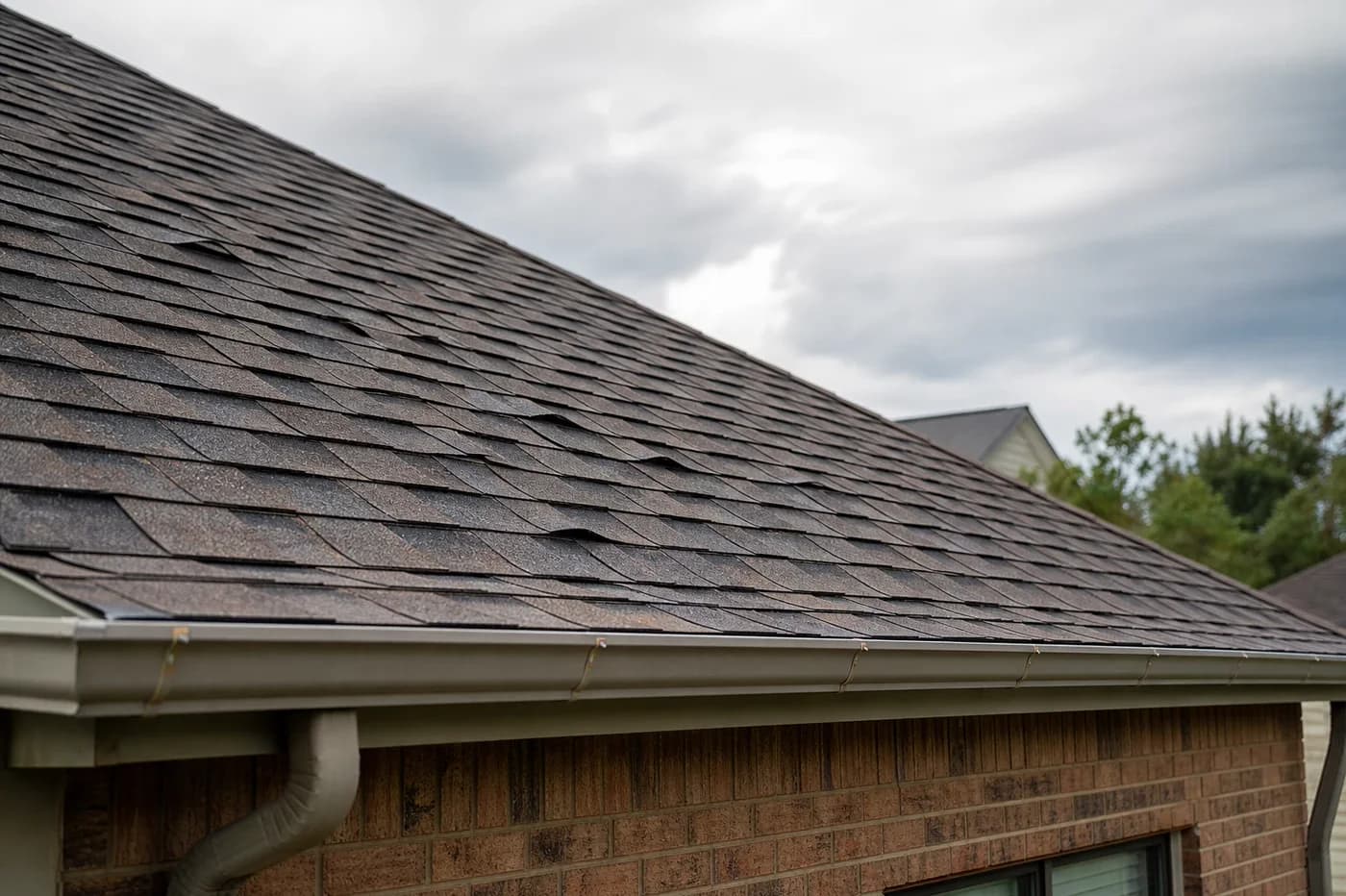
What Curling Shingles Mean
Curling is the broad homeowner word for shingles that no longer sit flat. Roofers may describe it a little more specifically. Cupping is when the shingle edges turn upward. Clawing is when the center rises or the tab bends downward like a little arch.
Either way, the shingle is changing shape. That can expose nail areas, weaken seal strips, trap wind at the edge, and make water move in ways the roof was not designed to handle.
One lifted corner after a storm is a different problem than a whole slope with curled tabs. The pattern matters. So does the roof age, attic ventilation, sun exposure, and whether the shingles still feel flexible or have gone brittle.
Common Causes Around Indian Trail Homes
Age is the big one. Asphalt shingles lose oils over time. Granules wear down. The mat dries out. Once shingles get brittle, they are more likely to curl, crack, or break when disturbed.
Heat and attic ventilation can speed up the problem. A roof slope that bakes in afternoon sun, especially over an attic with poor airflow, may age faster than a shaded slope. That is why an inspection should include intake, ridge vent, bathroom fan routing, and attic moisture clues instead of only looking at shingles.
Installation details can also play a role. Wrong nail placement, poor roof deck fastening, inadequate starter courses, or shingles installed over uneven decking can create stress points that show up later.
Storm and wind history matters too. If wind has repeatedly lifted the tabs, the seal strips may weaken. The roof may look “almost fine” from the yard, but curled edges can become the first place a gust grabs during a Union County thunderstorm.
Can Curling Shingles Be Repaired, or Is It Replacement Time?
Sometimes repair is reasonable. If a small area was damaged by wind, a branch, a localized leak, or a bad detail near a vent, replacing a few shingles may make sense. The surrounding shingles need to be flexible enough to work with, though. Brittle shingles crack during repair.
Replacement becomes more likely when curling is spread across multiple roof slopes, shingles break easily, granules are collecting in gutters, leaks keep returning, or the roof is already close to its expected service life. At that point, chasing one curled area after another can get expensive without really solving the roof.
Insurance is a separate question. Wear and age are not the same as sudden storm damage. If you recently had wind or hail, a documented inspection can separate ordinary deterioration from storm-created damage like creasing, tearing, bruising, or missing shingles.
Seeing curled shingles from the driveway?
Schedule a Roof InspectionSafe Checks You Can Do From the Ground
Do not climb up to press shingles flat. That can crack brittle tabs, break the seal on nearby shingles, or put you on a roof that is already harder to walk safely.
Instead, take clear photos from the yard. Try one wider picture of each roof slope and a few zoomed-in photos of the curled area. If you see granules in the gutters or downspout splash blocks, take a photo of that too.
Inside, look for ceiling stains, musty attic smell, damp insulation, or dark decking around the curled area if attic access is safe. A curling-shingle problem does not always mean an active leak today, but it can increase the risk when rain and wind hit together.
What a Roofer Should Inspect
A useful inspection should do more than say, “The shingles are curling.” It should document where the curling is located, how widespread it is, whether the shingles are brittle, whether seal strips have failed, and whether there are related issues at vents, valleys, flashing, gutters, or ridge caps.
The roofer should also look for causes behind the symptom. Poor ventilation, moisture in the attic, old decking movement, and repeated storm exposure can all change the recommendation.
For Indian Trail homeowners, the best answer is usually practical: repair what can be repaired safely, replace when the roof condition justifies it, and explain the difference with photos. No scare tactics. No guessing from the driveway.
Frequently Asked Questions
Are curling shingles always a sign I need a new roof?
Not always. A few damaged shingles may be repairable if the surrounding roof is still flexible and in good condition. Widespread curling, brittle tabs, granule loss, or repeated leaks usually means replacement should be part of the conversation.
Can curled shingles be flattened back down?
Usually no. Once asphalt shingles curl, cup, or claw from age, heat, moisture, or installation problems, they rarely return to a reliable shape. Trying to glue down brittle shingles can crack them or hide a larger roof condition issue.
Can wind lift shingles that are already curling?
Yes. Curled edges give wind an easier place to grab. Around Indian Trail and Union County, a roof with curling shingles may be more vulnerable during thunderstorms, gusty rain, and quick weather changes.
Will homeowners insurance cover curling shingles?
Curling caused by age, wear, poor ventilation, or installation defects is usually not treated the same as sudden storm damage. If a storm also tore, creased, or lifted shingles, documentation from a roof inspection can help you understand your options.
Does Kaliber Roofing inspect curling shingles near Indian Trail?
Yes. Kaliber Roofing inspects curled, cupped, clawed, wind-lifted, and leaking shingles in Indian Trail, Union County, Stallings, Matthews, Monroe, Waxhaw, Weddington, Mint Hill, and nearby Charlotte-metro communities.
Want a straight answer on curled shingles?
Kaliber Roofing can inspect the roof, check ventilation and storm clues, and explain whether a repair or replacement makes the most sense.