Class 4 impact-resistant shingles can be worth considering for an Indian Trail roof when the added material cost fits the budget and the exact product offers a useful step up in tested impact performance. But Class 4 does not mean hail-proof, wind-proof, or guaranteed insurance savings. Compare the product, complete roof system, installer's scope, warranty terms, and any carrier requirements before paying for the upgrade.
The label sounds decisive. Real roofs are messier.
A lab rating tells you something valuable about the shingle sample that was tested. It cannot recreate every hard, irregular hailstone that falls across Union County, and it says nothing by itself about a loose ridge cap, badly layered flashing, weak decking, or poor fastening. Those details still decide whether the finished roof works as a system.
That distinction is timely after today's guide to ridge cap shingles blowing off in Matthews. Impact resistance and wind resistance are related to storm planning, but they are not the same test and they do not replace sound installation.
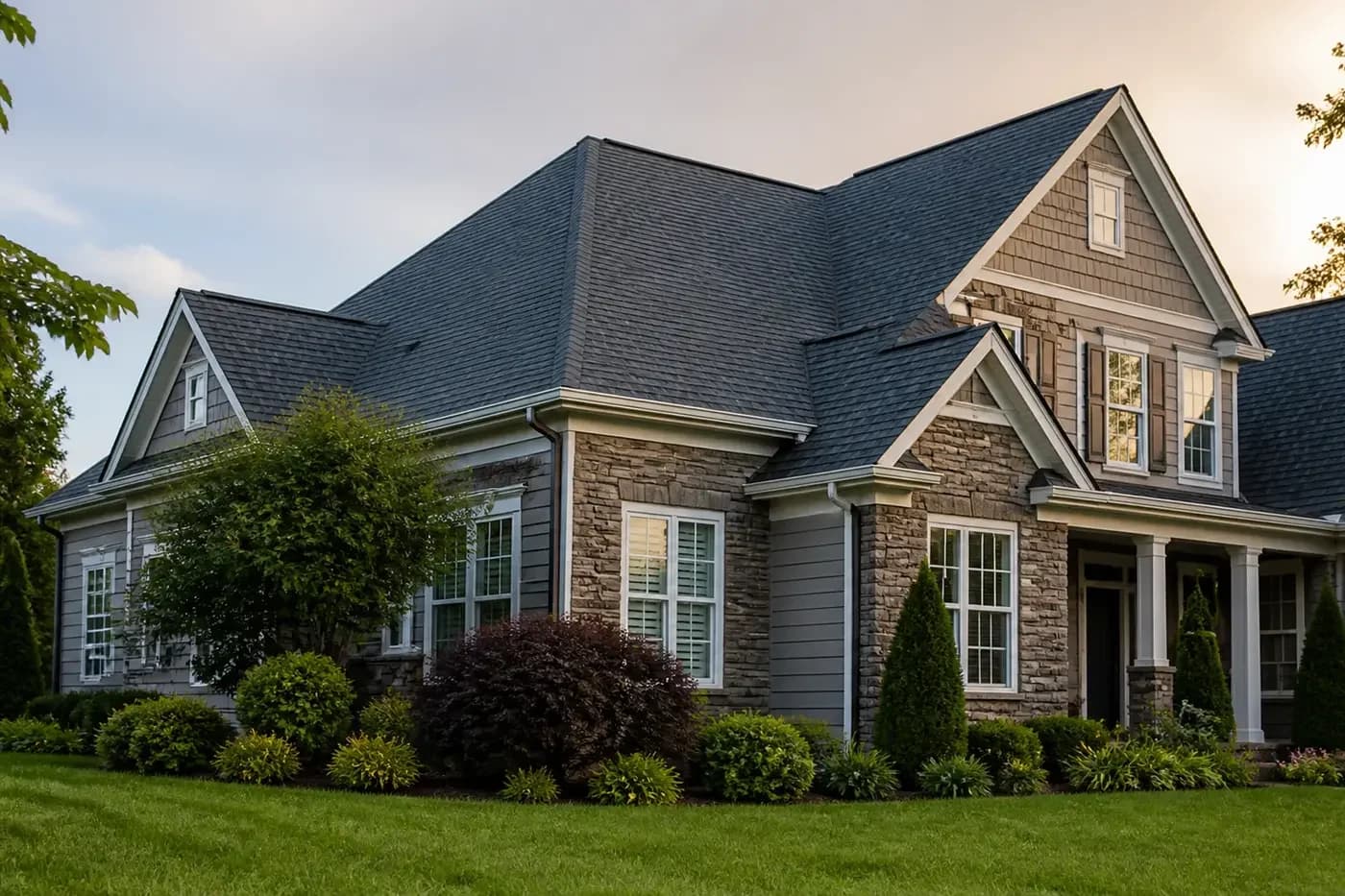
What Does Class 4 Mean for a Roof Shingle?
Class 4 refers to the highest classification in UL 2218, a laboratory impact-resistance test for prepared roof-covering materials. In plain English, the test uses steel balls of specified sizes to strike the material and then checks the sample for damage defined by the standard. Class 4 uses the largest impactor in that classification sequence.
That is more useful than a vague package claim. It gives homeowners, contractors, manufacturers, and insurers a shared test reference for the named product. The key phrase is named product. A brand may sell several shingle lines with different constructions and ratings, so the proposal should identify the manufacturer, product line, profile, and color—not just “architectural shingle.”
Some impact-resistant asphalt shingles use a polymer-modified asphalt blend. Others use different reinforcements or construction details. The label alone does not tell you how two products compare in real hail, how easy they are to repair later, or how the rest of the roof assembly is specified.
Keep the product data sheet and installation invoice after the job. If the bundle wrapper or product code is available during installation, a clear photo can help tie the finished roof to the material listed in the contract.
What Does a Class 4 Rating Not Promise?
It does not make a roof invincible. Actual hail can be hard or slushy, smooth or jagged, wind-driven or nearly vertical. Impacts hit at different speeds and angles, and the shingles may sit over roof decks with different stiffness. A controlled steel-ball test cannot reproduce every combination.
It also does not mean every Class 4 product performs identically outside the lab. Independent research from the Insurance Institute for Business & Home Safety has shown why product-level performance comparisons matter: shingles that share a broad impact classification can respond differently under more realistic hail-testing methods.
Then there is the rest of the roof. Class 4 field shingles cannot correct a poorly flashed wall, a cracked pipe boot, a weak roof deck, blocked intake ventilation, or a ridge vent installed outside its instructions. Impact-resistant field shingles may also be paired with separate hip and ridge products, so the written scope should identify those components rather than assuming one label covers everything.
And no shingle rating decides an insurance claim. Damage cause, policy language, exclusions, deductibles, maintenance, documentation, and the insurer's evaluation all remain separate questions.
When Might Impact-Resistant Shingles Be Worth the Upgrade?
Start with the reason you are reroofing. If an Indian Trail home already needs a full replacement and the roof has broad slopes exposed to open sky, comparing an impact-resistant option is sensible. The incremental material choice is easier to evaluate while the complete assembly is already being rebuilt.
Ownership plans matter too. A homeowner expecting to stay for years may place more value on improved impact performance than someone preparing to sell soon. That does not make one choice universally right. It changes how long the owner expects to live with the material, warranty, appearance, and future repair considerations.
Roof geometry belongs in the conversation. Homes around Brandon Oaks, Taylor Glenn, Lake Park, Hemby Bridge, and nearby Union County communities often have hips, valleys, dormers, and short roof planes. On a complex roof, workmanship at transitions can matter just as much as the field-shingle upgrade. Spending more on shingles while leaving the flashing and cap scope vague is backward.
Finally, compare the real price difference. Ask for two written scopes built around the same tear-off, decking terms, underlayment, leak barriers, flashing, ventilation, starter, caps, cleanup, and documentation. Only then can you see what the impact-resistant product itself adds. Kaliber's roof replacement service starts with that full-system comparison rather than a shingle label in isolation.
How Should You Compare Class 4 Products and Roofing Bids?
Ask for the exact manufacturer and product line first. Confirm the current technical sheet shows the claimed impact classification for that product. Similar names, colors, or package designs are not proof that two shingles carry the same rating.
Next, look beyond the field shingle. What starter course is specified? Which ridge and hip caps will finish the roof? Does the selected ridge-cap product belong with the system and roof geometry? What underlayment and leak barrier go at valleys, penetrations, and vulnerable transitions? How are pipe boots, wall flashing, and ventilation handled?
Installation requirements deserve their own line of questions. The proposal should account for roof slope, deck condition, fastener type and placement, shingle exposure, high-wind details where applicable, and manufacturer instructions. Today's Matthews ridge-cap failure guide is a good example: stronger field shingles cannot rescue caps that were fastened incorrectly or left with weak seals.
Also ask how future repairs would work. Color lots change. Products get revised or discontinued. A roofer should explain how a damaged area could be integrated later and what records you need to preserve. “Lifetime” wording on a brochure is not a substitute for reading the actual warranty coverage, limitations, transfer rules, and claim steps.
The better bid is the one you can audit. Product names, quantities, accessory materials, installation details, decking contingencies, cleanup, warranties, and photo documentation should be clear enough that you know what will be installed before the first bundle arrives.
What Should You Ask Your Insurer Before Choosing Class 4 Shingles?
Call before signing the roofing contract. Ask whether the carrier offers any premium credit for impact-resistant roofing at the property address, which test classifications and specific products qualify, and what documents must be submitted. Get the answer in writing when possible.
Then ask what happens over time. Does the credit continue at renewal? Is an inspection form required? Does the carrier need the paid invoice, product data, installer certification, photos, or proof that the complete roof uses the qualifying material? A possible discount is not useful if the installed product or paperwork misses the insurer's rule.
Do not assume a discount changes storm coverage in your favor. Ask directly about the deductible, cosmetic-damage terms, roof-surface settlement provisions, exclusions, and claim process under the actual policy. Kaliber can provide roof and installation documentation, but the insurance company interprets coverage and makes the claim decision.
If a storm hits later, document the date, interior leaks, property conditions, and visible changes without climbing onto the roof. A Class 4 label should not stop a homeowner from arranging a careful storm-damage roof inspection when there are signs of damage.
Comparing standard and Class 4 shingles for an Indian Trail roof?
Kaliber Roofing can inspect the roof, name the exact products, and show how each option fits the complete replacement scope.
Schedule a Free Roof InspectionFrequently Asked Questions
What does Class 4 mean on an asphalt shingle?
Class 4 is the highest impact classification in the UL 2218 laboratory test for prepared roof-covering materials. It describes how a tested product sample handled the test procedure. It does not mean the installed roof is hail-proof or guaranteed to avoid storm damage.
Are all Class 4 shingles equally resistant to real hail?
No. Products can earn the same classification while using different designs and materials, and real hail varies in size, hardness, shape, speed, and impact angle. Compare the exact product, independent performance information when available, installation requirements, and warranty rather than relying on the Class 4 label alone.
Will Class 4 shingles stop wind from lifting ridge caps?
Not by themselves. Impact classification and wind performance address different forces. Ridge-cap security still depends on compatible cap materials, correct exposure, fastener placement, deck attachment, seal condition, ridge-vent details, and installation for the selected roofing system.
Do Class 4 shingles lower homeowners insurance in North Carolina?
A discount may be available from some insurers, but it is not automatic and the rules can vary by carrier, policy, product, documentation, and renewal terms. Ask your insurer about the exact approved product and required records before treating a possible discount as part of the purchase decision.
Can Class 4 shingles still need repair after a storm?
Yes. Impact-resistant shingles can still be damaged, and the roof also includes ridge caps, flashing, vents, gutters, decking, and other components. After a severe storm, document visible changes from the ground and have concerning areas inspected rather than assuming the rating settled the question.
Does Kaliber Roofing install impact-resistant shingles in Indian Trail NC?
Kaliber Roofing can inspect the existing roof, compare suitable shingle options for the home and written scope, and explain installation details, product documentation, and tradeoffs. Product availability and the right specification should be confirmed for each project.