Yes, North Carolina heat and humidity can damage an asphalt shingle roof in Indian Trail, especially when attic ventilation is weak or the roof is already aging. Heat bakes shingles from above, trapped attic air cooks the roof deck from below, and humid storm cycles can expose weak pipe boots, flashing, nail pops, and decking problems. You do not need to panic after one hot week. You do need to watch for the signs.
Indian Trail roofs take a real beating in July and August. One afternoon is bright sun and heavy heat. A few hours later, a fast Union County storm pushes rain sideways across shingles, vents, valleys, and wall flashing. Then the roof dries out and does the same thing again.
That cycle is hard on older shingles. It is also hard on homes with blocked soffit vents, weak ridge ventilation, disconnected bath fans, or attic insulation that traps heat in the wrong places. From the street, everything can look fine. Up close, the roof may be telling a different story.
Kaliber Roofing helps homeowners sort out normal roof aging from repair-worthy damage through roof repair inspections, roof replacement planning, and free roof inspection appointments across Indian Trail and nearby Union County communities.
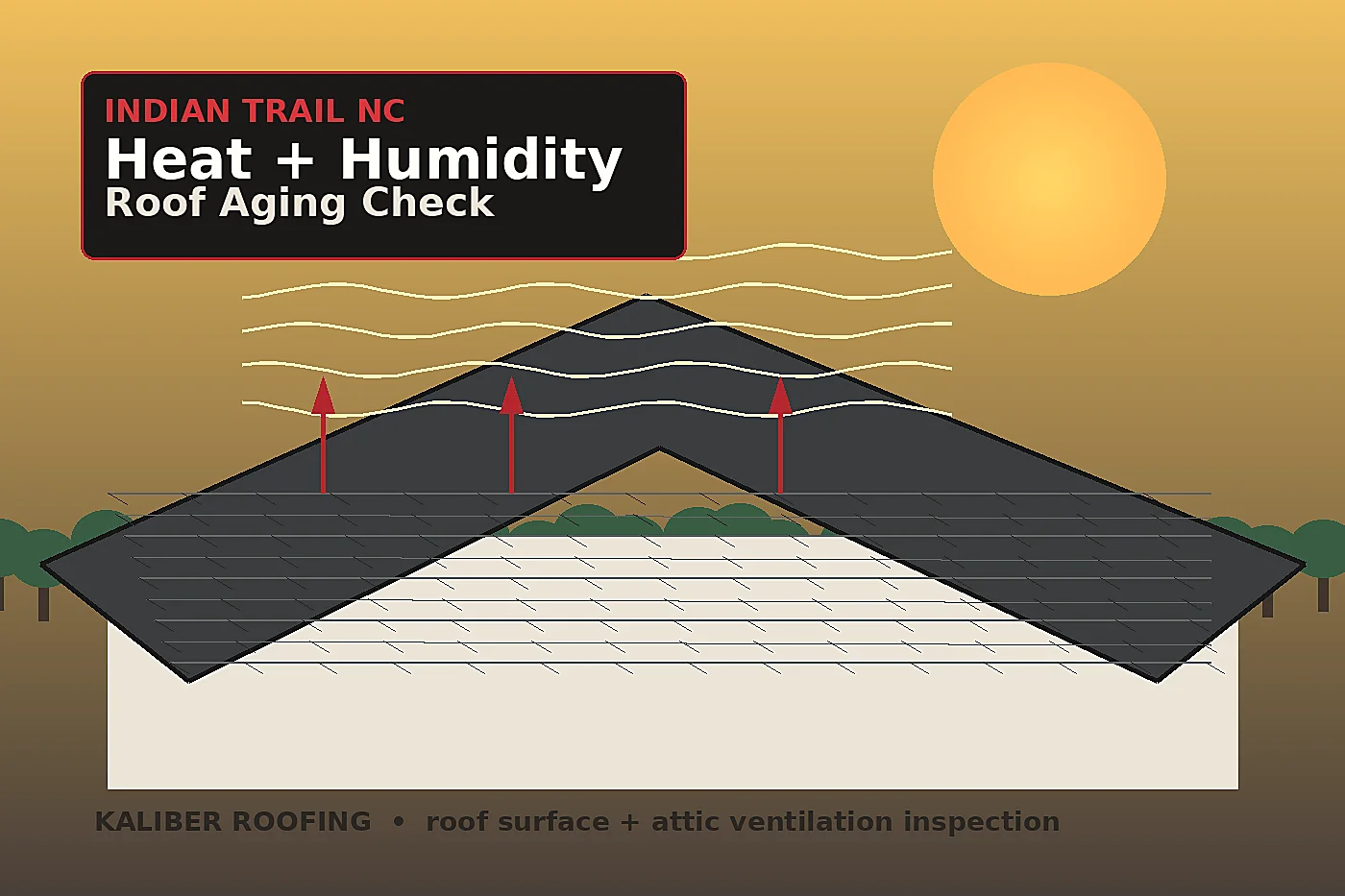
Why Heat and Humidity Matter for Indian Trail Roofs
Asphalt shingles are built to handle sunlight, rain, and seasonal temperature swings. Still, they are not magic. UV exposure dries out oils in the shingle. Heat makes materials expand. Cooler nights make them contract. Do that thousands of times and small weaknesses start to show.
Humidity adds another layer. Warm, damp air can hang around the attic if intake and exhaust ventilation are not balanced. That can leave the underside of the roof deck hotter and damper than it should be, especially above bathrooms, laundry rooms, kitchens, and bonus rooms.
The result is not always an instant leak. More often, it is slow wear: shingles that lose granules, tabs that become brittle, seal strips that do not hold like they used to, and roof details that fail during the next hard rain.
Warning Signs to Watch For
Start outside, from the ground. Look for shingles that are curling, cupping, clawing, cracked, shiny from granule loss, or uneven in color. Check whether ridge caps look brittle or split. Around Indian Trail neighborhoods with mature trees, also look for debris sitting in valleys or along roof edges after storms.
Then pay attention inside the house. A hot upstairs room, a musty attic smell, rusty roofing nails, dark roof decking, damp insulation, or ceiling stains after a summer downpour can all point to a roof or ventilation issue.
One clue by itself does not prove the roof is failing. But several clues together? That is when it is time to get the roof checked before a small repair turns into decking damage.
Attic Ventilation Clues Roofers Look For
A good inspection should not stop at the shingles. The attic matters because it shows what the roof has been living with from underneath.
Common ventilation clues include blocked soffit intake, too little ridge or box vent exhaust, bath fans dumping into the attic, insulation stuffed into vent channels, rusty nail tips, dark staining on decking, and big temperature swings between rooms.
Sometimes the fix is not a full replacement. It may be ventilation correction, a pipe boot repair, flashing work, sealing an attic air leak, or clearing clogged intake. Other times, the shingle condition and attic clues show that replacement needs to be part of the conversation.
Worried your roof is aging faster than it should?
Schedule a Roof and Attic CheckWhen to Schedule an Inspection
Do not wait for water to drip through the ceiling. Schedule an inspection if your roof is older, you see shingle curling or granule loss, the attic smells musty, the upstairs gets unusually hot, or a recent storm brought wind-driven rain through Indian Trail, Stallings, Matthews, Monroe, Waxhaw, or Weddington.
You should also call after a roof leak that only happens during summer storms. Those leaks are easy to dismiss because they stop when the weather clears. The roof did not heal itself, though. The rain just stopped testing the weak spot.
If insurance might be involved, photos and dates help. Write down when the storm happened, what you noticed first, and where the stain or leak showed up. A roof inspection with clear photo documentation gives you a better starting point.
What To Do Next
First, stay off the roof. Hot shingles can be slick, and summer storm damage is not worth a fall. Use binoculars from the ground if you want a closer look.
Second, check the attic only if you can do it safely from the access opening. Look for obvious moisture clues, but do not walk around on joists or disturb insulation if you are unsure.
Third, get a roof inspection that looks at the full system: shingles, pipe boots, flashing, valleys, roof edges, attic ventilation, and decking condition. That is the only way to know whether you are dealing with routine aging, a simple repair, storm damage, or a roof that is ready for replacement.
Frequently Asked Questions
Can heat and humidity shorten the life of an asphalt shingle roof?
Yes. Heat, trapped attic moisture, UV exposure, and repeated summer storms can speed up shingle aging. The roof may still last for years, but granule loss, curling, brittle tabs, soft decking, and attic moisture are signs it needs a closer look.
Is attic ventilation really connected to roof damage?
It can be. Poor intake or exhaust ventilation can trap heat and humidity under the roof deck. Over time, that stress can contribute to shingle wear, rusty nails, damp decking, and a hotter attic than the roof system was designed to handle.
What roof problems are common after hot Indian Trail summers?
Common concerns include granular wear, curled or brittle shingles, cracked pipe boots, loose seal strips, nail pops, attic condensation clues, and leaks that show during heavy or wind-driven rain.
Should I replace my roof just because it gets very hot in the attic?
Not automatically. A hot attic is a reason to inspect ventilation, insulation, decking, and shingle condition. Some homes need ventilation correction or targeted repair, while older roofs with widespread shingle damage may need replacement planning.
Does Kaliber Roofing inspect heat and humidity roof damage near Indian Trail?
Yes. Kaliber Roofing inspects asphalt shingle wear, attic ventilation concerns, roof leaks, pipe boots, flashing, storm damage, and replacement timing in Indian Trail, Union County, Stallings, Matthews, Monroe, Waxhaw, Weddington, Mint Hill, and nearby Charlotte-metro communities.
Need a straight answer on your roof's condition?
Kaliber Roofing can inspect the roof, check attic clues, and explain whether repair, ventilation work, or replacement makes sense.