Roof shingles usually crack because the asphalt has aged and become less flexible, but heat cycling, roof-deck movement, installation stress, wind, or impact can also split a shingle. One isolated crack may be repairable. Cracks spread across several slopes, especially with loose tabs or heavy granule loss, deserve a full roof inspection and a repair-versus-replacement conversation.
From the yard, a crack can look like a dark pencil line across one tab. Sometimes that is all it is. Other times, it is the first visible clue that a larger section of the roof has turned brittle.
Indian Trail roofs get long stretches of summer heat, humid attic conditions, hard rain, and quick weather changes. None of those automatically ruins shingles. Together, though, they can expose weak materials or installation details that were already under stress.
The useful question is not simply, “Is there a crack?” It is: How many are there, where are they, and what does the rest of the roof look like?
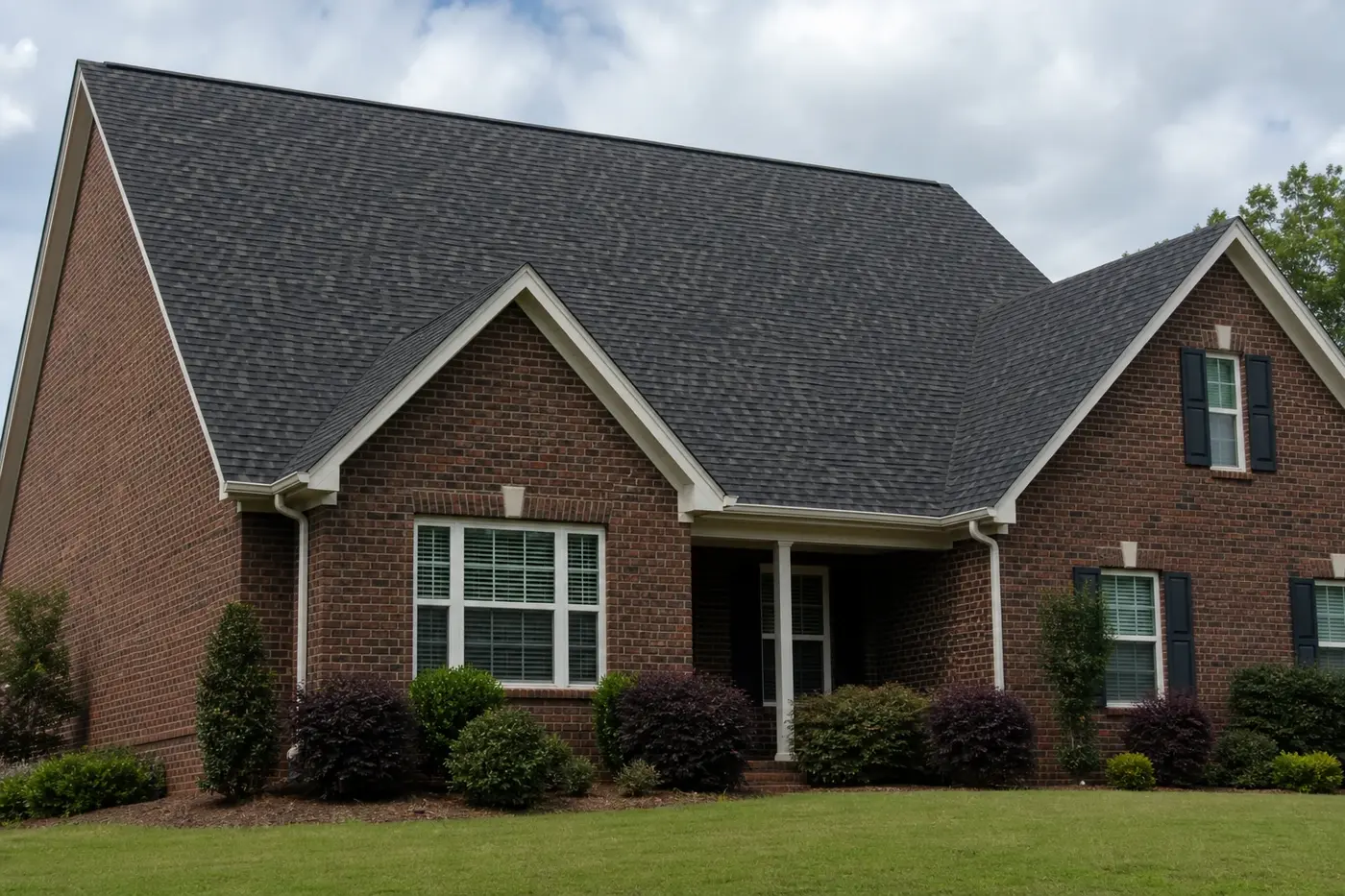
What Does a Crack in a Roof Shingle Mean?
A true crack is a split through part or all of an asphalt shingle. It may run across a tab, begin at an edge, or follow a stressed area near a fastener. That is different from a harmless color variation in the granules.
It is also different from curling. Curling changes the shape of the shingle edge; cracking splits the material itself. The two can show up together on an older roof. If the edges are lifting or cupping, see our guide to curling roof shingles in Indian Trail.
One crack does not tell you the cause. The surrounding evidence does. A straight split on one tab, random impact damage, repeated cracks in the same area, and fine surface weathering each point the inspection in a different direction.
Why Do Shingles Crack?
Normal aging is common. Asphalt shingles gradually lose flexibility. As the roof expands in daytime heat and contracts after sunset, older material has less ability to move without splitting. The change is usually gradual, not an overnight failure.
Heat and attic conditions can add stress. A hot attic does not prove it caused the cracks, but blocked intake vents, uneven exhaust ventilation, or trapped moisture can make roof aging harder on the system. Our guide to North Carolina heat, humidity, and roof damage explains what to check.
Deck movement matters. Sheathing panels and framing move slightly with temperature and moisture. A repeated crack pattern over a deck joint can be more than a surface problem, which is why the roofer should look at placement instead of replacing tabs blindly.
Installation stress can show later. Fasteners placed too high, overdriven nails, shingles bent during cold handling, or poorly aligned joints can leave a weak point. Storm wind may then reveal it.
Impact can split a tab. Hail, a fallen branch, or other debris may crack shingles, but a crack alone does not identify the impact source. Fresh storm documentation and the pattern across the roof are important.
Will Cracked Shingles Leak?
They can, especially when a split exposes a shingle joint, nail, or underlayment. Water does not always drop straight through. It may travel along the shingle layers or roof deck before reaching insulation and drywall.
A dry ceiling today is good news, but it is not proof the crack is harmless. Wind-driven rain can push water under a lifted or split tab in a way gentle rain cannot. Watch for attic staining, damp insulation, musty odors, ceiling spots, and granules gathering near downspouts.
If water is already showing inside, use our roof repair service page to see how Kaliber traces the entry point and documents the repair area.
What Can You Check Safely From the Ground?
Start with phone zoom or binoculars. Look for dark split lines, loose corners, missing pieces, tabs that no longer lie flat, and sections that look noticeably more weathered than neighboring slopes. Check the ridge caps and roof edges too.
Then look down. Sudden piles of granules at gutter outlets can support the case that the shingle surface is wearing, though a small amount of loose grit does not diagnose a failed roof by itself.
If you have safe attic access, stay on framing. Use a flashlight to check the underside of the deck for dark stains, damp wood, rusty fastener tips, or daylight. Never step on drywall, and do not climb onto a steep, hot, wet, or storm-damaged roof to inspect a crack.
Can Cracked Shingles Be Repaired, or Is It Time To Replace the Roof?
A few isolated shingles may be replaceable. The best candidates have sound decking, flexible surrounding shingles, intact flashing, and no broad pattern of cracking or granule loss. Matching the existing color and profile may still be difficult on an older roof.
Replacement becomes the more practical discussion when cracks are scattered across multiple slopes, tabs break during a careful repair attempt, the roof is already leaking in more than one area, or the shingles have become brittle enough that new spot repairs disturb the material around them.
That does not mean every visible crack earns a new roof. It means the recommendation should account for the remaining roof, not just the easiest photo to take. Kaliber compares targeted repair with roof replacement so you can see which option makes sense before work begins.
When Should You Call Kaliber?
Call when cracked shingles appear across more than one roof slope, a tab is loose or missing, granule loss is getting heavier, water has reached the attic or ceiling, or the condition changed after a Union County wind or hail event. Sooner is also sensible when a crack sits near a valley, wall, chimney, skylight, or roof penetration.
Kaliber Roofing serves Indian Trail first, along with Stallings, Matthews, Monroe, Waxhaw, Weddington, Mint Hill, and nearby communities. We document what is there, explain whether the damage is isolated or widespread, and keep the recommendation repair-first when the roof condition supports it.
Seeing cracked or brittle shingles on your Indian Trail roof?
Get the crack pattern, surrounding shingles, flashing, and attic clues checked before the next hard storm.
Schedule a Free Roof InspectionFrequently Asked Questions
Why do asphalt roof shingles crack?
Asphalt shingles may crack as they age and lose flexibility. Heat cycling, deck movement, poor attic ventilation, installation stress, impact, and wind can also contribute. The crack pattern and the condition of the surrounding roof matter more than one symptom by itself.
Can one cracked shingle cause a roof leak?
It can. A crack that passes through the shingle or exposes a joint, fastener, or underlayment creates a more direct water path. Some cracks remain dry for a while, but wind-driven rain can find openings that ordinary rain does not.
Can cracked shingles be repaired?
A few isolated cracked shingles can often be replaced when matching materials are available and the surrounding shingles remain flexible and well bonded. Widespread cracking on a brittle, aging roof usually points toward replacement planning rather than repeated spot repairs.
Should I put roof cement over cracked shingles?
Do not treat roof cement as a complete diagnosis. Surface sealant may hide the crack without correcting a failed shingle, exposed joint, loose fastener, or movement below it. A proper repair should restore the roof layers and water-shedding path.
Does cracked shingle damage mean I had hail?
Not by itself. Cracking may come from age, movement, installation stress, wind, falling debris, or impact. Hail evaluation looks at the broader pattern, recent storm timing, shingle surfaces, and marks on other exposed materials.
When should cracked shingles be inspected in Indian Trail?
Schedule an inspection when cracks appear across more than one slope, tabs are loose or missing, granules are collecting heavily, the roof is leaking, or the condition changed after a Union County storm. Prompt documentation is especially useful after wind or hail.