Roof flashing should be inspected during every roof replacement, and metal that is rusted, bent, punctured, loose, poorly layered, or disturbed during tear-off should be replaced. Not every piece must automatically go. Sound counterflashing built into brick or masonry may sometimes stay if it can be integrated correctly with the new roof. Your estimate should say which flashing will be replaced, reused, or rebuilt—not leave the decision hidden under “standard roofing accessories.”
That distinction matters because shingles are only one part of the water-shedding system. In Indian Trail, a hard summer downpour can find a weak chimney corner or wall transition even when every shingle in the open roof field is brand new.
Tear-off is also the best time to see what the old shingles were hiding. Once those materials are removed, the crew can inspect the metal, underlayment, decking, fasteners, and overlaps instead of trying to diagnose the detail from the surface.
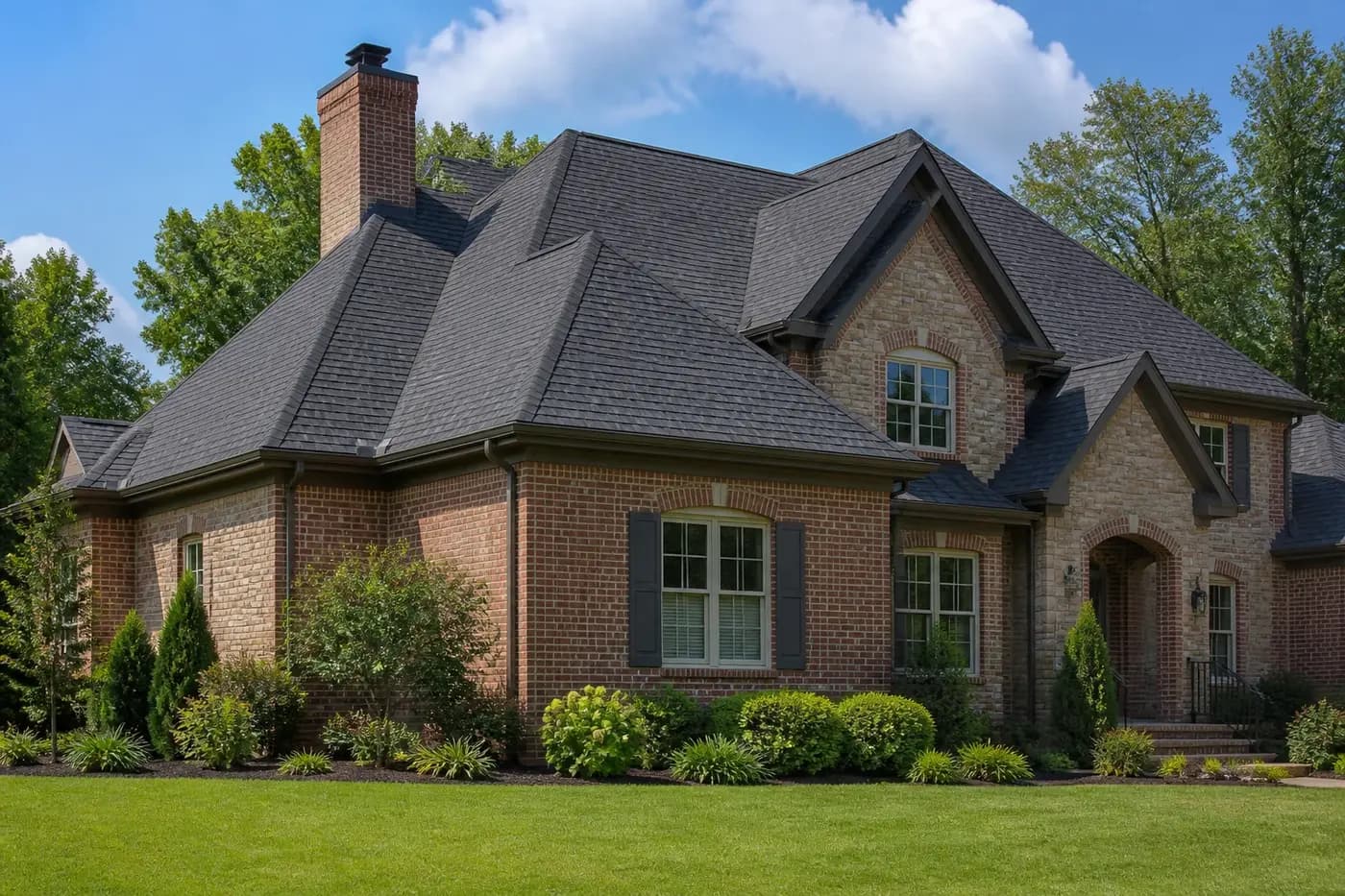
What Does Roof Flashing Actually Do?
Flashing moves water across places where the roof surface changes direction or meets something else. You will find it around chimneys, sidewalls, dormers, plumbing vents, skylights, valleys, and roof edges. Each piece has a specific job, but the basic idea is the same: overlap materials so gravity carries water back onto the roof surface.
Correct flashing is layered into the roofing. It is not simply a visible strip of metal with caulk along the edge. Step flashing, for example, works one shingle course at a time along a wall. Counterflashing protects the upper edge. If those pieces are too short, reversed, missing, or buried beneath patches, water can travel behind the new roof.
This is why a reroof is more than installing shingles. The crew must reconnect every penetration and transition to the new underlayment and shingle system.
How Does a Roofer Decide Whether Flashing Can Stay?
Start with condition. Surface discoloration is different from deep pitting, flaking rust, pinholes, open seams, or torn corners. The metal also needs enough width and length to direct water safely. A piece can look clean and still be too small for the detail.
Next comes access. Flashing woven into the old shingles may bend or tear during removal. Reusing it can also make it harder to install the new courses in the correct sequence. In those cases, fresh metal is usually the cleaner and more reliable path.
Some components are different. Counterflashing may be cut into brick mortar joints or built into masonry. If it is sound, correctly placed, and long enough to overlap new step flashing, leaving it can avoid unnecessary masonry disturbance. “Old” does not automatically mean failed. But “still attached” does not automatically mean reusable either.
Which Flashing Details Deserve the Closest Look?
Chimneys and walls: Step flashing must be woven correctly with the shingles, while counterflashing covers its upper edge. Check corners, sidewalls, the uphill side of a wide chimney, and any place siding or masonry makes access difficult. Our guide to chimney roof leaks in Indian Trail explains the common failure points.
Pipe penetrations: Rubber pipe-boot collars can crack even when the surrounding metal flange looks fine. A roof replacement is a practical time to install a compatible new boot rather than trap an aging collar inside a new shingle field.
Valleys: Some roofs use exposed metal valleys; others use woven or closed-cut shingle systems over underlayment. The proposed assembly should match the roof design and shingle requirements. Existing metal with corrosion, holes, bad laps, or old fastener penetrations should not be hidden beneath the new work.
Roof edges: Drip edge protects the decking and fascia while directing water toward the gutter. It must work with the underlayment, starter shingles, fascia, and gutter position. See our local drip edge guide for signs that the old edge detail is not doing its job.
What Should the Roof Replacement Estimate Say?
Ask for the flashing scope by location. The estimate should explain what happens at chimneys, sidewalls, dormers, valleys, plumbing vents, skylights, and eaves. If a component may stay, ask what condition would make the crew change that decision after tear-off.
Also ask how hidden damage is handled. Wet or soft decking, rotten framing at a chimney corner, deteriorated mortar, or siding that blocks proper step flashing may require work outside the base shingle price. A written allowance or unit price is more useful than discovering an undefined charge after the roof is open.
Finally, clarify responsibility. If masonry, siding, skylight, or gutter work involves another contractor, someone still needs to own the handoff. A dependable roof replacement plan connects the details instead of treating each trade as an isolated patch.
Which Signs Point to a Flashing Problem Before Replacement?
Look from the ground for loose metal, heavy patches, lifted shingle corners, rust streaks, gaps beside walls, or staining below a chimney. Indoors, note stains that appear near an exterior wall, fireplace chase, vent pipe, or roof transition after rain. The ceiling mark may not sit directly under the entry point because water can travel along decking or framing.
Do not climb onto the roof to inspect it yourself. Photograph visible clues safely, record when the moisture appeared, and keep temporary-repair receipts if a storm is involved. In Indian Trail, Stallings, Matthews, Monroe, Waxhaw, Weddington, and Mint Hill, wind-driven rain can expose a weak overlap that stays quiet during lighter showers.
A stain does not prove the whole roof needs replacement. It does mean the transition deserves a closer look before new materials cover the evidence.
Planning a new roof and unsure what happens to the old flashing?
Kaliber Roofing can inspect the roof transitions, document the condition, and explain which details should be replaced or rebuilt.
Schedule a Free Roof InspectionFrequently Asked Questions
Does all roof flashing have to be replaced with a new roof?
Not every piece in every situation. Flashing that is removed, rusted, bent, punctured, poorly layered, or incompatible with the new roof should be replaced. Sound counterflashing built into masonry may sometimes remain if it can be integrated correctly. The estimate should identify each flashing location and whether it will be replaced, reused, or repaired.
Can old flashing cause a new roof to leak?
Yes. A new shingle field can still leak where old flashing is split, corroded, loose, too short, badly lapped, or sealed as a substitute for correct layering. Flashing details should be inspected while the old roofing is removed and access is open.
Should chimney flashing be replaced during a reroof?
Step flashing around a chimney is often replaced when surrounding shingles are removed, especially if the metal is damaged or cannot be separated cleanly. Sound counterflashing embedded in masonry may sometimes stay. The two layers must overlap correctly and the chimney masonry must also be in serviceable condition.
Is roof flashing included in a roof replacement estimate?
It should be described, but scopes vary. Ask whether the price includes new step flashing, pipe boots, valley metal where used, wall flashing, chimney details, drip edge, and repairs discovered after tear-off. Do not rely on a general phrase such as standard accessories without knowing the actual locations.
Can roof cement or caulk replace metal flashing?
No. Sealant can be part of certain manufacturer-approved details, but a surface smear is not a substitute for correctly sized and layered flashing. Heavy patches may hide corrosion or a bad lap until water reaches the roof deck.
Can flashing be replaced without replacing the whole roof?
Often, yes. If the surrounding shingles, underlayment, and decking are still sound and can be opened without causing broader damage, a roofer may rebuild an isolated chimney, wall, vent, or roof-edge detail. Brittle roofing or several failed locations can make a wider scope more practical.