If your roof is leaking around the chimney in Indian Trail, the most likely culprit is the chimney flashing system: step flashing along the shingles, counter flashing in the brick or siding, worn sealant, cracked mortar, or storm-lifted shingles beside the chimney. The leak should be inspected before the next hard rain because chimney leaks can travel into the attic, down framing, and show up as a stain several feet from the actual opening.
Chimney leaks are frustrating because they rarely announce themselves neatly. One storm, nothing. The next storm, a brown spot appears near the fireplace, upstairs ceiling, closet, or wall. Then everybody starts guessing.
Here is the practical way to think about it: a chimney is a big interruption in the roof. Water has to be guided around all four sides of it. Around Indian Trail and Union County, fast summer storms, wind-driven rain, wet leaves, and long humid stretches can expose small flashing mistakes that stayed hidden during lighter showers.
Kaliber Roofing checks chimney areas during roof repair inspections, storm damage roof checks, and free roof inspection appointments in Indian Trail, Stallings, Matthews, Monroe, Waxhaw, Weddington, Mint Hill, and nearby Charlotte-metro neighborhoods.
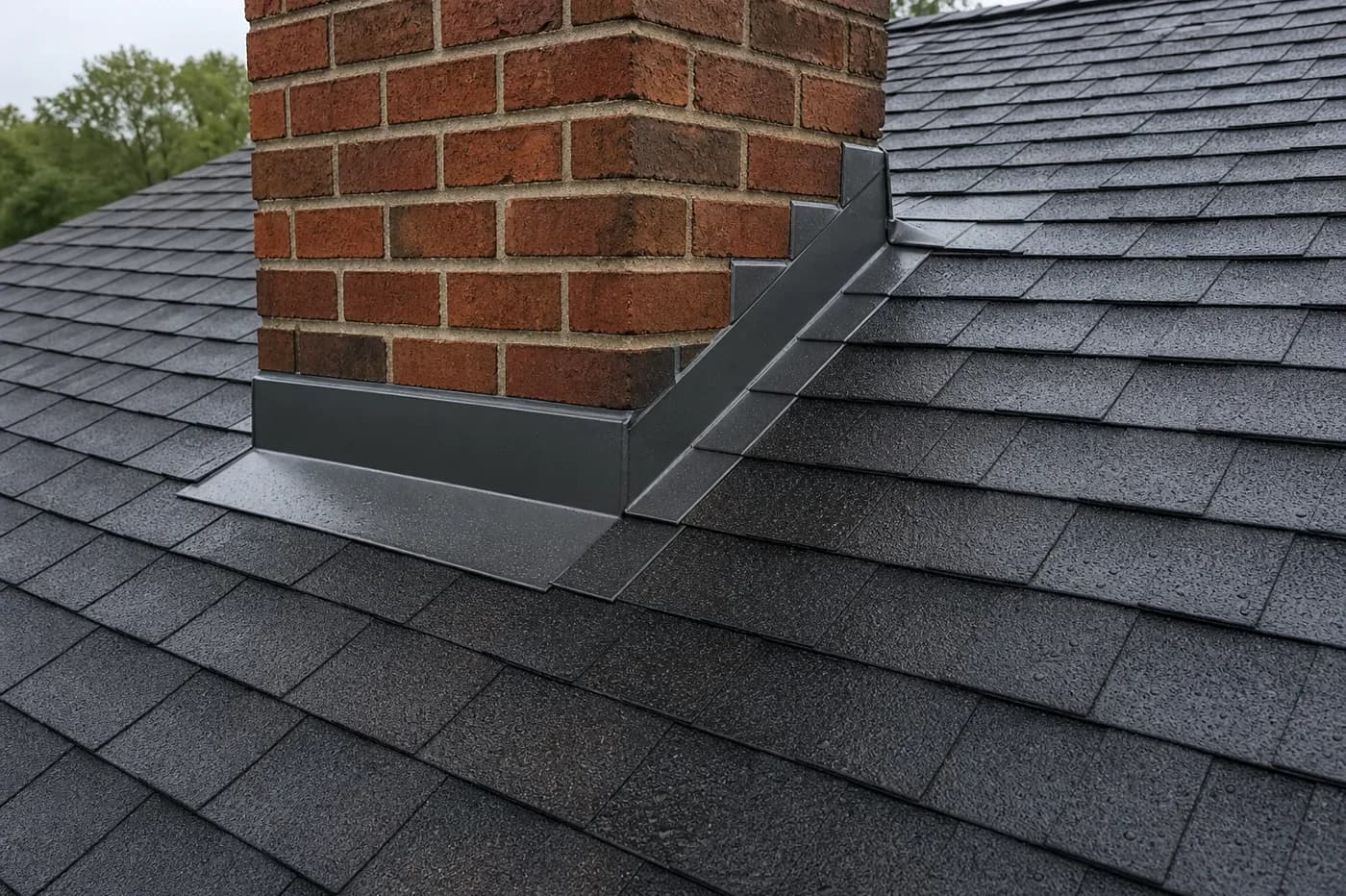
Why Chimneys Are Common Roof Leak Spots
A roof sheds water by overlapping materials in the right direction. Shingles overlap shingles. Flashing overlaps shingles. Counter flashing overlaps step flashing. When that sequence is right, rain moves down and away.
A chimney makes that harder. It creates two sidewalls, an uphill back side, and a downhill front edge. Each side needs the right flashing detail, and the uphill side may also need a cricket or saddle on wider chimneys so water and debris do not sit behind it.
That does not mean every chimney leak is a disaster. Sometimes it is a targeted flashing repair. Sometimes the chimney masonry is letting water in. Sometimes the roof around the chimney is old enough that the shingles break when someone tries to repair the flashing. The inspection has to sort those out.
Warning Signs the Leak Is Near the Chimney
Inside the home, watch for stains near the fireplace chase, along a ceiling line, inside an upstairs closet, or on drywall close to the chimney wall. Water can follow framing before it appears, so the stain is a clue, not a perfect map.
If you can safely look from the attic access, check for dark roof decking near the chimney, damp insulation, rusty nail tips, wet brick, or a musty smell. Stop there. Crawling across attic joists or walking a wet roof is not worth it.
Outside, ground-level clues may include missing sealant at the chimney, loose-looking metal, lifted shingles beside the chimney, heavy leaf debris on the uphill side, or a dark stain on the brick. Binoculars help. A ladder is optional only for trained people with the right setup.
Timing matters too. If the stain appeared after a wind-driven rain event in Indian Trail, Stallings, or Matthews, that points toward flashing or storm-lifted shingles. If it shows after every small rain, the opening may be more constant.
Common Chimney Flashing Problems
Step flashing problems are high on the list. Step flashing should work with each shingle course along the chimney side. If pieces are missing, reused poorly, buried under caulk, or installed without proper overlap, water can slip behind the system.
Counter flashing is the metal that covers the top edge of the step flashing. On a brick chimney, it is usually cut into the mortar joint or otherwise tied into the masonry. If it pulls loose, rusts, or relies only on surface caulk, the leak may come back after the next rough storm.
The uphill side of the chimney is another trouble spot. Water, pine needles, and leaves can pile up there. On some wider chimneys, a cricket helps split water around the chimney instead of letting it slam into the back side. Not every chimney needs one, but it is worth checking when the leak is on the uphill side.
And yes, caulk shows up everywhere. A little sealant in the right place can be part of a detail. A big smear of roof cement over bad flashing is usually a warning sign that someone patched the symptom, not the leak path.
Can It Be Repaired, or Does the Roof Need Replacement?
Many chimney leaks can be repaired without replacing the whole roof. If the surrounding shingles are flexible enough to work with, the deck is solid, and the leak is isolated to the chimney detail, a focused flashing repair may be the right call.
Replacement enters the conversation when the roof is near the end of its life, shingles are brittle around the chimney, decking is soft, leaks are happening in more than one area, or storm damage is broader than one flashing detail. A repair-first contractor should explain that difference with photos, not pressure.
If the chimney masonry is cracked, missing mortar, or absorbing water above the roofline, the repair may involve a chimney specialist too. Roofing flashing and masonry have to work together. Fixing only one side can leave the homeowner chasing the same stain again.
Seeing a stain near a chimney, fireplace, or upstairs wall?
Schedule a Roof Leak InspectionWhat To Do Next
Start with documentation. Take a clear photo of the ceiling stain, the fireplace wall, any attic moisture you can see safely, and the outside chimney from the ground. Write down the rain date if the stain showed up after a specific storm.
Do not scrape sealant, pull flashing, or climb onto slick shingles. That can make the leak worse and put you in a dangerous spot. The useful inspection is not just “is there caulk missing?” It should check the step flashing, counter flashing, chimney sides, uphill side, shingles, decking, attic moisture path, and storm-related damage around the chimney.
If the issue is small, fix it before it spreads. If the chimney leak is one sign of a larger roof problem, you want to know that before you spend money on a patch that cannot hold. Simple enough.
Frequently Asked Questions
Why does my roof leak around the chimney?
Most chimney roof leaks start around the flashing system, not through the middle of the roof. Step flashing, counter flashing, sealant, loose shingles, cracked mortar, or storm-lifted shingles can let water run behind the chimney and into the attic.
Can chimney flashing be repaired without replacing the whole roof?
Often, yes. If the shingles and decking around the chimney are still in good shape, a targeted chimney flashing repair may solve the leak. If the roof is older, brittle, storm-damaged, or soft around the chimney, the roofer should explain whether a larger repair or replacement discussion makes more sense.
Is roof caulk enough for a chimney leak?
Caulk can sometimes slow a leak for a short time, but it is not a real fix for missing step flashing, loose counter flashing, cracked mortar, or water getting behind the flashing. A good repair should move water around the chimney, not just cover the symptom.
Should I check the attic if I see a stain near the chimney?
If you can safely look from the attic access, check for damp insulation, dark roof decking, rusty nail tips, wet brick, or a musty smell near the chimney chase. Do not crawl across joists or climb onto the roof to prove the leak yourself.
Does Kaliber Roofing repair chimney roof leaks near Indian Trail?
Yes. Kaliber Roofing inspects and repairs chimney flashing leaks, roof-to-wall leaks, storm damage, roof penetrations, and related roof leak problems in Indian Trail, Union County, Stallings, Matthews, Monroe, Waxhaw, Weddington, Mint Hill, and nearby Charlotte-metro communities.
Need someone to check a chimney roof leak?
Kaliber Roofing can inspect the chimney flashing, surrounding shingles, attic moisture path, masonry clues, and storm damage signs so you know whether it is a targeted repair or part of a bigger roof issue.