The direct answer
Sometimes. A tree-sap spot does not automatically mean an asphalt shingle has failed, but sap and resin can affect the asphalt surface, and aggressive removal can make the condition worse. First separate residue or discoloration from physical changes such as soft asphalt, blisters, displaced granules, cracks, lifted edges, or an exposed shingle mat. Do not scrape, pressure-wash, or apply a household solvent without guidance for the identified shingle. If physical damage is confined, affected shingles can often be replaced as a focused repair instead of replacing the whole roof.
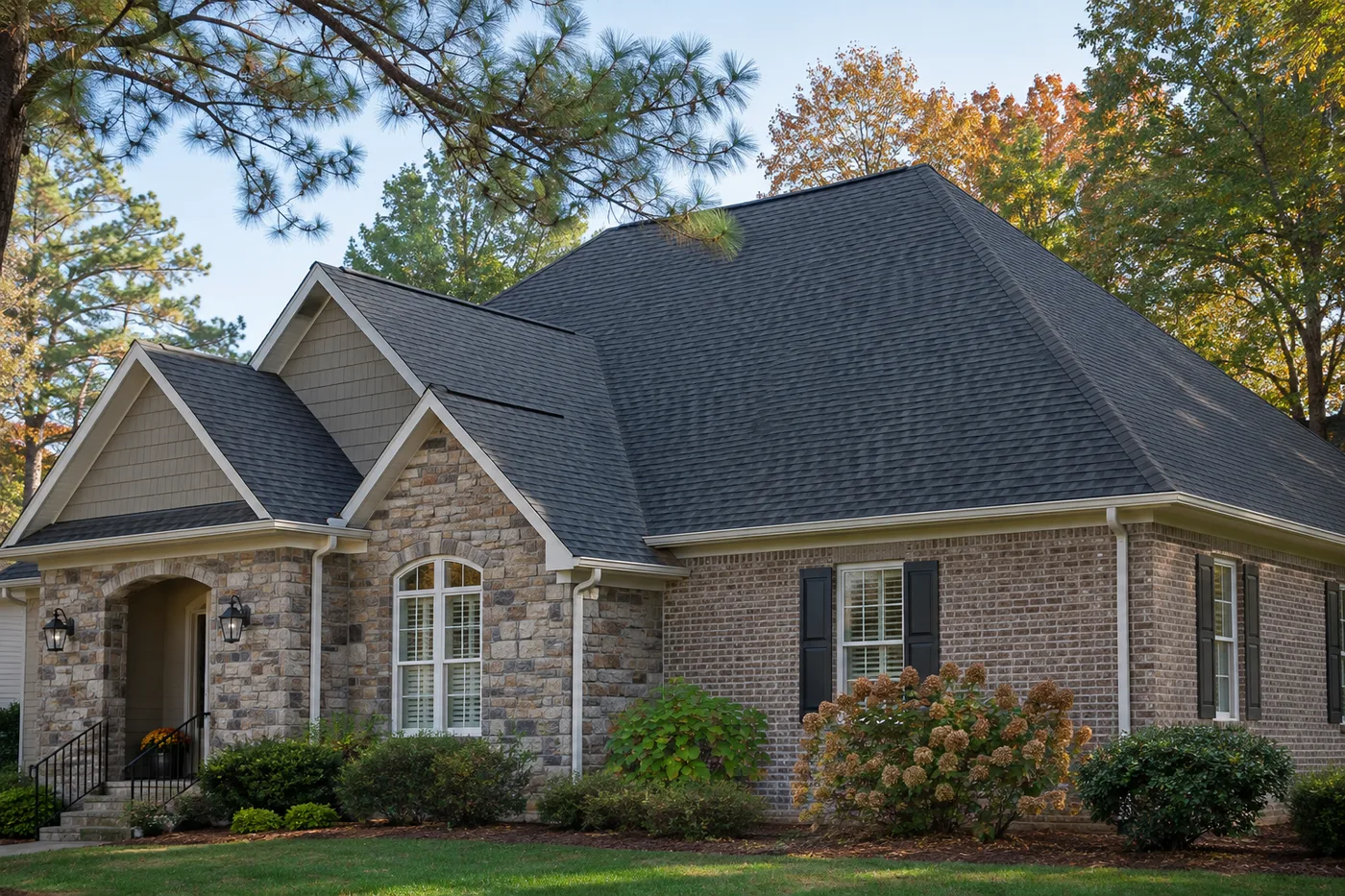
Separate sticky residue from physical shingle damage
Start with what can actually be observed. Sap may appear as clear or amber droplets, a darkened patch that collects dust, or a glossy area among otherwise granular shingles. Appearance alone cannot show whether the asphalt below has softened or whether the fiberglass mat and sealant bonds remain sound.
IKO identifies tree sap and resin as possible roof hazards because they may soften asphalt or contribute to blistering. That does not mean every spot is functionally damaged. The useful inspection question is whether the shingle surface, body, edge, fastening, or seal has changed—not simply whether a tree is nearby.
Look for a change over time. Wide and close photos from safe ground locations can document whether the area spreads, collects debris, loses granules, develops raised bubbles, cracks, or begins lifting at an edge. Compare the affected courses with similar shingles farther from the tree. A blog photo cannot determine whether one specific roof needs cleaning, monitoring, or replacement material.
Do not turn a sap spot into a cleaning injury
Tree sap is difficult to remove because products that dissolve sticky resin may also be unsuitable for asphalt, factory-applied sealant, flashing coatings, gutters, or painted surfaces. Do not assume that alcohol, mineral spirits, citrus cleaner, degreaser, petroleum solvent, heat, or another household remedy is safe for the installed roof. Identify the shingle manufacturer and product when possible, then request guidance on the exact proposed treatment.
Pressure washing is not a safe shortcut. The Asphalt Roofing Manufacturers Association warns that high-pressure washing causes granule loss and is very likely to shorten the life of an asphalt roof system. Stiff scraping and abrasive brushing can also remove granules, tear edges, break seals, or drive residue beneath a course.
Even a low-pressure cleaning method should be product-specific. ARMA recommends consulting the shingle manufacturer before applying cleaning materials or coatings that may be incompatible. The correct response may be to leave a harmless appearance spot alone, use a manufacturer-supported treatment, or replace physically affected shingles. Those are different outcomes and should not be guessed from a generic cleaning recipe.
What a tree-sap roof inspection should check
Map the complete affected area first. Photograph the tree canopy, branch position, roof slope, valleys, gutters, and every visible sap or debris concentration. Note whether branches touch the roof, scrape it in wind, shed pine needles into a valley, or direct repeated debris onto one section. These conditions can exist together without having the same repair.
At the roof surface, the contractor should distinguish residue from soft asphalt, blistering, granule displacement, bare asphalt, exposed fiberglass, cracking, punctures, lifted edges, broken seals, and old unrelated wear. The surrounding shingles matter because any repair requires access through overlapping courses. Underlayment and decking should be inspected if damaged material is removed or moisture evidence suggests that water crossed lower layers.
Interior evidence still belongs in the review when there is a leak. A ceiling stain near the tree-facing slope could come from damaged shingles, but it could also trace to a valley, flashing, vent, gutter edge, or a different opening uphill. Follow the moisture path instead of assigning the cause to the most visible sap spot.
When a focused shingle repair may be enough
A focused repair may work when physical damage is limited, surrounding shingles can be opened without breaking, compatible replacement material is available, and the underlayment and deck provide a sound boundary. The repair should replace failed shingles rather than bury softened, blistered, cracked, or bare material beneath a broad coating.
Asphalt-shingle systems are designed in overlapping courses. ARMA explains that sealed shingles can be carefully separated so individual components can be repaired without disrupting a large roof area. The work may require releasing courses above the visible spot, removing affected fasteners, checking lower layers, installing compatible shingles, and hand-sealing every bond disturbed for access.
The scope should expand only when the evidence expands. Widespread surface change beneath a tree canopy, several brittle courses, damaged lower layers, repeated branch abrasion, or no serviceable material for a repair tie-in can justify broader work. Kaliber provides a one-year workmanship warranty for repair work it performs, separate from manufacturer material warranties and roof areas outside the written repair boundary.
Reduce repeat exposure without creating new roof damage
Tree maintenance can reduce sap, shade, scraping, and debris, but do not cut large branches over the roof without a controlled plan. A qualified tree professional can evaluate branch condition and direct removal so limbs do not fall onto shingles, gutters, vents, or landscaping. Local rules and the health of the tree may affect the approach.
Keep branches from contacting the roof and clear loose debris with a non-abrasive method appropriate for the roof. ARMA and roofing manufacturers also recommend keeping gutters and drainage paths clear. Pine needles and leaves can hold moisture or collect at valleys even when sap itself has not damaged a shingle.
Coordinate the order of work. Remove a threatening branch before installing finished replacement shingles when practical, but protect an actively leaking roof promptly. Document the roof before tree work, after branch removal, during any opened repair, and after completion so later damage is not confused with the original condition.
What Indian Trail homeowners should do next
- Do not climb onto the roof, scrape the spot, or test a solvent.
- Take wide and zoomed photos from dry ground, including the tree and complete roof slope.
- Collect the roof proposal, warranty registration, saved wrapper, or other shingle identification.
- Note whether the area is only sticky or discolored, or also blistered, bare, cracked, lifted, or leaking.
- Request a repair-focused inspection and product-compatible cleaning or replacement plan in writing.
- Coordinate any branch removal with a qualified tree professional and preserve before-and-after photos.
Kaliber Roofing offers photo-documented roof repair inspections in Indian Trail and nearby Union County communities. Same-day or next-day inspection availability is subject to scheduling. The goal is to preserve a serviceable roof when possible while replacing material that is physically damaged rather than masking it with an uncertain cleaner or coating.
Related roof-repair guidance
Common questions
Does tree sap always damage asphalt shingles?
No. A sticky or dark spot does not by itself prove that the shingle has lost its water-shedding function. The concern rises when the surface is softened, blistered, bare, cracked, lifted, or losing granules, or when an attempted cleaning changes the shingle.
Can I use a solvent to remove pine sap from roof shingles?
Do not apply an unidentified solvent to asphalt shingles. A product that dissolves sap may also affect asphalt, sealant bonds, coatings, or nearby roof materials. Identify the installed shingle and ask its manufacturer about any proposed cleaning product and method.
Can I pressure-wash tree sap off my roof?
No. The Asphalt Roofing Manufacturers Association warns that pressure washing asphalt shingles can cause granule loss and likely premature roof-system failure. High-pressure cleaning can create more damage than the sap spot being investigated.
Do sap-damaged shingles require a whole-roof replacement?
Usually not when damage is limited and surrounding shingles, underlayment, decking, and fastening locations remain serviceable. Individual affected shingles or a bounded group may support a focused repair. A wider scope needs evidence that no dependable local repair boundary remains.
Should I trim the tree above the roof before the repair?
Address branches that touch, scrape, or threaten the roof with a qualified tree professional, but coordinate the timing so falling limbs and debris do not damage completed roofing. The roof condition and the tree hazard are related tasks that may require different contractors.
Sources and editorial notes
- IKO guidance on tree sap or resin, overhanging branches, debris, and asphalt-shingle damage
- Asphalt Roofing Manufacturers Association guidance on repairability, hand sealing, tree maintenance, and manufacturer review of cleaning materials
- ARMA warning against pressure washing and guidance on non-abrasive debris removal
- CertainTeed homeowner guidance on ground-level inspection, professional repairs, tree trimming, debris, and asphalt-roof cleaning
Prepared from current roofing-association and manufacturer guidance plus Kaliber's verified service and repair-warranty information. Written with AI assistance and editorially reviewed by Sage. No human approval is claimed. General homeowner guidance; not an on-site diagnosis, shingle-manufacturer compatibility decision, arborist evaluation, warranty decision, or project-specific repair recommendation.