No, you usually should not pressure wash moss off an asphalt shingle roof in Indian Trail. High pressure can remove protective granules, lift shingle edges, and push water under the roof system. If moss is spreading, the safer move is to document it from the ground, check for roof damage clues, and use a roof-safe cleaning plan only after the shingles are inspected.
Moss looks harmless at first. A little green along a shaded roof slope, maybe under trees near the back yard. Then it thickens, traps leaves, holds moisture, and starts making the roof look older than it is.
Indian Trail homes see the right mix for that problem: humid summers, shaded lots, mature trees, heavy afternoon storms, and roof slopes that may stay damp long after the driveway is dry. The fix is not blasting it with a pressure washer. That can create a bigger roof problem than the moss itself.
Kaliber Roofing checks moss and algae concerns during roof repair inspections, roof replacement evaluations, storm damage roof inspections, and free estimate appointments across Indian Trail, Union County, Stallings, Matthews, Monroe, Waxhaw, Weddington, Mint Hill, and the nearby Charlotte metro.
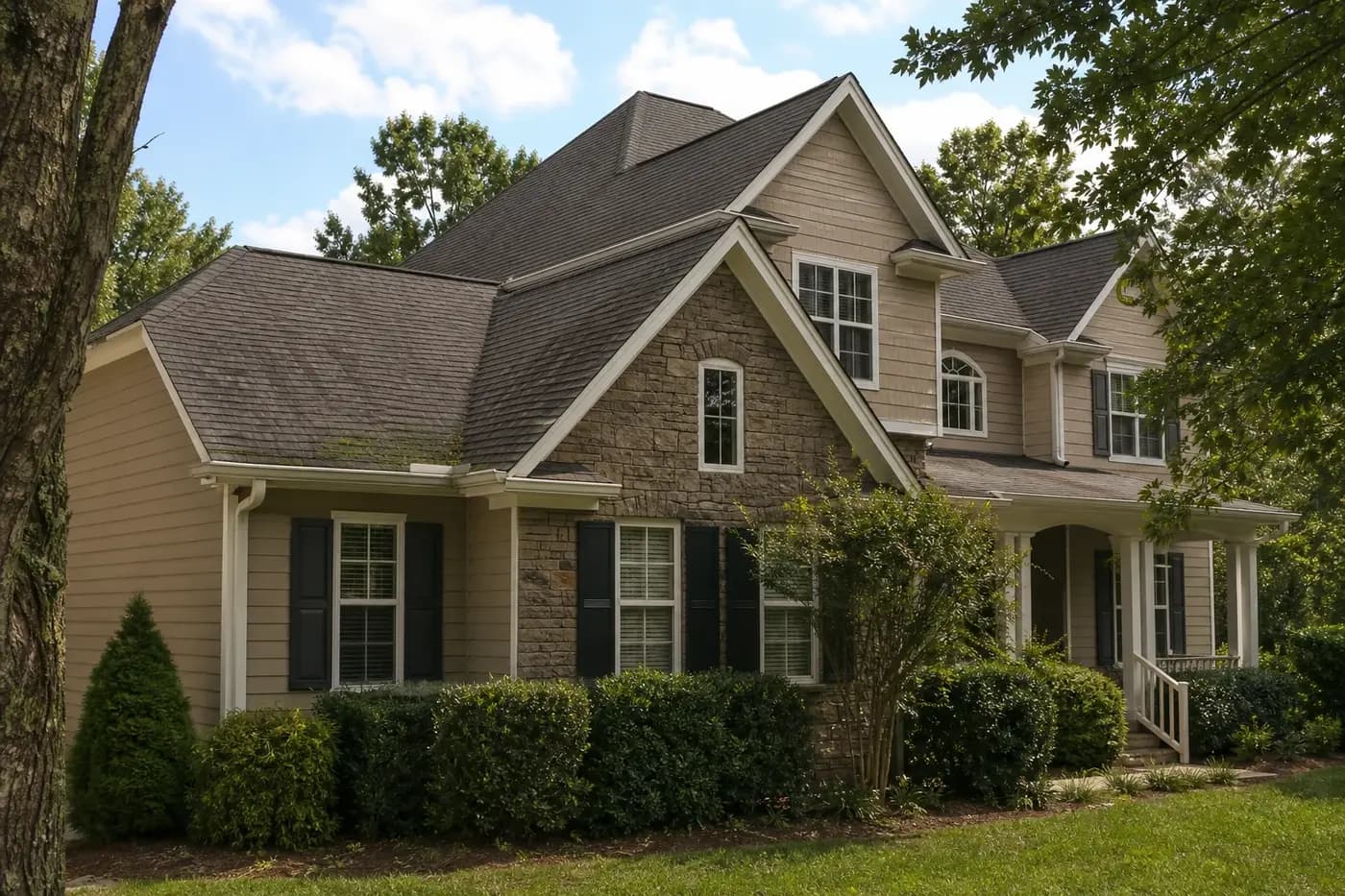
Why Does Moss Grow on Roofs Around Indian Trail?
Moss likes damp, shaded surfaces. Roof slopes under tree cover, north-facing sections, valley areas, and places where leaves collect are common spots. In Union County, a roof can get soaked by a thunderstorm and stay damp under shade for hours.
That moisture is the point. Moss does not just sit on the roof like dust. It can hold water against shingles, catch more debris, and slowly work into the small spaces between shingle tabs. Over time, that can make the edges lift or keep the roof surface from drying the way it should.
Not every green patch is an emergency. But it is not something to ignore for years either.
Why Pressure Washing Can Damage Shingles
Asphalt shingles are not concrete. The rough granules on the surface are part of the roof's protection. A pressure washer can knock those granules loose, leave bald-looking streaks, and age the roof surface in one afternoon.
There is another issue: water direction. Roofs are built to shed water downward. When a high-pressure stream is aimed upward, sideways, or too close to a shingle lap, it can push water under shingles, behind flashing, or into weak roof edges.
That is the frustrating part. A roof can look cleaner after pressure washing and still be worse off. Clean is not the same thing as healthy.
What Is Safer Than Pressure Washing?
A roof-safe cleaning plan usually uses low pressure, the right cleaning solution, careful rinsing, and patience. The exact method depends on shingle age, moss thickness, roof pitch, drainage, landscaping, and whether the shingles are already worn.
Sometimes the safest first step is not cleaning at all. If moss is growing on old, brittle, curled, or granule-starved shingles, cleaning may expose how worn the roof really is. That does not mean you need a replacement automatically. It means the roof condition should drive the decision.
If you hire a cleaner, ask how they protect asphalt shingles. If the answer is simply “we pressure wash everything,” be careful.
When Moss May Be Hiding Roof Damage
Moss can cover the very clues you need to see. Look from the ground for shingles that appear lifted, wavy, cracked, bald, dark, or uneven. Check gutters for heavy granule buildup. Inside, look for ceiling stains, musty attic smells, damp insulation, or darkened roof decking.
Pay close attention after wind-driven rain. Mossy roof areas near valleys, walls, chimneys, skylights, and pipe boots can make leak tracking more confusing because water may travel before it shows up inside.
If you see a stain, do not assume the moss patch directly above it is the source. Roof leaks are sneaky. Water can enter at one spot and appear several feet away.
Seeing moss, lifted shingles, or stains around your Indian Trail roof?
Schedule a Roof InspectionHow To Slow Moss Down After the Roof Is Checked
Start with drainage and drying. Trim overhanging branches where practical, keep leaves off the roof, clean gutters, and make sure downspouts move water away from the house. More sunlight and faster drying make a real difference.
Also watch the roof after storms. If one area stays damp much longer than the rest, it may be shaded, packed with debris, or draining poorly. Valleys and roof-to-wall transitions deserve extra attention because debris tends to settle there.
Some homes are just moss-prone because of tree cover and roof orientation. That is okay. The goal is not panic; it is routine attention before moss turns into trapped moisture, shingle damage, or a leak call.
What Should You Do Next?
First, take photos from the ground. Get the mossy slope, roof edges, gutters, nearby tree cover, and any interior stains. Do not climb onto a slippery roof to get a better angle.
Second, decide whether you are dealing with appearance, maintenance, or damage. Light moss on otherwise healthy shingles is different from moss on a roof that is already curling, losing granules, or leaking.
Third, get the roof inspected before cleaning if the moss is thick, spreading, near a leak area, or sitting on an older roof. A quick inspection can keep a cleaning project from turning into accidental shingle damage. Simple as that.
Frequently Asked Questions
Is it safe to pressure wash an asphalt shingle roof?
Usually no. High-pressure washing can strip granules, lift shingle edges, force water under laps, and shorten the life of asphalt shingles. A lower-pressure roof cleaning approach is safer when cleaning is appropriate.
Does moss mean my roof is already leaking?
Not always. Moss can grow on a roof before there is an active leak, especially in shaded, damp areas. The concern goes up if shingles are lifted, soft, missing granules, cracked, or if you see ceiling stains or damp decking in the attic.
Can I scrape moss off my roof myself?
Do not scrape aggressively or walk the roof just to remove moss. Scraping can damage shingles, and mossy roofs can be slippery. If you can see moss from the ground, document it with photos and have the roof checked before choosing a cleaning method.
Will trimming trees help with moss on an Indian Trail roof?
Often, yes. Trimming overhanging limbs, improving sunlight, clearing roof debris, and keeping gutters flowing can help the roof dry faster after rain. That does not fix damaged shingles, but it can reduce the damp conditions moss likes.
Does Kaliber Roofing inspect mossy roofs near Indian Trail?
Yes. Kaliber Roofing inspects moss growth, shingle wear, roof leaks, tree-shade drainage issues, roof repair needs, and replacement timing across Indian Trail, Union County, Stallings, Matthews, Monroe, Waxhaw, Weddington, Mint Hill, and nearby Charlotte-metro communities.
Need a mossy roof checked before cleaning?
Kaliber Roofing can inspect the shingles, roof edges, attic clues, and drainage conditions so you know whether to clean, repair, monitor, or plan replacement.