Yes, overhanging tree branches can damage a roof in Indian Trail when they rub shingles, drop debris into valleys and gutters, keep roof planes damp, or break loose during a Union County storm. The damage may start small: missing granules, lifted shingle edges, clogged gutters, or a soft leak near the eave. If branches are touching the roof or you see new debris after wind, get the roof checked before the next hard rain turns a maintenance issue into an active leak.
Indian Trail has plenty of homes with mature trees close to the roofline. That shade can be nice in July. The downside? Shingles need clean drainage and room to dry. A roof that is constantly brushed by limbs, covered in leaves, or shaded all day can age differently from a roof in open sun.
This is not about panicking every time a leaf lands on the house. It is about spotting the difference between normal tree cover and a branch that is quietly wearing down the roof system.
Kaliber Roofing checks tree-related roof issues during roof repair inspections, storm damage roof evaluations, and free roof inspection appointments across Indian Trail, Stallings, Matthews, Monroe, Waxhaw, Weddington, Mint Hill, and nearby Charlotte-metro communities.
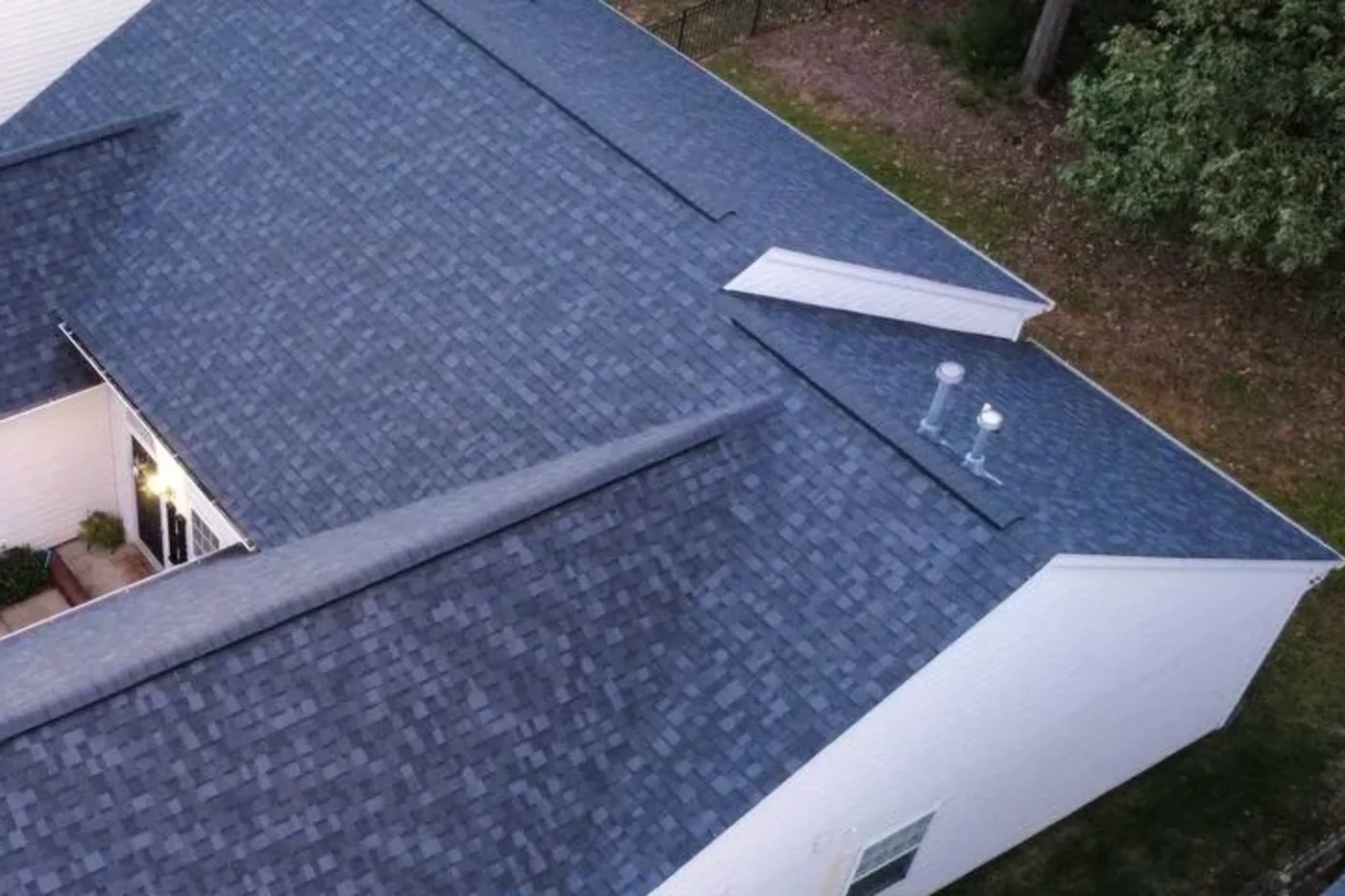
How Overhanging Branches Damage a Roof
The obvious damage is a limb falling and puncturing shingles or decking. But most branch problems are quieter than that. A low branch moves in the wind, rubs the same spot again and again, and slowly scrapes granules off the shingle surface.
Those granules are not decoration. They help protect asphalt shingles from sun and weather. Once they are worn thin, the shingle can dry out faster, shed water poorly, and become easier for wind to lift.
Branches also drop leaves, pine needles, seed pods, and small twigs. That debris piles up in valleys, behind chimneys, at low-slope roof areas, and along gutters. Water is supposed to move off the roof. Debris slows it down.
Warning Signs to Look For From the Ground
Start simple. Are branches touching the shingles, gutters, ridge, siding, or roof vents? Do they move into the roof when the wind picks up? If so, the roof is taking contact even if the branch looks light.
From the ground, phone zoom or binoculars may show dark debris piles, bare-looking shingle patches, leaves stuck in a valley, gutter overflow streaks, lifted tabs, or a roof edge that stays wet long after other areas dry. Inside the house, watch for ceiling stains near exterior walls, soffits, closets, or upper-story rooms below the tree-covered slope.
Do not climb the roof to brush debris away. Wet leaves on shingles are slippery, and a branch-damaged area may already be weaker than it looks.
Why Indian Trail Tree Cover and Storms Make This Worse
Indian Trail and nearby Union County areas get the usual North Carolina mix: humid summers, fast thunderstorms, heavy downpours, wind gusts, and long stretches where shaded roof planes dry slowly. A roof under trees can stay damp after the rest of the neighborhood looks dry.
Storms change the situation fast. A branch that barely grazed the roof last month can snap, twist, or scrape harder during wind-driven rain. Even if nothing punctures the roof, the movement can disturb shingles, vents, flashing, and gutter lines.
That is why timing matters. If you noticed branches on the roof, fresh debris, missing shingles, or a ceiling stain after a storm in Indian Trail, Stallings, Hemby Bridge, Monroe, or Matthews, take photos before cleanup and write down the date.
What a Roofer Should Check
A good roof inspection looks at the branch contact area first, then the roof slope around it. The inspector should check granule loss, bruised shingles, lifted tabs, cracked or creased shingles, exposed fasteners, gutter attachment, drip edge, fascia, soffit, valleys, and nearby penetrations.
The attic can help too. Damp decking, dark water trails, rusty nails, or wet insulation near the eave may show that the problem has moved past the roof surface. That is the difference between trimming a branch and repairing a leak.
If a large limb is still resting on the roof, the safest order may be tree removal first, then roofing inspection. Roofers can document the roof. Tree professionals handle the heavy limb work.
Do You Need Tree Trimming, Roof Repair, or Both?
If the branches are close but the shingles are clean, dry, and undamaged, trimming may be enough. Keep limbs from touching the roof and keep gutters clear so water can move where it should.
If the roof already has worn patches, lifted shingles, active leaks, gutter overflow, or debris packed into valleys, trimming alone will not fix the roof. The damaged area should be inspected and repaired before more water finds it.
If the roof is older, brittle, or showing problems on several slopes, Kaliber may also talk through roof replacement timing. Not because one branch means a new roof. Because branch damage sometimes reveals a roof that was already near the end of its service life.
Worried branches are rubbing your Indian Trail roof?
Schedule a Roof InspectionWhat To Do Next
Take photos from the ground before you move anything. Get the branch, the roof slope, the gutter line, any debris piles, and any ceiling stain inside the house. If storm timing matters, save the date.
Then decide what is urgent. A branch touching the roof should be trimmed safely. A limb sitting on the roof, a new leak, missing shingles, or water coming through the ceiling needs faster attention.
And if you are not sure? Get the roof looked at. A quick inspection is a lot cheaper than letting a small rub mark turn into wet decking, insulation damage, or a surprise ceiling stain after the next storm.
Frequently Asked Questions
Can tree branches rubbing on shingles cause a roof leak?
Yes. Branches can scrape granules off shingles, lift weak edges, rub at flashing, and drop debris that traps moisture. The leak may not start right away, but repeated contact can shorten shingle life and expose weak spots.
How far should branches be from my roof?
A common maintenance goal is to keep branches trimmed back so they do not touch the shingles, gutters, roof vents, or siding during normal wind. The exact clearance depends on the tree, roof slope, and safe trimming options, so large limbs should be handled by a qualified tree professional.
Should I trim the tree first or call a roofer first?
If a branch is actively rubbing, hanging over the roof, or touching the shingles, tree trimming may need to happen before a roof repair can last. If you already have missing granules, lifted shingles, gutter problems, or a leak, schedule a roof inspection too.
Can overhanging branches affect gutters?
Yes. Leaves, twigs, pine needles, and seed pods can clog gutters and valleys. Once water slows down or backs up near the roof edge, fascia, soffit, drip edge, and lower shingles can stay wet longer than they should.
Does Kaliber Roofing inspect roof damage from trees near Indian Trail?
Yes. Kaliber Roofing inspects roof damage related to overhanging branches, storm debris, clogged valleys, gutter overflow, lifted shingles, roof leaks, and fallen limbs in Indian Trail, Union County, Stallings, Matthews, Monroe, Waxhaw, Weddington, Mint Hill, and nearby Charlotte-metro communities.
Need help checking roof damage from overhanging branches?
Kaliber Roofing can inspect the contact area, gutters, valleys, roof edges, attic moisture path, and surrounding shingles so you know whether the next move is trimming, repair, documentation, or replacement planning.