The direct answer
Yes, the roof may be repairable, but an asphalt shingle with fiberglass mat visibly exposed should normally be replaced rather than coated or sprinkled with loose granules. A focused repair can make sense when the condition is limited to a few shingles and the surrounding shingles, seals, underlayment, deck, and fastening locations remain serviceable. The scope should expand when exposed mat or severe surface loss repeats across a roof plane, nearby shingles crack during controlled access, or the repair cannot end in sound compatible material.
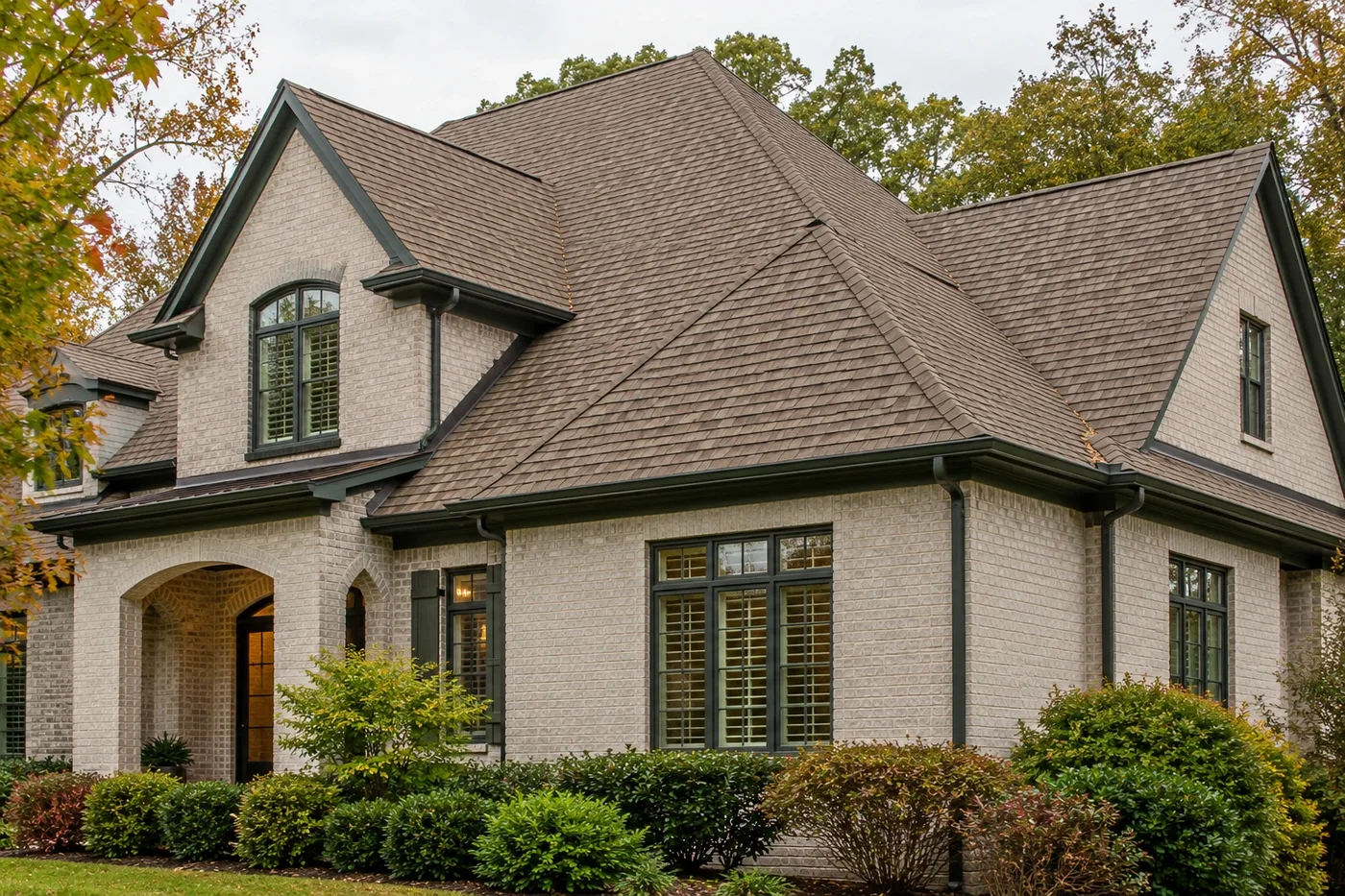
What exposed fiberglass means in an asphalt shingle
A modern fiberglass asphalt shingle has several working layers. The Asphalt Roofing Manufacturers Association describes fiberglass mat as the reinforcing backbone, asphalt as the water-shedding coating that holds the surface granules, and ceramic-coated mineral granules as protection against prolonged ultraviolet exposure. Seeing the light gray, white, or fibrous mat means more than ordinary loose grit in a gutter: surface material has been lost far enough to uncover part of the shingle body.
The visible spot still does not explain its cause by itself. Hail or windborne debris can fracture the surface. Foot traffic, pressure washing, a dragging branch, concentrated runoff, installation damage, a manufacturing issue, or long-term weathering can also produce exposed areas. The pattern matters. One damaged tab near a known impact calls for a different repair decision than repeated bald bands across several slopes.
GAF's storm-damage bulletin lists granule loss, cracks in the granule-asphalt surfacing, exposed fiberglass mat, and loosened self-seal integrity as possible forms of damage. It also states that adding loose granules to a damaged shingle with asphalt cement—sometimes called sugaring—is not a permanent repair. That guidance is useful even before the exact cause is settled: hiding the light spot does not rebuild the manufactured shingle.
First confirm that the mat is actually exposed
Not every lighter patch is fiberglass. A roof can show color variation from wet and dry areas, algae removal, transferred backing material, different granule blends, old repair shingles, or sunlight striking the roof at a different angle. A new roof can also shed loose excess granules after installation. GAF says this early shedding commonly decreases over several months and is not automatically a manufacturing defect.
A useful inspection records the exact roof plane, course, and shingle; includes wide and close photographs; and compares the spot with nearby undamaged material. It should note whether the surface is merely thinner, whether dark asphalt is visible, or whether light fibers can actually be seen. The same close look should check for a depression, crack, puncture, crease, tear, loose edge, broken seal, exposed fastener, or disturbed shingle above the spot.
The roof history adds context without proving a conclusion. Record when the condition was first noticed, recent storms or service work, roof age when supported by documents, and whether the pattern changed. If a manufacturer or insurance carrier may need notice, preserve product records and photographs before anyone applies cement, coating, replacement granules, or a broad cleaning treatment.
When a focused shingle repair may work
Asphalt-shingle roofs are assembled from overlapping components, so localized damage does not automatically require whole-roof replacement. ARMA explains that most components can be repaired independently and that sealed shingles can be carefully separated so damaged material can be replaced without opening a large roof area. The repair still has to restore the complete local assembly, not just cover the visible fibers.
For a confined exposed-mat condition, a roofer may open the necessary courses above and beside the damaged shingle, remove affected fasteners, replace the damaged shingle with compatible material, inspect the underlayment and deck, and restore every disturbed fastener and seal. GAF specifically notes that surrounding shingles opened during individual replacement need removed nails replaced and the shingles hand-sealed. Product instructions for the identified shingles and current conditions control the details.
A focused repair is more defensible when adjacent shingles remain flexible enough to open without cracking, the deck holds fasteners, lower layers are dry or locally repairable, and the new work can end in sound material. Appearance is a separate issue: even compatible replacement shingles may not match weathered roofing exactly. Agree on the likely color difference before work begins instead of confusing a visible repair with a failed repair.
When exposed mat points to a wider roofing scope
The repair boundary should grow when the physical condition grows. Repeated exposed areas across the same slope, widespread granule-asphalt loss, cracking, curling, torn mats, loose tabs, or several unrelated leak paths suggest that replacing isolated shingles may leave the same failure immediately beside the patch. A few damaged shingles can be repaired; a roof plane that no longer provides a dependable tie-in is a different project.
Access can reveal the limit. If neighboring shingles fracture as they are carefully separated, fasteners no longer hold in the deck, underlayment is damaged beyond the visible spot, or compatible replacement material cannot integrate with the existing courses, the written scope should change before the area is covered. Age alone is not the verdict, but age-related brittleness and widespread surface loss can make a small repair impractical.
Do not use one photograph of exposed fiberglass to make an insurance, warranty, or full-replacement decision. Manufacturer warranty coverage depends on the product, cause, records, terms, and claim process. Insurance coverage depends on the policy and carrier's evaluation. Kaliber can document observed roof conditions and define a repair boundary, but it does not decide manufacturer responsibility or insurance coverage.
What Indian Trail homeowners should do next
Start from the ground. Photograph the whole affected slope, then use optical zoom for the suspected area. Check safely accessible gutters and downspout outlets for an unusual amount of granules, but remember that loose granules do not identify which shingle lost them. Avoid climbing, brushing the spot, pressure washing, lifting tabs, or applying roof cement before the condition is documented.
Ask the inspection to answer four concrete questions: Is fiberglass truly exposed? How many shingles and roof planes are affected? What caused or contributed to the pattern? Can the repair end in sound shingles, underlayment, decking, and fastening locations? The proposal should identify the roof area, replacement material, access courses, concealed-condition process, appearance limits, documentation, and warranty.
Kaliber Roofing serves Indian Trail first and nearby Union County communities with photo-documented, repair-first roof inspections. Same-day or next-day availability is subject to scheduling. Kaliber provides a one-year workmanship warranty for the repair work it performs, separate from manufacturer material coverage and unchanged portions of the roof.
Related Indian Trail roofing guidance
Common questions
Can loose roof granules be glued back onto a shingle?
Not as a permanent restoration of the manufactured surface. GAF states that adding loose granules to damaged shingles with asphalt cement is not a permanent repair. The inspection should determine whether the shingle remains serviceable or should be replaced.
Does seeing fiberglass mean the roof is already leaking?
Not necessarily. Exposed mat shows that part of the shingle has lost protective surface material, but a photograph cannot establish whether water has crossed the roof assembly. Check the damaged shingle, its laps and fasteners, lower layers, nearby details, and any interior moisture evidence.
Do a few exposed-fiberglass shingles require a whole new roof?
No. Individual shingles can often be replaced when damage is confined and nearby shingles can be opened, refastened, and resealed without breaking. Widespread surface loss, brittle surrounding roofing, repeated defects, or no reliable repair boundary can justify a larger scope.
Is granule shedding on a new roof the same as exposed fiberglass?
No. New shingles may shed loose excess granules without exposing the manufactured shingle body. GAF describes that early shedding as commonly self-correcting. Visible bald areas, ongoing color change, exposed asphalt or mat, cracks, or other damage need a closer product-specific evaluation.
Should I climb onto the roof to check for fiberglass?
No. Use safe ground-level overview and zoomed photographs, and leave direct roof access to a trained professional. Walking a sloped roof creates a fall hazard and can damage adjacent shingles or disturb evidence needed to define the repair.
Sources and editorial notes
- Asphalt Roofing Manufacturers Association guide to fiberglass mat, asphalt coating, and mineral granules
- ARMA guidance on localized asphalt-shingle repair and safe professional roof access
- GAF technical bulletin on exposed fiberglass, granule loss, individual replacement, and resealing
- GAF technical bulletin on normal excess-granule shedding from new shingles
Prepared from current manufacturer and trade-association guidance plus Kaliber's verified service and repair-warranty information. Written with AI assistance and editorially reviewed by Sage. No human approval is claimed. General homeowner guidance; not an on-site diagnosis, structural conclusion, code ruling, manufacturer warranty decision, insurance determination, or project-specific repair recommendation.