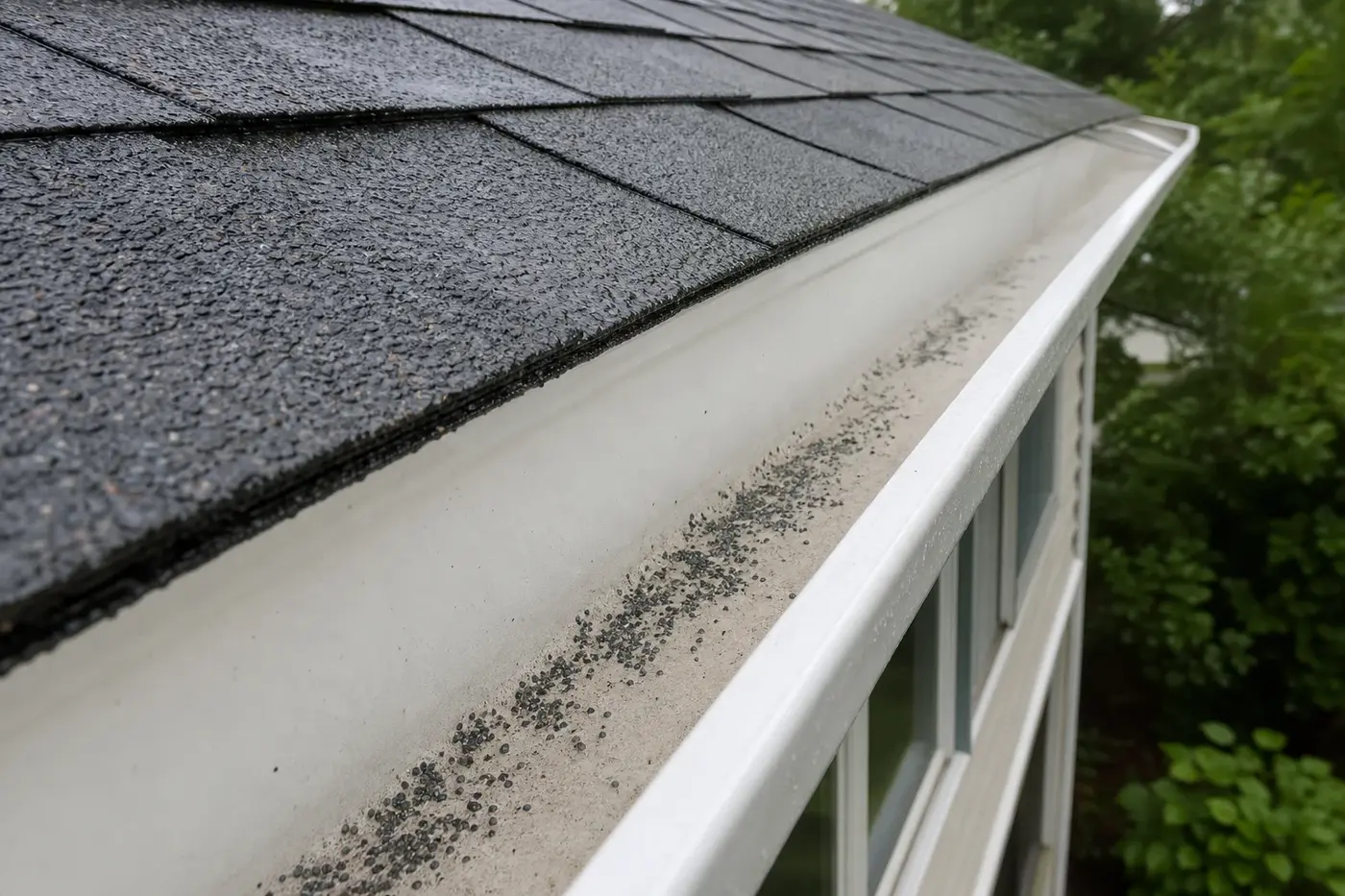
Roof granules collecting in your gutters in Indian Trail can be normal light shedding, but heavy piles, sudden loss after a storm, bare-looking shingles, or granules washing out of downspouts can mean the shingles are aging or storm-damaged. The safest move is to take photos, avoid climbing on the roof, and have the shingles inspected if the granules appeared after wind, hail, hard rain, or a new leak.
A few granules in the gutter do not automatically mean your roof is failing. Asphalt shingles shed some material over time. New roofs can release loose manufacturing granules. Older roofs can shed more after a hot summer, a hard downpour, or a week of Union County storms.
Still, there is a difference between a little grit and a gutter that looks like somebody poured black sand into it. That difference matters. Granules protect the shingle surface, and once they are gone in patches, the roof has less defense against sun, rain, and wind.
Kaliber Roofing checks granule loss during roof repair inspections, storm damage evaluations, roof replacement planning, and free inspection appointments across Indian Trail, Stallings, Matthews, Monroe, Waxhaw, Weddington, Mint Hill, and nearby Charlotte-metro communities.
What Do Roof Granules Actually Do?
Granules are the rough, sand-like surface on asphalt shingles. They help shield the asphalt from sunlight, add weather resistance, and give the roof its color and texture. When you look at a healthy architectural shingle roof, you are mostly seeing that granular surface.
Once granules wear away in a spot, the asphalt underneath is more exposed. That does not always mean water is coming through today. But it does mean that part of the shingle is aging faster and may be more likely to crack, curl, blister, or lose strength during the next storm cycle.
Think of granules like tread on a tire. A little wear is expected. Bald patches are different.
How Do I Know if Granule Loss Is Normal or a Problem?
Start with the amount. A light sprinkle in the gutter after a hard rain is common. A thick line of granules, repeated piles at downspout exits, or new deposits every time it rains deserve a closer look.
Next, think about timing. Did you just have the roof replaced? Some loose granules can wash off early. Did Indian Trail get wind, hail, or a heavy thunderstorm last week? Fresh granules after that kind of weather are more suspicious, especially if neighbors also had roof or gutter damage.
Then look from the ground. Shingles that appear shiny, dark, bald, uneven, bruised, cracked, curled, or washed-out may be losing more than loose surface grit. Do not walk the roof to confirm it. Phone zoom from the yard is enough for a first pass.
Can Indian Trail Storms Knock Granules Loose?
Yes. Wind-driven rain can wash already-loose granules into gutters. Hail can bruise shingles and knock granules away at impact points. Falling branches, tree debris, and gutter overflow can add to the mess.
The tricky part is that granules in the gutter do not prove a storm claim by themselves. A roof can shed granules because it is old, because the shingles are blistering, because gutters were packed with debris, or because hail hit the roof. A good inspection looks for the pattern, not just the pile.
Useful evidence includes photos of the gutter granules, downspout washout, any dents on gutters or vents, missing shingles, lifted tabs, fresh ceiling stains, and the date of the storm. Keep it simple. Clear photos beat guesses.
What a Roofer Should Check
A roof inspection should not stop at “there are granules in the gutter.” Kaliber checks the roof slopes above the heaviest deposits, the shingle surface, roof edges, valleys, ridge caps, pipe boots, flashing, gutters, downspouts, and attic leak clues when needed.
The inspector should separate a few possibilities: normal shingle shedding, age-related wear, storm bruising, heat-related shingle stress, gutter blockage, and roof areas that are wearing faster than the rest of the home.
That is also where photos help. If the shingles are still in good shape, you can stop worrying and keep an eye on it. If the roof is losing surface protection in patches, you can make a repair or replacement plan before a leak surprises you.
Does Granule Loss Mean Repair or Replacement?
Sometimes neither right away. If the roof is newer, the granule amount is light, and the shingles look healthy, routine maintenance and monitoring may be enough.
A targeted repair may make sense when granule loss is tied to a specific issue: a damaged valley, a rubbed area near tree cover, lifted shingles after wind, a roof-edge problem, or a few storm-damaged shingles. Small, isolated problems should not be turned into a full replacement conversation unless the roof condition supports it.
Replacement comes into the conversation when granule loss is widespread, shingles are brittle, bald patches show across multiple slopes, leaks keep returning, or the roof is already near the end of its useful life. That is not scare talk. It is just how asphalt shingles age.
Seeing heavy roof granules in your Indian Trail gutters?
Schedule a Roof InspectionWhat Should You Do Next?
First, take photos before you clean. Get the granules in the gutter, the downspout exit, the roof slope above it, and any ceiling stains or water marks inside. If there was a storm, save the date.
Second, clean drainage safely. Gutters packed with granules, leaves, and grit can overflow and create a separate roof-edge problem. If you cannot clean them safely, hire someone who can.
Third, get an inspection if the amount is sudden, heavy, or paired with other clues. A contractor should be able to tell you whether this looks like normal wear, storm evidence, a repair item, or the start of a bigger roof conversation. No drama. Just a clear answer.
Frequently Asked Questions
Are roof granules in gutters always bad?
No. A small amount of granules can be normal, especially on a newer asphalt shingle roof or after heavy rain. The concern is sudden heavy granule loss, bare-looking shingles, piles in the downspouts, or granules showing up along with wind, hail, lifted shingles, or a leak.
Can hail make roof granules come loose?
Yes. Hail can bruise shingles and knock granules loose at impact points. Granules in the gutters alone do not prove hail damage, but fresh granule piles after a storm are a reason to document the roof and schedule an inspection.
Can granule loss cause a roof leak?
Granule loss usually does not create an immediate hole by itself, but it can expose asphalt, speed up shingle aging, and make shingles more vulnerable to cracking, curling, and wind damage. Leaks are more likely when granule loss happens with damaged shingles, flashing problems, or worn roof edges.
Should I clean granules out of my gutters myself?
Only if you can do it safely from the ground or with normal gutter-cleaning precautions. Do not climb onto the roof to inspect shingles. If you are seeing a lot of granules, take photos first so the pattern is documented before cleanup.
Does Kaliber Roofing inspect granule loss near Indian Trail?
Yes. Kaliber Roofing inspects asphalt shingle granule loss, storm damage, gutter evidence, roof aging, roof leaks, and repair-versus-replacement timing across Indian Trail, Union County, Stallings, Matthews, Monroe, Waxhaw, Weddington, Mint Hill, and nearby Charlotte-metro communities.
Need a straight answer on granule loss?
Kaliber Roofing can inspect the gutter evidence, roof surface, storm clues, roof age, and leak risk so you know whether to monitor, repair, document, or plan replacement.