Sometimes. If high-pressure washing affected a small, defined part of an otherwise serviceable asphalt-shingle roof, damaged shingles and disturbed nearby layers may be repairable. The scope can become larger when the spray stripped granules across a broad area, lifted or tore many shingles, drove water beneath the courses, damaged flashing, or exposed brittle roofing that cannot be opened and tied back together reliably. The right next step is to document where and how the washing occurred, let the assembly dry as appropriate, and inspect the affected slopes before cleaning, coating, or sealing over the evidence.
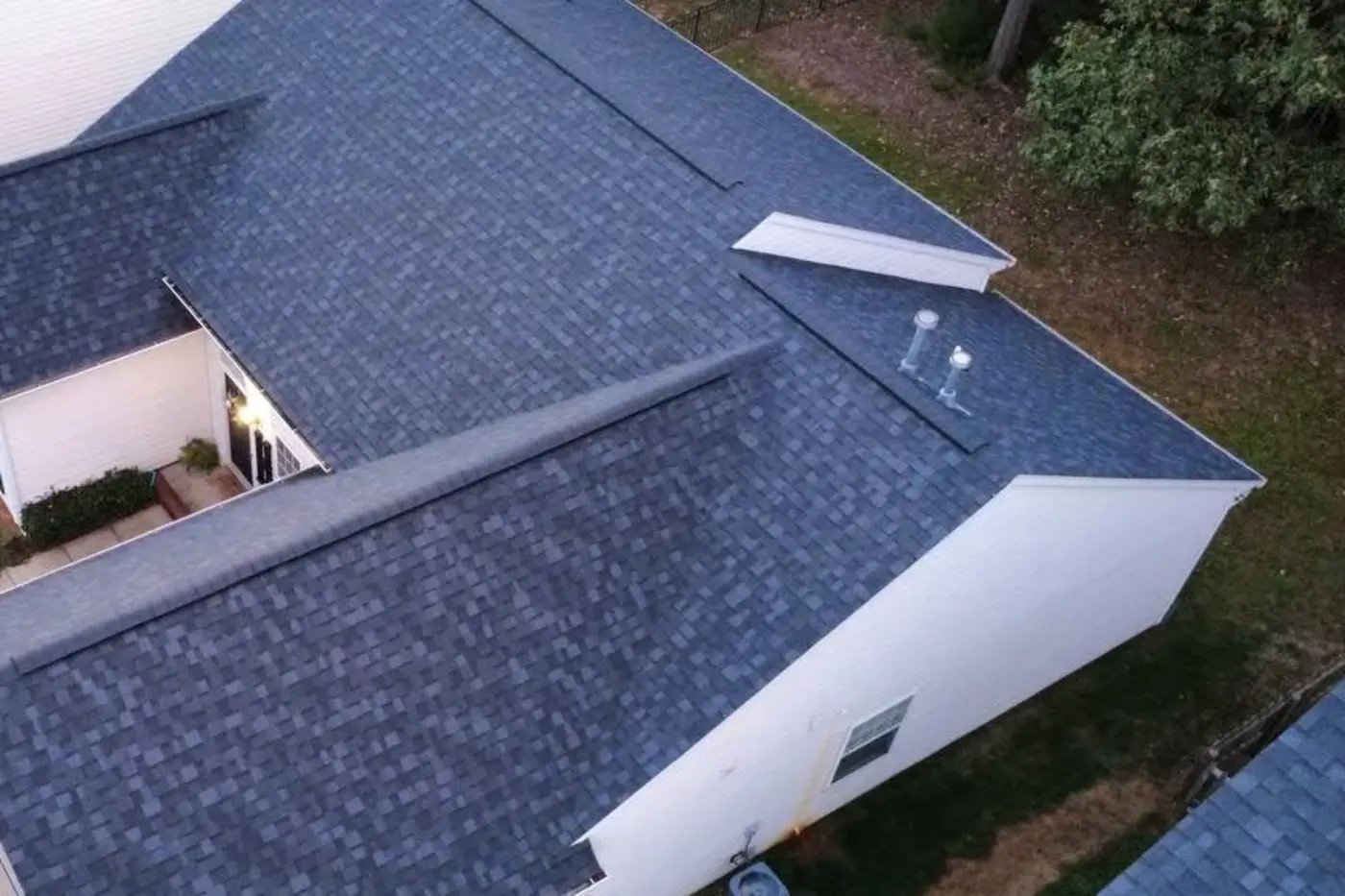
What high-pressure water can do to asphalt shingles
Mineral granules protect the asphalt surface from ultraviolet exposure and weathering. A concentrated spray can dislodge those granules, especially when the nozzle is held close or aimed repeatedly at one strip. Freshly washed runoff may carry granules into the gutters or leave lighter, darker, or smooth-looking tracks on the roof.
Spray direction matters too. Asphalt shingles are designed to shed water down overlapping courses. Water driven upward at an edge can break a seal, lift a tab, reach fastener locations, or move beneath the shingle laps. A nozzle can also disturb ridge caps, flashing edges, pipe-boot details, vents, and sealant that were not meant to resist water arriving under pressure from below.
The Asphalt Roofing Manufacturers Association says pressure washers should not be used on asphalt shingle roofs because they cause granule loss and are likely to damage the roofing system. GAF and Owens Corning give similar guidance: roof cleaning should use product-appropriate methods and low-pressure rinsing rather than high-pressure equipment.
How to tell cosmetic streaking from repairable physical damage
A color change alone does not establish that the shingle mat failed. Cleaning can remove algae unevenly, leave wet and dry bands, or reveal older weathering that was hidden by staining. An inspection should separate appearance from physical change by checking granule coverage, exposed asphalt or fiberglass, lifted edges, creases, tears, broken seals, displaced caps, and disturbed flashing.
The affected pattern helps define the repair question. A short spray pass that damaged several shingles on one accessible roof plane is different from a crew washing every slope. Wide photographs should map each washed area; close photographs should show the surface texture and any open edge. Gutters and downspout outlets may provide supporting evidence when they contain an unusual amount of fresh granules, but granules there do not identify the source by themselves.
Interior evidence deserves a separate check. Water forced beneath a shingle may wet underlayment or decking without creating an immediate ceiling stain. When attic access is safe, the inspection can compare the washed roof locations with new dampness, darkened decking, wet insulation, or water tracks. A dry interior does not prove the surface was unharmed, and a stain does not prove pressure washing was the only possible source.
When a focused shingle repair may be enough
A localized repair may be practical when the damage can be mapped to a limited number of shingles, the surrounding material remains flexible enough to open without cracking, and the underlayment, decking, flashing, and fastener locations are sound or locally repairable. Physically damaged shingles are normally replaced rather than painted, coated, or covered with exposed roof cement.
The roofer may need to release the sealed courses above the damage, remove the affected shingles and their fasteners, inspect the layers below, install compatible replacements, relocate removed fasteners as required, and hand-seal every disturbed shingle according to the product instructions. GAF’s repair guidance explains that surrounding shingles opened during replacement need their fasteners and seals restored; simply making the visible surface dark again is not the repair.
A written scope should identify the exact slope and repair boundary, how hidden moisture or damaged decking will be handled, the expected replacement-shingle match, and what finding would expand the work. Kaliber Roofing provides a one-year workmanship warranty for the roof-repair work it performs, separate from any manufacturer material warranty or conditions outside the defined repair.
When pressure-washer damage can require a wider scope
A spot repair becomes less dependable when granule loss or lifted edges repeat across much of a roof plane, many shingle seals were broken, water entered at several transitions, or the existing shingles crack during controlled access. Widespread damage may leave no sound nearby material for a durable tie-in even if only a few areas are leaking today.
Age is context, not an automatic verdict. An older roof with brittle shingles may be difficult to repair after washing, while a newer roof with confined damage may accept a focused repair. The recommendation should connect the scope to mapped conditions—surface loss, broken bonds, damaged mats, wet lower layers, or failed details—rather than using the pressure-washing incident as a shortcut to full replacement.
Before authorizing broad work, ask for overview and detail photos, the number or area of affected shingles, the condition of adjacent courses, and the reason a smaller repair cannot end in sound material. If a cleaning company or insurer may need notice, preserve the service agreement, date, photos, videos, invoices, and written communications. Kaliber can document roof conditions, but the responsible company or insurance carrier decides liability and coverage.
What Indian Trail homeowners should do after the roof was pressure washed
Stop additional washing and do not climb onto the roof to rub the surface or lift tabs. From dry ground, photograph every roof plane, the visible spray tracks, gutters, downspout exits, and any granules on the ground. Record the wash date, equipment or company if known, nozzle direction, when any leak appeared, and whether rain followed before the roof could dry.
Protect the interior if water is entering, but avoid smearing sealant over the exterior before it is documented. If water is near wiring, ceiling fixtures, or a sagging ceiling, keep people away and involve the appropriate qualified professional. A roofer should inspect the washed areas plus nearby valleys, walls, roof edges, ridges, and penetrations because pressurized water does not always stop at the visible streak.
For Indian Trail homeowners, Kaliber offers repair-first, photo-documented inspections with same- or next-day availability subject to scheduling. Start with the affected roof slopes and the smallest responsible repair boundary instead of assuming the roof is fine because it dried—or assuming the entire roof must be replaced because a pressure washer touched it.
Related guidance
Common questions
Does pressure washing always ruin an asphalt-shingle roof?
No, but it creates a real risk of granule loss, lifted edges, broken seals, and water forced beneath the shingles. The result depends on pressure, nozzle distance and direction, time spent on each area, shingle condition, and which roof details were sprayed. Inspect the roof rather than assuming either no damage or total failure.
Can missing granules from pressure washing be put back?
No. Loose granules cannot be reliably reattached in the field to restore a shingle to its manufactured condition. The inspection should determine whether the surface change is limited and serviceable or whether damaged shingles need replacement.
Should I coat or paint shingles after pressure-washer damage?
Not as a substitute for diagnosis and repair. A coating can hide the pattern without restoring lost granules, a torn mat, broken seals, disturbed fasteners, or wet lower layers. Product compatibility and manufacturer requirements also matter.
How soon should the roof be inspected after pressure washing?
Document it promptly, especially if there are visible tracks, granules in runoff, lifted shingles, attic moisture, or an interior leak. The roof may need time to dry before permanent work, but the original condition and timeline are easier to establish before more weather or cleaning changes the evidence.
Does pressure-washer damage mean the whole roof must be replaced?
Not automatically. A focused repair may work when damage is limited and surrounding shingles and lower layers remain serviceable. Broad granule loss, widespread broken seals, wet decking, or brittle roofing with no reliable tie-in can justify a larger scope.
Sources and editorial notes
- Asphalt Roofing Manufacturers Association guidance against pressure washing asphalt shingles
- GAF guidance on high-pressure washing risks and low-pressure roof cleaning
- GAF guidance on replacing damaged shingles and restoring disturbed fasteners and seals
- Owens Corning guidance that high-pressure washing can remove granules and loosen shingles
Prepared with AI assistance and editorially reviewed by Sage. General homeowner guidance; not an on-site diagnosis, manufacturer warranty decision, insurance or liability determination, structural conclusion, code interpretation, or substitute for evaluation by the appropriate qualified professional.