The direct answer
Sometimes. Paint mist on an otherwise serviceable asphalt-shingle roof may begin as an appearance problem, but the right response is not to scrub, dissolve, pressure-wash, or repaint it blindly. First document the affected roof area, identify the paint and shingle products when possible, and ask the shingle manufacturer whether a proposed cleaning method is compatible. A focused shingle repair may be the safer result when the coating cannot be removed without harming granules, asphalt, seals, or the shingle mat. A wider scope is justified only when overspray or attempted cleanup affects a wider area and no dependable repair boundary remains.
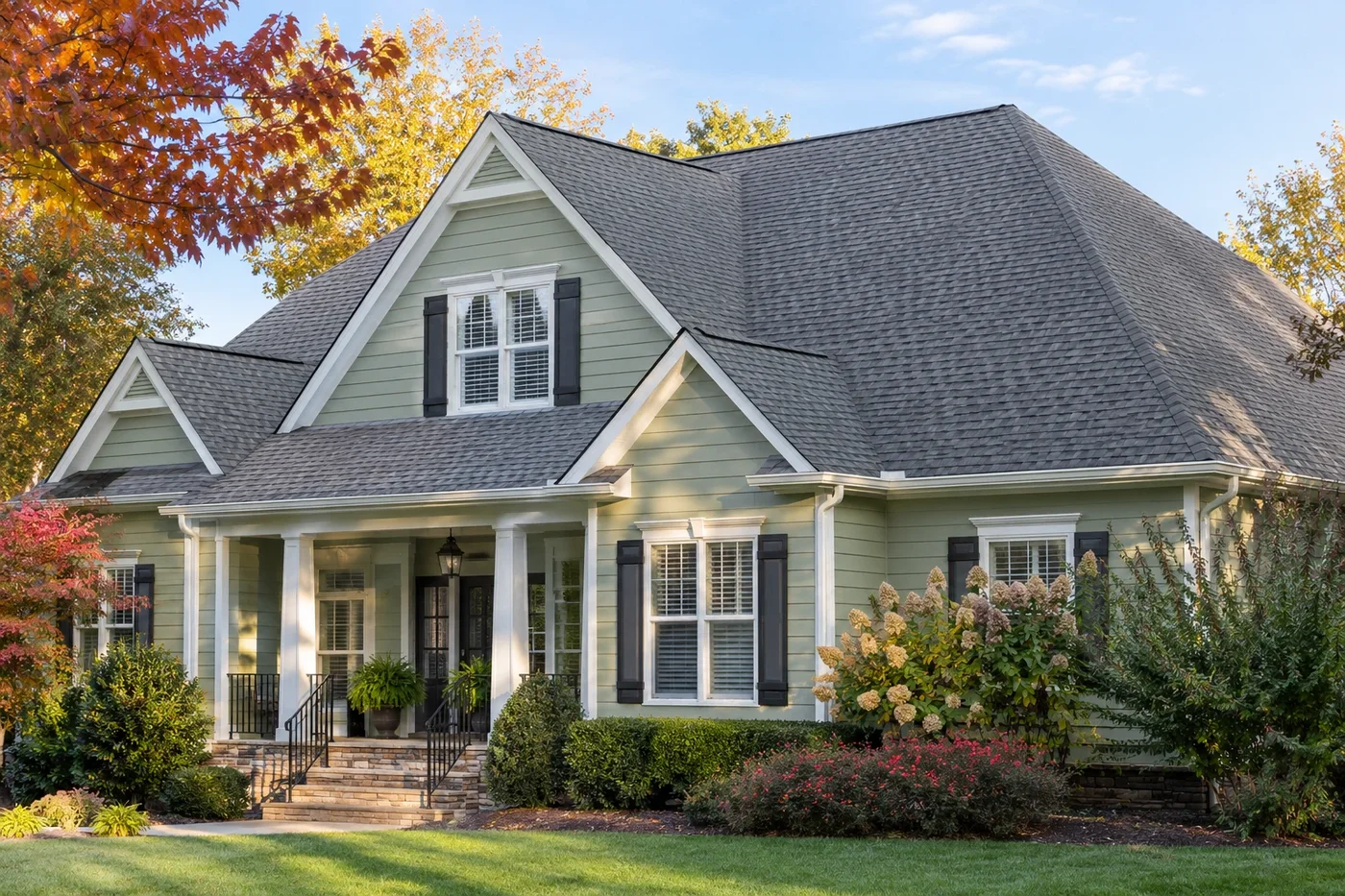
Document the overspray before anyone tries to hide it
Start with wide photographs of every roof plane near the painting work, then take closer zoomed views from a safe ground location. Include the wall, trim, chimney, vent, or other surface that was being sprayed so the pattern has context. Record the date, weather, wind direction, painting company, equipment, paint manufacturer, product name, color, and whether it was water-based, solvent-based, primer, stain, or another coating.
Do not let the first proposed remedy erase the original evidence. Wet wiping, brushing, pressure washing, solvents, roof cleaners, and color-matched paint can all change the surface. Ask for the exact proposed product, dilution, application method, rinse method, test area, and written reason it is compatible with the installed shingle.
Roof records help. The original proposal, warranty registration, saved bundle wrapper, spare shingles, and installation photos may identify the manufacturer and product line. If those are missing, a roofer or distributor may help identify the shingle before the manufacturer is asked about cleaning or replacement options.
Separate visible paint from physical roof damage
A light color change does not by itself prove that the shingle has lost its water-shedding function. The inspection should still determine whether paint bridged shingle edges, collected along seal strips, coated ridge or ventilation openings, reached flashing or gutters, or concealed existing cracks, bare asphalt, exposed fiberglass, lifted tabs, or displaced granules.
The coating and the cleanup attempt are two separate conditions. A fine dry mist may sit mainly on surface granules. A concentrated spray, incompatible solvent, stiff brushing, foot traffic, or high-pressure rinse can create a different problem by softening or abrading the surface, removing granules, breaking shingle seals, creasing tabs, or forcing water beneath the courses.
Map the complete affected area rather than counting only the brightest spots. Overspray can fade from obvious droplets to a light haze across the same slope. Photos taken at consistent angles and light can help define the boundary, but a project-specific conclusion still requires direct inspection and product information.
Why paint removal needs a product-specific plan
Asphalt shingles combine a fiberglass mat, asphalt coating, mineral stabilizers, surface granules, and factory-applied sealant. A cleaner that is suitable for painted siding, glass, or metal is not automatically suitable for that roof assembly. ARMA advises consulting the shingle manufacturer before applying coatings, rejuvenators, or cleaning materials that may be incompatible or harm performance.
Pressure washing is not the fallback. ARMA states that pressure washers should not be used on asphalt-shingle roofs because they cause granule loss and are very likely to shorten roof-system life. The fact that pressure can remove paint does not make it an acceptable roof treatment.
A controlled test should happen only after the installed shingle and paint are identified and the proposed method has written support from the appropriate product source. The test area should be documented before and after, allowed to dry, and checked for granule loss, color change, softened asphalt, lifted edges, damaged seals, residue, and runoff effects. A blog cannot select a safe chemical for an unidentified roof-and-paint combination.
When a focused shingle repair may be the better answer
Replacement may be more responsible than aggressive cleaning when a limited number of shingles carry concentrated paint, the manufacturer does not approve the proposed remover, or a test shows surface damage. Asphalt-shingle systems are designed so individual components can often be repaired without disturbing an entire roof plane.
The repair is more than sliding a new piece under the visible spot. IKO's shingle-replacement guidance shows that the installer may need to release seals and remove fasteners from overlapping courses to remove the complete target shingle. Compatible replacements are then fastened correctly, and every disturbed surrounding shingle is resealed according to the installed product requirements.
A useful scope identifies the affected slope and shingle count, replacement product, likely appearance difference, access courses, treatment of abandoned fastener holes, inspection of underlayment and decking, and the finding that would expand the work. Kaliber provides a one-year workmanship warranty for repair work it performs, separate from manufacturer material coverage and conditions outside the defined repair.
When the repair boundary may need to expand
A wider project can become reasonable when overspray covers much of one or more slopes, cleanup has stripped granules broadly, many shingle seals were broken, roof details or ventilation openings were coated, or surrounding shingles crack during controlled access. The question is whether the work can end in sound, compatible material—not whether every visible speck can be made the same color.
Roof age is context, not an automatic replacement decision. A newer roof with limited overspray may support a focused repair. An older, brittle roof may be harder to open without enlarging the damage. Ask the contractor to show the mapped condition and explain why each additional course or slope is necessary.
Liability and insurance are separate from roof scope. Inspection photos can document conditions, but they do not determine which party is legally responsible or whether a policy covers the loss. Preserve contracts, invoices, product records, correspondence, and proposed remedies before authorizing work.
What Indian Trail homeowners should do next
- Stop unapproved cleaning, repainting, or pressure washing.
- Photograph the complete roof planes and close visible spots from safe ground locations.
- Collect the paint label, product data sheet, painting scope, roof records, and shingle identification.
- Request a roof inspection that maps overspray separately from any cleanup damage.
- Get the proposed cleaning or repair method in writing and confirm product compatibility.
- Keep before, during, and after photos with the final invoice and warranty documents.
Kaliber Roofing offers repair-first, photo-documented roof repair inspections in Indian Trail and nearby Union County communities. Same-day or next-day inspection availability is subject to scheduling. The goal is to define the smallest responsible correction without turning an appearance complaint into unnecessary roof replacement—or letting an aggressive cleanup create avoidable damage.
Related roof-repair guidance
Common questions
Can I remove roof paint overspray with a pressure washer?
Do not pressure-wash an asphalt-shingle roof. The Asphalt Roofing Manufacturers Association warns that pressure washing can remove granules and likely cause premature roof-system failure. A paint-removal plan should be approved for the identified shingle and paint products before work begins.
Should painters cover overspray with shingle-colored paint?
Color-matching paint may hide the spots without establishing that the added coating is compatible or that the original shingle surface is undamaged. Document the condition and ask the shingle manufacturer about the proposed treatment before applying another product.
Does paint overspray mean the whole roof must be replaced?
No. The responsible scope depends on the affected area, paint or coating type, shingle condition, manufacturer guidance, and whether attempted removal damaged granules, seals, shingle mats, flashing, or lower layers. A limited group of affected shingles may support a focused repair.
Can individual paint-covered shingles be replaced?
Often, when the affected shingles can be opened and removed without breaking the surrounding roofing and compatible replacements can be tied into sound underlayment, decking, fasteners, and seals. The repair may involve courses above the visible spots because shingle fasteners are concealed by overlap.
What records should I keep after an overspray incident?
Keep dated wide and close photos, the painting scope and invoice, paint product name and data sheet when available, roof product records, all proposed cleaning methods, written manufacturer guidance, inspection photos, and any approved repair scope.
Sources and editorial notes
- Asphalt Roofing Manufacturers Association guidance on repairability, shingle matching, temporary fixes, and manufacturer review of coatings or cleaning materials
- Asphalt Roofing Manufacturers Association warning against pressure washing asphalt shingles
- IKO guidance showing how individual asphalt shingles and disturbed surrounding seals are removed, replaced, and restored
Prepared from current roofing-association and manufacturer guidance plus Kaliber's verified service and repair-warranty information. Written with AI assistance and editorially reviewed by Sage. No human approval is claimed. General homeowner guidance; not an on-site diagnosis, paint- or shingle-manufacturer compatibility decision, warranty decision, insurance or liability determination, or project-specific repair recommendation.