Start with records, not a color guess. Check the original proposal, invoice, warranty registration, installation photos, saved bundle wrappers, and spare shingles for the manufacturer, product line, color, and installation date. If those are missing, a roofer can document the shingle’s construction, dimensions, exposure, profile, sealant and fastening layout, then compare a safely obtained sample with current manufacturer or distributor information. The goal is physical compatibility first and the closest reasonable appearance second.
Build an evidence hierarchy before taking a sample
A labeled bundle wrapper or project record is stronger evidence than memory or a street-level color comparison. Search the roof proposal, paid invoice, warranty certificate, manufacturer registration email, permit or closing file, and dated installation photos. A leftover bundle may identify the exact manufacturer, line, color, plant, or production information.
Photograph every label before moving old material. Record which roof the bundle belongs to and how it was stored. A wrapper in the garage is useful only if it can be connected to the installed roof; a prior owner may have saved material from a shed, addition, or earlier roof.
Identify the shingle type and geometry
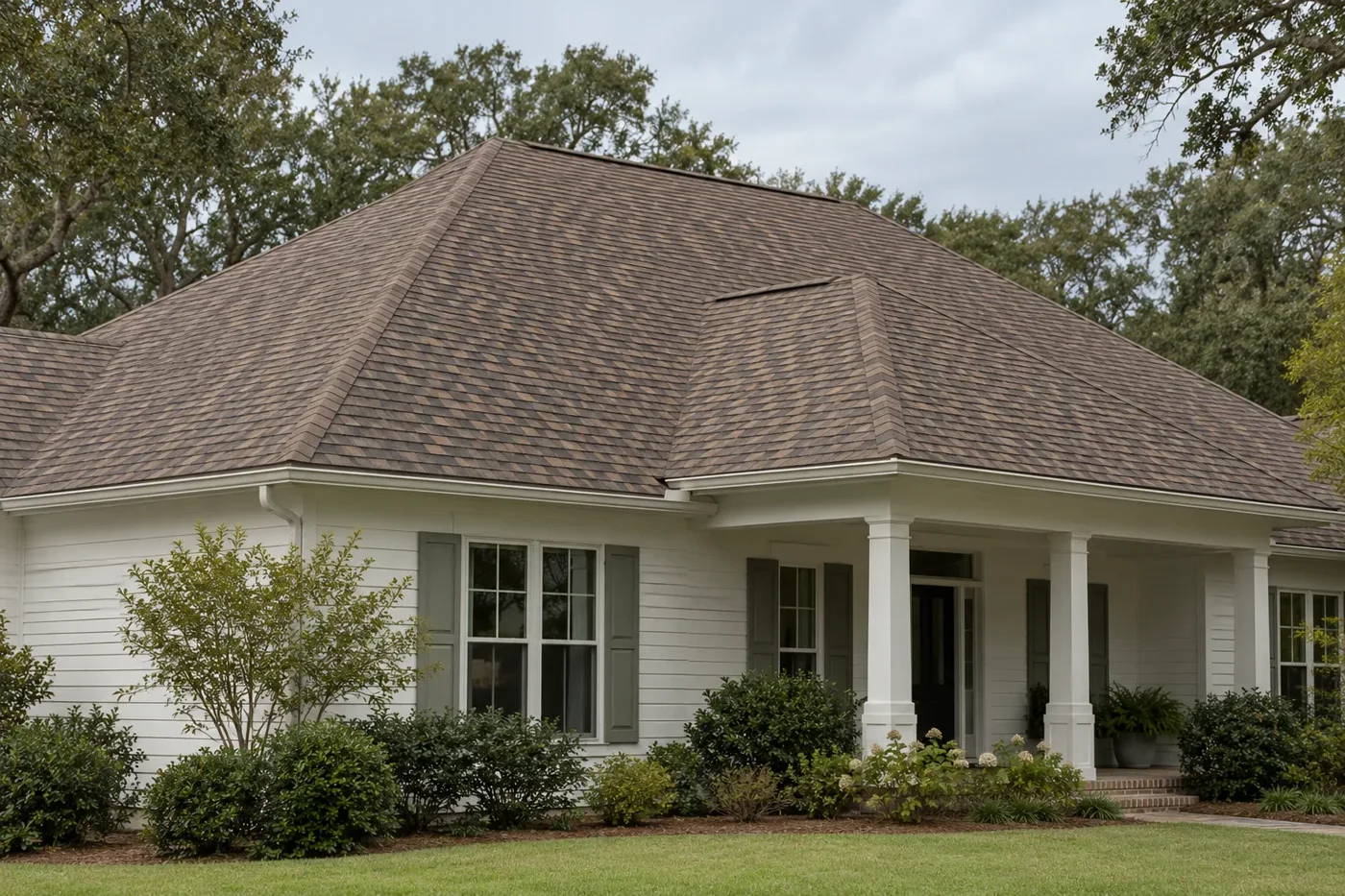
When records are absent, identification begins with physical facts: three-tab or laminated construction, overall size, installed exposure, tab or laminate pattern, thickness and profile, edge shape, granule blend, sealant location, and fastening area. Hip-and-ridge caps and starter products should not be mistaken for field shingles.
Measurements should come from a safely accessible loose piece or controlled professional inspection, not from a homeowner climbing the roof. Weathering changes color and surface texture, but it does not erase every dimensional and construction clue.
Use a sample without creating more damage
A spare shingle left from installation is the best sample because it does not require disturbing the roof. A detached storm-damaged piece may also help when its original location is documented. Do not tear off an intact shingle merely to carry it to a supplier.
If repair access is already required, the roofer can photograph both faces of a removed piece, record dimensions and markings, and preserve it until the replacement choice is settled. The repair still needs temporary protection when the roof cannot be closed the same day.
Ask manufacturers and distributors the right question
A manufacturer or roofing distributor may help identify an older product or suggest a current option with a similar appearance. Provide clear photographs, measurements, profile, known installation year, wrapper information, and the property’s existing spare material. Ask whether the product is still made and which current document supports the proposed use.
A visual resemblance is not an installation approval. Product lines can share color names while using different dimensions, exposures, laminated profiles, sealant patterns, or fastening requirements. The contractor must confirm that the proposed material can be integrated with the actual roof.
Separate compatibility from color matching
ARMA recommends using saved shingles when available and notes that the color name and installation year can help locate a close match. It also explains that even a matching new shingle may initially look different because the existing roof has weathered.
Discuss appearance before authorizing the repair, but do not let color conceal a technical mismatch. A slightly visible compatible repair can be more responsible than a close-looking piece that cannot maintain the existing course layout, fastening, overlap, and seal.
Turn the identification into a written repair decision
The estimate should name the known or proposed manufacturer and product line, explain what evidence supports the identification, describe any uncertainty, and state how the replacement integrates with the installed roof. Include the repair location, opened courses, underlayment and deck checks, fastening and hand-sealing method, appearance limitation, photos, and concealed-condition process.
Today’s Kaliber guide on reusing shingles opened for repair explains the next decision: identified material does not make a damaged access shingle reusable. Kaliber provides a one-year warranty for the repair work it performs, and same-day or next-day inspections are available subject to scheduling.
Related guidance
Common questions
Can a roofer identify shingles from a photo alone?
A photo can narrow possibilities, but weathering, lighting, and similar color blends limit certainty. Records, wrappers, a spare or safely obtained sample, dimensions, profile, and current manufacturer information provide stronger evidence.
Is the color name enough to select a repair shingle?
No. The product line, construction, dimensions, exposure, profile, fastening area, sealant pattern, and applicable instructions also matter. Similar color names do not establish physical compatibility.
What if my exact shingle is discontinued?
The contractor should document compatible current options and appearance differences. If no material can integrate dependably, the repair boundary or scope may need to change rather than forcing a mismatched piece.
Should I keep spare shingles after a repair?
Yes, when sound matching material remains. Keep it flat, dry, protected, and labeled with the roof records, installation date, manufacturer, product line, color, and repair information.
Sources and editorial notes
- ARMA: saved shingles, color and installation-year records, manufacturer and distributor matching help
- Owens Corning roofing product and installation documents
- GAF roofing product and installation document library
Written from current trade-association and manufacturer resources plus Kaliber’s verified service and warranty information. Prepared with AI assistance and editorially reviewed by Sage. No human approval is claimed. General homeowner guidance; not a product-identification, compatibility, warranty, or repair decision for a specific roof.