The direct answer
Yes. A roof with discontinued asphalt shingles may still support a focused repair when the damage is limited, a technically suitable replacement can be integrated, and the surrounding shingles, underlayment, flashing, and decking remain serviceable. “Discontinued” does not by itself prove that every slope needs replacement. The contractor should identify the existing product as closely as practical, compare the replacement's physical and installation requirements, document the repair boundary, and show the homeowner the expected appearance before work begins.
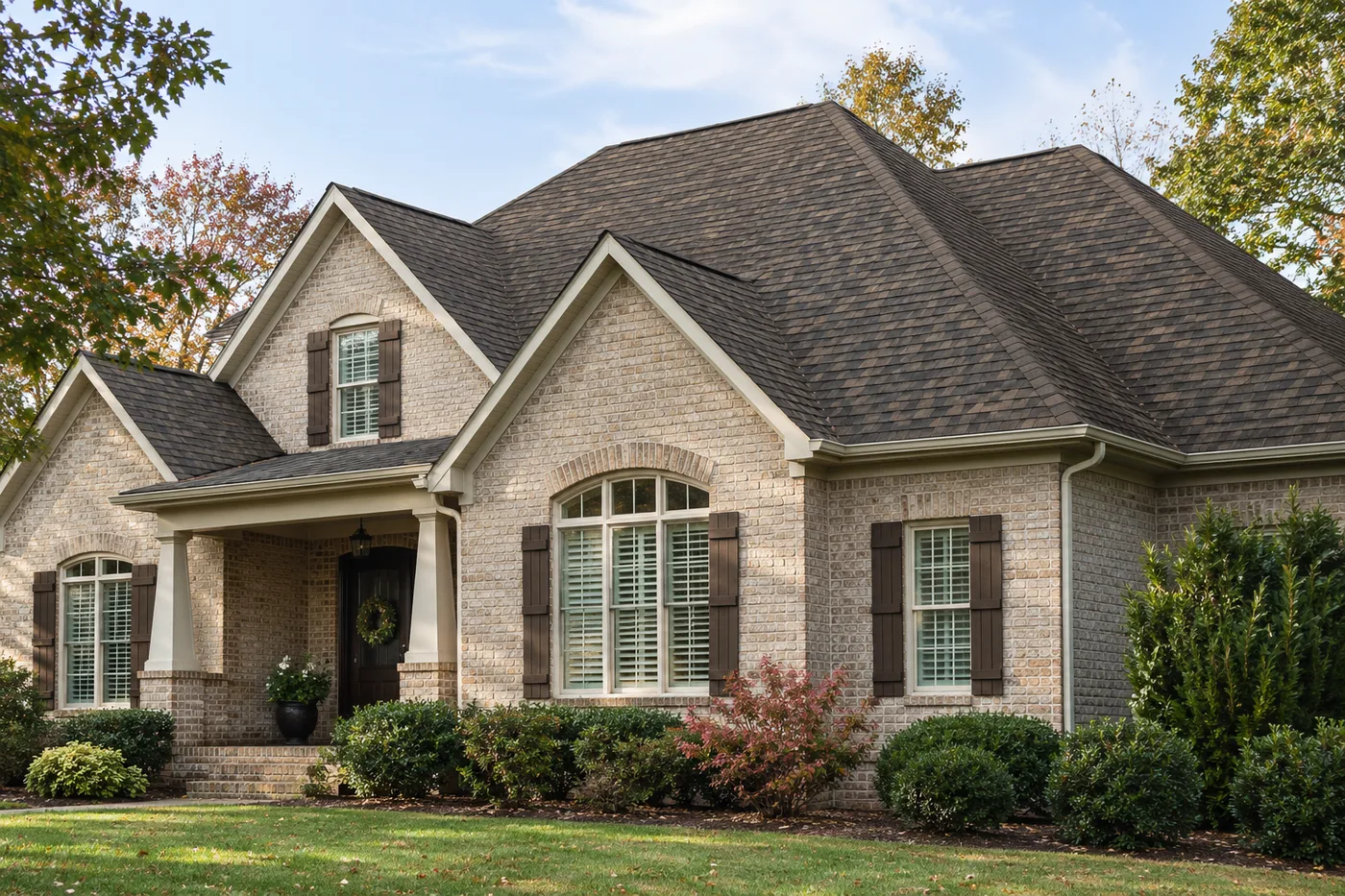
First confirm what “discontinued” actually means
A shingle can be unavailable for several different reasons. The manufacturer may have ended the product line, retired one color, changed the dimensions or design, stopped regional distribution, or replaced it with a newer product. A local supplier being out of stock is not the same as a manufacturer discontinuation. An unidentified shingle is not automatically a discontinued shingle either.
Ask for the evidence behind the statement. Useful evidence may include the manufacturer's current and archived product information, a distributor search tied to the exact product and color, the original roof documents, or a labeled wrapper or sample. Manufacturer websites sometimes retain pages for products they identify as discontinued, which can help establish the old product's name and specifications without proving that a particular roof uses it.
This distinction keeps the decision grounded. A contractor should not jump from “I cannot find this color today” to “the whole roof must be replaced.” The next question is whether a sound, compatible repair can be designed—not whether the original bundle is still sitting in a warehouse.
Compare physical compatibility before judging the color
A close color is not enough. The replacement needs to work with the installed roof's construction, length and width, exposure, thickness and profile, fastening area, sealant location, course layout, slope, and surrounding accessories. Those details affect where joints land, how shingles overlap, where fasteners can be placed, and whether disturbed courses can lie flat and seal correctly.
The repair also depends on the existing roof. A suitable current shingle does not solve brittle access courses, soft decking, damaged underlayment, failed flashing, or a repair boundary that ends in unsound material. Conversely, an obvious color difference does not automatically make an otherwise technically sound repair impossible. Appearance and weather-shedding performance are connected to the same work, but they are not the same test.
GAF's technical guidance says individual storm-damaged shingles can be replaced when damage is limited, while removed surrounding fasteners must be restored and broken seal bonds hand-sealed. That guidance supports a focused-repair method; it does not declare every current shingle compatible with every discontinued product. The installed and replacement product instructions still need to be compared for the actual roof.
Build a product record before choosing a substitute
Start with records rather than a roof walk. Gather the original proposal, invoice, warranty registration, installation photos, permit or closing records, saved bundle wrappers, spare shingles, and prior repair documents. A labeled wrapper or invoice that names the manufacturer, line, and color is stronger than a visual guess from the yard.
When records are missing, a roofer can document the shingle's construction, dimensions, exposure, profile, edge shape, granule blend, sealant and fastening layout, and location on the roof. A safely obtained sample may help a manufacturer or distributor compare older literature. Kaliber's guide to identifying existing roof shingles before repair explains that evidence in more detail.
Write down uncertainty. If the exact line cannot be confirmed, the proposal should say so and explain which observable features were used to select the replacement. That is more accountable than giving a confident product name based on color alone.
When a focused repair may still be responsible
A focused repair is most practical when damage is confined to a few shingles or one bounded detail, the surrounding roof can be opened without widespread breakage, the lower layers and deck remain serviceable, and a replacement can be installed with dependable overlaps, fastening, and sealing. The work may require more than removing the visibly damaged shingle because overlying courses and concealed fasteners control access.
The contractor should map the damaged area and the access area separately. For example, today's guide to repairing shingles fastened with short nails explains why a limited defect can require opening additional courses to restore attachment correctly. The same principle applies here: the smallest responsible repair is the smallest area that permits a complete tie-in, not necessarily the smallest visible patch.
Before installation, compare an actual replacement sample with the roof when practical. View it from normal ground locations and in more than one lighting condition. Agree in writing that weathered shingles and a new product may not match exactly. That conversation protects the homeowner from a visual surprise without turning appearance into an unsupported technical conclusion.
When product availability can contribute to a wider scope
A wider repair, one-slope replacement, or full replacement may become more practical when no suitable product can maintain the installed course layout, the roof cannot be opened without breaking adjacent shingles, damage is distributed across a broad area, lower layers or decking are failing, or multiple roof details no longer provide sound boundaries. Those are roof-specific findings. Discontinuation may complicate the material decision, but it should not replace the condition evidence.
Sometimes one slope has a different age, product, exposure, or condition from the others. A complete roof does not have to be treated as one undifferentiated surface. Shared ridges, hips, valleys, walls, ventilation, and appearance still have to be considered before recommending a one-slope roof replacement.
Keep insurance separate from repair design. A contractor can document damage, identify materials, test availability, and explain a proposed repair boundary. The insurer interprets the policy and makes its coverage decision. A discontinued product is not a promise of replacement coverage, and a general article cannot determine the outcome of a specific claim.
What the written repair proposal should show
- The existing product identification, supporting records, and any remaining uncertainty.
- The manufacturer or distributor evidence used to describe the product as discontinued or unavailable.
- The exact damaged area plus the courses or details that must be opened for access.
- The proposed replacement product and the dimensions, exposure, profile, fastening, sealing, and instruction comparison.
- The expected color, texture, and profile difference, ideally supported by a physical sample.
- The process if surrounding shingles crack, lower layers are wet, or the planned repair cannot end at sound material.
- Before, during, and after photos, cleanup, price, timing, exclusions, and written workmanship coverage.
The Federal Trade Commission recommends a written home-improvement estimate that describes the work, materials, completion date, and price, followed by a contract that captures promises about scope and cost. For a discontinued-shingle repair, the material comparison and appearance expectation belong in that written record rather than in a verbal assurance after the roof has been opened.
Kaliber Roofing provides photo-documented, repair-first roof repair inspections in Indian Trail and nearby Union County communities. Same-day or next-day inspection availability is subject to scheduling. Kaliber provides a one-year workmanship warranty for repair work it performs, separate from manufacturer material coverage and roof areas outside the written repair boundary.
Common questions
Does a discontinued shingle automatically mean I need a new roof?
No. Discontinued means the original product is no longer being made or sold through normal channels. The roof may still support a focused repair if a suitable replacement can be installed correctly and the surrounding shingles, underlayment, flashing, and decking provide a sound repair boundary.
Can a different shingle brand be used for a roof repair?
Possibly, but brand alone does not establish compatibility. The contractor should compare construction, dimensions, exposure, profile, fastening area, sealant layout, applicable instructions, and the way the replacement ties into the existing courses. Appearance should be evaluated separately.
Do replacement shingles have to match the old roof exactly?
An exact visual match may be unavailable even when the original product still exists because weathering and production changes affect appearance. The repair must first be physically and technically suitable. The homeowner should then see an actual sample when practical and approve the expected color and profile difference before work begins.
Does a discontinued shingle decide an insurance claim?
No. Product availability is one fact, not a coverage decision. Policy language, cause and extent of damage, applicable requirements, repair feasibility, and the insurer’s investigation all matter. A roofer can document the roof and proposed scope but should not promise claim approval.
What records help identify an older roof shingle?
Look for the original proposal and invoice, warranty registration, installation photos, saved bundle wrappers, spare shingles, product codes, distributor records, and clearly labeled samples. When records are missing, document the shingle dimensions, exposure, construction, profile, sealant pattern, fastening layout, and roof location before comparing products.
Sources and editorial notes
- GAF technical guidance on replacing individual damaged shingles, restoring fasteners, and hand-sealing disturbed shingles
- GAF homeowner roof-repair guide on evaluating repair versus replacement and understanding roof-system components
- Owens Corning example of a manufacturer retaining product and warranty information for a discontinued shingle line
- Federal Trade Commission guidance on written estimates, materials, contracts, payments, and contractor verification
Prepared from current manufacturer and federal consumer guidance plus Kaliber's verified service and repair-warranty information. Written with AI assistance and editorially reviewed by Sage. No human approval is claimed. General homeowner guidance; not a product-compatibility approval, on-site diagnosis, warranty interpretation, insurance determination, code ruling, legal opinion, or project-specific repair recommendation.