Sometimes. Replacing one complete roof slope can be a responsible scope when the problem is genuinely confined to that plane, the remaining roof is serviceable, and the new work can terminate at dependable roof boundaries. It is not the same as cutting an arbitrary patch across the middle of a slope. The contractor should show how the slope meets ridges, hips, valleys, walls, roof edges, and penetrations; identify every shared component that must be opened or replaced; confirm compatible materials; and compare the remaining life of the untouched slopes with the cost and disruption of returning for another project later.
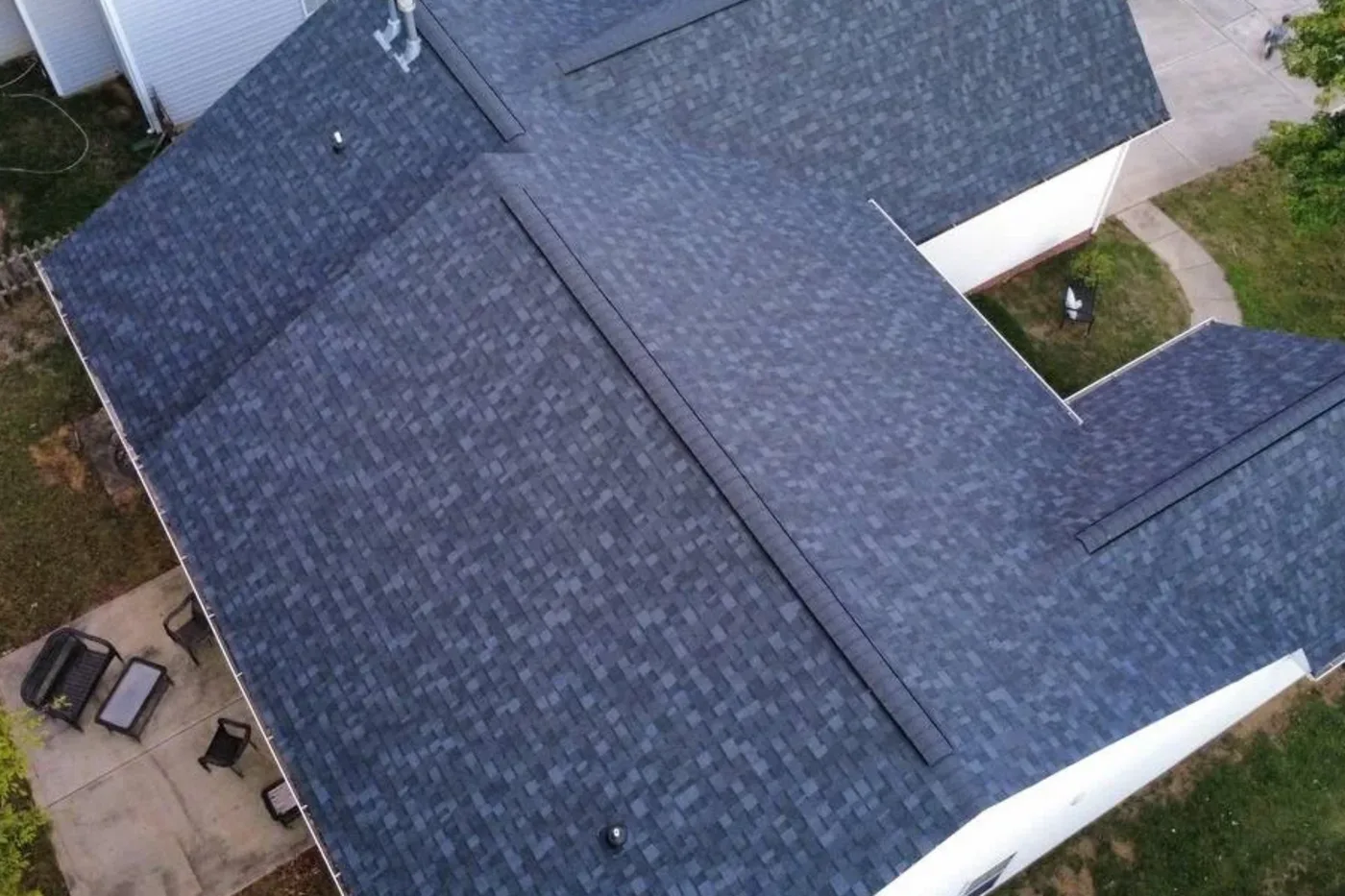
A complete roof slope is different from a boxed-in section
A roof slope, also called a roof plane, is one continuous surface that normally runs from an upper boundary such as a ridge or wall down to an eave. Replacing that complete plane allows the field shingles and underlayment to be rebuilt in their normal downhill sequence. Drawing a rectangle around damage in the middle of the plane creates a different repair with tie-ins above, below, and beside the opening.
GAF technical guidance says that when storm damage is confined to one roof plane, replacement of that damaged plane may be possible. That is permission to evaluate the scope, not a promise that every one-sided problem can stop cleanly at the visible edge. The actual roof geometry and the selected shingle instructions still control how the work is opened and closed.
This distinction is useful after wind damage, uneven aging, a branch impact, a failed addition roof, or widespread fragility on one exposure. The question is not simply whether one side looks worse. It is whether one complete plane can be rebuilt while every boundary around it remains dependable.
Shared roof details can push the work beyond one plane
Ridge and hip caps cover joints between roof planes. A ridge vent may also span the peak. Removing the covering on one side can require limited work on the adjoining side so caps, vent material, underlayment, fasteners, and disturbed seals are restored correctly. The proposal should identify that work instead of describing the new slope as if it were isolated from the peak.
Valleys deserve special attention because they collect runoff from two planes. Depending on the existing valley type and selected installation detail, rebuilding one side may require opening part of the other side so the valley lining, underlayment, and shingles remain continuous and correctly overlapped. Roof-to-wall flashing, skylights, chimneys, and other penetrations create similar scope questions.
The International Residential Code requires roof assemblies to follow approved manufacturer instructions and requires flashing where roofs meet walls, change slope or direction, and surround openings. Local requirements and the actual product must be confirmed for the house. A one-slope proposal should therefore list every shared detail it crosses and say what is replaced, temporarily removed, reused, or left untouched.
Compare the untouched slopes before choosing a partial replacement
Inspect the whole roof even when one plane has the obvious problem. Record shingle cracking, curling, seal condition, granule loss, prior patches, flashing, drainage, attic evidence, and deck concerns by slope. A newer roof with isolated damage presents a different decision from an older roof where the other planes already show the same deterioration in an earlier stage.
The earlier Kaliber guide on why one side of a roof wears faster explains how sun, shade, wind, rain, debris, and drainage can expose roof planes differently. Uneven wear can be real. It does not prove that the better-looking slopes have enough remaining service life to make a separate project economical, nor does it prove they must be discarded.
Ask for a side-by-side scope comparison. The one-slope option should state what stays, how the transition is built, what future work may disturb, and which mobilization, protection, disposal, ventilation, and closeout tasks will be repeated later. The full-replacement option should state the additional work and coverage it provides. That makes the decision about documented condition and ownership plans rather than a vague percentage of the roof.
Matching and warranty questions need written answers
A technically compatible shingle may not be visually identical to weathered material. Product lines change, existing granules weather, and even a newly installed roof can show appearance variation from surface texture, light, viewing angle, or installation pattern. ARMA recommends following manufacturer application instructions and recognizing that color appearance can vary.
Confirm the manufacturer, product line, profile, exposure, color, and accessory products proposed for the new slope. Compare a real sample from normal viewing locations when appearance matters, and document the expected difference before ordering. Color mismatch by itself is not proof that untouched serviceable slopes must be replaced, but it can be a legitimate homeowner or HOA consideration.
Ask the contractor and manufacturer which material and workmanship terms apply to the new plane, the shared details, and the roof that remains. Do not assume a partial replacement starts or extends coverage for untouched slopes. Kaliber Roofing provides a 10-year workmanship warranty on roof replacements, but the written scope and warranty for the actual project must define whether a one-plane project qualifies and exactly what work is covered. Manufacturer material coverage is separate.
What a one-slope replacement proposal should document
The proposal should identify the exact plane on a roof diagram or wide photograph; the reason replacement is recommended; tear-off depth; decking and concealed-damage terms; underlayment; leak barrier; field shingles; starter; drip edge; flashing; ventilation; ridge or hip caps; valley treatment; penetrations; disposal; property protection; and photo closeout. Shared details should never be hidden inside the phrase “replace one slope.”
It should also explain the stopping boundary. Ask how the new underlayment and shingles terminate at each ridge, hip, valley, wall, rake, and eave; which material on an adjacent plane must be disturbed; and how broken seals, removed fasteners, or old holes are handled. If the boundary changes after tear-off, require photographs and a written change before added work is covered.
Kaliber serves Indian Trail first, with same-day or next-day inspections available subject to scheduling. A useful inspection can compare the damaged plane, every shared transition, and the remaining roof before pricing a focused repair, one-slope replacement, or full replacement.
Related guidance
Common questions
Can a roofer replace half of one roof slope?
A localized repair may replace a defined area inside a slope, but it is not the same as replacing one complete plane. The scope must explain how new shingles and underlayment tie into sound material on every side. An arbitrary horizontal cut across a slope should not be accepted without a product-compliant, water-shedding detail.
Can one side of a roof be replaced when both sides share a ridge vent?
Possibly, but the ridge vent, cap shingles, upper shingle courses, underlayment, and disturbed fasteners or seals may require work across the peak. The proposal should identify the shared ridge work and the effect on the slope being retained.
Will the new roof slope match the old slopes?
Not necessarily. The exact product may be discontinued, production appearance can vary, and existing shingles have weathered. Confirm technical compatibility first, then compare a real sample and document the likely visual difference before installation.
Does replacing one roof slope give the whole roof a new warranty?
Do not assume so. Contractor workmanship terms and manufacturer material coverage apply according to their written scope and conditions. Ask for separate written answers for the new plane, shared transitions, and untouched existing slopes.
Sources and editorial notes
- GAF technical guidance on individual-shingle and roof-plane replacement
- 2024 International Residential Code provisions for roof assemblies, flashing, compatibility, and manufacturer instructions
- Asphalt Roofing Manufacturers Association guidance on shingle color-appearance variation
Prepared with AI assistance and editorially reviewed by Sage. General homeowner guidance; not an on-site diagnosis, product-specific installation approval, code or warranty determination, insurance decision, or substitute for evaluation by the appropriate qualified professional.