One side of your roof can wear out faster because every slope gets a different mix of sun, shade, wind, rain, tree debris, and drainage. Uneven wear can also point to a past repair, installation difference, flashing problem, or isolated attic-moisture issue. The color alone does not settle it. An Indian Trail roof inspection should compare both slopes, then check shingles, penetrations, edges, attic conditions, and repair history before recommending work.
Roofs do not age like matching tires. The shingles may have gone on during the same week, yet one plane spends years baking in afternoon sun while another sits under oak shade and dries slowly after a Union County thunderstorm.
A small visual difference is not automatically trouble. A sharp dividing line, bare-looking granules, curling tabs, soft decking, recurring stains, or damage limited to one slope is different. That calls for a closer look.
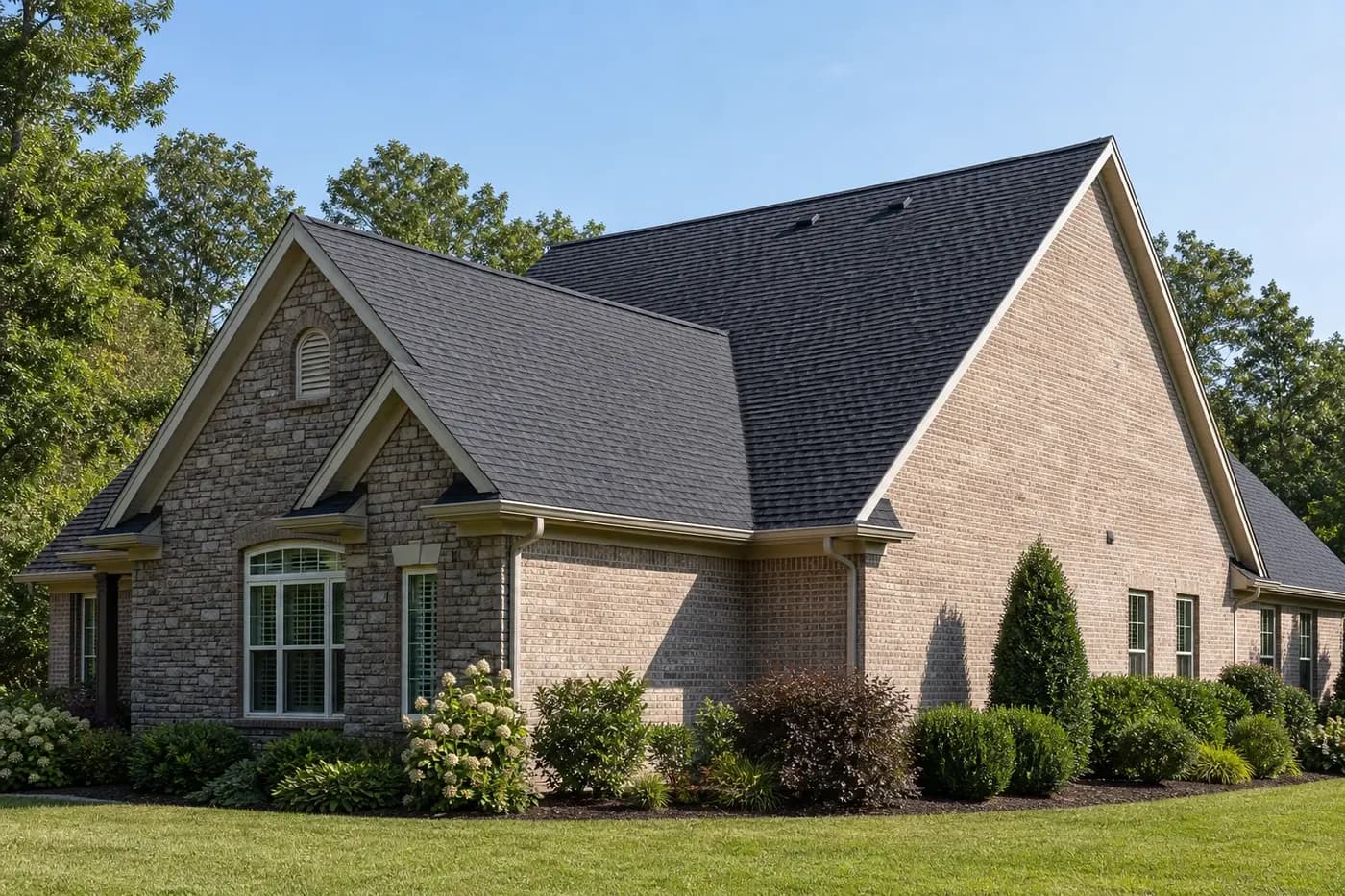
Sun Can Age One Slope While Shade Changes Another
Direct sun raises the temperature of asphalt shingles and exposes them to ultraviolet light. Day after day, heating and cooling place stress on the asphalt, granules, seal strips, and surrounding roof details. A west-facing plane that catches hard afternoon sun may therefore look drier or lose definition sooner than a protected plane.
But the shady side is not automatically the healthy side. Shingles beneath dense tree cover can stay damp longer. Leaves and needles collect at roof-to-wall joints, valleys, and gutters. Dark streaking or moss may become obvious even when the underlying shingles still have serviceable life.
That is why “the dark side is bad” and “the faded side is bad” are both shaky shortcuts. Color is a clue. Texture, granule coverage, flexibility, fastening, drainage, and the condition below the shingles matter more.
If the visible difference is mostly black streaking, review our guide to why pressure washing a mossy roof can cause damage before trying an aggressive cleaning method.
Wind and Rain Do Not Hit Every Roof Plane Equally
During summer storms around Indian Trail, Stallings, Matthews, Monroe, Waxhaw, Weddington, and Mint Hill, the windward side can receive more direct wind-driven rain. Gusts can work at exposed corners, rake edges, ridge caps, and shingle tabs. The sheltered plane may show little change from the ground.
Roof shape matters here. A simple gable reacts differently than a roof with dormers, intersecting valleys, sidewalls, or a lower addition. Turbulence around a tall wall or chimney can focus pressure on a small area. Water can also enter at one detail and appear inside several feet away.
Storm timing is useful, but it does not prove cause. If the difference appeared after a storm, preserve dated ground-level photos and compare them with older listing, inspection, or maintenance images. Our guide to documenting roof storm damage explains how to build a clear record without making an insurance assumption.
Trees Can Create a Different Climate on One Side
A mature tree can shade one slope, drop organic debris into one valley, and slow airflow at the roof surface. Small branches may rub shingles. Gutters beneath the canopy can clog first, leaving water to spill against fascia or back up at a roof edge.
Look from the ground after the roof is dry. Does the worn-looking side sit below overhanging limbs? Are leaves packed behind a chimney or dormer? Is one downspout slow while the others discharge normally? These observations help, but do not climb up to clear a steep or damp roof.
Tree work and roof work should be separated. A qualified tree company can address unsafe limbs; a roofer can evaluate abrasion, lifted shingles, flashing, gutters, fascia, and decking. Cutting the branch does not repair damage already below it.
Sometimes the Difference Is in the Roof, Not the Weather
Uneven aging can follow an old partial repair. The shingles may be a different product, production run, or age. Even a good repair can look newer. A poor one may show exposed fasteners, mismatched courses, lifted corners, excess sealant, or an abrupt granule change.
Installation details can vary too. Overdriven or misplaced nails, wrinkled underlayment, weak decking, missing flashing, and blocked drainage do not always affect the entire roof. One slope may reveal the problem first.
Attic conditions deserve a careful check, especially when the uneven area lines up with a cathedral ceiling, addition, bathroom exhaust, blocked soffit intake, or old moisture stain. Still, do not let someone diagnose “poor ventilation” from an exterior photo alone. Intake, exhaust, insulation, air leakage, ducts, framing, and moisture patterns have to be considered together.
What Should a Slope-by-Slope Roof Inspection Compare?
A useful inspection starts wide. Compare matching areas on each slope: overall granule coverage, cracked or curled tabs, seal-strip performance, ridges, valleys, flashings, vents, gutters, roof edges, and any soft or uneven decking. Then map each finding instead of treating the darker or lighter slope as one problem.
Inside the attic, look for differences in decking color, rusty fasteners, water tracks, damp insulation, blocked intake paths, disconnected ducts, or previous repairs. Moisture readings and photos can help distinguish an active condition from an old stain. Electrical hazards, tight access, and weak decking should be left to trained professionals.
Ask for the findings in plain language. “The rear slope is older-looking” is vague. “The rear slope has widespread granule loss and brittle tabs, while the front slope remains flexible with consistent coverage” gives you something useful to plan around.
Does Uneven Wear Mean the Whole Roof Needs Replacement?
No. Not by itself.
A focused roof repair may make sense when the problem is limited to flashing, a few shingles, one edge, or a past repair area and the surrounding roof is still sound. A single-slope replacement may be possible when wear is genuinely confined, tie-ins are practical, and a compatible shingle can be sourced.
Broader replacement becomes more reasonable when brittle shingles, granule loss, failed seals, soft decking, or repeated leaks extend across multiple planes—or when repairing one slope would create unreliable valleys, ridges, warranties, or material transitions. Age is part of that decision, not the entire decision.
The goal is not to make both sides look identical at any cost. It is to restore a reliable water-shedding system with a scope supported by the roof condition.
Does one side of your Indian Trail roof look noticeably older?
Kaliber Roofing can compare each slope, document the exterior and attic findings, and explain whether the evidence supports maintenance, repair, a single-slope scope, or broader replacement.
Schedule a Free Roof InspectionFrequently Asked Questions
Is it normal for one side of a roof to look older?
Some difference can be normal because roof slopes receive different amounts of sun, shade, wind, rain, and debris. A noticeable change in granules, color, curling, cracking, moss, or softness still deserves inspection because exposure is not the only possible cause.
Which roof direction usually wears out first in North Carolina?
There is no guaranteed direction. Slopes with stronger afternoon sun may show more heat and ultraviolet aging, while shaded slopes can stay damp longer and collect algae or organic growth. Trees, roof pitch, nearby buildings, wind direction, and installation details can outweigh compass direction.
Can poor attic ventilation wear out only one roof slope?
Ventilation and air-sealing problems often affect the attic broadly, but framing layout, blocked soffit intake, additions, cathedral ceilings, or isolated moisture paths can create uneven conditions. The attic and exterior roof should be evaluated together instead of blaming ventilation from appearance alone.
Can only one side of an asphalt shingle roof be replaced?
Sometimes a defined slope can be repaired or replaced independently, but the answer depends on shingle availability, tie-in details, valleys, ridges, flashing, decking condition, warranty requirements, and the age of the remaining roof. A slope-by-slope inspection should come before the scope decision.
Do dark streaks mean the shingles are worn out?
Not necessarily. Dark streaks are often an appearance issue associated with algae, especially on shaded slopes, but they can hide uneven granule loss or moisture-related conditions. Avoid pressure washing and have questionable areas evaluated before choosing cleaning or replacement.
What should I photograph before a roof inspection?
From the ground, photograph the full roof from each accessible side, then capture the slope that looks different and the matching slope for comparison. Include gutters, downspouts, nearby trees, stains, debris, interior moisture signs, and any dated photos that show how the condition changed.