A roof leaking in a valley in Charlotte NC is usually caused by debris buildup, worn shingles, exposed nails, failed underlayment, damaged valley flashing, or storm damage. Because valleys carry a large amount of water, even a small weakness can turn into a ceiling stain during a hard rain. Protect the room, document the leak, and have the valley inspected before the next storm.
Roof valleys do a lot of work. Every time it rains, two roof slopes drain into the same channel. In a light shower, a small weakness might stay quiet. In a Charlotte thunderstorm, that same spot can suddenly leak because water volume, wind, leaves, and shingle granules all meet in one place.
That is why valley leaks can feel confusing. The stain may show up in a hallway, bedroom corner, garage ceiling, or attic line even though the actual entry point is several feet uphill. Water does not always fall straight down. It follows decking, rafters, nails, and drywall until it finds the easiest way inside.
The good news is that a valley leak does not automatically mean a full roof replacement. If the surrounding roof is still healthy, a focused roof repair may solve it. The important part is finding why the valley stopped shedding water correctly.
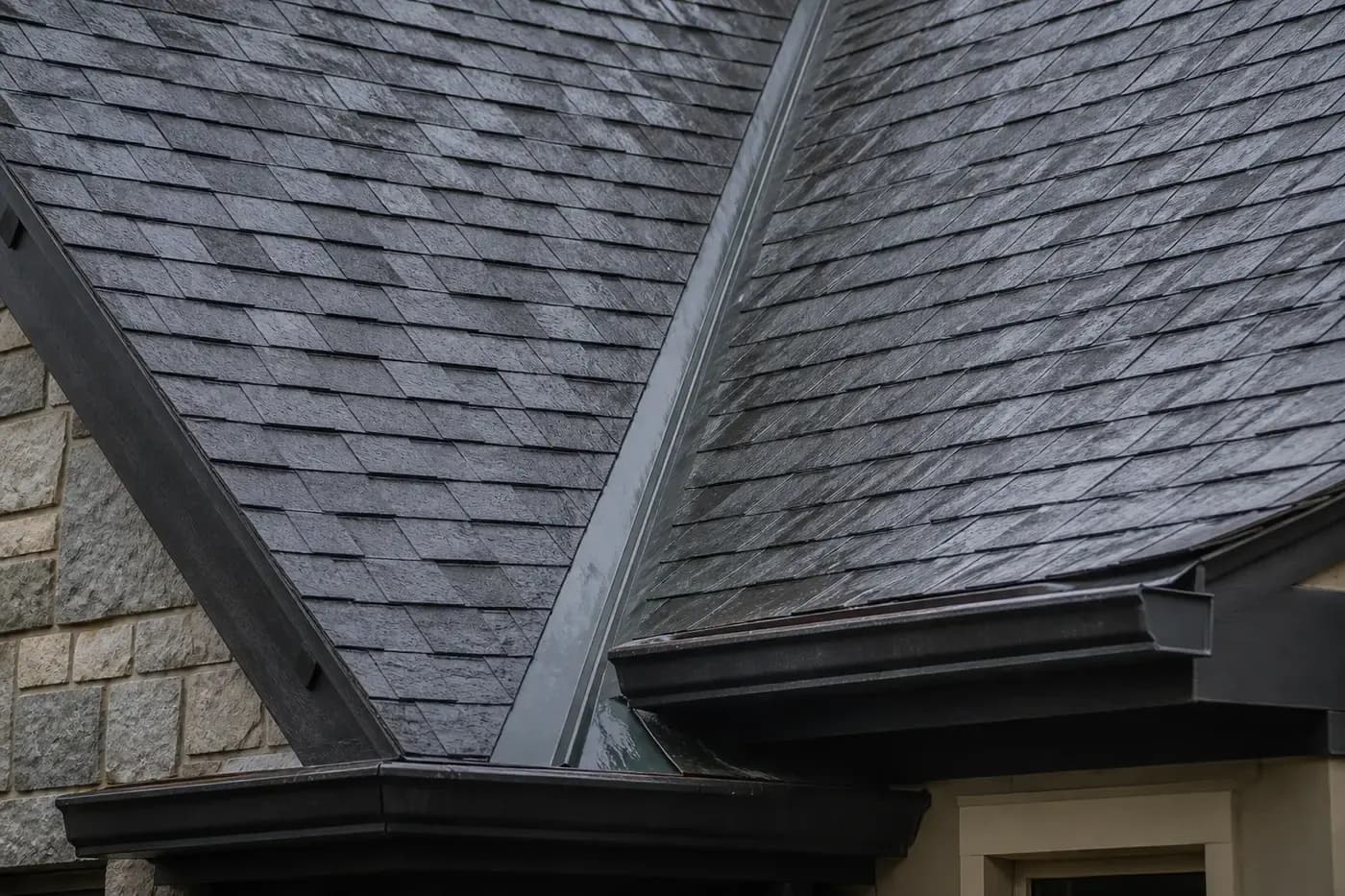
Why Roof Valleys Leak
The first thing to understand is water volume. A valley is not like a normal flat section of shingles. It collects runoff from both roof planes. If the valley is long, steep, or aimed toward a gutter that clogs easily, water can build up fast during a storm.
Debris is one of the simplest causes. Leaves, pine needles, small branches, seed pods, and loose shingle granules can sit in the valley and slow drainage. Around Charlotte neighborhoods with mature trees, that buildup can keep the valley wet longer and push water sideways under shingle edges.
Installation details matter too. Valleys need the right underlayment, shingle cuts, nail placement, and flashing approach. Nails placed too close to the center of the valley can become leak points. A poor shingle cut can catch water. Missing or damaged valley metal can create a weak spot where water runs hardest.
Age plays a role. Older shingles get brittle. Granules wear off. Edges curl. Seal strips lose grip. Once the shingles around a valley stop lying flat, wind-driven rain can find paths that were not there a few years ago.
Warning Signs of a Valley Leak
Inside, watch for ceiling stains that appear below a roof intersection, especially after hard rain. You may also see bubbling paint, damp drywall, musty smells, wet insulation, or dark streaks on attic decking. If the stain grows after every storm, the leak path is active.
Outside, the clues can be subtle from the ground. Look for leaves sitting in the valley, missing shingles near the valley edge, lifted tabs, exposed nail heads, loose flashing, torn shingles, dark water tracks, or granules collecting at the bottom of the downspout.
One tricky detail: the ceiling stain may not line up perfectly with the valley. Water can enter at the valley, run along the underside of the decking, follow a rafter, and show up several feet away. That is why patching only the visible stain rarely solves the roof problem.
If the leak started after wind or hail, compare it with broader storm clues. Missing shingles, lifted tabs, dents in soft metals, fresh debris, or a sudden leak after a specific storm can change the inspection conversation. Our guide to wind damaged roofs in Charlotte explains what to document from the ground.
What You Can Check Safely
During an active leak, focus on the room first. Move furniture, place a bucket or towel under the drip, and keep water away from lights, outlets, and ceiling fans. If drywall is sagging, do not stand directly under it. Wet drywall can release suddenly.
If you have attic access and it is safe, look for wet insulation, dark decking, shiny water tracks, rusty nail tips, or damp rafters near where the roof planes meet. Do not step off framing. Do not force your way through a tight attic in bad weather. A few photos from a safe position are enough.
From outside, stay on the ground. Use binoculars or your phone camera zoom. Take pictures of the valley, the gutter below it, and any debris or shingle damage you can see. If the roof is steep, wet, high, or hard to access, stop there.
Also note the weather pattern. Did the leak show up during wind-driven rain? After hail? After several days of soaking rain? After leaves built up? These details help narrow down whether the problem is drainage, storm damage, age, or an installation defect.
Can a Roof Valley Leak Be Repaired?
Many valley leaks can be repaired when the roof around the valley is still in good condition. A proper repair may involve removing shingles along the valley, replacing damaged underlayment, correcting nail placement, adding or replacing valley metal where needed, repairing soft decking, and reinstalling shingles so water sheds cleanly.
A quick smear of sealant is not the same thing. Sealant may slow a leak for a short time, but it can also hide the actual water path and make the next repair messier. Valleys need water management, not just surface caulk.
Replacement becomes more likely when shingles are brittle, the roof has multiple leaks, decking is soft, the valley has been patched several times, or the roof is already near the end of its service life. If you are weighing that decision, read our repair-first guide on whether to repair or replace your roof in Charlotte.
Kaliber's approach is to inspect first, explain what is actually failing, and recommend the smallest responsible fix when a repair makes sense. If the valley is only one symptom of a bigger roof condition problem, we will explain that too.
Seeing a stain under a roof valley after rain?
Request a Free Roof InspectionWhat If the Valley Leak Started After a Storm?
If the valley leak appeared after wind, hail, or a falling limb, document everything before cleanup. Take photos of interior stains, attic moisture, the valley from the ground, debris in the yard, damaged shingles, gutter dents, and the date of the storm if you know it.
Documentation does not mean every valley leak becomes an insurance claim. Long-term wear, poor installation, old repairs, and neglected debris are handled differently than sudden storm damage. The goal is to collect facts before the roof dries out and the evidence changes.
Kaliber can inspect the valley, nearby shingles, attic line, gutters, and storm indicators. We can show you what is visible, explain likely causes, and help you understand whether the next step is a targeted repair, maintenance cleanup, broader storm documentation, or a larger roof plan. For claim basics, see our insurance restoration page.
When Should You Call Kaliber?
Call when a ceiling stain grows after rain, water is actively dripping, the attic is damp near a roof intersection, debris is sitting in the valley, shingles near the valley look lifted or missing, or the leak started after a strong storm.
A Kaliber inspection looks at the valley as part of the whole roof system: shingles, underlayment, flashing, nail placement, decking, gutters, attic moisture, storm clues, and nearby penetrations. That matters because valley leaks are often blamed on the wrong thing when someone only looks from inside the room.
Whether the fix is a small repair, a valley rebuild, storm documentation, or a larger roof replacement conversation, the goal is the same: stop the water before it damages drywall, insulation, decking, and framing.
Frequently Asked Questions
Why do roof valleys leak during heavy rain?
Roof valleys carry more water than most parts of the roof. During a heavy Charlotte storm, debris, worn shingles, exposed nails, weak underlayment, or valley flashing issues can let water back up or move sideways under shingles instead of draining cleanly into the gutter.
Can a roof valley leak be repaired without replacing the whole roof?
Often, yes. If the shingles and decking around the valley are still in good condition, a roofer may be able to remove the affected valley section, replace underlayment or flashing, correct nail placement, and reinstall shingles. A full replacement is more likely when the roof is brittle, old, or leaking in several areas.
Is a valley leak usually caused by storm damage?
Not always. Valley leaks can come from age, installation problems, debris buildup, nail pops, worn shingles, or damaged underlayment. Wind, hail, and falling limbs can also damage a valley. Photos, storm dates, and a documented inspection help separate sudden damage from long-term wear.
Should I clean debris out of a roof valley myself?
Only if you can do it safely from the ground or a stable, low-risk position. Do not climb onto a wet or steep roof. Use binoculars or phone zoom to document debris and let a roofer handle the roof work if access is unsafe.
Why is there a ceiling stain below a roof valley?
A stain below a valley often means water is entering above the ceiling line and traveling along decking, rafters, or drywall before it shows up inside. The visible stain may not sit directly under the entry point, so the valley and nearby roof sections should be inspected together.
Does Kaliber Roofing inspect roof valley leaks around Charlotte?
Yes. Kaliber Roofing inspects roof valley leaks, shingles, underlayment, flashing, gutters, attic moisture, decking condition, and storm damage around Charlotte, Indian Trail, Matthews, Mint Hill, Ballantyne, Pineville, Weddington, Stallings, Monroe, Waxhaw, Concord, Huntersville, Cornelius, Midland, and nearby communities.
Need a straight answer on a roof valley leak?
Kaliber Roofing will inspect the valley, shingles, attic clues, drainage, and storm evidence so you know whether repair or replacement makes sense.