Wind damage on a Charlotte NC roof usually shows up as missing shingles, lifted or creased shingle tabs, loose ridge caps, exposed nails, damaged flashing, granules in the gutters, or a new leak after strong gusts. The tricky part is that wind can break the shingle seal without ripping the shingle completely off, so a roof may look mostly fine from the driveway and still need inspection.
After a hard Carolina storm, most homeowners do the same thing: step outside, look up from the yard, and hope nothing looks terrible. Fair. But roofs rarely tell the whole story from the ground.
Kaliber Roofing inspects wind-damaged roofs across Charlotte, Indian Trail, Matthews, Mint Hill, Ballantyne, Pineville, Weddington, Stallings, Monroe, Waxhaw, Concord, Huntersville, Cornelius, Midland, and nearby areas. We are looking for the difference between harmless scattered debris, a small roof repair, storm documentation for insurance, and a roof that is reaching the point where roof replacement needs to be discussed.
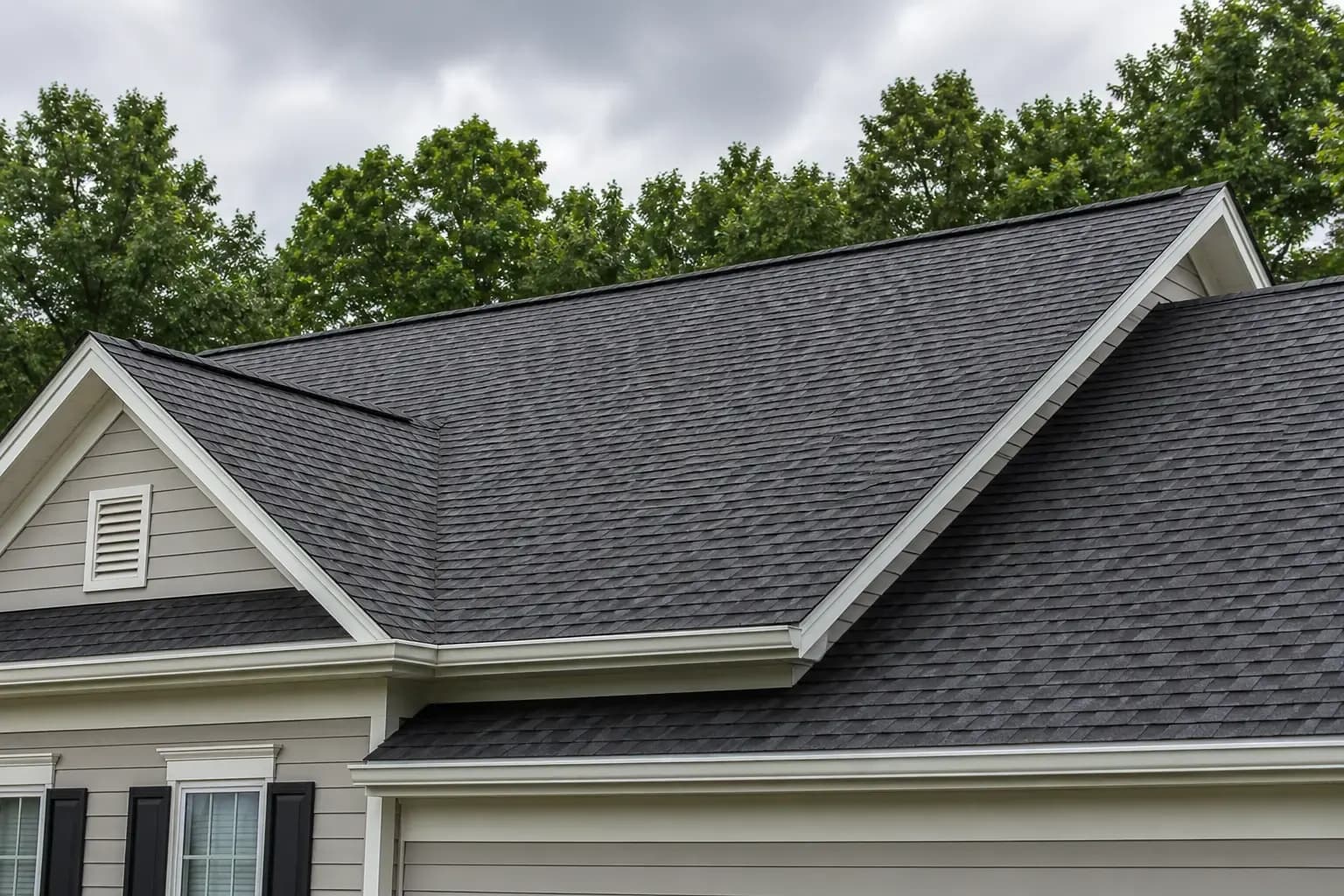
What Are the Most Common Signs of Wind Roof Damage?
The easiest sign is a missing shingle. If you can see a clean rectangular gap, exposed felt, a different color patch, or bare roof decking, the wind did more than rattle the gutters. That area needs attention before the next rain.
But missing shingles are only the loud version. Wind can lift the bottom edge of a shingle, break the factory seal, and let the tab settle back down. From the yard it may look normal. Up close, you may see a crease line, a slightly curled tab, a nail that has backed out, or a shingle edge that does not lay flat anymore.
Ridge caps matter too. They sit at the highest, most exposed part of the roof. Strong gusts can loosen or tear them before lower field shingles show damage. The same goes for rake edges, pipe boots, vents, chimney flashing, skylight flashing, and valleys where wind-driven rain can push water sideways.
Inside the home, watch for fresh ceiling stains, damp insulation, musty attic smells, bubbling paint, or water marks near exterior walls. A roof leak after wind does not always drip in the same room where the roof was damaged. Water travels. Annoyingly well.
Why Charlotte Wind Damage Can Be Sneaky
Charlotte-area storms do not have to be a named event to damage a roof. A fast-moving thunderstorm can push hard gusts across one neighborhood, drop limbs in the next, and leave another street almost untouched. That is why one house in Matthews may lose ridge caps while a home two blocks away looks fine.
Tree cover adds another layer. Older neighborhoods in Charlotte, Mint Hill, Weddington, and Waxhaw often have mature trees close to the roofline. Branches scrape shingles. Falling limbs bruise roof surfaces. Leaves clog valleys and gutters, then wind-driven rain finds the weakest path.
Age changes the outcome. Newer shingles usually hold better if they were installed correctly and sealed properly. Older shingles can become brittle, lose granules, and fail at the edges faster. A 17-year-old roof that survives normal rain may still open up when a storm hits from the wrong direction.
That is the part homeowners cannot see from the sidewalk: whether the roof is simply messy after a storm or whether the wind exposed a roof that was already tired.
What Can You Check Safely From the Ground?
Start with the obvious stuff. Look for shingles in the yard, pieces near downspouts, loose metal, gutter sections hanging low, or branches resting on the roof. Walk the perimeter if it is safe. Take photos before moving debris, especially if you may need storm documentation later.
Check the gutters and splash blocks. A sudden pile of shingle granules after a storm can mean impact, aging, or heavy runoff from damaged areas. Granules look like coarse sand. A little is normal over time. A fresh pile after wind or hail deserves a closer look.
Then step inside. Look at ceilings, attic access areas, light fixtures, exterior wall corners, and rooms below valleys or roof penetrations. If you see an active leak, put a container under it, move valuables, and document the area. Do not poke the ceiling unless water is bulging and you know how to relieve it safely.
What should you not do? Do not climb the roof after a storm. Wet shingles, loose shingles, hidden soft spots, and unstable debris are a bad mix. A free inspection is cheaper than a fall.
How Should Wind Damage Be Documented for Insurance?
If the damage may involve a claim, documentation matters. You want clear photos of visible exterior damage, interior leaks, fallen limbs, detached shingles, and any emergency steps taken to prevent more water from entering the home. Keep receipts for tarping, temporary leak control, or cleanup.
Kaliber can inspect and document what we find, including photos of lifted shingles, missing tabs, ridge cap damage, flashing concerns, roof penetrations, granule loss, and interior water clues when accessible. That does not mean we decide coverage. We do not. Your insurance carrier and adjuster make that call based on your policy and their inspection.
Still, a clean report helps everyone speak clearly. Was the roof damaged suddenly by wind? Is there older wear mixed in? Is the issue limited to one slope or spread across the system? Is emergency drying or tarping needed? Those details matter more than guessing from the driveway.
One practical tip: do not throw away damaged shingles or major debris before photographing them. And if a tree punctured the roof, focus on stopping water first. Documentation is important, but the house comes first.
Can Wind Damage Be Repaired, or Does the Roof Need Replacement?
Sometimes a wind-damaged roof only needs a targeted repair. A few missing shingles, a loose pipe boot, or a small section of ridge cap damage may be fixable if the surrounding roof is still healthy and matching materials are available.
Replacement becomes more realistic when the roof is older, brittle, heavily creased, leaking in multiple areas, losing granules badly, or showing storm damage across several slopes. At that point, patching one spot may only buy a little time before another area fails.
This is where Kaliber's repair-first approach matters. We do not need every inspection to become a replacement conversation. If the roof can be repaired honestly, we will say so. If replacement is the cleaner long-term answer, we will show you the evidence and explain why.
The right answer depends on roof age, shingle condition, storm pattern, leak history, ventilation, installation quality, and what the damage actually looks like up close. Not one photo. Not one missing tab. The whole roof.
Think the last storm lifted shingles or opened a leak?
Request a Free Wind Damage InspectionWhen Should You Call Kaliber Roofing?
Call after high winds if you see shingles in the yard, lifted roof edges, ridge damage, gutter damage, ceiling stains, branches on the roof, or a neighbor's roof was damaged by the same storm. Also call if the roof is older and you are not sure what changed after the weather passed.
We inspect the roof, photograph what we find, explain whether the issue looks like repair, replacement, storm documentation, or monitoring, and help you avoid spending money in the wrong order. That is especially helpful when the roof looks "mostly fine" but you have a bad feeling about it.
Charlotte storms move fast. Small roof openings do not always stay small. If wind damage is possible, get the roof checked before the next round of rain makes the answer more expensive.
Guessing is free. Water damage is not.
Frequently Asked Questions
How do I know if wind damaged my roof in Charlotte NC?
Common signs include missing shingles, lifted or creased shingle tabs, exposed nail heads, granules in gutters, loose ridge caps, damaged flashing, ceiling stains, and debris impact after a storm. Some wind damage is not visible from the ground, so a documented roof inspection is the safest next step.
Can wind damage a roof without blowing shingles off?
Yes. Wind can lift shingle tabs, break the seal strip, crease shingles, loosen ridge caps, or open small water paths without removing a full shingle. That kind of damage may show up later as a leak.
Should I get a roof inspection after high winds?
Schedule an inspection after strong gusts if you see missing shingles, branches on the roof, granules below downspouts, new leaks, loose flashing, or damage on nearby homes. It is especially important for older roofs or roofs with past storm history.
Will homeowners insurance cover wind damage to a roof?
Many policies may cover sudden wind damage, but coverage depends on the policy, deductible, roof age, wear, exclusions, and the adjuster findings. Kaliber Roofing can document roof conditions, but the insurance carrier makes the coverage decision.
Can Kaliber tarp a wind-damaged roof?
Kaliber Roofing can help homeowners understand urgent leak control options after wind damage. If active water is entering the home, protect the interior first, document the damage, and request inspection support quickly.
Does Kaliber inspect wind-damaged roofs outside Charlotte?
Yes. Kaliber Roofing inspects storm and wind damage in Charlotte, Indian Trail, Matthews, Mint Hill, Ballantyne, Pineville, Weddington, Stallings, Monroe, Waxhaw, Concord, Huntersville, Cornelius, Midland, and nearby communities.
Need a straight answer after high winds?
Kaliber Roofing will inspect the roof, document what we find, and explain whether repair, replacement, or storm documentation makes sense.