You should repair your roof in Charlotte NC when the problem is isolated: one pipe boot leak, one flashing issue, a few missing shingles, or minor storm damage on one section. You should replace your roof when leaks keep returning, shingles are brittle, granules are gone, decking is soft, ventilation has cooked the shingles, or storm damage affects several slopes.
That answer sounds simple until water is dripping into a hallway at 10 p.m. From the ground, a repairable pipe boot leak and a roof that is nearing the end of its life can look almost identical. Both can show up as a ceiling stain. Both can make you worry about mold, drywall, and money.
Kaliber Roofing looks at this decision with a repair-first mindset. Repair-first does not mean repair-only. It means we start with the smallest responsible solution and move toward replacement only when the roof condition justifies it. For homeowners in Indian Trail, Charlotte, Matthews, Mint Hill, Monroe, Waxhaw, Weddington, and the surrounding Union County area, that distinction matters.
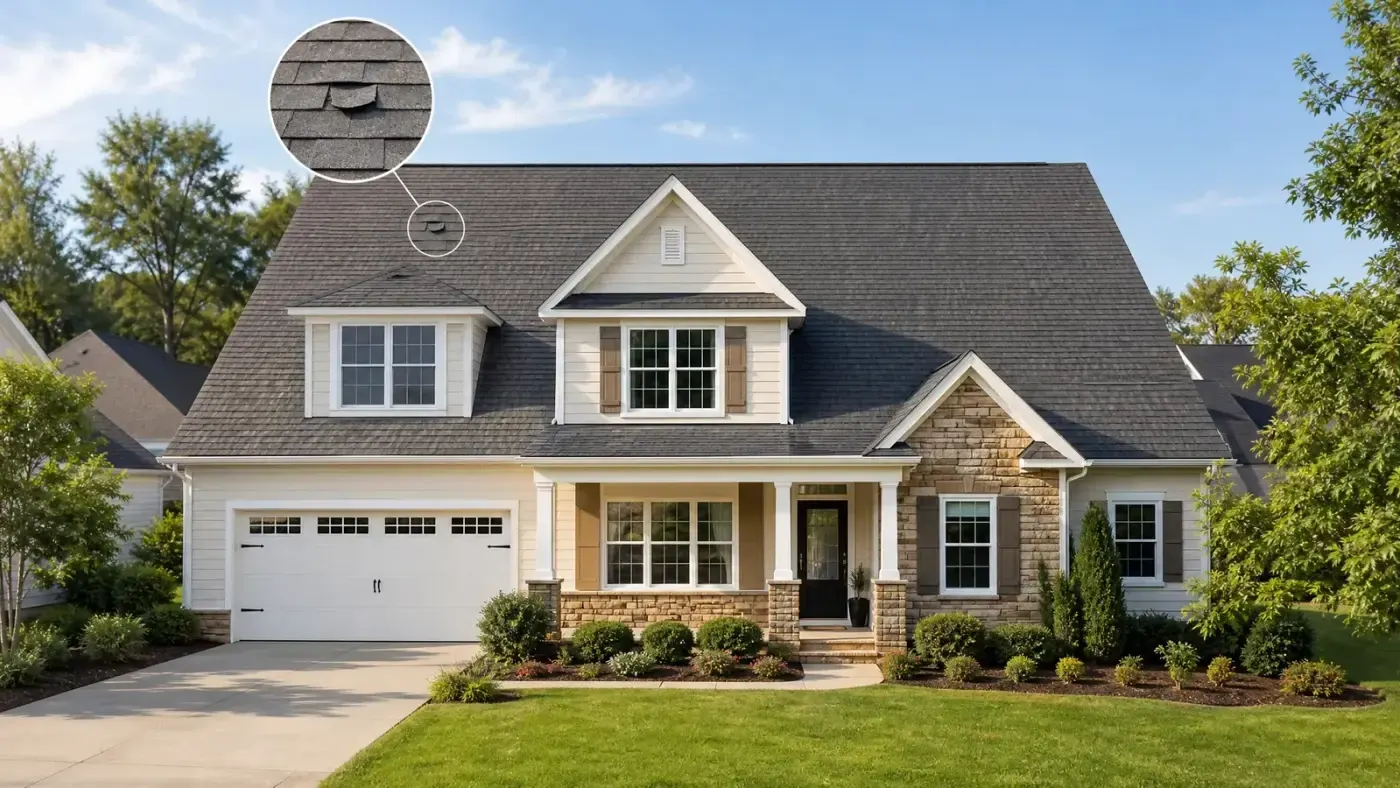
Roof Repair vs Roof Replacement: What Is the Difference?
Roof repair fixes a specific failure point while keeping the existing roof system in place. Common examples include pipe boot replacement, flashing repair, missing shingle replacement, nail pop sealing, chimney leak correction, ridge cap repair, or a small storm-damaged section.
Roof replacement removes the old roofing system and installs a new one. Replacement addresses problems that are no longer isolated: widespread shingle deterioration, repeated leaks, poor ventilation damage, old underlayment, compromised flashing, or storm damage across multiple slopes.
| Decision Factor | Repair Usually Fits | Replacement Usually Fits |
|---|---|---|
| Damage pattern | One or two specific spots | Several slopes or repeated leak areas |
| Age | Often under 12–15 years | Often 18–25+ years |
| Shingles | Flexible, bonded, granules mostly intact | Brittle, cracked, curling, bald, or sliding |
| Decking | Dry and solid around the problem | Soft, stained, rotted, or repeatedly wet |
| Storm damage | Localized missing shingles or one impact area | Hail/wind damage across multiple slopes |
| Financial logic | Repair buys meaningful remaining life | Repairs are becoming temporary and repetitive |
When Roof Repair Is the Right Call
A repair is usually the right call when the roof is still performing and one detail failed. Around Charlotte, that often means a pipe boot cracked from heat, flashing pulled loose at a wall, wind lifted a few shingles, or a branch damaged one area.
Good repair candidates usually have three things in common: the damage is limited, the surrounding shingles still have life, and the repair will actually solve the problem instead of hiding it for a few months.
- The roof is newer or middle-aged, not at the end of its expected life.
- The leak source can be traced to one roof penetration, flashing detail, valley, or small shingle area.
- The roof has not needed repeated repairs in different places.
- The shingles around the problem are still flexible and not crumbling when handled.
- The attic decking near the issue is not soft, sagging, or heavily stained.
- The repair cost is reasonable compared with the remaining life of the roof.
Here is the plain version: if a focused repair gives you several more useful years, repair is worth considering. If it only buys time until the next rain, it may not be.
When Roof Replacement Is the Smarter Move
Replacement becomes the smarter move when the roof is failing as a system. This is where cheap repairs get expensive. A $650 repair may feel better today, but if you are paying for a new repair every storm season, the roof is telling you something.
- Leaks are showing up in multiple rooms or on different roof slopes.
- Shingles are curling, cracking, blistering, or losing granules across the field.
- The roof is around 20 years old and has already been repaired more than once.
- Decking feels soft or shows dark, repeated water staining from the attic.
- Ventilation problems have overheated and aged the shingle system early.
- Storm damage is documented on multiple slopes, not just one corner.
- You are planning to stay in the home and want the problem solved, not delayed.
Replacement also gives you a chance to correct the parts of the system a repair cannot fix: underlayment, drip edge, flashing, ridge ventilation, pipe boot details, starter shingles, and manufacturer-backed installation standards.
Charlotte Weather Makes This Decision Less Obvious
Charlotte roofs deal with heat, humidity, fast summer storms, wind-driven rain, and occasional hail. The same roof can age differently depending on tree cover, attic ventilation, slope direction, and storm exposure.
In shaded neighborhoods around Matthews, Mint Hill, and east Charlotte, moisture and debris can sit longer in valleys. In open parts of Union County, wind can hit roof slopes harder. In larger homes around Weddington, Waxhaw, and Ballantyne, complex valleys and roof-to-wall transitions create more places for flashing issues.
That is why a repair-vs-replacement decision should not be made from a checklist alone. The checklist helps. The roof still has to be inspected.
Storm Damage and Insurance Can Change the Math
Storm damage roof repair can be simple when the damage is limited: a few wind-lifted shingles, one missing ridge cap, or a small impact area. But wind and hail damage can also spread across several slopes in a way that makes replacement more appropriate.
Insurance restoration is where documentation matters most. A homeowner's policy may cover roof damage from wind, hail, or falling debris. It usually does not cover ordinary wear, old age, poor installation, or leaks that developed over time.
Two policy details matter: replacement cost value and actual cash value. Replacement cost coverage can make a covered replacement much more realistic for the homeowner. Actual cash value coverage may depreciate the roof based on age, which can change whether a repair or replacement makes financial sense. Do not guess here. Read the policy and document the roof.
Need storm damage documented before you decide?
Request a Free InspectionThe Inspection Should Prove the Recommendation
A roofing recommendation should come with evidence. If a contractor tells you to replace the roof but cannot show why, slow down. If a contractor says a repair will work but does not explain the failure point, slow down there too.
A proper Kaliber inspection looks for the actual cause, not just the visible stain inside the home. The roof system includes shingles, underlayment, flashing, valleys, ridge caps, vents, pipe boots, decking, attic ventilation, and drainage. One weak detail can create a leak. A pattern of weak details can reveal a roof that is ready for replacement.
- Photos of the leak source or damaged area.
- Photos of the surrounding shingle field for context.
- Pipe boot, flashing, valley, chimney, vent, and ridge checks.
- Attic or decking review when accessible.
- Storm damage photos when wind or hail is suspected.
- A written or clearly explained repair option when repair is responsible.
- A clear replacement explanation when the roof is past repair.
What If You Are Selling the Home?
If you are selling soon, the decision changes. A small roof repair with documentation may be enough to satisfy a buyer, especially if the roof still has life. But a roof near the end of its life can become a negotiation problem. Buyers may ask for concessions, lenders may ask questions, and inspection reports can turn a small issue into a closing delay.
In that situation, get the roof inspected before listing if you already suspect a problem. A clean repair invoice and photos can help. So can knowing ahead of time that replacement may come up during negotiations.
The Bottom Line
Repair the roof when the problem is specific, the rest of the roof is sound, and the repair buys meaningful life. Replace the roof when the problems are spread out, the shingles are failing, repairs keep repeating, or storm damage changes the scope.
The wrong answer is expensive either way. Replacing too early wastes money. Repairing too long can damage decking, insulation, drywall, and the inside of the home. The right answer is the one the roof can prove.
Frequently Asked Questions
Should I repair or replace my roof in Charlotte NC?
Repair usually makes sense when damage is isolated, the roof is younger, and the surrounding shingles still have life left. Replacement usually makes sense when leaks repeat, shingles are brittle, granules are gone, decking is soft, or storm damage affects several slopes.
How old is too old to repair a roof?
Age alone does not decide it, but many asphalt shingle roofs around Charlotte deserve a replacement conversation once they reach 18–25 years old. A 20-year-old roof can still be repairable if the problem is isolated, but repeated leaks usually change the math.
Can one roof leak mean I need a new roof?
One leak does not automatically mean you need a new roof. A single pipe boot, flashing detail, nail pop, or lifted shingle can often be repaired. Multiple leaks in unrelated areas are a stronger sign that the roof system is failing.
Can storm damage require roof replacement?
Yes. Hail bruising, wind-lifted shingles, missing ridge caps, and impact damage across several slopes can justify replacement, especially when insurance is involved. The recommendation should come from photo documentation, not a guess from the ground.
Will insurance pay to repair or replace my roof in North Carolina?
Insurance may cover repair or replacement when the damage comes from a covered event such as wind, hail, or falling debris. Wear, age, poor installation, and old maintenance issues are usually not covered. Policy type and documentation matter.
What should a roofing inspection include before I decide?
A proper inspection should include photos of the failure point, surrounding shingles, flashing, vents, pipe boots, valleys, ridge details, and attic or decking concerns when accessible. You should understand why repair or replacement is being recommended.
Still not sure whether repair or replacement is right?
Kaliber Roofing will inspect it, document it with photos, and tell you the next right move.