Roof flashing usually rusts when its protective coating wears or gets scratched, water and debris stay against the metal, fasteners corrode, or incompatible metals react where they touch. On an Indian Trail home, rust around a chimney, wall, valley, vent, or roof edge does not automatically mean there is an active leak. It does mean the metal should be checked for pitting, splits, loose seams, and hidden moisture before a small weak spot opens up.
Sometimes the orange mark is only surface corrosion. Sometimes it is the first visible clue that the flashing has become paper-thin under old sealant. Those two conditions look similar from the lawn, which is why a close inspection matters.
One thing not to do: climb up and scrape at it. Old flashing edges can be sharp, and testing a questionable roof detail with a screwdriver can create the hole you were worried about.
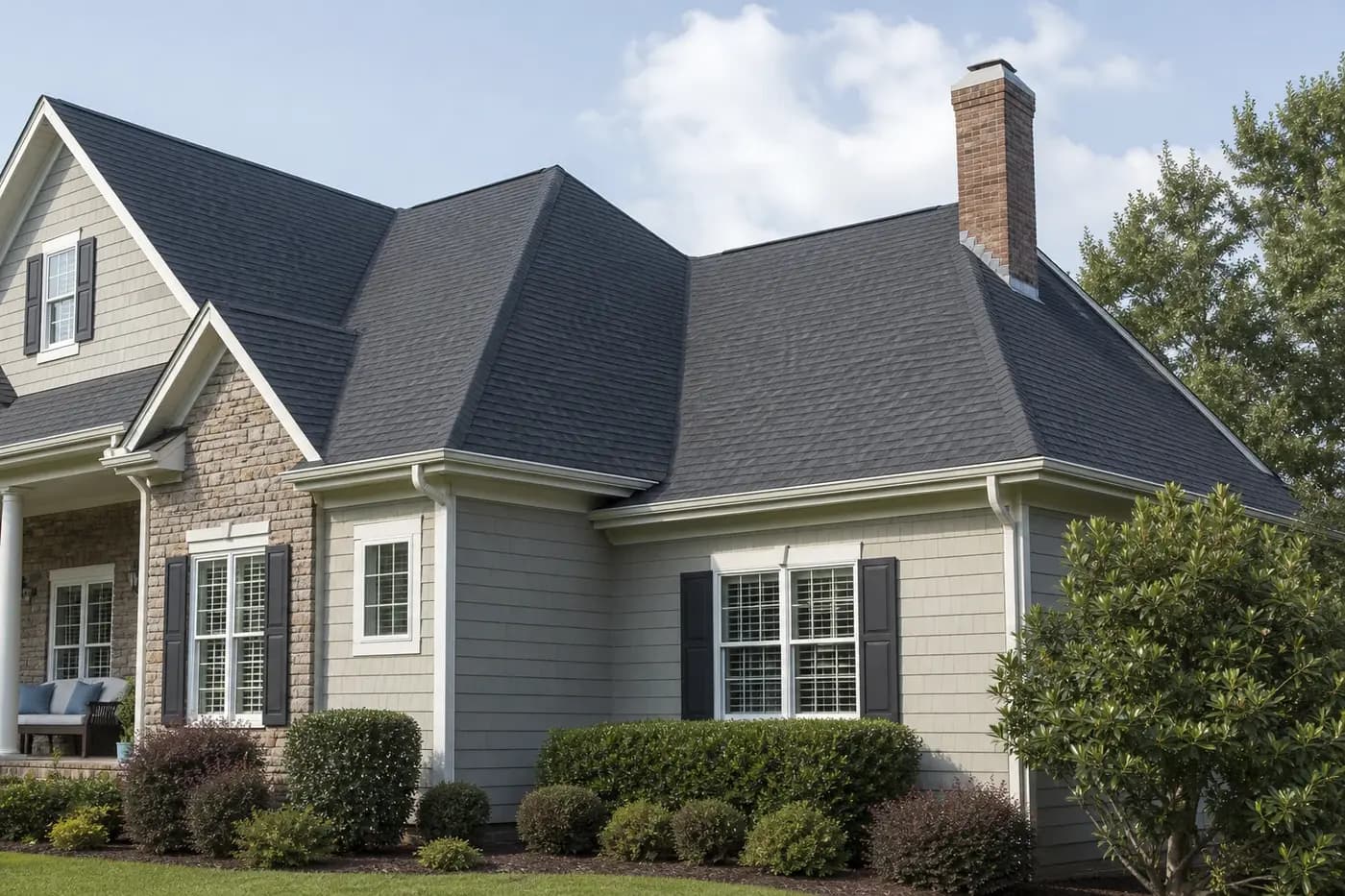
Where Does Roof Flashing Commonly Rust?
Chimneys are an obvious spot. Step flashing runs along the sides, counter flashing covers its upper edge, and the back of the chimney has to move water around the uphill side. More joints mean more places for old coatings, fasteners, or patches to fail. If that is where you see the problem, compare it with our guide to chimney flashing leaks in Indian Trail.
Roof-to-wall transitions are another. Individual pieces of step flashing should overlap with the shingle courses and work behind the wall finish. A rust streak at one corner can come from an exposed edge, a nail, or water sneaking behind siding—not necessarily from the broad piece of metal you can see.
Metal also appears around plumbing vents, furnace flues, skylights, valleys, drip edges, and some roof vents. Each location handles water differently. That matters because a repair that works at a pipe collar is not automatically right for a chimney or sidewall.
What Causes the Metal to Corrode?
Damaged protective coating is common. Galvanized and coated metals rely on that surface for protection. Cutting, bending, scratching, or years of weather can expose a vulnerable edge. Corrosion may begin at a cut, crease, screw hole, or spot where tools scraped the finish during an earlier repair.
Moisture that does not drain gives rust more time to work. Pine needles, leaves, roof grit, and old sealant can form a little dam on the uphill side of a chimney or wall. Indian Trail humidity slows drying, especially on shaded slopes around mature trees.
Old fasteners can rust before the main flashing does. Once a screw or nail head deteriorates, it may stain the surrounding metal and leave an opening at the same time. Driving another exposed fastener through the flashing is not a dependable fix.
Incompatible materials can also speed corrosion. Certain dissimilar metals react when they touch and moisture is present. Runoff from another material can matter too. The fastener, flashing, gutter, chimney cap, and nearby metal should be viewed as one assembly rather than a collection of unrelated parts.
Then there are old repairs. Thick roof cement can crack, pull away, and hold damp debris along the metal edge. It may cover the rust without stopping the water. Honestly, a tar-covered joint often tells you less than a clean exposed detail because no one can see what is underneath.
Will Rusty Flashing Cause a Roof Leak?
It can. Rust weakens metal gradually. Pitting can become a pinhole, a folded corner can split, or a fastener hole can enlarge. Water only needs a narrow path past the flashing, especially when a Union County storm pushes rain sideways.
But color alone does not prove water is getting inside. Look for a pattern: rust plus a lifted edge, open lap, missing fastener, cracked sealant, damp roof decking, wet insulation, or an interior stain. A dry attic beneath light surface rust is a different situation from active water tracking down a rafter.
And remember, stains travel. Water entering near a chimney may run along the roof deck or framing before it drips. The ceiling mark does not always sit directly under the outside failure.
What Can You Check Without Walking the Roof?
Start with zoomed photos from the ground. Capture the whole roof transition, then closer views of the stained area. Look for flaking metal, holes, loose corners, open seams, rusted fasteners, cracked roof cement, or shingles that sit differently around the detail.
After rain, check the attic only if you can enter safely on proper framing or a decked walkway. Use a flashlight. Darkened decking, a shiny water trail, damp insulation, rusty nail tips concentrated near the flashing, or a musty smell are useful clues. Do not touch wet wiring, step between joists, or press on stained drywall.
Write down when the stain appears. Hard rain, wind direction, and how long it takes to show up can narrow the search. That record is more useful than climbing onto wet shingles for a closer look.
Can Rusty Flashing Be Repaired, or Must It Be Replaced?
Sound metal with limited surface rust may sometimes be cleaned, prepared, and protected with a compatible coating. That decision depends on the metal type, the amount of remaining material, and whether the seams still shed water correctly. Coating a bad installation only gives you a better-looking bad installation.
Pitted, split, loose, heavily scaled, or paper-thin flashing usually needs replacement. Nearby shingles or siding may have to be lifted carefully so new metal can be layered into the roof system. The goal is not to glue metal onto the surface. It is to rebuild the path that carries water down and out.
A focused flashing repair does not automatically mean roof replacement. If the surrounding shingles and decking are sound, Kaliber's roof repair team can document the problem area and discuss a targeted repair. Broader work enters the conversation only when the roof condition justifies it.
What Should a Flashing Inspection Cover?
A useful inspection identifies the flashing type and follows the water path above it. It checks laps, corners, coating loss, cut edges, fasteners, sealant, shingle integration, siding or masonry transitions, and whether debris keeps the area wet.
The attic side matters too. Photos of the roof deck, rafters, insulation, and stain pattern help separate surface corrosion from an active leak. If the metal surrounds a furnace flue, the roofer may also recommend HVAC coordination rather than altering a combustion vent as though it were an ordinary pipe.
Kaliber Roofing serves Indian Trail first, along with Stallings, Matthews, Monroe, Waxhaw, Weddington, Mint Hill, and nearby Union County communities. The practical question is simple: Is the flashing still sound and shedding water, or is the rust warning you before the next leak?
Seeing rust around a chimney, wall, vent, or roof edge?
Have the flashing and the attic below it checked before another hard rain turns a weak spot into interior damage.
Schedule a Free Roof InspectionFrequently Asked Questions
Does rust on roof flashing always mean it is leaking?
No. Light surface discoloration can appear before the metal develops a hole or an open seam. Still, rust means the protective surface may be failing, so the flashing, overlaps, fasteners, sealant, shingles, and attic below should be checked before corrosion progresses.
Can rusty roof flashing be painted?
A compatible coating may protect sound metal after proper preparation, but paint does not rebuild thin metal, close a failed overlap, or correct flashing installed the wrong way. The condition and water-shedding detail need to be evaluated first.
Can I cover rusty flashing with roof cement?
Smearing roof cement over rust is usually a temporary patch at best. It can hide split metal and trap water around a seam. A lasting repair restores the flashing detail so each layer directs water back onto the roof surface.
Why does flashing rust faster around a chimney?
Chimney flashing has several seams and corners, and debris can collect on the uphill side. Failed coatings, scratched metal, old fasteners, masonry runoff, standing moisture, or incompatible metals can all speed corrosion around that detail.
Can different metals cause roof flashing corrosion?
Yes. Certain dissimilar metals can corrode faster when they touch in the presence of moisture. Fasteners, flashing, gutters, and other metal components should be compatible with one another and with the surrounding roof assembly.
Should rusty flashing be repaired before the next storm?
Prompt inspection is wise when the rust is flaking, pitted, split, loose, or next to an interior stain. A stable patch of surface rust may not be an emergency, but waiting makes it harder to tell whether the metal is still sound beneath the discoloration.