When the attic is safely accessible, it should usually be part of the evidence considered before a roofer recommends replacement. The underside of the roof can reveal active moisture, old staining, soft or damaged decking, rusty fastener tips, wet insulation, blocked intake paths, disconnected exhaust ducts, or water tracks that an exterior view cannot show. But an attic inspection is not a verdict by itself. Staining may be old, insulation can hide damage, some assemblies are intentionally unvented, and most of the top of the decking remains concealed until tear-off. A responsible recommendation combines the roof surface, attic or interior evidence, leak and repair history, shingle condition, roof details, access limits, and any concealed conditions that cannot be confirmed before work begins.
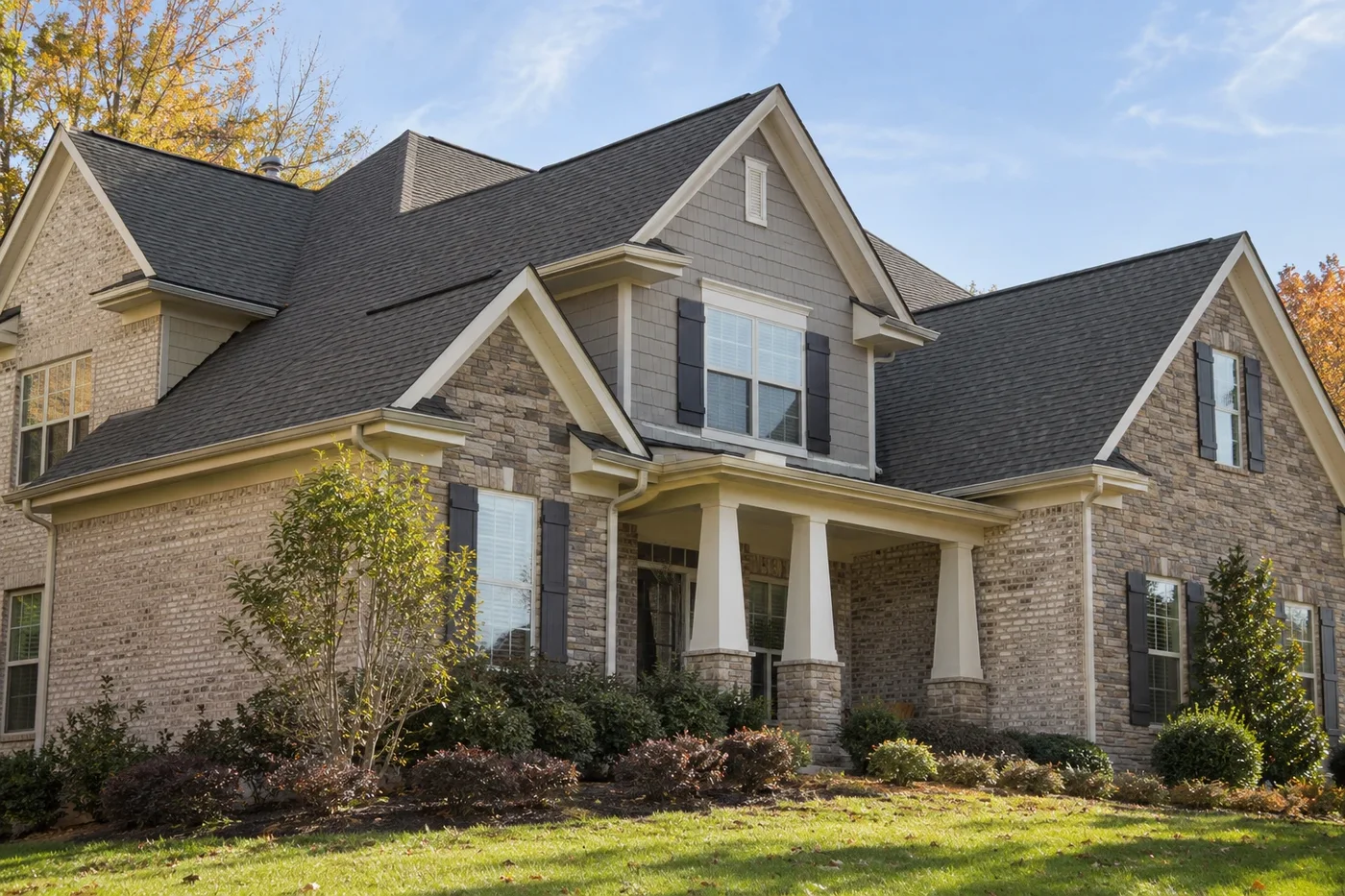
The attic shows the roof from the side exterior photos cannot
A roof inspection from outside can document shingles, valleys, flashing, vents, edges, drainage, and visible movement in the roof plane. The attic provides a different view: the underside of the decking, framing, fastener tips, insulation, exhaust ducts, and the path water may have followed before it reached a ceiling. Those two views answer different questions and are strongest when they are compared.
For an Indian Trail homeowner deciding between repair and replacement, attic evidence can help test whether one visible exterior defect aligns with one localized moisture path or whether several parts of the assembly show trouble. It can also reveal that an interior stain does not line up directly below the suspected exterior opening because water traveled along decking, a rafter, a pipe, or insulation.
The purpose is not to collect a dramatic attic photo. It is to connect each finding to a location on the roof and explain whether it supports a focused repair, broader investigation, drying or ventilation work, or replacement planning.
Useful attic findings need context, not automatic conclusions
Fresh dampness, a changing water track, delaminated sheathing, softness, sagging, open holes, or fasteners that no longer hold in sound wood can affect the roofing scope. GAF notes that decking is the structural base beneath the weatherproofing layers and that moisture damage, rot, holes, cracks, warping, and other integrity problems may require replacement.
Dark wood or an old ring-shaped stain does not automatically mean the roof is currently leaking or structurally unsound. The inspector should distinguish dry staining from current moisture, map its highest visible point, compare it with the rain timeline, and look for corresponding exterior details. When strength is uncertain or framing appears altered, bowed, split, decayed, or displaced, a qualified structural professional may be needed; a roofing article or photograph cannot supply that conclusion.
Insulation creates another limitation. It may conceal the ceiling plane, eave area, or lower decking, and it should not be moved casually around wiring, recessed fixtures, fragile drywall, pests, or suspected contamination. A report should state what was actually visible instead of treating an inaccessible bay as inspected.
Attic moisture may come from a roof leak, condensation, or another source
Moisture under a roof is not always rainwater. A localized track that appears during or after a particular storm may support an exterior entry theory. Broad dampness, widespread rusty fastener tips, moisture on many roof-deck areas, or repeated cold-weather condensation may point toward indoor humidity, air leakage, insulation, or ventilation conditions instead. Plumbing, HVAC drains, and bathroom or dryer exhaust ducts can also put water or moist air in an attic.
GAF explains that condensation can resemble a roof leak and may show up as wet insulation, stains, musty odors, or moisture on the underside of the deck. NRCA also cautions that attic ventilation is not a one-size-fits-all answer and that manufacturer requirements should be checked for the selected asphalt-shingle system.
That distinction matters before replacement. New shingles correct an exterior roof-covering problem; they do not automatically correct an exhaust duct ending in the attic, indoor air leakage, wet insulation, or a project-specific building-science issue. The inspection should identify the evidence, disclose uncertainty, and involve the appropriate trade when the source falls outside roofing.
Some attics cannot or should not be entered during a routine roof visit
Safe access is a real limitation. A small hatch, deep loose-fill insulation, exposed wiring, unstable storage, suspected mold, pest activity, heat, confined areas, or framing that is not designed as a walking surface can make entry inappropriate. Homeowners should not step between ceiling joists or crawl into a hazardous space simply to complete a checklist.
Some homes also have intentionally unvented or conditioned roof assemblies, including roofs with insulation at the roofline. Those systems should not be judged by the same visual assumptions used for a conventional vented attic. The inspector should identify the assembly as accurately as access allows and avoid recommending that vents be added, blocked, or mixed without evaluating how the whole roof and enclosure were designed.
When attic access is unavailable, the recommendation should not pretend otherwise. Exterior inspection, interior ceiling evidence, moisture measurements used within their limits, records, repair history, and carefully authorized diagnostic openings may still provide useful information. The report should name the missing view and explain how it affects confidence.
Attic evidence can narrow the repair-or-replacement decision
A focused repair may still be responsible when the entry point is isolated, the surrounding shingles remain serviceable, the decking can hold fasteners, and the moisture pattern supports a limited failure. Today’s guide to a <Link href="/blog/should-a-leaking-closed-roof-valley-be-rebuilt-as-an-open-valley-indian-trail-nc/" className="text-brand-red underline">leaking closed roof valley</Link> is one example: attic evidence can help test the suspected location, but the valley still has to be opened enough to inspect and rebuild the failed layers.
Replacement becomes more supportable when several roof areas show widespread material deterioration, shingles are too brittle for dependable tie-ins, leaks recur at unrelated details, the deck has broad integrity problems, or the system cannot be restored through a defined repair boundary. Those conclusions should come from the combined record—not one stain, one aerial photo, or the roof’s estimated age alone.
Kaliber’s <Link href="/roof-repairs/" className="text-brand-red underline">roof-repair service</Link> starts with whether the failed area can be restored responsibly. When the evidence supports broader work, the <Link href="/roof-replacement/" className="text-brand-red underline">roof-replacement scope</Link> should explain why replacement is the better stopping point and identify the conditions that may remain concealed until tear-off.
Ask the inspection report to connect attic findings to the written scope
A useful report should identify whether the attic was entered, viewed from the hatch, partially visible, intentionally unvented, or inaccessible. Photos need location context: a close view of staining is more useful when another image shows which slope, valley, wall, vent, or penetration sits above it. The report should separate observed condition from possible cause and state which conclusions still depend on opening the roof.
For replacement planning, ask how visible deck concerns will be handled and how concealed decking will be documented, priced, and approved after tear-off. Nobody inspecting from the attic can see every top-side panel surface beneath shingles and underlayment. The contract should preserve that uncertainty instead of promising an exact hidden-wood quantity without evidence.
Kaliber Roofing serves Indian Trail first with photo-documented, repair-first inspections available the same or next day subject to scheduling. The goal of an attic check is not to create another sales step. It is to make the recommendation more accountable by showing what was inspected, what was found, what remains hidden, and why the proposed scope fits that evidence.
Related guidance
Common questions
Can a roofer recommend replacement without entering the attic?
Yes, in some cases. The attic may be inaccessible or unsafe, and widespread exterior deterioration or a clearly failed roof system may still support replacement. The roofer should disclose that the attic was not inspected, explain what evidence supports the recommendation, and identify concealed conditions that cannot be confirmed before tear-off.
Does attic staining prove my roof is leaking now?
No. Staining may be old and dry, or moisture may come from condensation, plumbing, HVAC equipment, or an exhaust duct. Current moisture, storm timing, the highest visible water track, exterior roof findings, and follow-up observation help distinguish an active roof leak from another source.
Can an attic inspection show all damaged roof decking?
No. It can reveal portions of the underside where access and insulation allow, but framing, insulation, finished spaces, and roofing layers conceal other areas. The full top-side condition is usually clearest after authorized tear-off removes the old shingles and underlayment.
Should I enter the attic before the roofer arrives?
Only if the space is familiar, dry, cool enough, safely floored, and free of electrical or other hazards. Do not step on drywall or loose insulation, move suspect materials, or enter during active leaking or dangerous heat. Photos from a safe hatch position and a clear description of when the symptom occurs can still help.
Does every Indian Trail attic need more ventilation?
No. Ventilation needs depend on the actual roof and attic assembly, selected roofing products, intake and exhaust paths, insulation, air sealing, moisture sources, and applicable requirements. An intentionally unvented or conditioned attic should not be altered using assumptions meant for a conventional vented attic.
Sources and editorial notes
- National Roofing Contractors Association guidance on attic ventilation, roof problems, and detailed roofing proposals
- GAF guidance on roof decking, concealed damage, attic observations, and reroofing limitations
- GAF overview of attic condensation, leak lookalikes, and moisture-control considerations
Prepared with AI assistance and editorially reviewed by Sage. General homeowner guidance; not an on-site diagnosis, moisture-source determination, ventilation or enclosure design, code ruling, structural conclusion, or substitute for evaluation by the appropriate qualified professional.