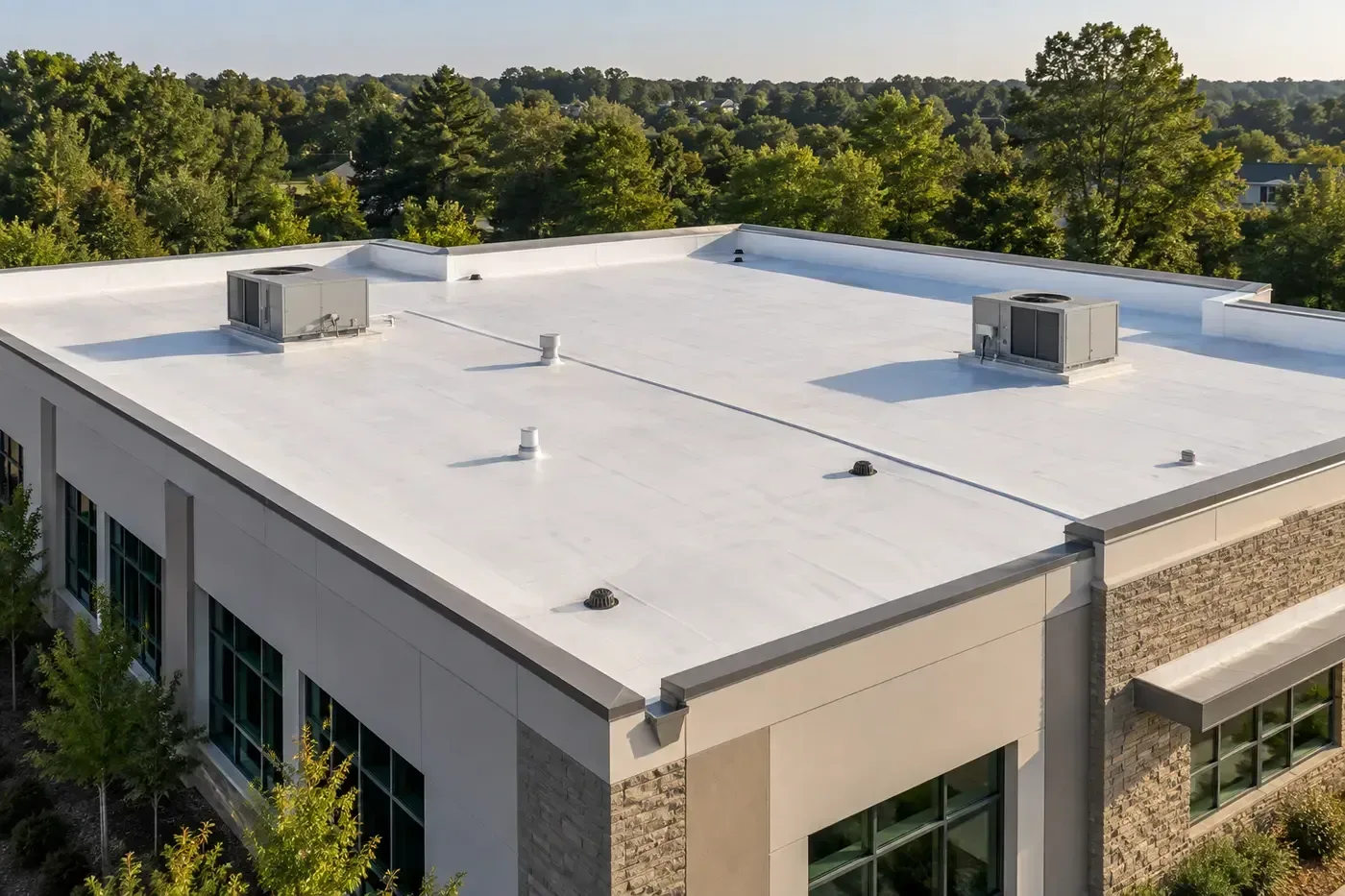
Yes—an inspection or focused roof check is useful after HVAC work that brings technicians, tools, materials, or equipment across a commercial roof, especially when a unit, curb, penetration, line support, or access route was changed. The check does not need to become a full-roof investigation after every filter change. Its scope should match the work: document the access path and service area, inspect the membrane or roof surface around the unit, confirm curbs and flashings were not disturbed, remove debris, verify drainage remains open, and record any new condition before responsibility becomes unclear.
Match the roof check to the HVAC work
Routine service confined to an established walkway and one unchanged unit may justify a short visual closeout of that route and work area. A more detailed roofing inspection is prudent after equipment replacement, curb modification, new refrigerant or electrical penetrations, crane work, removed panels, moved supports, spilled fluids, or repeated trips outside protected walkways. A reported leak, cut, puncture, displaced flashing, or dropped object should also trigger prompt roofing review.
This is an event-based check, not a claim that the HVAC contractor caused damage. GAF identifies other trades and equipment removal or replacement as risks because foot traffic, tools, and rooftop work can affect roofing materials. Carlisle likewise recommends checking around rooftop mechanical equipment for cuts, damage, and debris. The purpose is to establish what changed while the work area and timeline are still clear.
Document the route, not only the unit
Begin at the roof hatch, ladder access point, or other approved entry and follow the actual travel path to the serviced equipment. Look for displaced walkway pads, scuffs, cuts, punctures, loose fasteners, compressed insulation, open seams, spills, discarded wire or sheet-metal pieces, and objects that could block a drain. The area beside the HVAC cabinet matters, but so do the places where tools and replacement parts were staged.
Use overview photos that locate the route and close photos that show individual conditions. Include the date, contractor, unit identification, roof section, purpose of access, and whether equipment or roof components were changed. “Checked Roof A from north hatch to Unit 3 after motor replacement” is a usable record. “Roof looked okay” is difficult to compare with a later condition.
Check curbs, flashings, penetrations, and supports
Rooftop HVAC equipment should transfer loads through its intended support while the roof system remains continuous around curbs, pipes, conduits, and lines. A post-service check should note loose or displaced counterflashing, opened seams, cut membrane, disturbed sealant where sealant is part of the approved detail, unsupported lines, sharp edges resting on the roof, and blocks or supports that moved across the surface.
Do not assume every visible bead of sealant is a repair, and do not let an unapproved general-purpose patch hide a roof opening. The installed roof system, curb detail, manufacturer requirements, and warranty terms control how roofing work should be completed. If the HVAC scope requires a new penetration or a changed curb, coordinate the roofer and mechanical contractor before the opening is made whenever practical.
Keep drains and low areas clear
Small scraps from mechanical work can travel farther than expected. Screws, wire ties, packaging, insulation, filters, leaves disturbed near a unit, and sealant tubes can obstruct strainers or collect in low areas. Check nearby drains, scuppers, gutters, and the flow path between the unit and the outlet. Remove ordinary loose debris safely, but document anything embedded in or adhered to the roof before disturbing it.
Standing water after rain does not identify its cause by itself. Compare the current water boundary with earlier photos, the drainage plan, and recent work. If a support, line, pad, or discarded material changed the drainage path, record that condition. If the roof shape or drain performance appears to have changed, the property may need a broader roofing or qualified building evaluation rather than a quick cleanup.
Separate mechanical and roofing responsibilities
The HVAC contractor should close out the mechanical work, including equipment operation and the components within its scope. A roofing contractor should evaluate and repair membrane, flashing, curb, penetration, edge, or drainage details when roofing work is required. Some projects need both trades present because lifting a unit, rebuilding a curb, reconnecting services, and restoring the roof must happen in a controlled sequence.
Put the handoff in writing. Identify who protects the roof during service, who may cut or patch roofing, who inspects after the work, who handles concealed wet materials, and which party supplies final photos. Review the current roof warranty or guarantee before authorizing alterations; notification, approved-contractor, repair-material, and documentation requirements vary by system and agreement.
Create a closeout record before the next leak
Save the HVAC work order, access log, before-and-after photos, roof-check notes, unit number, repair documents, and any warranty communication in the same property file. Update the roof map if a curb, penetration, support, or unit changed. If a condition is being monitored rather than repaired, give it a date, location, comparison photo, and next review trigger.
A post-work record cannot prove how the roof will perform in every future storm, but it gives the owner a defensible baseline. If interior moisture appears later, the investigation can compare rain timing, the first visible indoor evidence, the mapped rooftop work, drains, seams, walls, and other possible entry points instead of assigning cause from proximity alone.
A practical Indian Trail closeout sequence
Before rooftop HVAC service, identify the unit and roof section, provide the approved access route, review protection and warranty requirements, and photograph the area. After service, account for tools and debris, inspect the route and work zone, check nearby drainage and roof details, document any change, and assign roofing follow-up before the ticket is closed.
Kaliber Roofing serves Indian Trail first and works with nearby Union County commercial properties. Same-day or next-day inspection appointments are available subject to scheduling. A focused post-HVAC roof check can document the affected area without turning routine mechanical service into an automatic full-roof repair recommendation.
Related guidance
Common questions
Does every HVAC maintenance visit require a full commercial roof inspection?
No. The scope should match the work and roof access. Routine service may need a documented check of the access route and work area, while equipment replacement, new penetrations, curb changes, suspected damage, or a leak can justify a more detailed roofing inspection.
What should be photographed after rooftop HVAC service?
Photograph the access route, staging area, serviced unit, curb and flashing, penetrations and line supports, nearby seams, drains or scuppers, any observed condition, and the cleaned work area. Label the roof section, unit, date, and contractor.
Can an HVAC contractor patch a commercial roof membrane?
Only when the contractor is authorized and the repair method complies with the installed roof system and applicable warranty terms. Undefined surface patches can be incompatible or hide an opening. Coordinate a qualified roofing contractor when roofing materials or details must be cut, repaired, or rebuilt.
Who is responsible if a leak appears after HVAC service?
Timing and proximity do not prove responsibility. Preserve records and inspect the mechanical work area, roof system, drainage, interior moisture path, and other possible entry points. The contracts, documented conditions, cause, and scopes of work determine responsibility.
Sources and editorial notes
- GAF: professional commercial roof inspections, other trades, access logs, and maintenance records
- Carlisle SynTec: inspecting rooftop mechanical equipment, membrane conditions, drainage, and debris
- GAF: commercial roof asset management and maintenance guidance
Written from manufacturer commercial-roof maintenance guidance and Kaliber’s verified service information. Prepared with AI assistance and editorially reviewed by Sage. No human approval is claimed. General property-maintenance guidance; not an on-site diagnosis, warranty determination, structural conclusion, safety plan, code decision, or allocation of responsibility for a specific property.