A useful commercial roof maintenance plan should identify the roof system and warranty, map every roof area and drainage path, set inspection triggers, control rooftop access, document conditions with consistent photos, and turn findings into dated repair priorities. The plan should cover the membrane or roof surface, seams, flashings, edges, walls, penetrations, drains, scuppers, gutters, rooftop equipment, interior moisture evidence, and any solar attachments. Many commercial roofs are checked in spring and fall and after severe weather, but the final schedule should follow the roof manufacturer, warranty, building use, and actual condition. The goal is not a generic checklist. It is a repeatable record that shows what changed, what was repaired, who accessed the roof, and what needs attention next.
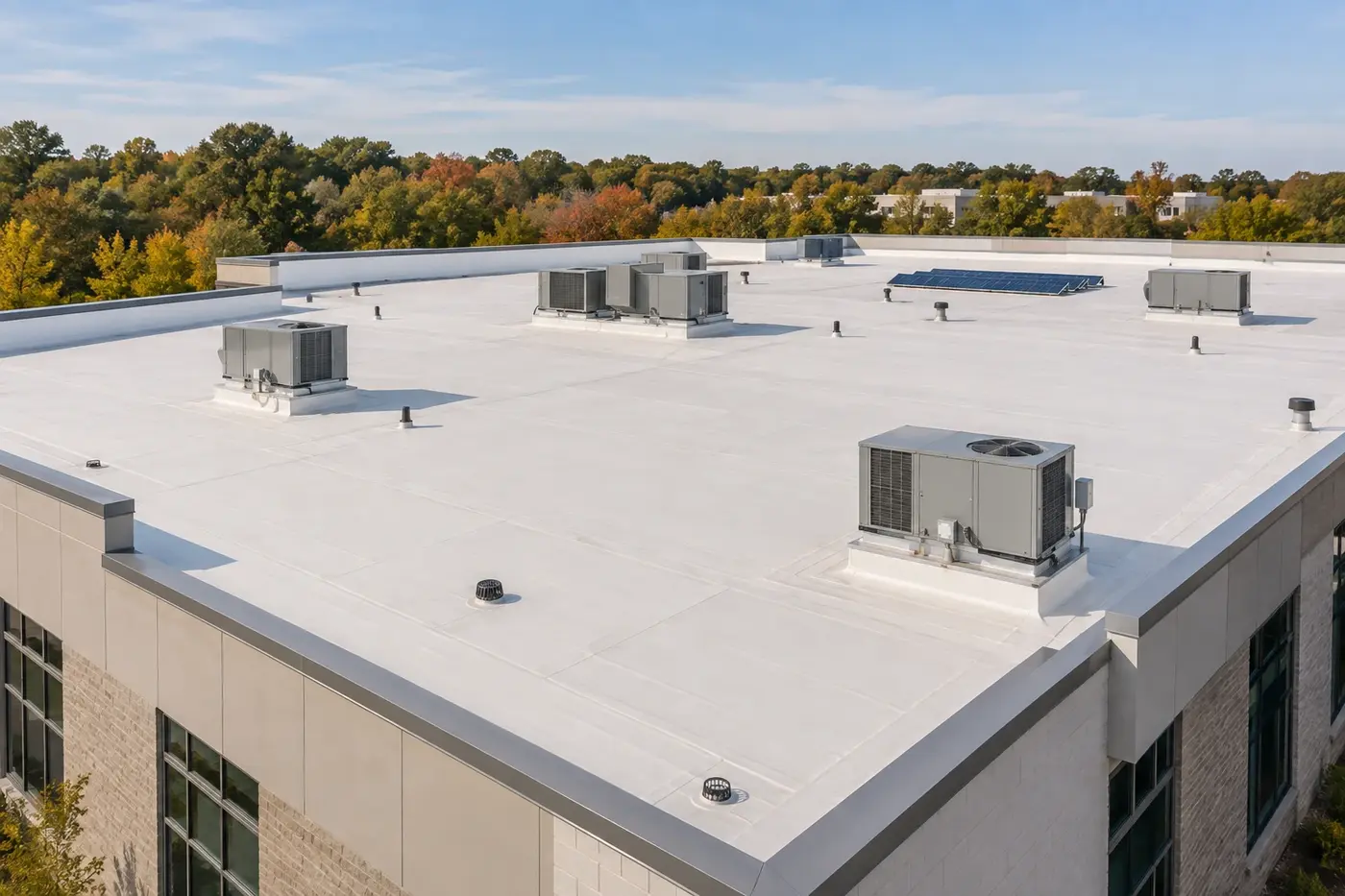
Start with the roof file, not a walkaround
Before the first scheduled inspection, collect the roof warranty or guarantee, original scope, product information, drawings, past inspection reports, repair invoices, leak records, and rooftop-equipment history. If records are incomplete, begin a new baseline rather than guessing at the assembly, age, or prior work.
Create a simple roof map that names each roof section and marks drains, scuppers, gutters, downspouts, curbs, skylights, hatches, vents, pipes, walls, expansion joints, rooftop HVAC equipment, and solar components. Use those same location names in every report. “Open seam at Roof A, east curb” is useful later; “problem near unit” is not.
The GAF scheduled-maintenance guide recommends keeping roof guarantees, inspection reports, repair bills, original drawings, specifications, and invoices together. That record becomes especially important when equipment is added, a leak returns, responsibility is disputed, or replacement planning begins.
Set both routine and event-based inspection triggers
A calendar alone is not enough. The National Roofing Contractors Association recommends roof-system inspections at least twice each year, preferably in spring and fall, plus inspections after severe storms. GAF advises at least annual inspections and describes twice yearly as optimal. The governing roof warranty or manufacturer may set different requirements, so use those documents to finalize the schedule.
For an Indian Trail property, the plan should also trigger a review after conditions that could affect the roof: high wind, hail, heavy rain, falling limbs, reported interior moisture, new rooftop work, HVAC replacement, solar service, or repeated foot traffic. An event check can be limited to the affected area when the evidence supports that boundary, but the scope and access limits should be written down.
Do not send untrained staff onto wet, damaged, fragile, steep, or otherwise unsafe roof areas. Building staff can log interior stains, ceiling changes, drain overflow, or visible debris from safe locations. A qualified roofing contractor should handle roof access and determine the appropriate inspection method.
Inspect the water-shedding system as connected parts
The inspection should cover the field of the roof for punctures, open seams, displaced material, blisters, splits, surface wear, soft areas, or signs of movement appropriate to that roof system. It should also examine perimeter edges, parapet coping, walls, counterflashing, transitions, and every penetration. A clean roof surface does not cancel a loose edge, failed curb detail, or blocked drain.
Drainage deserves its own section in the report. Confirm that roof drains, strainers, scuppers, gutters, and downspouts are present, secure, and free of debris, then note evidence of slow drainage or recurring ponding. The report should distinguish a maintenance item such as removable debris from a design, slope, drain, or structural condition that needs further evaluation.
Interior observations belong in the same record. Map ceiling stains, wet insulation, odors, damaged finishes, or recurring tenant reports to the roof plan without assuming the roof opening sits directly above the visible stain. Water can travel before it appears indoors, so the inspection should separate observed evidence from suspected source.
Control rooftop equipment and other trades
Commercial roofs are working platforms for HVAC, electrical, communications, plumbing, solar, and other service providers. New fasteners, discarded parts, dragged equipment, blocked drainage, and uncoordinated penetrations can create roof problems even when the original roof remains serviceable. The maintenance plan should require sign-in, approved access routes, protection where needed, and a post-work roof check.
Keep a roof access log with the company, technician, date, purpose, work area, and any items carried onto or removed from the roof. Require contractors to photograph the work area before and after service and to report any cut, puncture, spill, loose flashing, or displaced protection immediately. Do not let another trade cover a roof opening with a general-purpose patch and close the ticket without roofing review.
Solar equipment needs coordinated roofing and electrical responsibility. The Building America Solution Center explains that rooftop photovoltaic attachments should match the roof type and use appropriate flashing and seals, with roofers and solar installers coordinating installation details. If moisture appears near an array, follow the same evidence-first process described in our guide to what to do when a roof leaks after solar panels are installed, rather than assuming either the roof or the mounts caused it.
Turn findings into repair priorities and closeout records
Each finding should have a location, photo, observed condition, recommended next step, urgency, access limitation, and status. Separate active water entry or an unsafe condition from a maintenance task, a monitored condition, and a capital-planning item. This keeps a long list of minor observations from hiding the few items that need prompt action.
When repairs are completed, update the roof map and attach the approved scope, before-during-after photos, product information, invoice, warranty terms, and any change in responsibility. A repair is not closed merely because the interior stopped dripping during the next light rain. The repaired area should be checked under appropriate conditions and any concealed wet material addressed within the documented scope.
Trend the records over time. Repeated repairs at one curb, drain, wall, or seam can point to a broader detail that needs redesign or replacement. Isolated damage elsewhere may still support a focused repair. A maintenance plan should help the owner make that distinction from evidence rather than turning every leak into an automatic whole-roof replacement recommendation.
What the annual maintenance summary should answer
At the end of each maintenance cycle, the property owner or manager should be able to answer a short set of practical questions: What roof systems are present? Which areas were accessible? What changed since the last inspection? Did any storms or other trades affect the roof? Which repairs are open, completed, or being monitored? Are drainage and rooftop equipment creating repeat concerns? What records are missing?
The summary should also identify likely work for the next budget period without presenting an inspection as a guaranteed service-life forecast. Roof condition, hidden moisture, tenant operations, weather, and future rooftop changes can alter the plan. State what is known, what is uncertain, and what additional testing or qualified evaluation would resolve the uncertainty.
Kaliber Roofing serves Indian Trail first and works with nearby Union County commercial properties. Same-day or next-day inspection appointments are available subject to current scheduling. The useful first step is a documented baseline: identify the roof assembly, map the details, record current conditions, and build a maintenance schedule around the actual property.
Related guidance
Common questions
How often should a commercial roof be inspected?
A common baseline is spring and fall plus an inspection after severe weather, but the roof manufacturer, warranty or guarantee, building use, roof condition, and recent rooftop work may require a different schedule. Put both calendar dates and event triggers in the written plan.
What should a commercial roof inspection report include?
It should include a roof map, inspected areas, access limits, dated overview and detail photos, observed conditions, drainage and rooftop-equipment findings, interior moisture evidence, repair priorities, responsible parties, and the status of every open item.
Should HVAC and solar contractors sign in before going onto the roof?
Yes. A roof access log should record who entered, when, why, where they worked, and what they changed. Before-and-after photos and a roofing check after penetrations, equipment replacement, or suspected damage create a clearer responsibility record.
Does routine maintenance keep a commercial roof warranty valid?
Maintenance may be required by some warranties or guarantees, but completing a generic checklist does not automatically preserve coverage. Read the exact inspection, notification, repair, contractor, documentation, and access requirements in the current warranty and follow them.
Sources and editorial notes
- NRCA roof inspection and maintenance guidance
- GAF scheduled commercial roof maintenance checklist
- Building America Solution Center guidance for rooftop solar anchors, flashing, and trade coordination
Prepared with AI assistance and editorially reviewed by Sage. General property-maintenance guidance; not an on-site diagnosis, warranty determination, structural conclusion, safety plan, code decision, or substitute for the roof manufacturer, warranty provider, property safety program, or qualified roofing and building professionals.