Choose the exact shingle product first, then compare several full-size color samples against the permanent parts of your home—brick, stone, siding, trim, and gutters—in morning, midday, and late-day light. Use an online visualizer to narrow the choices, not to make the final decision, because screens and small swatches can misrepresent a blended roof color. Before ordering, confirm the manufacturer, shingle line, exact color name, regional availability, matching hip-and-ridge components, and any HOA approval. If energy performance matters, compare the product’s published solar-reflectance or cool-roof specifications rather than assuming every light color performs alike.
Start with the parts of the exterior that will stay
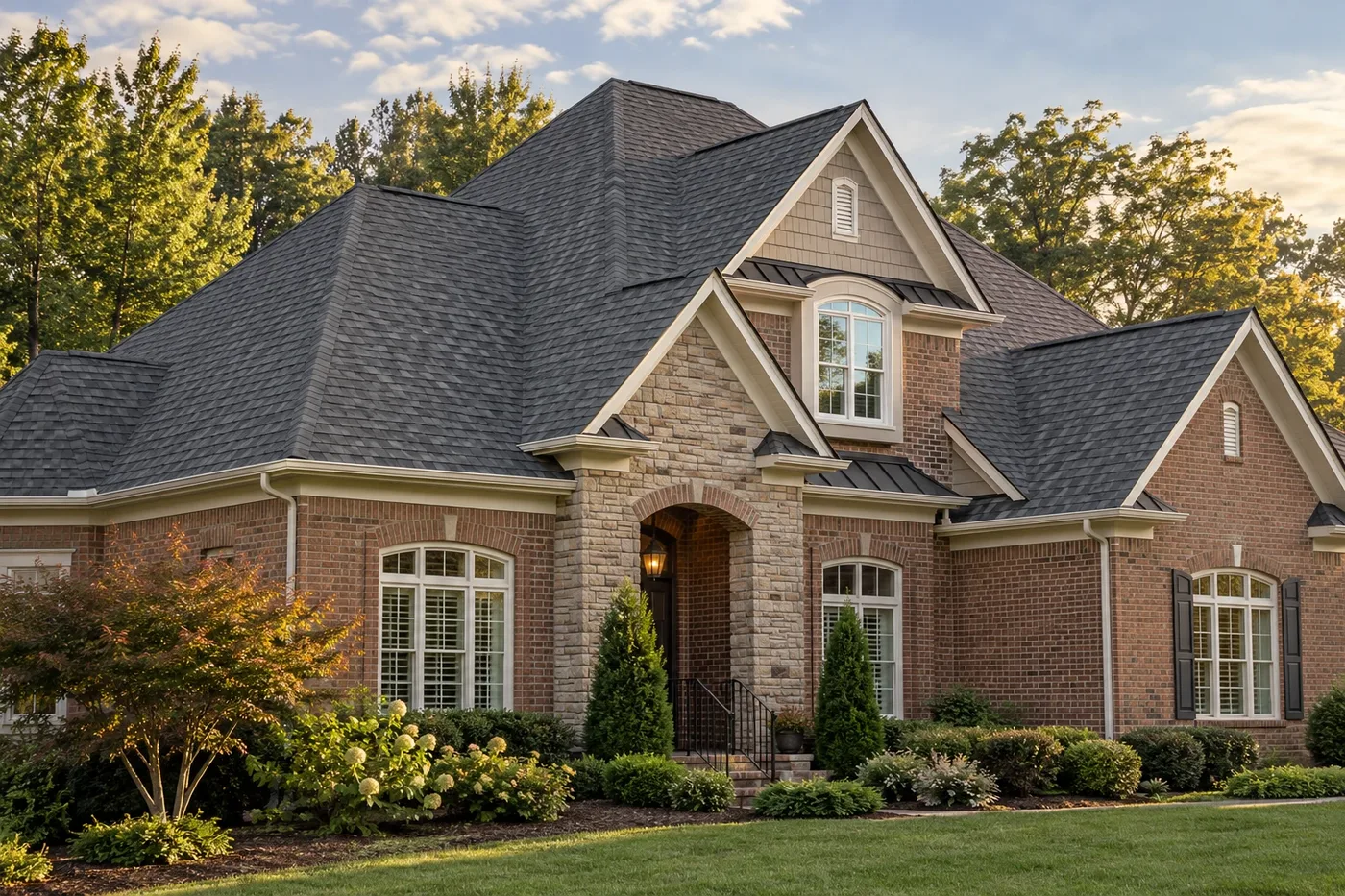
A roof occupies a large visual area, but it should not be selected by looking at the roof alone. Begin with materials that are expensive or unlikely to change soon: brick, stone, siding, window frames, trim, gutters, and visible metal accents. Paint colors and a front door can change later; masonry usually cannot. The roof should coordinate with those fixed materials rather than chase a temporary trend.
Look for the undertones already present. Warm red or brown brick often works differently with a blue-gray shingle than with a warm charcoal or weathered-brown blend. Cream trim can soften a dark roof, while bright white trim may create stronger contrast. The goal is not an exact color match. A roof usually looks more coherent when one or two tones in the granule blend relate to the exterior without making every surface the same color.
Also consider how much roof is visible from normal viewpoints. A steep, multi-plane roof is a major part of the facade and makes a high-contrast blend more noticeable. On a low-slope roof with less visible surface, the edge, gutters, and exterior walls may dominate. Review the choice from the street or lawn distance where the complete house can be seen, not only from a sample held at arm’s length.
Use digital tools to narrow the list, then inspect real shingles
Manufacturer visualizers are useful for testing broad directions such as charcoal, brown, gray, or a more varied blend. Uploading a clear photo of the actual house is more informative than using a stock home with different brick, roof pitch, and lighting. Still, a visualizer is a planning aid. GAF notes that screen colors can differ from the installed product and recommends viewing actual samples before selection.
Ask to see several full-size shingles, not only a small printed chip. Architectural shingles combine granules, shadow lines, and multiple tabs, so the overall roof can read lighter, darker, warmer, cooler, or more varied than one small area suggests. Owens Corning likewise recommends viewing a real product sample and, when possible, an installed roof with a pitch similar to the home.
Place samples beside the brick, siding, stone, and trim outdoors. Check them from several feet away in morning, midday, and late-afternoon light, and view both sunlit and shaded sides of the house. Photographing the options can help with comparison, but make the final judgment from the physical samples because a phone camera introduces another layer of color interpretation.
Confirm the exact product—not just a color name
A proposal that says only “charcoal architectural shingle” is incomplete. Record the manufacturer, product line, exact color name, and any required matching starter, hip-and-ridge, or accessory products. Similar color names from different product lines can use different blends, profiles, availability, or performance specifications. The approved selection should match the wording on the contract and later on the delivered bundle labels.
Confirm that the color is currently available through the supplier serving the Indian Trail area before scheduling tear-off. Regional product offerings can differ, and a backordered selection can affect timing. If the contractor proposes a substitution, review a new physical sample and update the written scope rather than treating a similar name as automatic approval.
Ask how normal manufacturing variation is handled across the roof. Asphalt-shingle colors are blended from granules, so shingles should be distributed and installed according to the manufacturer’s instructions to avoid unintended concentration of one shade. The contractor should also verify that caps and other visible components are the compatible products intended for the selected field shingle.
Separate appearance, HOA approval, and energy claims
An attractive selection still has to fit any rules that apply to the property. Some Indian Trail-area homeowners associations require architectural review, a named product, an approved palette, or a physical sample before roof replacement. Check the current documents for the specific community and obtain any required written approval before material is ordered. A neighbor’s roof is useful inspiration, not proof that the same choice is approved for another address.
Do not choose by the assumption that dark always means inefficient or light always means a certified cool roof. ENERGY STAR explains that roof temperature is influenced by solar reflectance and thermal emittance, and reflective technologies are available in more than one color family. If heat performance is a priority, compare the exact product’s published data and suitability for the roof assembly instead of relying on appearance alone.
Color also does not replace technical roof planning. The written replacement scope still needs to address tear-off, decking, underlayment, leak barriers, flashing, drip edge, penetrations, ventilation, starter shingles, ridge caps, cleanup, documentation, and warranties. A well-coordinated color cannot correct an incomplete roof system, and a strong roof system should not arrive in an unapproved color.
Lock the selection before installation begins
Put the final manufacturer, line, and color in the signed proposal or a written selection form. Save the sample identification, product sheet, visualization, HOA response when applicable, and any notes about visible accessory colors. At the pre-job walkthrough, confirm that the project record and order still show the same choice.
When materials arrive, compare the accessible bundle labels with the approved selection before installation without opening or moving bundles yourself. If a label, product line, or color does not match, stop and resolve it before the roof is covered. This is easier than trying to correct a selection dispute after thousands of shingles have been fastened.
A focused repair follows a different color decision. Today’s guide to removing an unused roof vent explains that a dependable repair must restore the deck, underlayment, and shingles around a limited opening. In that situation, compatibility and a sound tie-in come first, and new shingles may not perfectly match weathered roofing. For a full replacement, by contrast, the homeowner can choose one coordinated color for the complete roof while the system is being planned.
Related guidance
Common questions
Should I choose a roof color from a website or phone screen?
Use the screen to narrow the options, but inspect full-size physical shingles outdoors before deciding. Display settings, photography, shade, and surrounding exterior colors can all change how a roof blend appears.
Should my roof match my brick or siding exactly?
Usually no. A coordinated undertone or controlled contrast is often more useful than an exact match. Compare the full house from a normal viewing distance and prioritize permanent exterior materials such as brick and stone.
Does a lighter shingle color always make the roof more energy efficient?
Not automatically. Lighter surfaces often reflect more sunlight, but the useful comparison is the exact product’s published solar-reflectance, thermal-emittance, or cool-roof data together with the complete roof and attic assembly.
Can my HOA require a specific roof color?
An association may have roof-color or architectural-review requirements in its current governing documents. Check the rules and obtain any required written approval for the exact product and color before ordering materials.
Why might the installed roof look different from the sample?
A small sample shows only part of a blended shingle, while a completed roof combines many shingles, shadow lines, roof planes, and changing light. Normal granule-blend variation and the home’s surroundings also affect the overall appearance.
Sources and editorial notes
- GAF roof visualizer and physical-sample guidance
- GAF guide to shingle color families and screen-color limitations
- Owens Corning roof color guide and real-sample recommendations
- ENERGY STAR explanation of solar reflectance and thermal emittance for cool roofs
Prepared with AI assistance and editorially reviewed by Sage. General homeowner planning guidance; not a product guarantee, HOA decision, energy-savings estimate, or substitute for physical samples, current product documents, and requirements that apply to a specific property.