Possibly. An Indian Trail homeowners association may require architectural approval before a roof replacement, especially when the shingle color, profile, material, visible flashing, or other exterior details will change. The controlling answer comes from the current declaration, architectural guidelines, application, and written response for your property—not from a neighbor’s roof or a contractor’s assumption. Check the process before ordering material or scheduling tear-off, submit the exact proposed product and color, and keep the approval with the roofing contract. HOA approval does not replace permits, manufacturer instructions, code requirements, or a complete roofing scope.
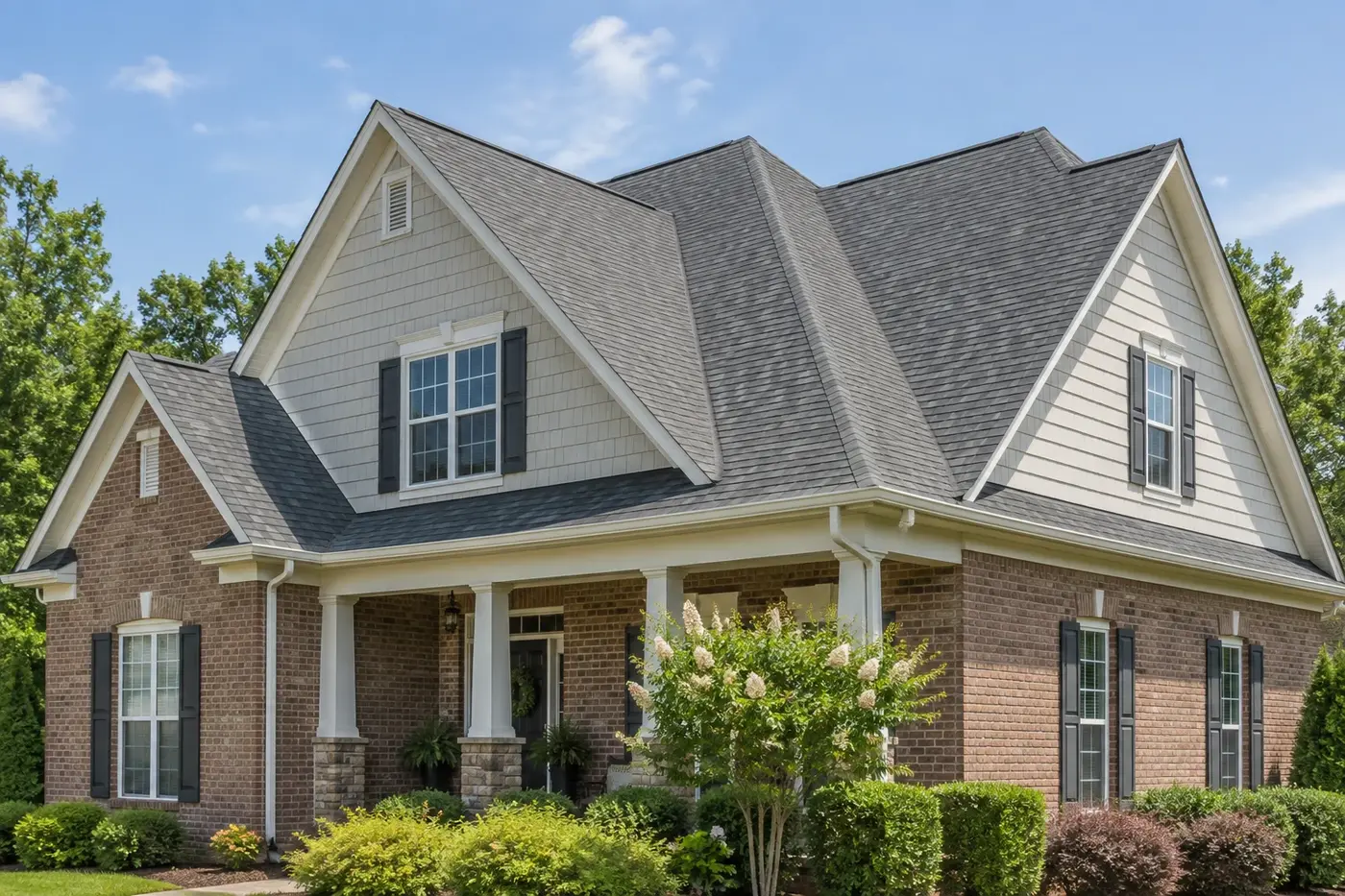
Start with the documents that apply to your property
Ask the association or management company for the current declaration, covenants, architectural guidelines, application form, fee schedule, submission calendar, and any roof-specific product or color list. Rules can differ between nearby Indian Trail communities, and an older copy saved from a prior project may no longer show the current process.
Look for terms such as exterior alteration, architectural review, roof covering, approved colors, like-for-like replacement, emergency work, material sample, and written approval. Also confirm who decides the request: a management company may collect the packet while an architectural committee or board makes the decision.
North Carolina’s Planned Community Act provides a legal framework for many planned communities, but it does not turn every neighborhood into the same approval system. The recorded documents and facts of a specific community matter. This article is practical project-planning guidance, not an interpretation of your covenants or legal advice.
“Same color” is not always a complete application
A roof can look gray from the street while the proposal changes the manufacturer, product line, color blend, profile, algae-resistance feature, impact classification, or hip-and-ridge product. An HOA may care only about the final appearance, or it may ask for the exact product information. Do not reduce the request to “gray architectural shingles” if the application asks for more.
Use the manufacturer name, shingle line, exact color name, and a current product sheet. Include a physical sample or a photo of the sample against the brick, siding, trim, and stone when requested. GAF cautions that screens can represent shingle colors differently and recommends viewing actual samples. That is useful even when an online visualizer is part of the HOA packet.
Make sure the approved item and the roofing proposal use the same wording. A committee approval for one color should not sit beside a contract naming another. If availability changes before installation, send the proposed substitution back through the required process instead of assuming that two similar-looking colors are interchangeable.
What to include in a roof approval packet
A clear packet helps the reviewer understand the visible result without trying to evaluate the entire roofing contract. Include the property address, owner contact information, contractor information if required, existing roof color, proposed manufacturer and product, exact color, representative sample, front and rear exterior photos, and the planned start window.
If the project changes a visible element, identify it. Examples include switching from three-tab to architectural shingles, changing to metal, adding or removing roof vents, replacing skylights, changing gutter color, or altering visible flashing. If those items are not changing, say so rather than leaving the reviewer to guess.
Keep the technical roofing scope separate but coordinated. The contractor still needs to specify tear-off, decking terms, underlayment, leak barriers, drip edge, flashing, pipe boots, ventilation, starter shingles, ridge caps, property protection, cleanup, warranties, and change-order rules. An HOA approval that says “Charcoal approved” does not establish how the roof will be built.
Approval, permits, and product instructions answer different questions
HOA review generally addresses private community requirements such as appearance and the association’s application process. A local permit or inspection requirement comes from the authority having jurisdiction. Manufacturer instructions control how a named roofing product must be installed for that roof system. The written contract defines the work the homeowner and contractor agreed to perform.
One document should not be treated as a substitute for another. A roof can match an approved neighborhood color and still have an incomplete installation scope. A permit, when required, does not prove the HOA approved the color. A contractor should identify these separate responsibilities before materials are ordered.
Ask who submits each item, who receives the written response, and what must be available before the start date. If the address is near a municipal boundary or the project includes structural, solar, or unusual material changes, confirm the applicable requirements rather than relying on a generic “Indian Trail” answer.
Plan for timing without leaving an active leak exposed
Do not promise a start date until you understand the HOA review window and the contractor confirms material availability. Ask whether the association has fixed meeting dates, whether complete applications can be reviewed between meetings, and whether an incomplete packet restarts the timeline. Get the final response in writing.
An active leak or storm opening may need temporary protection before a normal architectural review can finish. Ask the association whether its documents contain an emergency-work process, and document the condition and temporary work. Emergency protection should remain limited to controlling the immediate risk; it is not automatic approval for every permanent material or color choice.
For the roof itself, keep the response repair-first and evidence-first. Today’s Indian Trail guide to aligned shingle seams explains why a suspicious pattern should be traced and documented before broader work is recommended. If replacement is justified, the HOA packet can then be built around the actual roof plan instead of a rushed assumption.
Keep one complete record after approval
Save the submitted application, attachments, sample identification, emails, written approval, conditions, approved roofing proposal, change orders, product labels, installation photos, final invoice, and warranty documents together. If the property is sold later, the file helps distinguish an approved product from a verbal recollection.
Before installation, compare the delivered bundle labels with the approved product and color. After completion, photograph the roof from normal public viewpoints and retain the contractor’s close and progress photos. If the finished appearance is questioned, those records show what was proposed, what was approved, and what was installed.
Kaliber Roofing serves Indian Trail first with documented roof inspections and same-day or next-day appointments subject to scheduling. Kaliber can identify the proposed roofing system and provide the product details needed for a homeowner’s application, while the homeowner or association confirms the actual approval requirements for that property.
Related guidance
Common questions
Does replacing my roof with the same color always avoid HOA approval?
No. Some associations may allow a like-for-like replacement without a full review, while others still require notice or approval. Confirm how the current rules define like-for-like and get the answer in writing before ordering materials.
Should I order shingles before the HOA responds?
Usually it is safer to confirm written approval and material availability before making a nonrefundable order. If scheduling is urgent, ask the contractor and association what can be reserved without treating the project as approved.
Can an HOA choose how the roof is installed?
An association may have enforceable exterior standards under its governing documents, but appearance approval does not replace code, permit requirements, manufacturer instructions, or the contractor’s technical scope. A project-specific dispute may require advice from the association, permitting authority, manufacturer, or a qualified legal professional.
What if my roof is leaking while approval is pending?
Protect people and the building first. Ask about documented temporary protection and the association’s emergency-work process. Temporary leak control should be photographed and should not be treated as automatic approval for an unreviewed permanent roof change.
Sources and editorial notes
- North Carolina General Assembly: Planned Community Act
- GAF guidance on shingle color, neighborhood, and HOA considerations
- GAF shingle color guide and physical-sample guidance
Prepared with AI assistance and editorially reviewed by Sage. General homeowner planning guidance; not a legal interpretation, HOA decision, code or permit ruling, product approval, or substitute for reviewing the documents and requirements that apply to a specific property.