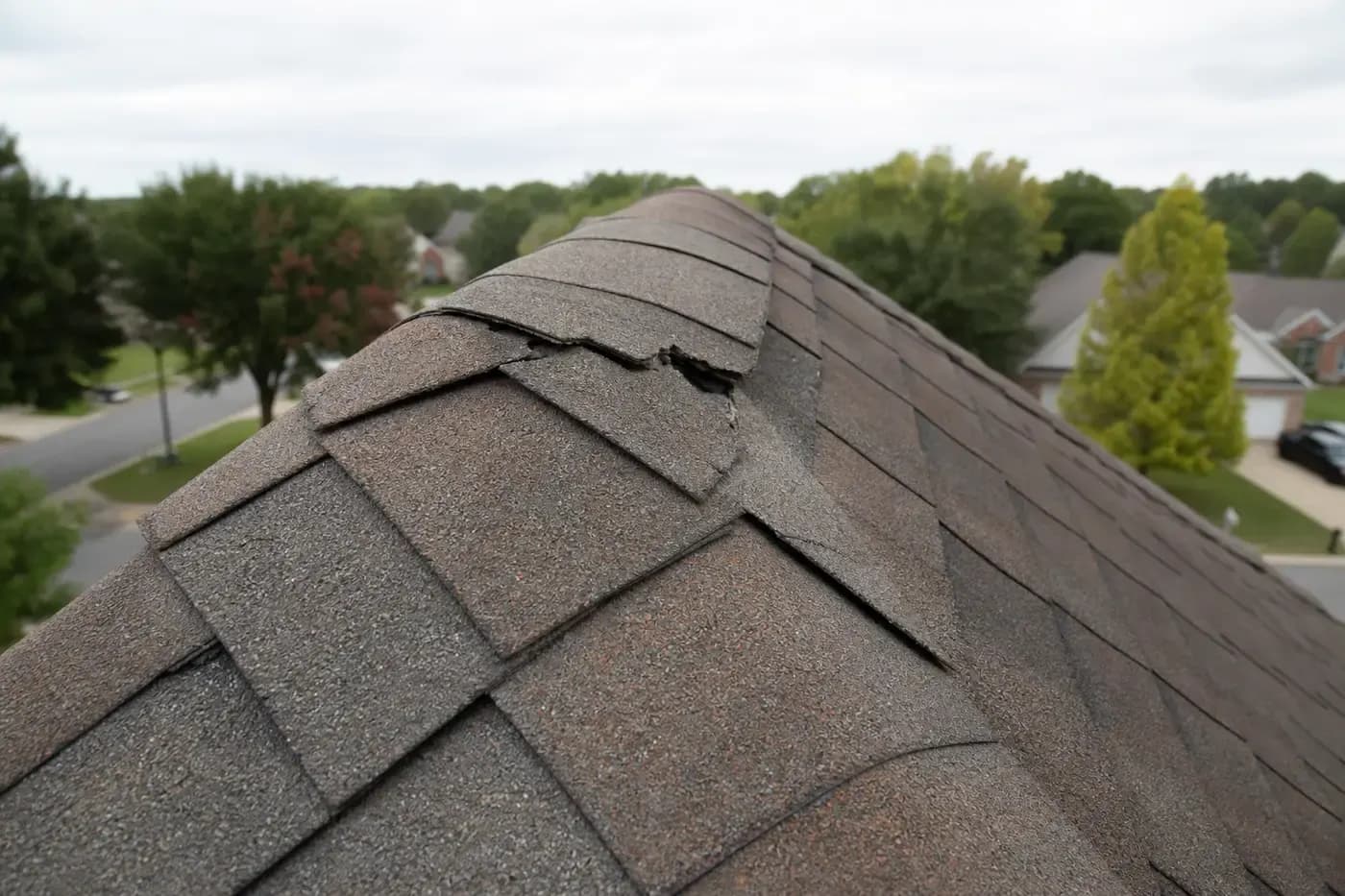
You can usually spot damaged ridge cap shingles by looking for cracked, curled, lifted, missing, or loose shingles along the peak of the roof. In Charlotte, ridge cap damage often shows up after wind, hail, summer thunderstorms, or years of sun exposure. If the peak looks uneven, pieces are in the yard, or a ceiling stain appears near the center of the house, get the roof inspected before the next hard rain.
Ridge caps do not always get the attention that missing field shingles do. They should. The ridge is one of the most exposed parts of the roof, and when it starts to open up, wind-driven rain gets a much easier path into the roof system.
Here is the frustrating part: ridge cap damage can look small from the driveway. One lifted tab. One split cap. A few bare nail heads. But up at the peak, small openings take a beating from Charlotte weather because that area catches wind from both roof slopes.
If you recently had a storm and also see missing shingles elsewhere, compare this with our guide on what to do when shingles are missing in Charlotte. If water is already coming inside, start with our storm roof leak steps and protect the interior first.
What Ridge Cap Shingles Actually Do
Ridge cap shingles cover the peak where two roof slopes meet. Instead of lying flat like regular shingles, they bend over the ridge and shed water down both sides of the roof. On many Charlotte homes, that ridge also works with attic ventilation, which makes proper installation even more important.
Think of the ridge as a seam. The roof needs that seam protected from rain, wind, UV exposure, and heat cycling. When the caps are tight and intact, water runs away. When they split, curl, or lift, the seam is exposed.
That is why a damaged ridge cap should not be shrugged off as cosmetic. It sits at the top of the system. Water that enters there can travel before it stains a ceiling, so the wet spot inside may not line up perfectly with the visible damage outside.
Signs Your Ridge Cap Shingles May Be Damaged
From the ground, look for ridge caps that seem raised, crooked, cracked, or missing. Binoculars help. You may see one section that sits higher than the rest, a flap lifted by wind, a dark gap along the peak, or a cap shingle folded back on itself.
After a storm, walk the yard and driveway. Pieces of shingle near downspouts or landscaping can be a clue. So can fresh granules in gutters, dents in metal vents, torn ridge vent material, or debris sitting across the roof peak.
Inside the home, pay attention to stains near upstairs ceilings, attic moisture near the ridge, musty insulation, or water marks on rafters. Those signs do not prove the ridge is the leak source, but they do mean the roof needs a real inspection instead of guesswork.
Why Ridge Cap Shingles Get Damaged Around Charlotte
Wind is the obvious one. Ridge caps are exposed from both sides, and gusts can lift a loose edge or finish off brittle shingles. Charlotte-area thunderstorms can also drive rain sideways, so a ridge cap that was barely hanging on may finally leak during one nasty storm cell.
Age matters too. Heat, UV, attic ventilation problems, and years of expansion and contraction can make ridge caps dry, brittle, or cracked. Sometimes the ridge fails before the main roof field looks terrible because the caps take more direct weather exposure.
Installation can play a role as well. Wrong fastener placement, exposed nails, overdriven nails, reused old caps, poor seal strips, or ridge vent mistakes can all shorten the life of that area. Not every ridge problem is storm damage. Some are wear. Some are workmanship. Some are both.
Can Damaged Ridge Caps Cause a Roof Leak?
Yes. Damaged ridge cap shingles can let water reach underlayment, decking, attic insulation, and ceiling drywall. The leak might show up fast after a hard storm, or it might build slowly through repeated wind-driven rain.
One thing homeowners miss: the ridge can leak even if the rest of the roof looks fine from the street. Water follows framing, nails, underlayment laps, and ventilation openings. By the time you see a stain, the leak may have been active for a while.
If water is already entering the house, do not wait for a sunny weekend to think about it. Move belongings, protect the floor, take photos, and schedule a roof repair inspection. If the damage followed wind or hail, our storm damage roof repair team can document the condition clearly.
Worried about ridge cap damage after a Charlotte storm?
Request a Free Roof InspectionDoes Ridge Cap Damage Mean Repair or Replacement?
Sometimes it is a focused repair. If the main roof is in good condition and only a few ridge caps are cracked, missing, or poorly sealed, replacing that section may be enough. That is the best-case scenario.
Other times, ridge cap damage is the clue that the whole roof is aging out. If the caps are brittle, the field shingles are losing granules, multiple slopes have lifted tabs, or leaks keep showing up in different places, a bigger plan may make more sense. Our guide on repairing vs replacing a Charlotte roof walks through that decision.
The inspection should answer a few plain questions: Is the damage isolated? Is there water in the attic? Are the nails and ridge vent installed correctly? Are nearby shingles still flexible enough to repair? And if a storm caused it, what documentation should be saved?
When Should You Call Kaliber?
Call Kaliber if you see missing ridge caps, lifted shingles at the roof peak, exposed nails, torn ridge vent material, fresh shingle pieces in the yard, attic moisture, or a ceiling stain after heavy rain. That is especially true if the issue appeared after wind, hail, or a fallen limb.
Kaliber Roofing serves Charlotte, Indian Trail, Matthews, Mint Hill, Ballantyne, Pineville, Weddington, Stallings, Monroe, Waxhaw, Concord, Huntersville, Cornelius, Midland, and nearby communities. We will inspect the ridge, photograph what we find, explain whether a repair is realistic, and avoid pushing replacement when the roof does not need it.
Frequently Asked Questions
How can I tell if my ridge cap shingles are damaged?
Look for cracked, curled, missing, lifted, or loose shingles along the peak of the roof. You may also notice exposed nail heads, granule loss, pieces of shingle in the yard, or ceiling stains near the center line of the roof. Use binoculars from the ground if needed, but do not climb the roof to check.
Can damaged ridge cap shingles cause a roof leak?
Yes. Ridge cap shingles protect one of the highest, most exposed seams on the roof. If they crack, lift, blow off, or pull away around nails, wind-driven rain can reach the ridge, underlayment, attic, and roof decking.
Should ridge cap damage be repaired right away?
It should be inspected quickly, especially before more rain. A small ridge cap repair may be simple when caught early, but waiting can let water reach decking, insulation, ceilings, or nearby ventilation details.
Does insurance cover ridge cap shingles blown off by wind?
Coverage depends on your policy and the cause of damage. Sudden wind damage may be treated differently than old, brittle shingles or poor installation. Take photos, note the storm date, and ask for an inspection before assuming either way.
Can I replace ridge cap shingles myself?
Most homeowners should not. Ridge work usually means walking near the highest point of the roof, where fall risk is serious. A roofer can check whether the issue is isolated ridge cap damage, ventilation-related, storm-related, or part of a broader aging-roof problem.
Does Kaliber Roofing repair ridge cap shingles around Charlotte?
Yes. Kaliber Roofing inspects and repairs ridge cap damage, missing shingles, wind damage, roof leaks, ventilation issues, flashing problems, and storm-related roof damage for Charlotte-area homeowners.
Not sure what is happening at the roof peak?
Kaliber Roofing can inspect the ridge, attic, shingles, and storm evidence so you know whether this is a small repair or part of a bigger roof issue.