Yes. A full asphalt-shingle roof replacement in Indian Trail should normally include removing the old shingles before the new roof goes on. The tear-off exposes the wood deck for inspection, clears away worn roofing and old fasteners, and gives the new underlayment, flashing, and shingles a clean starting point. Still, read the proposal. “Replacement” should not leave you guessing whether tear-off, disposal, and cleanup are included.
That distinction matters because a tear-off and a roof-over are two different jobs. From the yard, both may end with new shingles. Underneath, the scope is not remotely the same.
A clear contract should tell you how many existing layers will be removed, what happens to the debris, how concealed deck damage is handled, and what the crew checks before covering the roof again. Those details prevent a vague price from turning into a string of surprises.
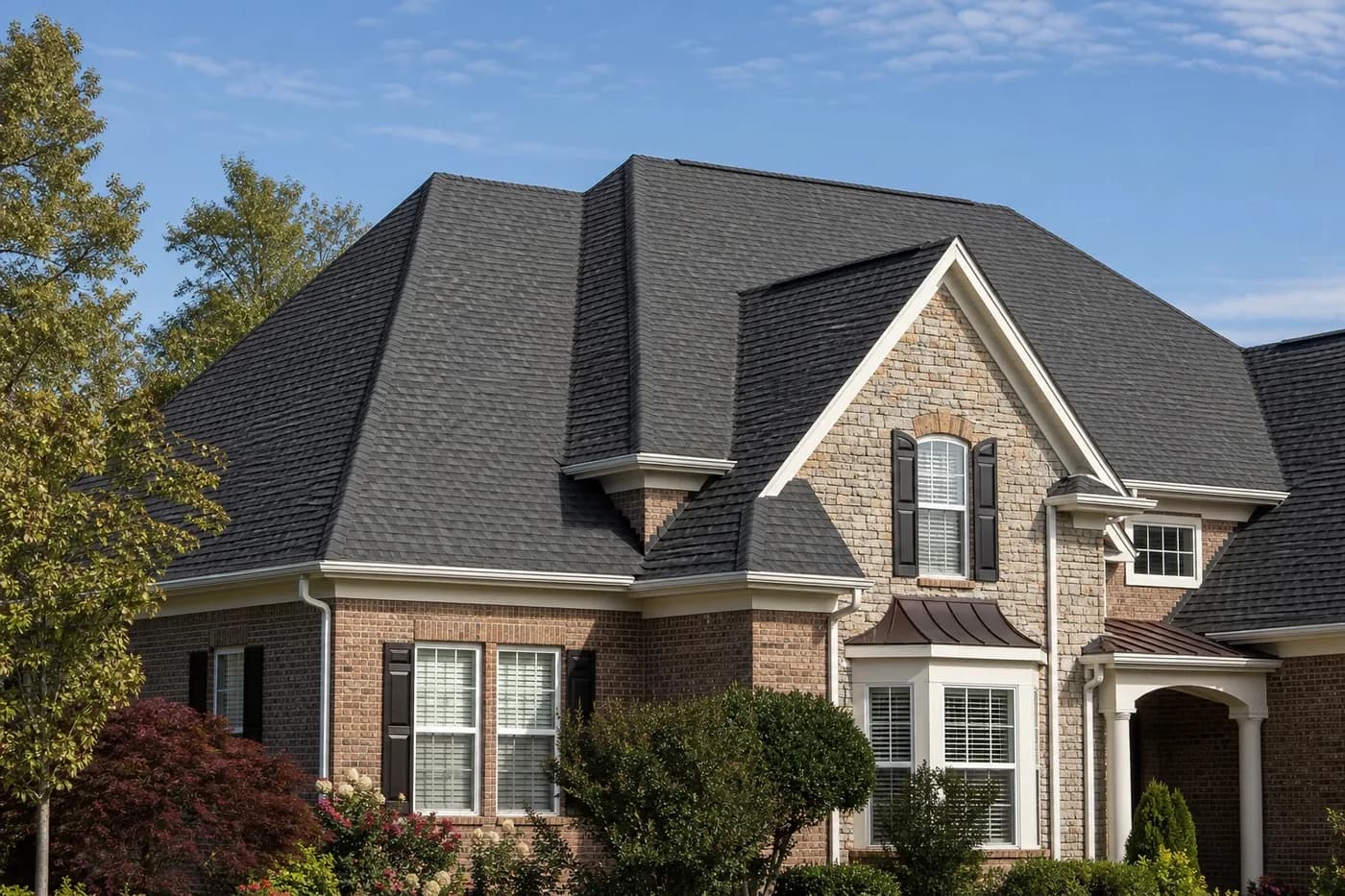
What Does an Old-Shingle Tear-Off Include?
Tear-off starts at the top and works down through the materials being replaced. Field shingles and ridge caps come off first. The crew also removes the old underlayment and disposable nails or fasteners that would interfere with deck preparation. Flashing, vents, pipe boots, and edge metal are evaluated according to the written replacement plan rather than tossed into one generic category.
Then comes the unglamorous part: controlling thousands of loose pieces as they leave the roof. Crews may use tarps, catchment systems, trailers, or containers depending on the property and access. On tighter lots around Indian Trail, Stallings, and Matthews, placement deserves thought. A container cannot simply block the safest route, damage a surface, or leave landscaping unprotected.
Weather planning matters too. The crew should open only as much roof as it can protect, watch the forecast, and have a dry-in plan. Summer weather in Union County can change quickly. Speed helps, but controlled sequencing matters more.
Why Does Seeing the Bare Roof Deck Matter?
Old shingles hide the surface that holds every new fastener. Once the roof is stripped, the crew can see soft areas, delaminated panels, broken boards, open seams, old patches, staining, and places where fasteners no longer hold well. Some stains record an old leak and leave the wood sound. Other areas have lost strength. You need the difference documented, not guessed from above.
The exposed deck also makes roof geometry easier to evaluate. Valleys, wall lines, eaves, penetrations, and ventilation openings can be checked before fresh materials conceal them. This is the right time to correct a weak foundation. Our guide to roof decking during replacement explains which wood may stay and which conditions call for replacement.
After repairs, the deck should be reasonably clean, flat, secure, and ready for the next layer. New underlayment does not make damaged wood stronger. It only makes the problem harder to see.
How Is a Full Tear-Off Different From Installing Over Old Shingles?
A roof-over, sometimes called an overlay, leaves the existing shingles in place and adds a new layer above them. That may reduce tear-off labor and debris on a narrowly suitable roof. But there is a tradeoff: the old roof still hides the deck, old flashing details, and previous repairs. The new surface also follows whatever unevenness is already there.
Overlays are not a default shortcut. The number of existing layers, deck condition, shingle condition, roof slope, flashing geometry, structural loading, product instructions, local requirements, and warranty terms all affect whether the approach is available or sensible. A roof with curled shingles, soft decking, active leaks, uneven planes, or unresolved flashing problems needs more than a fresh skin.
Ask one direct question: “Is this price for a complete tear-off to the deck?” If the answer is no, ask why the alternate scope fits your specific roof and what cannot be inspected. Plain language beats assumptions.
Should Disposal, Nail Pickup, and Final Cleanup Be Included?
They should be written into the job. Removal is only half complete if old shingles remain piled beside the house. The proposal should cover loading, haul-away, disposal fees, and cleanup of the accessible work area. Ask where the trailer or container will sit and how the crew will protect siding, windows, landscaping, decks, HVAC equipment, and exterior fixtures while material comes down.
Nails deserve their own conversation. Crews commonly combine controlled collection, hand pickup, sweeping, gutter checks, and magnetic passes over accessible ground. A magnet helps on lawns and planting edges, but it is not a magic eraser. Nails can hide under mulch, leaves, thick ground cover, or objects that were never moved. That is why preparation and a deliberate final walkthrough matter.
Before work begins, move fragile items and follow the contractor's instructions for access around the home. Afterward, look at gutters, porches, paths, planting beds, and areas near downspouts. If something was missed, point it out while the crew and cleanup equipment are still there.
What Should the Roof Replacement Estimate Say?
Look for a line that describes removal of the existing roofing down to the deck, including the assumed number of layers. It should say whether underlayment, caps, vents, boots, flashing, and edge components are removed or evaluated, then identify what replaces them. Our guide to new roof underlayment covers the hidden layer that should follow deck preparation.
The proposal should also explain concealed decking. Contractors cannot know the exact quantity before the roof is open, but the decision process does not have to be vague. Ask how damaged wood is measured, what the unit price is, who approves additional work, and whether photos will document the condition before it is covered.
Finally, confirm disposal, property protection, and cleanup. A complete roof replacement scope connects demolition with the finished system. Tear-off, dry-in, installation, cleanup, and the final inspection are one job—not unrelated add-ons revealed one at a time.
Want a roof replacement scope that explains the tear-off before work begins?
Kaliber Roofing can inspect your Indian Trail roof and walk through removal, decking, hidden components, cleanup, and the finished system in plain language.
Schedule a Free Roof InspectionFrequently Asked Questions
Are old shingles normally removed during roof replacement?
Yes. A full asphalt-shingle tear-off normally includes removing the old shingles, caps, underlayment, and related disposable roofing materials so the deck can be inspected and prepared. If a proposal is for an overlay instead, it should say that clearly.
Can new shingles be installed over old shingles?
An overlay may be possible in limited situations, but it is not the same scope as a full replacement. Existing layers, roof condition, deck flatness, flashing details, product instructions, local requirements, and long-term repairability all need to be considered before choosing that route.
Why is tear-off important if the old roof is not leaking?
Tear-off reveals the roof deck, old fastener holes, hidden patches, stained areas, soft wood, flashing transitions, and ventilation openings. A roof can look dry indoors while still having concealed conditions that should be addressed before the new system covers them.
Does shingle removal include hauling away the debris?
It should when disposal and haul-away are written into the contract. Ask who supplies the container or trailer, where it will be placed, what materials are included, and whether disposal fees are part of the quoted price.
How should roofers clean up old roofing nails?
Crews commonly combine tarps or controlled collection, hand pickup, sweeping, gutter checks, and magnetic passes around accessible ground areas. No method can promise that every hidden nail will be found, so the final walkthrough and cleanup scope still matter.
What happens if damaged decking appears after the shingles come off?
Damaged sections should be documented and addressed before new underlayment and shingles cover the deck. The contract should explain how decking is measured, priced, photographed, and approved when the exact quantity cannot be known before tear-off.