Yes. A full asphalt-shingle roof replacement in Indian Trail should normally include new ridge cap shingles at every peak and hip. The old caps come off during tear-off, and new compatible caps finish the new roof after the field shingles and any ridge vent are in place. Do not assume they are covered just because an estimate says “complete roof.” Ask for the cap product and scope in writing.
Ridge caps are a small part of the material list, but they work in the most exposed places on the roof. Wind crosses the peak. Summer sun hits it hard. Rain has to split and move down either side without finding a loose edge or misplaced fastener.
That is why the detail deserves more than whatever material happens to be left at the end of the job. The cap has to fit the roof shape, match the shingle system, and be fastened at the correct exposure.
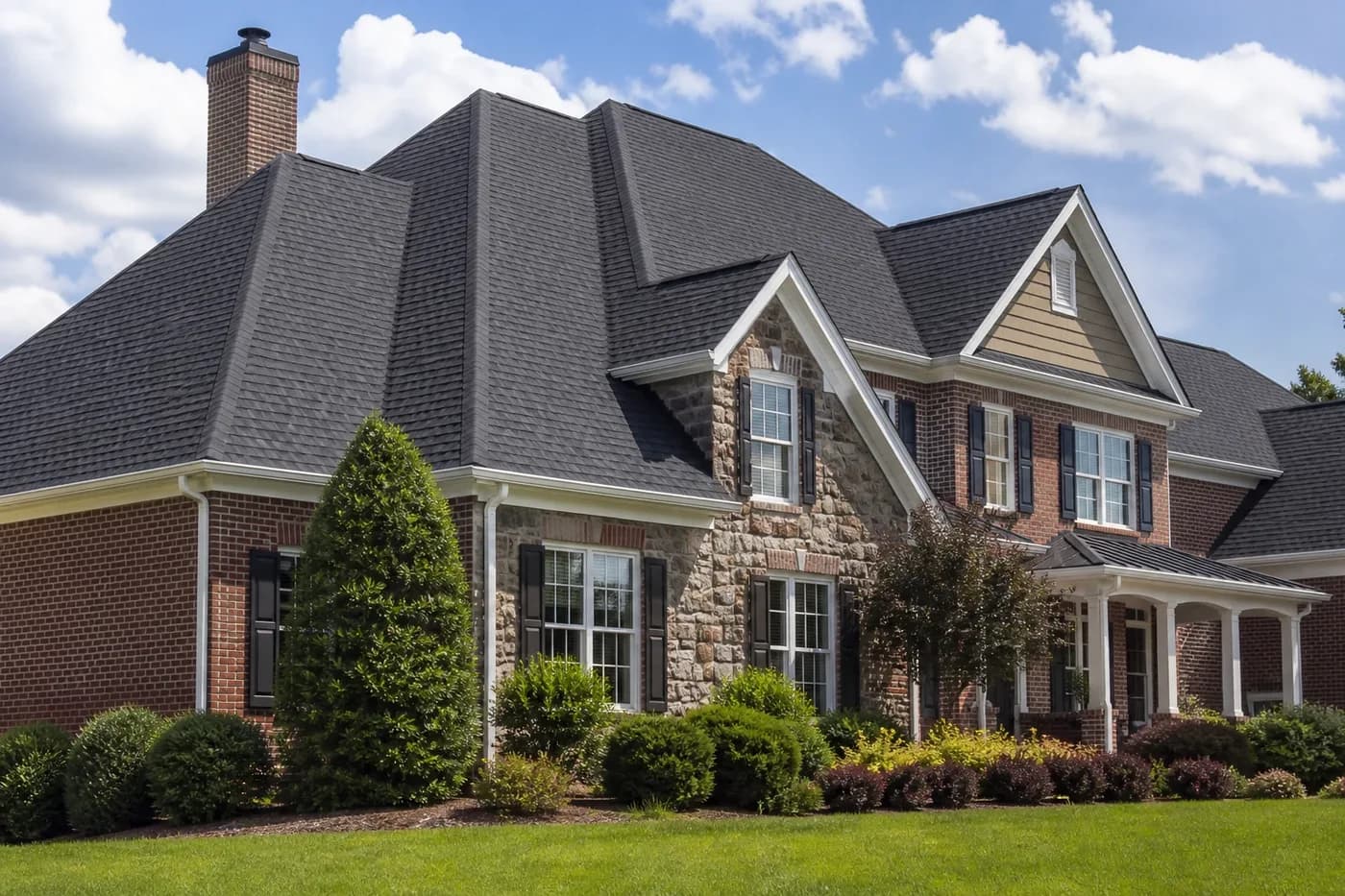
What Do Ridge Cap Shingles Actually Do?
Field shingles lie mostly flat across each roof plane. At a ridge or hip, two planes meet and create an angle. Cap shingles bridge that joint in overlapping courses, shedding water away from the seam while giving the roof a finished edge.
Purpose-made caps are designed to bend over that angle and install at a stated exposure. Depending on the roofing system, they may also carry a profile that complements the field shingles. The visual match is useful. The installation match is more important.
A cap is not merely trim. Missing, cracked, lifted, or poorly fastened pieces can expose the joint below to wind-driven rain. On a vented ridge, the cap also protects the vent assembly while leaving the intended airflow path intact.
What Should Ridge Cap Replacement Include?
First, the old caps and nearby roofing come off with the rest of the tear-off. That exposes the ridge or hip so the crew can check the deck edges, old fastener damage, and the condition of any existing vent. New field shingles are then carried up each plane in the sequence required by the roofing system.
At hips, caps are usually installed from the lower end toward the top so each piece overlaps the one below. At ridges, the crew has to account for prevailing weather, ridge intersections, vent ends, and the manufacturer's starting and finishing details. A complex roof may have several hips feeding into one short ridge; every one needs a planned termination.
Material choice matters too. Some systems call for a purpose-made cap shingle. Others may permit a specifically prepared field shingle. Either can only be judged against the written product instructions and warranty requirements. Cutting random laminated shingles on the roof because the cap bundles ran short is not a material plan.
How Do New Ridge Caps Work With a Ridge Vent?
A ridge vent changes the detail underneath the caps. The deck opening should be the correct width and stop where the vent manufacturer requires. The vent must sit straight, remain open to the attic below, and terminate cleanly before the ridge ends. Then compatible cap shingles are fastened through the approved locations without crushing or distorting the vent.
More vent is not automatically better. Exhaust at the peak depends on adequate intake lower in the attic, usually at the soffits. Mixing powered fans, gable vents, and ridge ventilation without a plan can change how air moves. Our guide to roof vents during replacement explains why the whole intake-and-exhaust system should be reviewed together.
Look closely at the ends. A ridge vent that stops awkwardly, a cap that bridges an open gap, or visible face nails near the termination can become a leak point. Small detail. Big exposure.
What Should the Roof Estimate Say About Ridge Caps?
The proposal should identify the hip-and-ridge product, color, and roofing system it belongs to. It should also make clear whether the price covers every ridge and hip, the ridge vent, vent removal or replacement, and any deck repair discovered along the peak.
Ask how quantity was measured. Field shingles are discussed by roof area, while cap coverage follows the linear length of hips and ridges. A roof with several gables and hips can need much more cap material than a simple two-plane roof of similar square footage.
A complete roof replacement scope should connect the cap shingles with the field shingles, starter, underlayment, flashing, ventilation, penetrations, and roof edges. If the estimate names only the field-shingle brand and color, it is not yet describing the whole assembly.
What Should You Check After the New Roof Is Finished?
Start from the ground. The cap courses should look even along the hips and peaks, with no obvious humps, wandering exposure, flipped corners, or gaps at intersections. Ridge vent lines should appear straight and consistent rather than pinched in one area and raised in another.
Then review the close-up photos. Ask to see hip starts, ridge ends, vent transitions, and the final fasteners or seal detail specified at terminations. Wide property photos are good for the overall roofline, but they can hide the exact places where several components meet.
If an older roof only has a few damaged caps, targeted repair may still be reasonable. That is a different decision from installing a full new roof. Our guide to recognizing ridge cap damage covers lifted, cracked, missing, and brittle pieces in more detail.
Want every roof-replacement component listed before work begins?
Kaliber Roofing can inspect your Indian Trail roof and explain the shingles, ridge caps, ventilation, flashing, and hidden layers in plain language.
Schedule a Free Roof InspectionFrequently Asked Questions
Are ridge cap shingles normally replaced with a new roof?
Yes. During a full asphalt-shingle tear-off, the old caps are normally removed and new compatible cap shingles are installed over the roof peaks and hips. The written scope should identify the cap product instead of leaving it implied.
Can old ridge cap shingles be reused?
Reusing old asphalt ridge caps is generally not a sound full-replacement detail. Removal bends and disturbs the pieces, old fastener holes remain, and aged caps may be brittle. New caps let the crew fasten and integrate the peak with the new roof system.
Are ridge cap shingles the same as regular shingles?
Not necessarily. Manufacturers offer purpose-made hip and ridge products with their own dimensions, exposure, nailing pattern, and wind-rating instructions. Some approved systems may use field shingles cut for caps, but that choice should follow the shingle manufacturer’s written instructions rather than jobsite improvisation.
Do ridge caps go over a ridge vent?
On a vented ridge, compatible cap shingles are installed over the ridge vent according to the vent and roofing instructions. The opening, vent, end details, fasteners, and caps all have to work together without blocking airflow or creating a water-entry path.
Why do ridge caps sometimes fail before the rest of the roof?
Caps sit at exposed peaks and hips where they take direct sun, wind, and weather. Problems can also come from incorrect exposure, poor fastening, incompatible materials, or brittle shingles bent too sharply. A failure at the peak does not automatically mean every field shingle is worn out.
How can I verify new ridge caps were installed correctly?
Ask for the product name and installation photos, then review the finished peaks from the ground. Caps should look straight and evenly exposed, with no lifted corners, open joints, visible face nails where they do not belong, or unfinished ridge-vent ends.