Not automatically. A roof replacement in Indian Trail normally covers the roofing materials named in the contract, while rotten or damaged fascia boards are often priced as a separate repair or an approved change after the edge is opened. If fascia work matters to your project, the estimate should say who inspects it, what repair is included, how hidden damage is approved, and whether gutters must be removed and reset.
It is an easy detail to miss. Homeowners see shingles, but the fascia runs vertically along the roof edge, usually behind the gutter. By the time soft wood or peeling paint becomes obvious, water may have been working at that edge for a while.
And a new roof does not magically cure it. Fresh shingles can improve water shedding above, yet decayed trim, loose gutters, bad drip-edge alignment, or a leak farther upslope still needs its own repair plan.
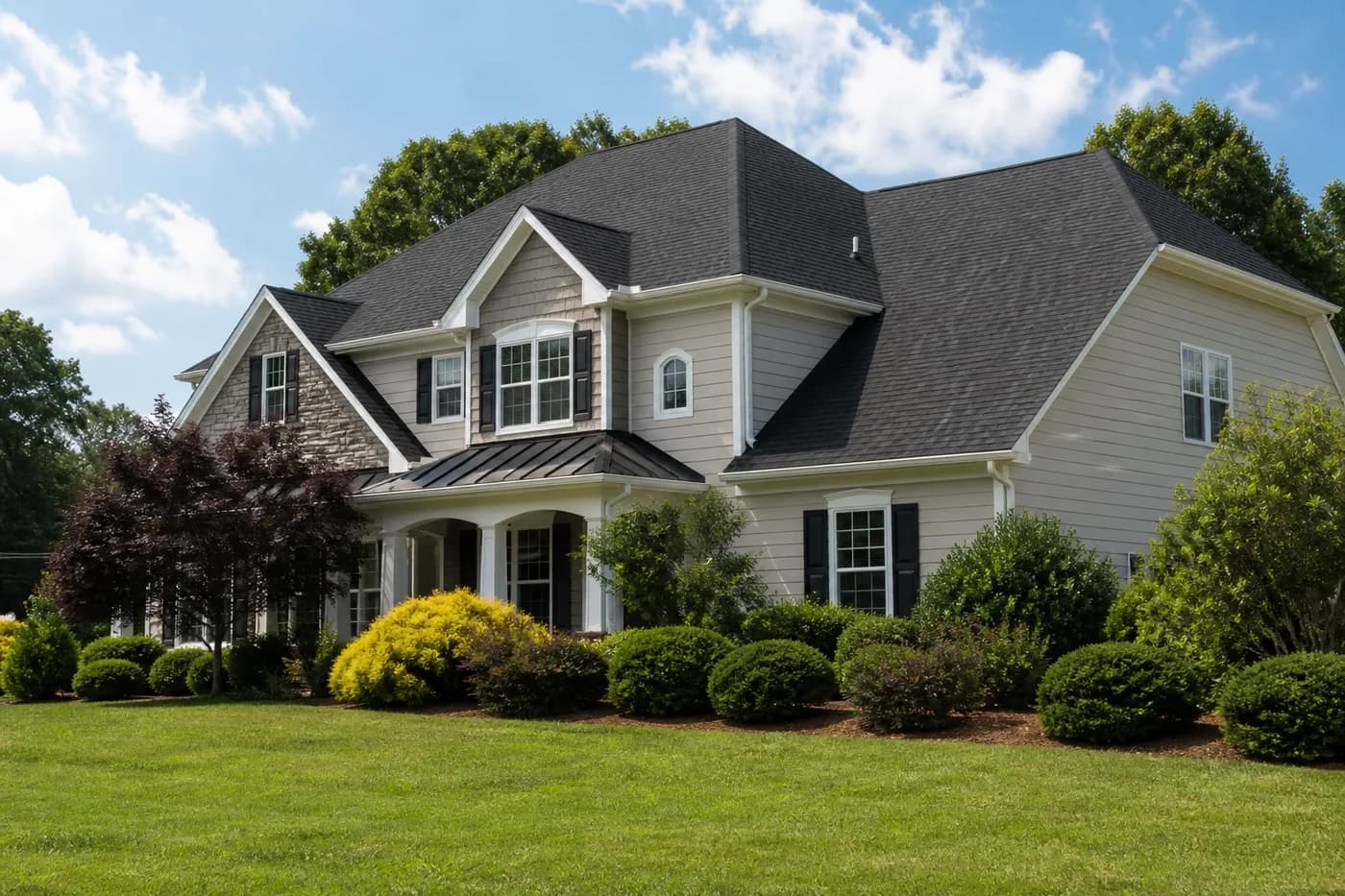
What Does the Fascia Board Do at the Roof Edge?
Fascia is the vertical finishing board at the lower roof edge. It closes off the rafter or truss ends, gives the roofline a clean face, and commonly provides the mounting surface for gutters. The soffit returns from the fascia toward the exterior wall underneath the overhang.
That location puts the board in a busy spot. Runoff should leave the shingles, pass over the drip edge, and enter the gutter. Wind-driven rain, gutter overflow, backed-up debris, short or poorly aligned edge metal, loose fasteners, and leaks higher on the roof can push water where it does not belong.
A fascia board is not interchangeable with roof decking. Decking supports the roofing across the roof plane. Fascia finishes and supports parts of the perimeter. Damage in one area can reach the other, though, especially when moisture stays trapped at the eave.
Paint or metal wrap can hide the surface. That is why a straight-looking edge is not conclusive. A gutter hanger that keeps pulling loose, a soft fastener location, or staining below one valley may reveal a localized problem that is hard to see from the lawn.
When Is Fascia Damage Found During Roof Replacement?
Some damage is visible during the estimate. Look for peeling or swollen paint, dark streaks, open joints, sagging gutter runs, soft corners, missing trim, and wood that crumbles around a fastener. The safest check is from the ground; do not lean from a ladder or pull on a loaded gutter.
Other damage stays hidden. Gutters can cover the board face, metal trim can cover the wood, and the roof edge can conceal the top. Once tear-off exposes the deck perimeter—or a gutter section is removed—the crew gets a better view.
Finding hidden damage should trigger a simple process: photograph it, identify the likely moisture path, measure the affected area, explain the repair, and get approval under the contract. Then the edge can be rebuilt before new roofing hides it again.
Be careful with broad conclusions. One soft corner beneath a leaking gutter joint does not prove every fascia board needs replacement. On the other hand, fresh paint over several weak sections is not a sound repair. The actual wood condition should set the scope.
What Should the Roof Estimate Say About Fascia Repair?
Start with a direct sentence: fascia repair is included, excluded, or available at a stated unit price when damage is discovered. Vague phrases such as “replace roof as needed” leave too much room for disagreement.
If repair is included, identify the material, approximate dimensions, quantity, finish, and limits. Will the replacement match the existing wood profile? Is priming and painting included? What happens to aluminum fascia wrap? Those small details decide whether the edge is actually finished when the roofing crew leaves.
Gutters need their own line. State whether they stay in place, are loosened, or are removed and reset. Note who is responsible if an older section bends or breaks, and confirm that the finished run will be secured and checked for proper drainage.
The roofing layers above matter too. A complete roof replacement scope should connect sound decking, underlayment, drip edge, starter shingles, fascia, soffits, gutters, and flashing rather than treating the edge as unrelated pieces.
How Much of the Fascia Should Be Repaired?
The right repair reaches sound material. A short damaged section may be removed and replaced when the surrounding board is dry, solid, properly joined, and able to hold the gutter system. Long runs may make more sense when decay crosses several joints or matching the existing profile would leave a weak patchwork edge.
What caused the damage? That question comes first. If a valley dumps concentrated water past a gutter, a joint leaks, or drip edge sends water behind the gutter, new wood alone is a reset button—not a solution. Read our guide to gutters pulling away from the roof for related fascia and hanger clues.
Damage can travel farther than the visible paint stain. The contractor should check the nearby decking edge, soffit, rafter or truss tail, gutter attachment, and roof covering above. Extensive structural decay or pest damage may require additional expertise before the roof edge can be closed.
Timing matters. Fascia repair is usually easiest while the affected edge is accessible and before final roofing and gutter work lock everything back together. Delaying a known repair can mean disturbing new materials later.
How Do You Keep New Fascia From Rotting Again?
First, correct the source. The roof should shed water over properly integrated edge metal. Gutters should be secure, pitched to drain, clear enough to carry runoff, and connected to downspouts that move water away without spilling back onto the trim.
Next, finish the material correctly. Cut ends and joints need the coating or trim treatment specified for the chosen fascia product. Open seams, bare end grain, and loose wrap give water an easy path. The exact finishing method depends on whether the repair uses wood, engineered trim, or another approved material.
Watch the repaired area during the next few rains from a safe spot on the ground. Look for drips behind the gutter, overflow at a low point, stains beneath a valley, or a downspout connection that leaks against the board. Catching a drainage problem early is far cheaper than replacing the same trim twice.
If the edge is already showing rot or persistent moisture, our Indian Trail guide to fascia and soffit rot near the roof explains the common warning signs and inspection sequence.
Planning a roof replacement in Indian Trail?
Kaliber Roofing can inspect the roof edge, document visible fascia trouble, and explain the roofing, gutter, and trim scope before work begins.
Schedule a Free Roof InspectionFrequently Asked Questions
Is fascia board replacement automatically included with a new roof?
Usually not. Standard roof replacement covers the agreed roofing system, while fascia work is commonly a separate line item or a documented change if concealed damage appears after tear-off or gutter removal. The written estimate should say what is included instead of leaving the answer to assumption.
How can I tell if a fascia board is rotten?
Peeling paint, dark staining, soft wood, open joints, sagging gutters, repeated water marks, and sections that will not hold gutter fasteners are common clues. A contractor may need to remove or loosen a gutter or edge material to see the full condition.
Can roofers replace fascia boards during roof replacement?
Many roofing contractors can handle limited fascia repair or coordinate it, but the crew, material, finish work, and gutter handling should be confirmed before the project starts. Extensive framing, trim, pest, or siding damage may require another qualified trade.
Can new shingles be installed over rotten fascia?
Fascia is not the main roof deck beneath the shingles, so the answer depends on where the damage is and how the edge assembly is built. Still, rotten fascia should not be ignored because drip edge, gutters, soffits, and roof-edge drainage rely on sound, properly aligned materials.
Do gutters have to come off for fascia repair?
Often, the affected gutter section must be loosened or removed so damaged fascia can be exposed and replaced correctly. The scope should state who handles the gutter, whether it will be reused, and how pitch and drainage will be checked after reinstallation.
What should happen if hidden fascia damage is found during tear-off?
The contractor should stop at the affected area, document the condition with clear photos, explain the repair and price, obtain approval under the contract process, and then rebuild the edge before covering it. Homeowners should not receive an unexplained surprise after the work is hidden.