Fascia or soffit usually starts rotting near the roof in Indian Trail because water is getting trapped at the roof edge. The source may be clogged gutters, a gutter pitched the wrong way, missing or bent drip edge, short shingle overhang, a roof leak above the eave, or humid attic air that cannot vent correctly. The fix is not just painting over the stain. You have to stop the water first.
Fascia and soffit problems are easy to ignore because they sit up high. You notice a brown streak under the gutter, a soft corner, or paint that keeps bubbling. Then a heavy Union County storm rolls through and water pours behind the gutter instead of into it.
That is the moment most homeowners realize the roof edge is part of the roof system, not just trim. Shingles, drip edge, gutters, fascia, soffit vents, attic airflow, and roof decking all meet in a small strip around the house. When one part fails, the wood often pays for it.
Kaliber Roofing helps homeowners sort out roof-edge water problems through roof repair inspections, storm damage roof checks, and free roof inspection appointments across Indian Trail, Stallings, Matthews, Monroe, Waxhaw, and nearby Union County communities.
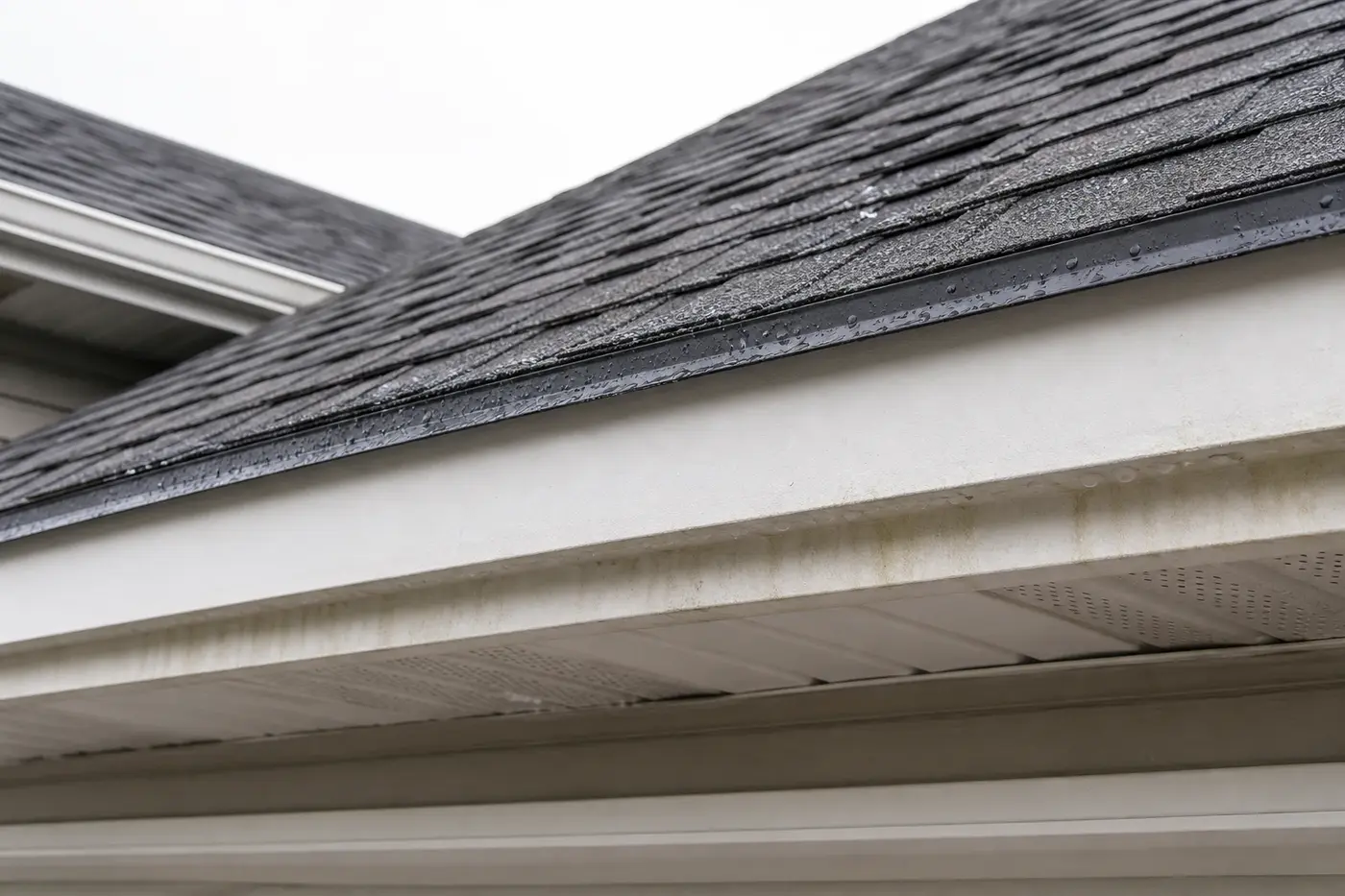
Why Fascia and Soffit Rot Near the Roof
Fascia is the vertical board behind the gutter. Soffit is the underside of the roof overhang. Around Indian Trail, those areas deal with hot summers, humid air, fast afternoon storms, and plenty of leaf debris from mature trees. That mix can keep roof edges damp longer than homeowners expect.
The most common issue is simple: water does not make it into the gutter cleanly. It curls behind the gutter, runs across the fascia, and soaks the bottom edge. After enough rain cycles, the paint blisters, the board softens, and the gutter fasteners can start to loosen.
Sometimes the cause is higher up. A lifted shingle, worn roof edge, bad valley termination, damaged flashing, or missing starter course can let water reach the eave. From the ground, it looks like a gutter problem. Up close, it is really a roof problem feeding the gutter problem.
Warning Signs Indian Trail Homeowners Should Not Ignore
Walk the house after a hard rain and look from the ground. You are watching for brown streaks below the gutter, peeling paint, soft-looking fascia corners, sagging gutter sections, drip marks behind the gutter, soffit panels that bow down, or small gaps where animals could enter.
Inside, check the attic only if you can do it safely from the access opening. Damp insulation near the eave, dark decking, musty smells, rusty nail tips, or daylight where the roof edge should be sealed all deserve attention.
One stained board does not automatically mean the whole roof is failing. Good news. But if the same area gets wet every storm, the damage will keep spreading until the drainage or roof-edge detail is corrected.
Is It a Roof Problem or a Gutter Problem?
It can be either. It can also be both. That is why guessing from the driveway gets expensive.
Gutter-related causes include clogs, undersized downspouts, loose hangers, a gutter that tilts backward, debris packed behind gutter guards, or a gutter installed too low or too tight against the fascia. During a downpour, water spills over or sneaks behind the metal.
Roof-related causes include missing drip edge, drip edge tucked incorrectly, damaged starter shingles, short shingle overhang, lifted tabs at the eave, rotten decking at the edge, or flashing problems dumping water where the gutter cannot catch it. If wind-driven rain is involved, the weak spot may only show during certain storms.
The repair order matters. If the roof edge is wrong, a new gutter may still leak behind the fascia. If the gutter is failing, replacing fascia without correcting drainage just gives water fresh wood to ruin.
Seeing stains, soft fascia, or water behind the gutter?
Schedule a Roof Edge InspectionWhat To Check Safely Before Calling
Stay off the roof. Seriously. Wet shingles, loose gutters, and soft trim are not worth a fall.
From the ground, take photos of the damaged area from a few angles. Note whether the staining is below a valley, roof-to-wall area, dormer, downspout, or long gutter run. If you can see debris packed in the gutter, write that down too.
After the next rain, watch how water moves. Does it overflow the front lip? Drip between the gutter and fascia? Pour from one end? Back up near a downspout? Those clues help separate drainage issues from roof-edge leaks.
If you see active leaking inside the house, a sagging gutter pulling away from the fascia, or a soft roof edge, move faster. That can turn into decking damage, pest entry, or interior water damage if it sits through another storm cycle.
What To Do Next
A good inspection should follow the water. That means checking the shingles above the area, the drip edge, gutter attachment, downspouts, fascia board, soffit panels, attic intake ventilation, and roof decking near the eave.
Small repairs may involve correcting gutter pitch, clearing drainage, replacing a pipe boot or roof-edge shingle detail, repairing drip edge, or replacing a limited section of damaged fascia after the water source is handled. Larger repairs may involve rotten decking, widespread edge damage, or roof replacement planning if the shingle system is at the end of its life.
Either way, do not let anyone cover rotten wood and call it fixed without explaining why it rotted. The stain is the symptom. The water path is the problem.
Frequently Asked Questions
Why does fascia rot near the roof edge?
Fascia usually rots when water keeps touching the board instead of shedding into the gutter and away from the house. Common causes include clogged gutters, bad gutter pitch, missing or bent drip edge, short shingle overhang, roof-edge leaks, and repeated splashback during heavy rain.
Can a roof leak cause soffit damage?
Yes. A leak at the eave, valley, wall flashing, or roof edge can travel into the soffit area before it shows inside the house. Soffit staining, peeling paint, soft panels, or a musty smell near the attic edge are signs the roof system needs to be inspected.
Is rotted fascia an emergency?
It depends on how soft or widespread the damage is. A small stained area can often be scheduled normally, but sagging gutters, active dripping behind the gutter, animal entry, soft roof decking, or water entering the home should be checked quickly.
Should I replace the gutter or repair the roof first?
Find the water source first. Replacing a gutter will not solve a missing drip edge, damaged shingles, or rotten roof decking. A good inspection should check the roof edge, gutter attachment, fascia board, soffit ventilation, and attic side before recommending the order of repairs.
Does Kaliber Roofing inspect fascia and soffit roof-edge leaks near Indian Trail?
Yes. Kaliber Roofing inspects roof-edge leaks, drip edge issues, gutter-related water damage, fascia and soffit warning signs, attic ventilation clues, storm damage, and roof repair needs in Indian Trail, Union County, Stallings, Matthews, Monroe, Waxhaw, Weddington, Mint Hill, and nearby Charlotte-metro communities.
Need someone to trace the roof-edge water source?
Kaliber Roofing can inspect the gutter line, fascia, soffit, shingles, drip edge, and attic clues so you know what actually needs fixing.