Sometimes. A small repair above a sound eave may be completed while the gutter stays in place, but the gutter often needs to be loosened or temporarily removed when it blocks access to damaged fascia, the roof-deck edge, drip edge, gutter apron, starter shingles, or the gutter’s own fasteners. The decision should follow the repair boundary—not a blanket rule. Before work begins, the written scope should identify which layers are damaged, whether the gutter can be protected in place, who will detach and reset it if needed, and how runoff will be directed into the gutter after the repair.
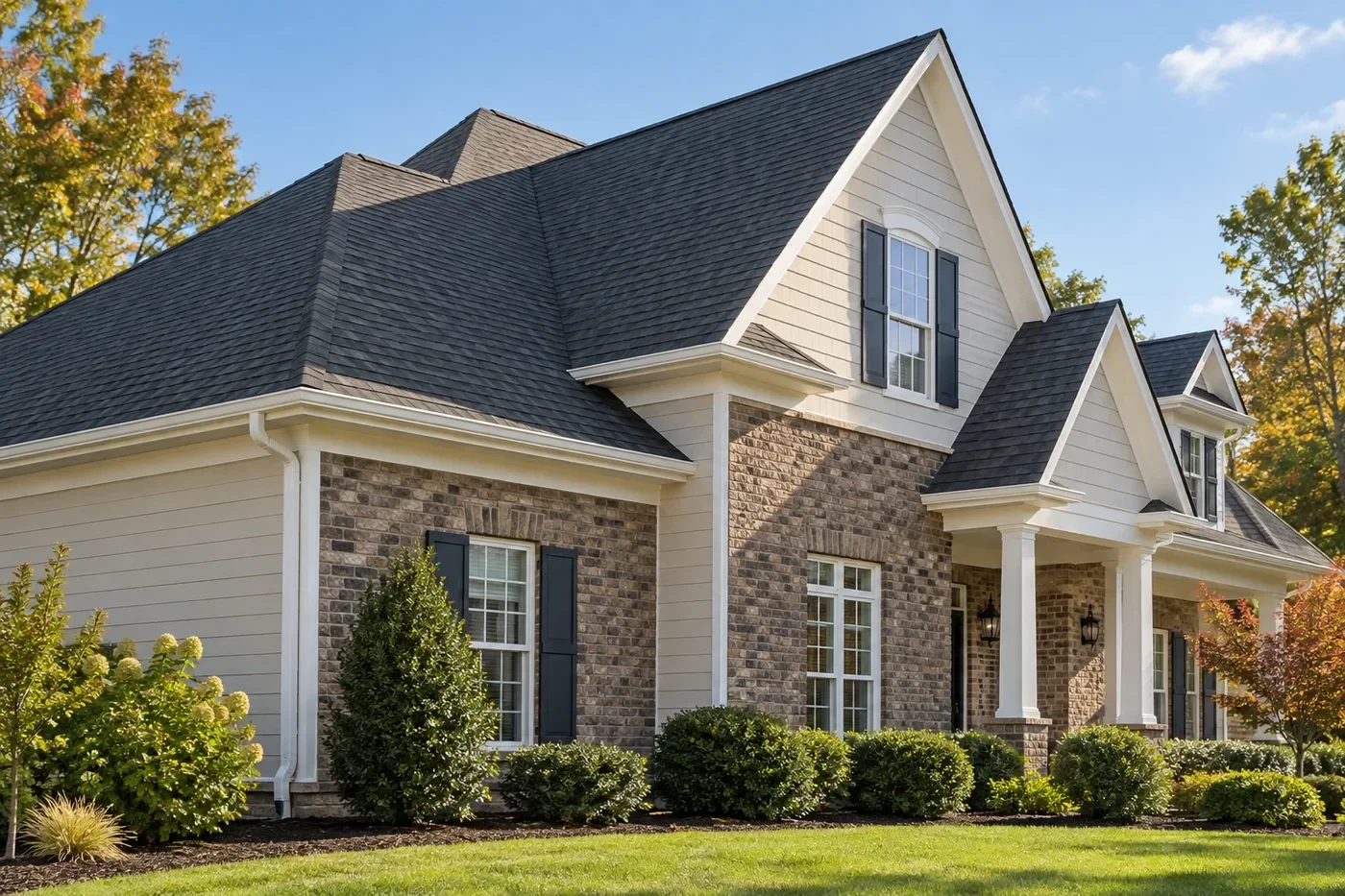
The repair boundary decides whether the gutter stays
A gutter is attached at the eave, where several roof components meet: the first shingle courses, starter material, underlayment, roof decking, drip edge or gutter apron, fascia, soffit, and gutter hangers. Damage limited to shingles farther up the slope may not involve the gutter at all. Damage at that layered edge is different because the gutter can cover the very materials that need to be inspected or replaced.
The useful question is not whether gutters always come off for roof repair. It is whether the contractor can reach dry, sound material and rebuild the complete water-shedding path without bending the gutter, hiding damaged wood, trapping flashing, or fastening into a weak fascia board.
That answer can vary along one house. A straight eave with sound fascia may allow careful work in place, while a corner, low spot, valley discharge, or rotten section on another elevation may need temporary gutter removal.
Repairs that may leave the gutter in place
The gutter may remain when the confirmed defect sits above the edge, the lowest shingle courses can be opened without damage, the drip edge is correctly aligned, and the fascia and decking edge are dry and solid. A localized shingle replacement or a repair that ends well above the eave does not automatically justify disturbing a secure gutter run.
A minor alignment correction may also be possible without removing the entire run. For example, accessible hangers can sometimes be adjusted when the receiving wood is sound and the roof-edge flashing already directs water into the trough. That is gutter work, not proof that the roof edge itself is damaged.
Leaving the gutter in place should still be deliberate. It needs protection from ladders, falling material, foot pressure, and bent flashing. Photos before and after the work should show that the trough, hangers, downspout connection, and drainage line were not damaged or shifted.
When temporary gutter removal is usually the responsible access plan
Temporary removal becomes more likely when the fascia is soft, split, or unable to hold hangers; when the edge of the roof deck is swollen or rotten; or when the drip edge is missing, corroded, bent, too short, or trapped behind the gutter. Those materials cannot be evaluated honestly if the gutter hides the repair area.
Removal may also be needed when the gutter is mounted through or tight against the flashing that must be replaced, when hangers block the repair boundary, or when the trough sits too high or too low for the rebuilt edge. Trying to slide new material blindly behind an attached gutter can leave the laps, fasteners, and drainage path unverified.
This does not always mean buying new gutters. A sound section can often be detached carefully, labeled, stored without distortion, and reset after the roofing and fascia work is complete. Replacement becomes a separate decision when the gutter itself is cracked, badly bent, corroded, undersized for the design, or unable to be reinstalled securely.
Why drip edge and gutter position must be checked together
Drip edge is not decorative trim. The Asphalt Roofing Manufacturers Association explains that it helps shed water away from the roof deck and fascia, and that its lower flange should direct water away from supporting wood. GAF likewise advises that, at a gutter edge, shingles should direct runoff into the gutter instead of down the face of the building.
That relationship can fail even when each part looks acceptable by itself. A secure gutter mounted below a short edge metal profile may let water pass behind the trough. A correct drip edge cannot make up for a gutter that has pulled away or twisted. New fascia will get wet again if the repaired assembly still sends runoff behind it.
A complete repair therefore checks the shingle overhang, starter course, underlayment-to-edge-metal sequence, metal profile and laps, fascia condition, gutter height and pitch, hangers, outlets, and downspouts. Product instructions and the existing roof assembly matter; there is no universal retrofit detail that fits every eave.
What hidden damage can change the scope
Painted fascia can look intact while the wood behind a gutter is soft. The top edge of the fascia and the lower edge of the decking are especially easy to miss from the ground. Staining, peeling paint, a widening gutter gap, bowed soffit panels, or damp attic insulation near an exterior wall are clues—not a diagnosis.
Once the area is opened, the contractor may find solid wood that only needs to dry and be protected, or damage that continues beyond the visible stain. The scope should expand only far enough to reach sound material and restore the affected layers. One damaged eave section is not automatic evidence that every gutter or the whole roof must be replaced.
If the gutter is supporting standing water, pulling on soft fascia, or threatening to fall, keep people and belongings away from the area below. Do not climb a ladder against the loose run or push it back into place without knowing what the fasteners will enter.
What the written repair scope should say
Require the estimate to name the affected elevation and repair length, the roofing layers and wood components included, and whether the gutter will stay, be loosened, or be fully detached. If removal is planned, the scope should identify who handles it, where the section will be stored, whether existing hangers can be reused, and who is responsible for resetting pitch, outlets, and downspouts.
The document should also explain how concealed decking or fascia damage will be priced and approved, which edge metal profile will be used, how it will integrate with the existing underlayment and shingles, and how disturbed shingles will be refastened and sealed according to the applicable product instructions.
Closeout should include before-during-after photos and a drainage check. The finished path should carry water from the shingles across the roof edge and into the gutter without sending it behind the trough or down the fascia. If the existing gutter cannot be reset to do that, the contractor should explain why with measurements and photos rather than treating replacement as an unstated add-on.
How Indian Trail homeowners can document the problem safely
From the ground, photograph the whole gutter run and then the stained, sagging, or separated area. During rain, from a protected location, note whether water spills over the front, leaks at a seam, passes behind the gutter, or misses the trough at one edge. Check downspout discharge from a safe distance so a blockage is not mistaken for a roofing defect.
If the attic is safely accessible, look for damp insulation or staining near the eave without touching wet wiring or walking on framing that is not designed as a floor. Do not lift shingles, pry on drip edge, or lean a ladder against the gutter. Those actions can damage the same evidence a repair inspection needs.
Kaliber Roofing serves Indian Trail first with repair-focused inspections and same-day or next-day appointments subject to scheduling. The goal is to preserve a sound gutter when practical, remove it when access demands it, and define the smallest repair that restores a complete roof-edge drainage path.
Related guidance
Common questions
Do gutters always have to come off for a roof repair?
No. A repair above a sound eave may not disturb the gutter. Temporary removal is more likely when the repair includes fascia, decking at the eave, drip edge, gutter apron, starter shingles, or blocked fasteners.
Can the same gutter be reinstalled after roof-edge repair?
Often, yes, if the gutter is structurally sound and can be removed without damaging it. It should be reset with secure hangers, correct pitch and outlets, normal downspout connections, and a roof edge that directs runoff into the trough.
Does rotten fascia require gutter removal?
It commonly requires at least detaching the affected gutter section because the gutter is normally fastened to or positioned against the fascia. The contractor needs access to remove damaged wood, inspect the supporting edge, install sound material, and provide a secure mounting surface.
Can caulk fix water running behind my gutter?
Caulk may seal a specific compatible joint, but it does not correct soft fascia, a short or misplaced drip edge, bad shingle overhang, poor gutter alignment, blocked drainage, or damaged decking. The water path should be identified before any sealant is used.
Sources and editorial notes
- Asphalt Roofing Manufacturers Association guidance on drip edge at eaves and rakes
- GAF technical guidance on drip edge, shingle overhang, and gutter-edge drainage
Prepared with AI assistance and editorially reviewed by Sage. General homeowner guidance; not an on-site diagnosis, project-specific repair design, code determination, warranty interpretation, or substitute for evaluation by a qualified roofing professional.