If water is leaking behind your gutters in Charlotte NC, the usual causes are clogged gutters, poor gutter pitch, gutters pulling away from the fascia, missing or poorly placed drip edge, or damage at the roof edge. Start with safe ground-level photos and gutter overflow clues, but do not ignore it. Water behind the gutter can rot fascia, soak roof decking, and eventually show up inside the house.
This one is easy to dismiss. You see water running down the outside wall during a hard rain and think, “the gutters just need cleaning.” Maybe they do. But sometimes the gutter is only where the symptom shows up.
A roof edge is a busy little intersection: shingles, starter strip, underlayment, drip edge, fascia, soffit, gutter hangers, and downspouts all have to work together. When one part is off, water takes the shortcut. In Charlotte, where quick thunderstorms can dump a lot of rain and leaves in a hurry, that shortcut often appears behind the gutter.
If you already have ceiling stains or water inside, start with our guide on what to do if your roof leaks after a Charlotte storm. If your gutters are packed with leaves and spilling over, this related article explains how clogged gutters can cause roof leaks.
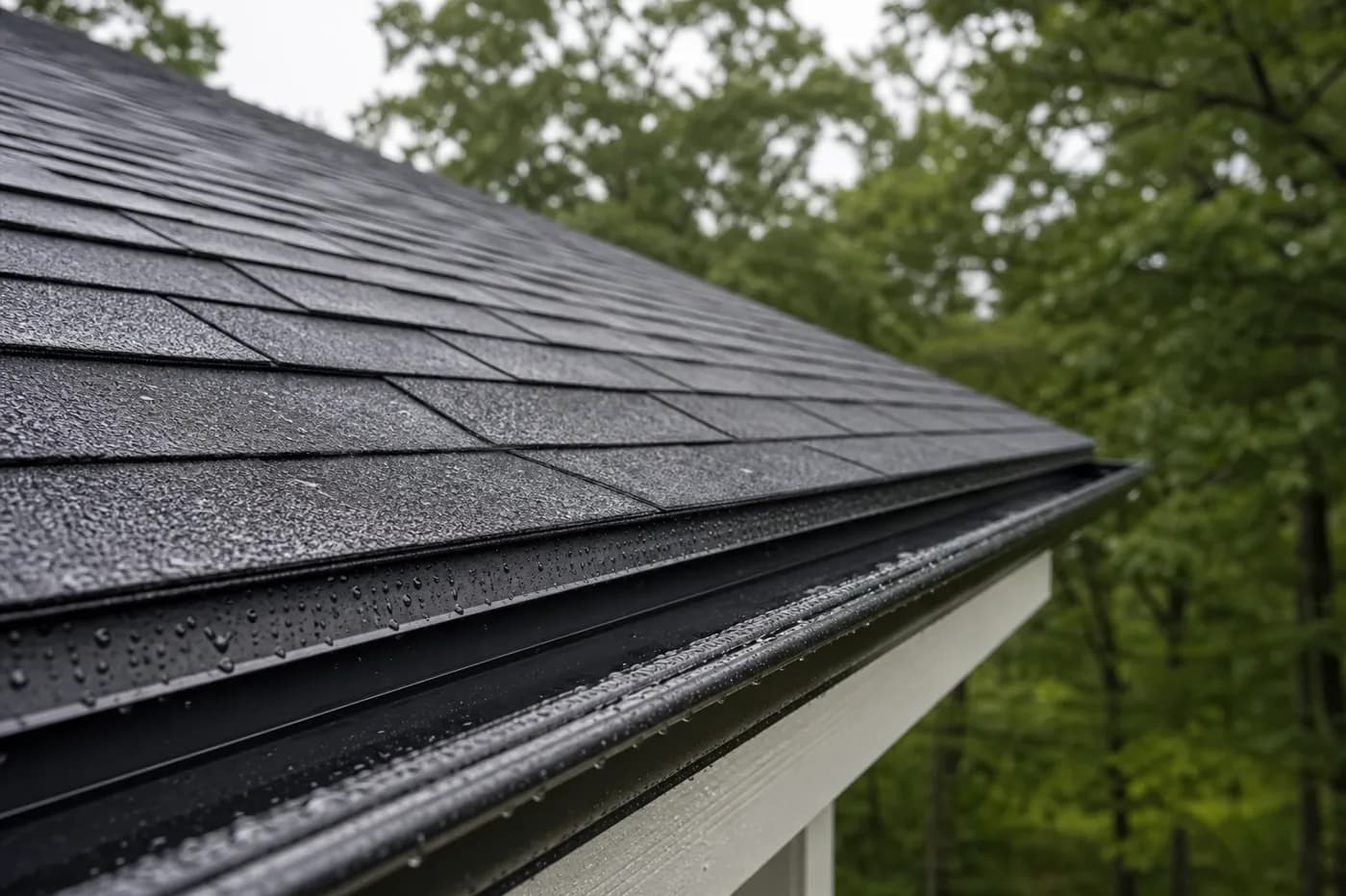
What It Usually Means When Water Runs Behind Gutters
Water should leave the roof surface, pass over the drip edge, and fall into the gutter. From there, it should move toward the downspout and away from the foundation. When water runs behind the gutter, it means that path is being interrupted somewhere.
Sometimes the fix is simple: leaves, pine needles, roof granules, or a sagging section of gutter are blocking flow. Other times, the gutter is installed too low, the drip edge does not project far enough, or the shingles are not directing water cleanly into the gutter. You cannot tell all of that from one rainy-window video, but the video helps.
Here is the part homeowners miss: water behind the gutter can wet wood every time it rains without dripping into the living room right away. The damage can be slow. Fascia gets soft. Soffits stain. Nails loosen. The roof edge starts holding moisture. Then one strong storm makes it obvious.
Common Causes Around Charlotte Homes
Clogged gutters are the first suspect. Charlotte neighborhoods with mature trees can load gutters with leaves, seed pods, pine needles, and roof grit. If water cannot move to the downspout, it spills over the front, backs up at the roof edge, or finds gaps behind the gutter.
Bad gutter pitch can make clean gutters act clogged. A section that sags or tilts the wrong way holds water. During heavy rain, that standing water overflows near corners, fascia joints, porch roofs, and valleys where extra water already collects.
Gutters pulling away from fascia create a gap. Water may still leave the shingles correctly, but instead of landing inside the gutter, it drops between the gutter and the board. Loose spikes, failing hangers, rotten fascia, or storm movement can all cause that gap.
Missing or poorly placed drip edge is a roof-edge detail problem. Drip edge is metal flashing that helps kick water away from fascia and into the gutter. If it is absent, short, bent, buried behind the gutter, or installed in a way that lets water curl underneath, the fascia can get wet even when the gutter itself is clear.
Roof-edge shingle problems matter too. Lifted starter shingles, damaged first-course shingles, exposed nail holes, old repairs, or rotten decking near the eave can all leak at the edge. Wind-driven rain makes those weak spots show up fast.
Safe Checks You Can Do Before the Inspection
Start with photos and short videos during the rain, from the ground. Capture the whole gutter run, the downspout, the roof slope above it, and the exact place water appears. A close video of dripping is useful, but a wide shot tells the story.
After the weather clears, walk the perimeter. Look for mulch washed out below the leak, splash marks on siding, peeling paint on fascia, stained soffits, gutter seams dripping after the rain has stopped, or downspouts that barely move water during storms. If you see piles of shingle granules near the downspout, take a photo of that too.
If you can see into the attic safely, look near the exterior wall under the problem area. Dark decking, damp insulation, musty smell, rusty nail tips, or water trails down rafters are clues. Stay on framing. Do not step on drywall. And if the attic feels unsafe, skip it. A good inspection can pick up from there.
Water running behind the gutter after every storm?
Request a Free Roof InspectionIs This a Roof Problem or a Gutter Problem?
It can be either. Annoying answer, but true. If gutters are packed, overflowing, or sloped wrong, the gutter system may be the main issue. If the gutter is clean and water still curls behind it, the roof edge deserves a closer look.
Roofing and gutters overlap at the eave, so a clean diagnosis should include both. Kaliber looks at the shingle edge, starter course, underlayment exposure, drip edge, gutter position, fascia condition, downspout flow, and nearby roof features like valleys or dormers. One loose gutter section may be simple. A rotten fascia board under damaged shingles is a different conversation.
Do not let anyone solve it with a bead of caulk and no explanation. Caulk may stop a drip for a minute, but water is stubborn. If the slope, metal, shingle edge, or wood behind it is wrong, the leak will usually come back.
Why Charlotte Weather Makes Gutter-Edge Leaks Worse
Charlotte storms do not always arrive politely. A dry afternoon can turn into hard wind-driven rain, then sunshine, then another round later. That kind of rain can overwhelm small downspouts, push water sideways under lifted edges, and expose details that never leak during a soft drizzle.
Trees add another layer. In Matthews, Mint Hill, Indian Trail, Weddington, Waxhaw, Huntersville, Cornelius, and older Charlotte neighborhoods, a single storm can fill a roof valley or gutter run with debris. When leaves collect near a valley that drains into one gutter section, the edge sees more water than it was handling the day before.
Humidity also slows drying. Wet fascia, shaded eaves, and damp soffits can stay moist long enough to cause wood damage. That is why repeated behind-the-gutter leaks should not be treated as a cosmetic nuisance.
When Should You Call Kaliber?
Call Kaliber if water runs behind the gutter after more than one rain, if the fascia is soft or stained, if soffits are discoloring, if shingles near the edge look lifted, if gutters are pulling away, or if you see any interior moisture near an outside wall. Also call after wind or hail if the leak started suddenly.
Kaliber Roofing handles gutter services, roof repairs, storm damage inspections, roof-edge leak tracing, fascia moisture concerns, and storm damage roof repair across Charlotte, Indian Trail, Matthews, Mint Hill, Ballantyne, Pineville, Weddington, Stallings, Monroe, Waxhaw, Concord, Huntersville, Cornelius, Midland, and nearby communities.
The goal is simple: find the water path, show you photos, explain whether it is maintenance, a gutter issue, a roof repair, or a bigger roof-edge problem. No guessing from the driveway.
Frequently Asked Questions
Why is water dripping behind my gutters instead of into them?
Water can run behind gutters when the gutter is clogged, pitched wrong, pulling away from the fascia, missing proper drip edge, tucked under the roof edge incorrectly, or when roof-edge materials are damaged. Heavy rain can make a small issue look much worse.
Can leaking behind gutters damage my roof?
Yes. Water behind gutters can soak fascia, rot roof-edge decking, stain soffits, feed mold, and eventually show up as interior wall or ceiling moisture. It is not always only a gutter issue.
Is a drip edge required to stop water behind gutters?
Drip edge helps direct water off the roof edge and into the gutter. If it is missing, short, bent, or poorly integrated with the gutter, water can curl behind the gutter and wet the fascia.
Should I clean the gutters before calling a roofer?
If you can safely clean them from the ground or with proper equipment, clearing debris may help. Do not climb onto a wet roof. If water still runs behind the gutter after cleaning, have the roof edge, fascia, gutter pitch, and drip edge inspected.
Can wind-driven rain cause water behind gutters in Charlotte?
It can. Charlotte storms often bring hard sideways rain, quick downpours, tree debris, and wind gusts. That combination can overwhelm clogged gutters and expose weak roof-edge details that seemed fine during lighter rain.
Does Kaliber Roofing inspect roof-edge and gutter leak problems?
Yes. Kaliber Roofing inspects roof-edge leaks, drip edge concerns, fascia moisture, shingle damage, storm damage, attic signs, and related roof repair needs for Charlotte-area homeowners.
Need the roof edge checked before the next downpour?
Kaliber Roofing can inspect the gutter line, drip edge, fascia, shingles, attic clues, and storm evidence so you know what is actually letting water through.