Yes. Damaged or missing starter shingles can often be repaired along a limited eave or rake without replacing the entire roof. The repair usually requires opening the first field-shingle course, checking the starter, fasteners, drip edge, underlayment, and deck edge, then rebuilding the affected perimeter with a compatible starter product and correctly resealing every disturbed shingle. A small repair is responsible only when the surrounding shingles can be lifted without breaking and the edge assembly is sound beyond the damaged section.
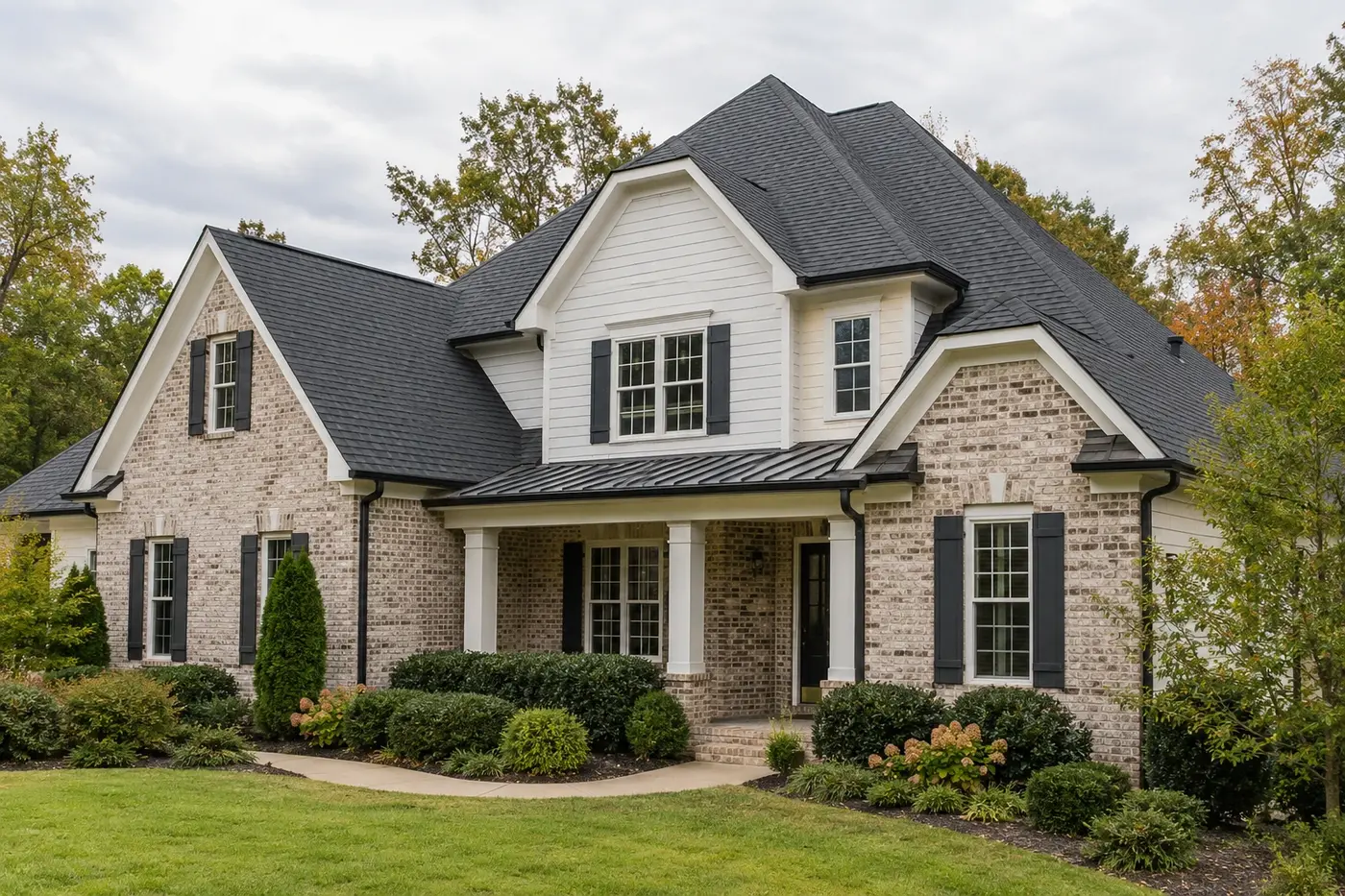
Starter damage is a roof-edge problem, not just a loose strip
Starter shingles sit beneath the first visible shingle course at the eaves and, for many roof systems, along the sloped rake edges. ARMA identifies starter as part of the asphalt-roofing system because it provides the first sealant line at the perimeter. GAF likewise describes starter products as helping lock down shingle edges where wind can begin a blow-off.
That hidden position changes the repair. A roofer generally cannot confirm the complete starter condition from a lawn photo or fix it by pressing down one visible edge. The first course may need to be released or removed far enough to expose the starter joint, sealant location, fasteners, edge metal, and substrate below it.
The visible symptom can also belong to another component. A lifted first-course shingle may have a broken seal, a misplaced fastener, brittle field material, missing starter, damaged drip edge, or weak decking. The inspection should identify which layer failed before the estimate labels the job a starter repair.
When a focused starter-shingle repair can make sense
A contained repair is often possible when damage affects a short section of one eave or rake, the surrounding field shingles remain flexible, compatible starter and replacement shingles are available, and the deck edge still holds fasteners. This may apply after localized wind damage, an impact at the roof edge, or a prior repair that disturbed only part of the first course.
ARMA explains that asphalt-roof components can often be repaired independently because sealed shingles can be carefully separated and restored over a limited area. GAF’s storm-repair guidance also allows individual damaged shingles to be replaced, while requiring removed fasteners to be replaced and disturbed shingles to be hand-sealed. Those principles support a focused edge repair when the opening can reach sound material.
The repair boundary should not be chosen by the length of the visible flap alone. It needs to extend past damaged starter joints, torn field shingles, enlarged fastener holes, or wet substrate. If opening one short section exposes sound layers on both sides, the work may stay limited. If every neighboring shingle breaks during access, the responsible boundary becomes wider.
What the roofer should inspect before deciding on the repair
Start with the complete edge. Document whether the concern is at a horizontal eave, a sloped rake, or the corner where they meet. Photograph the first course, overhang, drip edge, gutter or fascia relationship, and any missing, lifted, creased, or torn material. Then compare the exterior location with attic or interior moisture evidence when relevant.
After controlled access, check whether a compatible starter is present, whether its joints are offset from the first-course joints, whether its sealant is positioned at the edge as the product requires, and whether fasteners are placed in sound deck. GAF and Owens Corning publish different product-specific starter dimensions, fastener patterns, joint offsets, and edge details, so the installed roof system matters more than a universal rule of thumb.
The surrounding assembly matters just as much. ARMA’s drip-edge guidance explains that edge metal, underlayment, starter, and field shingles must shed water in the correct order. Soft decking, torn underlayment, corroded or loose drip edge, damaged fascia, or gutter interference can turn a narrow starter problem into a broader roof-edge repair. Those conditions should be photographed before they are covered again.
What a complete starter repair should restore
A durable repair opens only as much of the first course as necessary, removes damaged starter and field material, and addresses the edge substrate before new roofing goes back. Any deck section that is soft, delaminated, or unable to hold the specified fastener needs an appropriate repair. Torn underlayment and displaced drip edge cannot be ignored simply because the new starter will hide them.
The replacement starter should be compatible with the existing field shingles and installed according to its current instructions. Placement, overhang or alignment with the drip edge, sealant orientation, fastener count, fastener location, and joint offset are product-specific details. At the corner, the eave and rake starter runs must reconnect without leaving an unprotected transition.
The first field course then has to be restored. Shingles damaged during the original event or controlled removal should be replaced rather than concealed. Nails removed for access should be replaced in approved locations, and every seal intentionally broken during the repair should be hand-sealed as required for the shingle system and weather conditions. The finished edge should lie flat, release water cleanly, and show no exposed fasteners or blocked drainage path.
When the problem is larger than a starter-strip repair
A short repair becomes less dependable when missing or misinstalled starter continues across several roof edges, the first course is widely wind-damaged, or the surrounding shingles are too brittle to open without repeated breakage. Widespread soft decking, deteriorated fascia, badly positioned drip edge, recurring gutter-line moisture, or several failed perimeter details also justify a broader scope.
Broader does not automatically mean the entire roof. One complete eave or rake may need reconstruction while other roof planes remain serviceable. The estimate should explain why the proposed stopping point reaches intact roofing and how the repaired edge connects to the unchanged sections.
Whole-roof replacement belongs in the conversation only when the evidence extends beyond the perimeter—such as widespread brittle shingles, repeated failures on several slopes, multiple moisture areas, or a roof that cannot accept a reliable tie-in. A missing starter section by itself is not proof that every shingle needs replacement.
What to require in the written repair scope
Ask the proposal to identify the exact eave or rake section, the suspected failure, the materials that will be opened, and the starter product proposed. It should describe how first-course shingles, fasteners, sealant bonds, drip edge, underlayment, decking, fascia, and gutters will be handled. If concealed damage changes the scope, require photos and written approval before extra work proceeds.
Before-during-after photos are especially useful because the starter disappears beneath the finished course. A useful sequence shows the original edge, exposed starter and substrate, any repaired deck or underlayment, the new starter before it is covered, and the completed first course. Keep those photos with the invoice, material identification, and written warranty terms.
Kaliber Roofing serves Indian Trail first with same-day or next-day inspections subject to scheduling. Kaliber provides a one-year workmanship warranty for the repair work it performs. That workmanship coverage is separate from any manufacturer material warranty and applies to Kaliber’s repair scope—not unrelated roof areas.
Related guidance
Common questions
Can starter shingles be repaired without replacing the whole roof?
Yes. A limited eave or rake section can often be rebuilt when the surrounding shingles are flexible, the deck edge is sound, and compatible materials are available. The repair must open enough of the first course to restore the starter and every disturbed layer correctly.
Can a roofer slide new starter under the existing first course?
Sometimes limited access is possible, but the method must still expose the critical fasteners, joints, sealant position, drip edge, underlayment, and deck condition. Blindly pushing material beneath fixed shingles can leave damaged layers, stacked joints, or unsealed edges hidden.
Does one lifted shingle at the eave prove the starter is missing?
No. The first-course shingle may be lifted by a broken seal, wind crease, misplaced fastener, brittle material, damaged starter, weak deck, or another edge defect. Controlled inspection is needed before assigning the cause.
Will repairing starter shingles stop water behind my gutter?
Only when starter damage is the actual cause. Water behind a gutter can also involve drip edge position, gutter alignment, fascia damage, shingle overhang, underlayment, or runoff from another roof detail. The full edge assembly should be inspected before choosing the repair.
Sources and editorial notes
- ARMA guidance on repairable asphalt-shingle roof systems
- ARMA overview of starter products in an asphalt roofing system
- ARMA guidance on drip edge at eaves and rakes
- GAF WeatherBlocker starter-strip product and installation guidance
- GAF technical guidance on replacing storm-damaged shingles
Prepared with AI assistance and editorially reviewed by Sage. General homeowner guidance; not an on-site diagnosis, product-specific installation instruction, structural conclusion, code determination, warranty decision, or substitute for evaluation by a qualified roofing professional.