A skylight leaking in Indian Trail NC is usually caused by failed flashing, worn skylight seals, cracked shingles around the opening, uphill debris, condensation, or storm damage. If water shows up during rain, protect the room, take photos, avoid climbing a wet roof, and have the skylight plus the surrounding roof system inspected before the next hard storm.
Skylight leaks rarely feel straightforward. Water appears on the drywall, runs down trim, drips onto the floor, and then disappears until the next storm. That stop-and-start pattern can make homeowners think the leak fixed itself. It usually did not.
A lot of Indian Trail homes deal with fast summer downpours, sideways wind, pine needles, humid attic air, and mature trees in nearby Union County neighborhoods. Any of those can expose a weak spot around a skylight. Sometimes the unit is failing. Sometimes the roof around it is failing. Sometimes the moisture is condensation that only looks like a roof leak.
The good news: a leaking skylight does not automatically mean you need a full roof replacement. If the roof is still healthy, a focused roof repair around the skylight may solve it. The important part is finding the real water path instead of smearing caulk over a mystery leak.
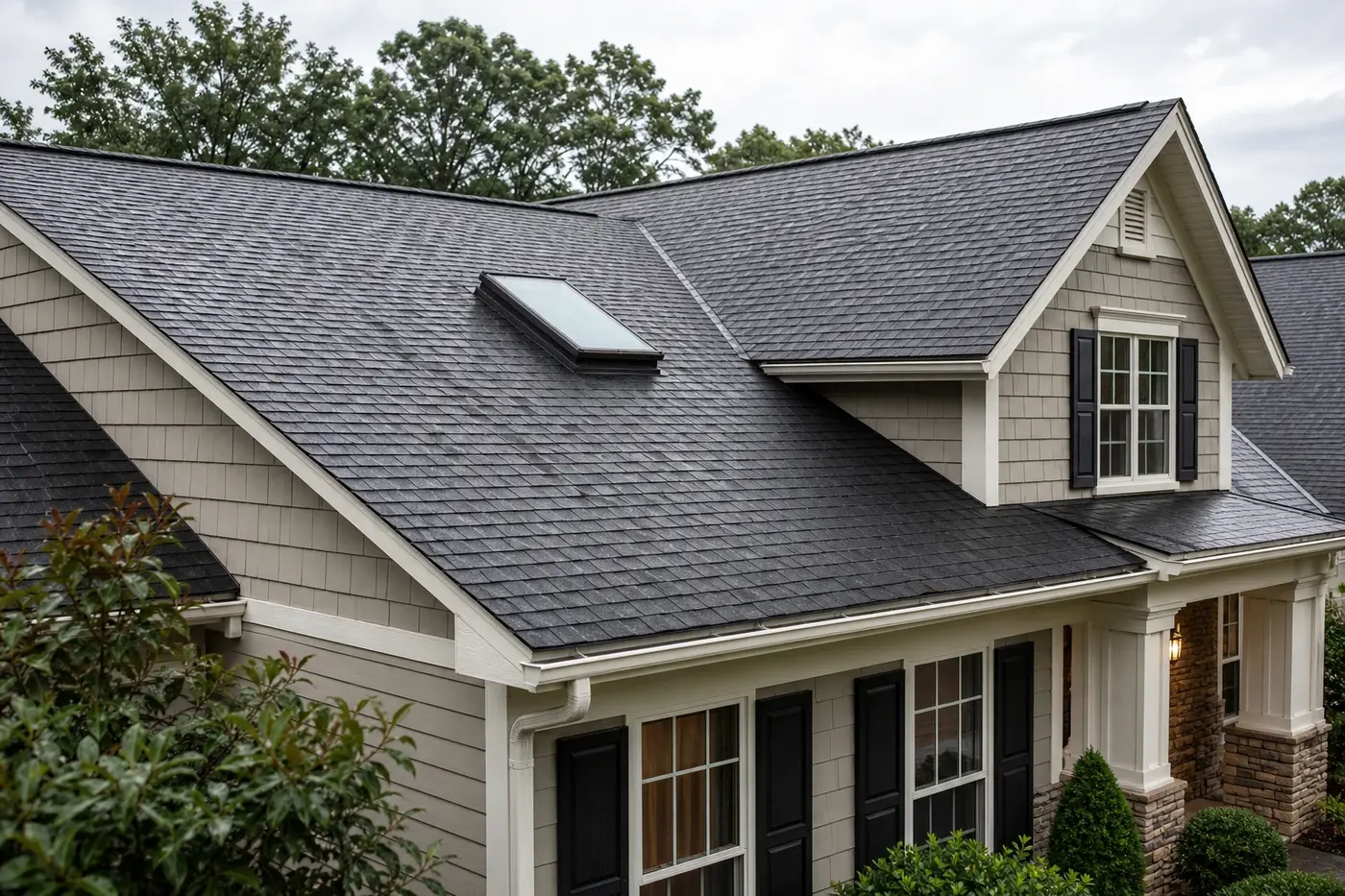
Common Reasons Skylights Leak
Flashing is the first place a roofer looks. A skylight needs a water-shedding system around the curb or frame: head flashing above it, side flashing along it, sill flashing below it, and underlayment that laps in the right direction. If one piece is missing, corroded, loose, or buried under an old patch, water can sneak in.
Shingles around the opening matter too. Cracked shingles above the skylight, lifted tabs along the side, exposed nails, or a worn valley nearby can steer water toward the skylight. Homeowners often stare at the glass while the actual leak starts a few feet uphill.
Then there are skylight-unit problems. The glass seal can fail. The frame can crack. Older acrylic domes can age out. Fasteners and gaskets can wear down. A caulk-heavy repair may look fine from the yard and still fail as soon as wind pushes rain against the curb.
Debris is the quiet one. Pine needles, leaves, shingle granules, and small branches can collect on the uphill side of a skylight. Around Indian Trail, Stallings, Matthews, Waxhaw, Weddington, and Monroe, that buildup can slow water down and force it under shingles or flashing.
Is It a Roof Leak or Condensation?
Not every wet skylight is a roof leak. Condensation happens when warm, humid indoor air hits colder glass or metal. It is more common in bathrooms, kitchens, vaulted rooms, and homes with weak ventilation. You may see moisture on the inside face of the skylight even when it has not rained.
Rain leaks leave different clues. The drywall around the skylight may turn brown, bubble, or soften. Trim may swell. Insulation in the skylight shaft may feel damp. In the attic, you may see dark sheathing, rusty nail tips, or water tracks on framing.
Here is the practical test: if moisture appears on dry days or cold mornings, condensation deserves attention. If it follows rain, wind, hail, or debris buildup, the roof system needs a closer look. North Carolina humidity can blur the line, so do not be surprised if both issues are present.
What Can You Check Safely?
Start inside. Look at the stain shape. A ring around the skylight opening can point to flashing or curb issues. A drip from the glass may point to condensation or a failed skylight seal. Water running down one corner often suggests side flashing or debris on the uphill side.
If you can access the attic or skylight shaft safely, check for wet insulation, dark wood, musty smells, rusted nail tips, or water tracks. Do not step on drywall. Do not force your way into a tight attic during a storm. A roof leak is not worth a fall or a ceiling repair.
Outside, stay on the ground. Use binoculars or phone zoom. Look for leaves above the skylight, missing shingles, lifted tabs, loose metal, cracked sealant, exposed nails, or granules piled against the curb. If the roof is steep, wet, or high, stop there. That is enough information to help the inspection start in the right place.
Also write down the weather. Did the leak start after wind? Hail? A long soaking rain? A short hard thunderstorm? If storm timing is part of the question, this Indian Trail guide on old versus new roof storm damage explains what details matter.
Can a Skylight Leak Be Repaired?
Often, yes. If the roof is in good condition and the leak is isolated, the repair may involve removing shingles around the skylight, replacing damaged underlayment, correcting the flashing, sealing only the correct components, clearing debris paths, and reinstalling shingles so water sheds properly.
If the skylight unit itself has failed, replacement of the skylight may be smarter while the surrounding roof is already opened up. That is especially true for old domes, cracked frames, failed glass seals, or units that have been patched several times.
What about caulk? It has a place, but it should not be the whole plan. Caulk can hide the real failure and redirect water into a worse path. A clean flashing repair beats a mystery bead of sealant almost every time.
Replacement becomes a bigger conversation when surrounding shingles are brittle, decking is soft, multiple roof penetrations are leaking, or the roof is already near the end of its service life. If you are weighing that decision, read Kaliber's guide on whether to replace a roof before selling in Indian Trail; the same inspection-first thinking applies before spending money.
Seeing stains, dripping, or wet trim around a skylight?
Schedule a Free Roof InspectionWhat If the Leak Started After a Storm?
If the skylight leak appeared after wind, hail, or a falling branch, document it before cleanup. Take photos of the indoor leak, the skylight area, debris in the yard, hail if visible, and any damaged shingles you can see from the ground. Save the storm date if you know it.
That does not mean every skylight leak is an insurance claim. Old flashing, failed seals, poor installation, and long-term wear are different from sudden storm damage. The goal is to separate facts from guesses.
Kaliber can inspect the skylight, surrounding shingles, flashing, attic clues, and storm indicators. We can document what is visible and explain whether the pattern looks like a repair issue, maintenance issue, storm-related damage, or a bigger roof condition problem. For claim-specific basics, see our North Carolina insurance restoration page.
When Should You Call Kaliber?
Call when water shows up during rain, stains grow, trim swells, the skylight leak returns after several storms, shingles around the skylight look lifted, or debris keeps sitting above the unit. Call faster if rain is coming and water is already entering the home.
A Kaliber inspection looks at the skylight as part of the whole roof system: shingles, flashing, underlayment, roof slope, nearby valleys, attic moisture, decking condition, and storm clues. We are not there to sell the biggest project. We are there to find the leak path and explain the cleanest fix.
Sometimes that is a targeted repair. Sometimes the skylight needs replacement. Sometimes the roof has enough age or damage that a broader plan makes more sense. Either way, you get a straight answer before drywall, insulation, and decking damage pile up.
Frequently Asked Questions
Why does my skylight leak only during heavy rain?
A skylight that leaks only during heavy rain usually has a flashing, uphill debris, worn seal, cracked shingle, or wind-driven rain problem. Light rain may shed normally, while a hard Union County storm can push water sideways against the skylight curb or under a weak shingle edge.
Is a leaking skylight always a roof problem?
Not always. Moisture on the inside face of the skylight can be condensation, especially in humid rooms. Brown drywall stains, damp trim, wet insulation, rusty nail tips, or leaks that show up during rain usually point to a roof, flashing, underlayment, or skylight seal issue.
Can skylight flashing be repaired without replacing the whole roof?
Yes, if the surrounding shingles, decking, and underlayment are still in good shape. A roofer may remove shingles around the skylight, correct the flashing system, replace damaged underlayment, seal the right components, and reinstall shingles so water sheds cleanly.
Should I caulk around a leaking skylight?
Caulk is usually a short-term bandage, not the fix. It can trap water, hide the real leak path, and fail quickly in North Carolina heat and rain. The better move is to identify whether the problem is flashing, shingles, underlayment, the skylight frame, or the glass seal.
Will insurance cover a skylight roof leak in North Carolina?
Insurance may apply if the leak is tied to a covered event such as wind, hail, or falling debris. Long-term wear, old seals, poor installation, or neglected flashing are handled differently. Photos, storm dates, and a documented inspection help clarify the cause.
Does Kaliber Roofing inspect skylight leaks around Indian Trail NC?
Yes. Kaliber Roofing inspects skylight leaks, flashing, surrounding shingles, roof decking, attic moisture, storm damage, and related roof repair issues around Indian Trail, Union County, Stallings, Matthews, Monroe, Waxhaw, Weddington, Mint Hill, and nearby Charlotte-metro communities.
Need a skylight leak checked in Indian Trail?
Kaliber Roofing will inspect the skylight, flashing, surrounding roof, and attic clues so you know whether repair, skylight replacement, or a larger roof plan makes sense.