You can often tell newer roof storm damage in Indian Trail by matching fresh shingle breaks, lifted tabs, granule loss, dents on soft metals, and interior leak timing to a recent Union County storm. Older damage usually looks weathered, dirty at the edges, or mixed with long-term wear. The safest answer is a documented roof inspection before you file a claim or wait through another round of heavy rain.
Storm damage is not always obvious. A missing shingle after a windy night? That one is easy. A hail bruise that slowly turns into granule loss, or a shingle tab that lifted and then settled back down? Much harder.
That is why timing matters. Indian Trail homeowners get summer downpours, wind-driven rain, hail pockets, tree debris, and the broader Charlotte-metro storm pattern. If you are trying to decide whether roof damage is new, old, repairable, or worth documenting for insurance, do not guess from the driveway.
Kaliber Roofing helps homeowners with storm damage roof inspections, roof repairs, and insurance restoration support across Indian Trail, Union County, Stallings, Matthews, Monroe, Waxhaw, Weddington, Mint Hill, and nearby communities.
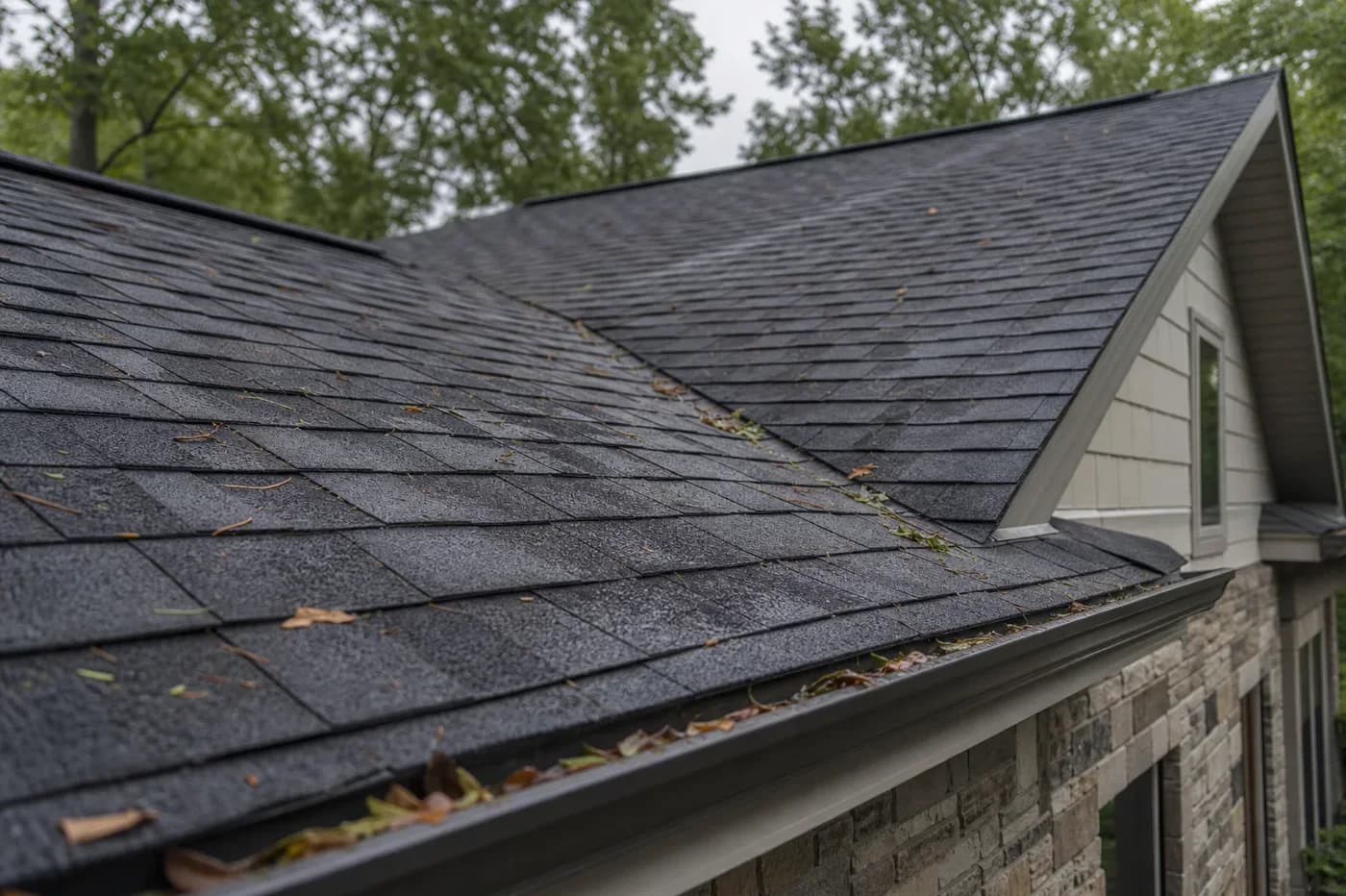
Why Old vs New Damage Matters
There are two practical reasons homeowners ask this question. First, they want to know whether the roof needs immediate repair. Second, they want to know whether a recent storm may be connected to the damage.
Those are related, but they are not the same. A roof can have old damage that still needs repair. It can also have fresh damage that is too minor for a claim but important enough to fix before water gets under the shingles.
For insurance, the date matters. Carriers often look for whether the damage lines up with a covered storm event. A roofer cannot promise coverage, but a good inspection can document what is visible: wind creases, missing shingles, hail marks, dents on vents or gutters, leak paths, roof age, and whether the condition looks recent or weathered.
Clues Roof Storm Damage May Be New
Fresh shingle breaks are one clue. Newly torn shingles may show cleaner edges, exposed asphalt, or a tab that looks recently lifted rather than brittle and curled from age.
Loose granules in gutters or at downspouts can also show up after hail or heavy rain. Granules do shed over time, so this is not proof by itself. But a sudden pile after a specific storm is worth documenting.
Soft metal dents on gutter faces, downspouts, roof vents, flashing, or metal caps can support a hail timeline. If those dents look fresh and match marks on shingles, the picture gets clearer.
Interior leak timing matters too. If the ceiling was clean before a storm and stained the next morning, write that down. Take photos before the stain dries out or changes color.
Clues Roof Damage May Be Older Wear
Older damage often looks tired. The edges may be dark, dirty, curled, cracked, or rounded from sun and weather. Shingles may be brittle across several slopes, not just one storm-facing area.
Age-related granule loss also tends to be more even. Instead of a focused impact pattern, you may see general wear on south-facing slopes, near valleys, or along areas where water runs hard during storms.
Old repairs are another clue. Mismatched shingles, heavy roof cement, patched pipe boots, exposed fasteners, or repeated stains in the attic can mean the issue has been around for a while. Again, not always. But it changes the conversation.
Here is the thing: old does not mean harmless. A small old leak around flashing can rot decking quietly. By the time it shows inside, the repair may be bigger than it needed to be.
Not sure whether the roof damage is from the latest Indian Trail storm?
Schedule a Roof InspectionWhat to Document Before You Call
Start with the date and time of the storm as best you remember it. Note what happened: high wind, hail, heavy rain, fallen limbs, or water coming through a ceiling after the storm passed.
Then take safe photos. Get pictures of missing shingles from the ground, debris in the yard, gutter dents, downspout granules, ceiling stains, wet insulation, and any temporary leak control you had to do. Do not throw away fallen shingle pieces if you can safely keep them in a bag.
Also write down what was already there. If you had an old ceiling stain or a known repair from last year, say so. Honest timelines help everyone. They keep the inspection clean and make the final recommendation more useful.
How a Roofer Checks the Damage
A good storm inspection is not just a quick look at shingles. The roofer should check slopes facing the storm direction, ridge caps, valleys, roof-to-wall flashing, pipe boots, vents, chimney or skylight areas, gutters, and attic clues when there is an active leak.
Photos should tell the story. You should be able to see the difference between a torn shingle, a wind crease, an old brittle crack, a hail bruise, and normal wear. If something is uncertain, it should be labeled that way instead of oversold.
That is especially important around Indian Trail, where one neighborhood can get hail while another only gets rain and wind. A documented inspection gives you a better next step: targeted repair, monitoring, insurance documentation, or replacement if the roof condition truly calls for it.
If your roof was hit recently in Indian Trail, Stallings, Matthews, Monroe, Waxhaw, Weddington, or Mint Hill, get the damage checked while the timeline is still fresh. Waiting a few months can make new damage look old, and old damage more expensive.
Frequently Asked Questions
Can I tell roof storm damage age from the ground in Indian Trail NC?
Sometimes you can see clues from the ground, such as fresh missing shingles, loose tabs, new debris, or recent gutter dents. But the age of hail bruising, lifted shingles, and flashing damage usually needs a roof-level inspection with photos.
Why does old versus new storm damage matter for insurance?
Insurance carriers often want to know whether the damage lines up with a covered storm date. Fresh documentation, storm timing, photos, and a contractor inspection can help separate recent wind or hail damage from age-related wear.
Does old storm damage still need repair?
Yes. Old damage can still leak, loosen shingles, expose fasteners, or shorten the roof life. Even if it is not claim-worthy, it may still be worth repairing before the next heavy rain in Union County.
Should I walk on the roof to check for hail damage?
No. Hail and wind damage can be easy to miss and walking on a wet or damaged roof is risky. Take ground photos, check safe interior areas, and let a roofer inspect the shingles, vents, gutters, flashing, and attic clues.
Can Kaliber Roofing inspect storm damage near Indian Trail?
Yes. Kaliber Roofing inspects roof storm damage for homeowners in Indian Trail, Union County, Stallings, Matthews, Monroe, Waxhaw, Weddington, Mint Hill, and nearby Charlotte-metro communities.
Need a straight answer after a storm?
Kaliber Roofing can inspect the roof, document what is visible, and explain whether repair, storm documentation, or replacement makes the most sense.