If your roof still leaks after a repair, do not assume you need another patch—or a full replacement—until the old repair and the new water path are compared. Ask for a documented Wesley Chapel roof-repair reinspection that checks the repaired assembly, its edges, the roof details above and beside it, and accessible interior evidence. The same ceiling spot does not always mean the same exterior opening failed.
Start with facts you can save: when the repair was completed, what the written scope says, when moisture returned, how the rain and wind behaved, and whether the stain grew in exactly the same place. That short record is far more useful than telling the next inspector, “It still leaks somewhere over there.”
Safety comes first. Stay off wet or steep roofing. Keep clear of sagging drywall and water near a light, ceiling fan, outlet, or electrical panel, and use qualified help for an electrical or structural concern. This article is general guidance, not a diagnosis of your home.
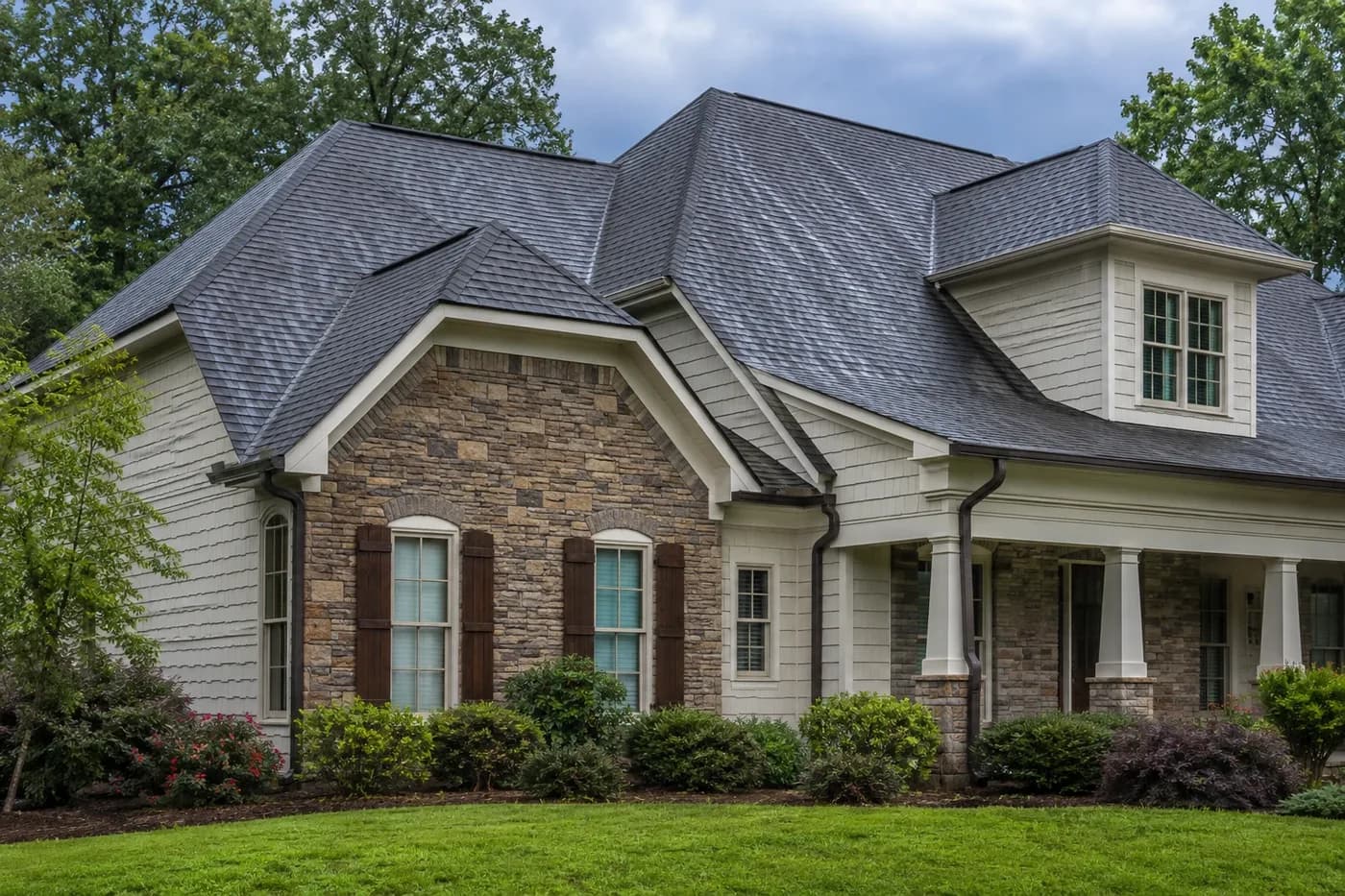
Is It Actually the Same Roof Leak?
It may be. But the indoor location cannot settle that question by itself.
Water entering above a ceiling can move along roof decking, underlayment, rafters, pipes, wiring, or insulation before it drops. GAF's homeowner guidance notes that the source of a roof leak can sit far from the visible damage. A familiar ceiling stain may simply be the easiest exit point for water from a second opening nearby.
Compare the triggers. Did the original leak appear only during wind-driven rain, while the new drip started during a long straight-down shower? Did the stain return at the same edge, or did a new edge form? Did it begin while no rain was falling? Those differences do not diagnose the cause, but they tell the inspector whether to repeat the old assumptions or widen the search.
Kaliber's guide to delayed roof leaks after rain explains why timing matters. Use that timing as evidence. Do not use it as permission to climb into an unsafe attic or onto the roof.
What Should You Gather From the Original Repair?
Find the signed estimate or work order first. Highlight the exact component and area named: pipe boot, step flashing, chimney flashing, shingles, ridge cap, valley, roof edge, skylight, or something else. Then note the verbs. Was the part replaced, rebuilt, reset, sealed, patched, or only inspected?
Words matter here. “Seal flashing” describes a narrower scope than removing shingles, inspecting the deck, replacing flashing, integrating underlayment, and installing new shingles around the opening. Neither phrase proves good or bad work. They do show what the contractor agreed to address.
Add the invoice, before-and-after photos, material details, completion notes, and written warranty or callback terms. If the repair changed after the area was opened, include the approved change. The Federal Trade Commission recommends keeping project documents and first trying to resolve a home-improvement problem with the contractor. North Carolina's Department of Justice also advises homeowners to bring problems to the contractor's attention promptly and use a written contract that details the work, materials, price, warranties, and dates.
No paperwork? Write down what you remember without turning memory into proof. Ask the original contractor what their records show and request the photos tied to the repair.
Which Four Possibilities Should the Reinspection Consider?
The original entry point may not have been confirmed. A visible crack, loose shingle, or old sealant can look suspicious without being the route that reached the ceiling. If the first repair addressed the nearest visible defect rather than connecting exterior and interior evidence, the actual opening may remain.
The repair boundary may meet another weak detail. New work has to connect to serviceable shingles, flashing, underlayment, and decking. Water can bypass a small repaired section when the adjacent material or transition was outside the agreed scope. That does not identify fault by itself; it tells the inspector to examine the tie-in, not just the center of the patch.
A separate opening may feed the same indoor spot. A roof can have more than one vulnerable point above the same room. Flashing, penetrations, valleys, and changed roof slopes handle concentrated water. The new evidence needs to be traced rather than forced into the old explanation.
The moisture may not be entering through the roof. Plumbing, HVAC drainage, bathroom exhaust, and attic condensation can produce wet insulation or ceiling stains. A responsible roof inspection should say when the pattern does not match rainfall or when another qualified trade needs to evaluate the source.
What Should a Corrective Reinspection Answer?
Give the inspector one assignment: compare the old repair with the new event. A useful report should answer these questions:
- Where was the original repair, and what were its exact boundaries?
- Which photos show the condition before, during, and after that work?
- Does the repaired assembly appear intact from the accessible views?
- What roof details sit above, upslope, beside, or directly below the repair?
- Does accessible attic or ceiling evidence create a traceable water path?
- What observations support the proposed cause, and what remains concealed?
- Would limited opening or controlled water testing add useful evidence, and how will it be done safely?
- Is the proposed next step corrective work, a separate repair, monitoring, or a roof-wide evaluation?
The answer should separate observation from conclusion. “The repair flange is visible and intact” is an observation. “The leak must be somewhere else” is a conclusion that still needs a path. Kaliber's roof inspection report checklist can help organize locations, photos, access limits, and urgency.
Avoid an unplanned homeowner hose test. Water introduced in the wrong place can create a new path, soak materials, or confuse the evidence. When testing is warranted, let a qualified contractor choose a controlled sequence for the specific roof.
How Should You Contact the Original Contractor?
Keep the first message short and factual. Include the property address, repair date, invoice or job number, when the new moisture appeared, two or three clear photos, and a request for reinspection. Ask the contractor to confirm the next step in writing.
Do not begin by declaring that the repair failed. You may eventually have evidence that supports corrective work under the written agreement, but a ceiling stain alone cannot decide workmanship, cause, or coverage. Read the exact warranty and callback language. Manufacturer material terms and contractor workmanship terms may address different issues, and neither should be summarized from memory.
If the contractor does not respond or the explanation does not connect evidence to scope, preserve your messages and records. A focused second opinion can compare the same disputed area. Ask that inspector to identify what they observed, what they could not see, and how their proposed work relates to the prior repair.
Does a Leak After Repair Mean Repair Again or Replace the Roof?
One recurring symptom does not automatically justify replacement. A focused corrective repair or a separate small repair may still make sense when the opening is isolated, the surrounding shingles can accept a reliable tie-in, and the decking and nearby roof details remain serviceable.
Replacement becomes a reasonable discussion only when the inspection shows a broader condition: brittle or failing materials across multiple slopes, repeated leaks in different areas, widespread deck damage, several failed transitions, or no sound boundary for another repair. The evidence should explain why local work cannot restore a dependable water-shedding path.
For Wesley Chapel homeowners, Kaliber's repair-first process starts with the reported leak and the surrounding roof condition. The matching Wesley Chapel roof-repair service covers local inspections, while the Indian Trail roof-repair hub explains the broader photo-first approach. Same-day or next-day inspections are available subject to current scheduling.
Still seeing water after a roof repair?
Kaliber Roofing can compare the prior repair boundary with the new moisture evidence and explain the smallest responsible next step.
Schedule a Free Roof InspectionSources and Limits
This guide uses current homeowner information from GAF's roof-leak detection and repair guide, consumer guidance from the Federal Trade Commission, and the North Carolina Department of Justice. Kaliber Roofing is the organizational author and reviewer; no individual credential or firsthand claim about a specific home is presented here.
This article is general education. It is not a diagnosis, structural opinion, electrical assessment, contract interpretation, warranty decision, insurance-coverage opinion, code ruling, or substitute for an on-site inspection by a qualified roofing professional. Use the appropriate qualified professional when electrical, structural, plumbing, HVAC, or other non-roof conditions may be involved.
Frequently Asked Questions
Does a leak after repair prove the repair was done wrong?
No. A repeated ceiling stain does not prove that the same exterior opening failed or that workmanship caused it. Water can travel before appearing indoors, and a nearby roof detail, plumbing line, HVAC drain, or condensation problem may create a similar symptom. Compare the original repair evidence with a focused reinspection before assigning a cause.
Should I call the original roofer first?
Usually, yes. Send the contractor the repair date, original scope, photos of the new moisture, and the weather timing, then request a documented reinspection. Review the exact written warranty or callback terms rather than assuming the new visit or corrective work is covered.
Can water show up in the same ceiling spot from a different roof opening?
Yes. Water can follow decking, framing, pipes, insulation, or an existing ceiling low point. Two separate exterior entry points may drain toward the same indoor stain, which is why the ceiling location alone cannot identify the failed roof detail.
Should the repaired area be opened again?
Not automatically. Start with the original photos, accessible attic evidence, surrounding roof details, and the repair boundary. Limited opening or controlled testing may be useful when a qualified roofing professional cannot confirm the route another way, but the method should be planned for the specific roof rather than attempted by the homeowner.
Does a recurring leak mean I need a full roof replacement?
Not by itself. A focused corrective repair may still be responsible when the opening and repair boundary are isolated and the surrounding roof is serviceable. Replacement needs roof-wide evidence such as widespread deterioration, repeated failures in different areas, damaged decking, or materials that cannot accept a reliable repair.
How quickly can Kaliber inspect a recurring roof leak in Wesley Chapel?
Kaliber Roofing offers same-day or next-day inspections subject to current scheduling. An active leak, wet electrical area, or sagging ceiling should be described when you call so the immediate safety and protection needs can be prioritized.