The direct answer
No. A roofing manufacturer certification can show that a contractor met that manufacturer's current program requirements and may be eligible to offer certain enhanced warranties, but it does not guarantee the workmanship on your Indian Trail home. Major manufacturers also state that listed contractors are independent businesses. Treat the credential as one verified data point, then check the exact company, credential level, insurance, any required North Carolina license, references, written roof-system scope, onsite supervision, installation records, and separate manufacturer and contractor warranties.
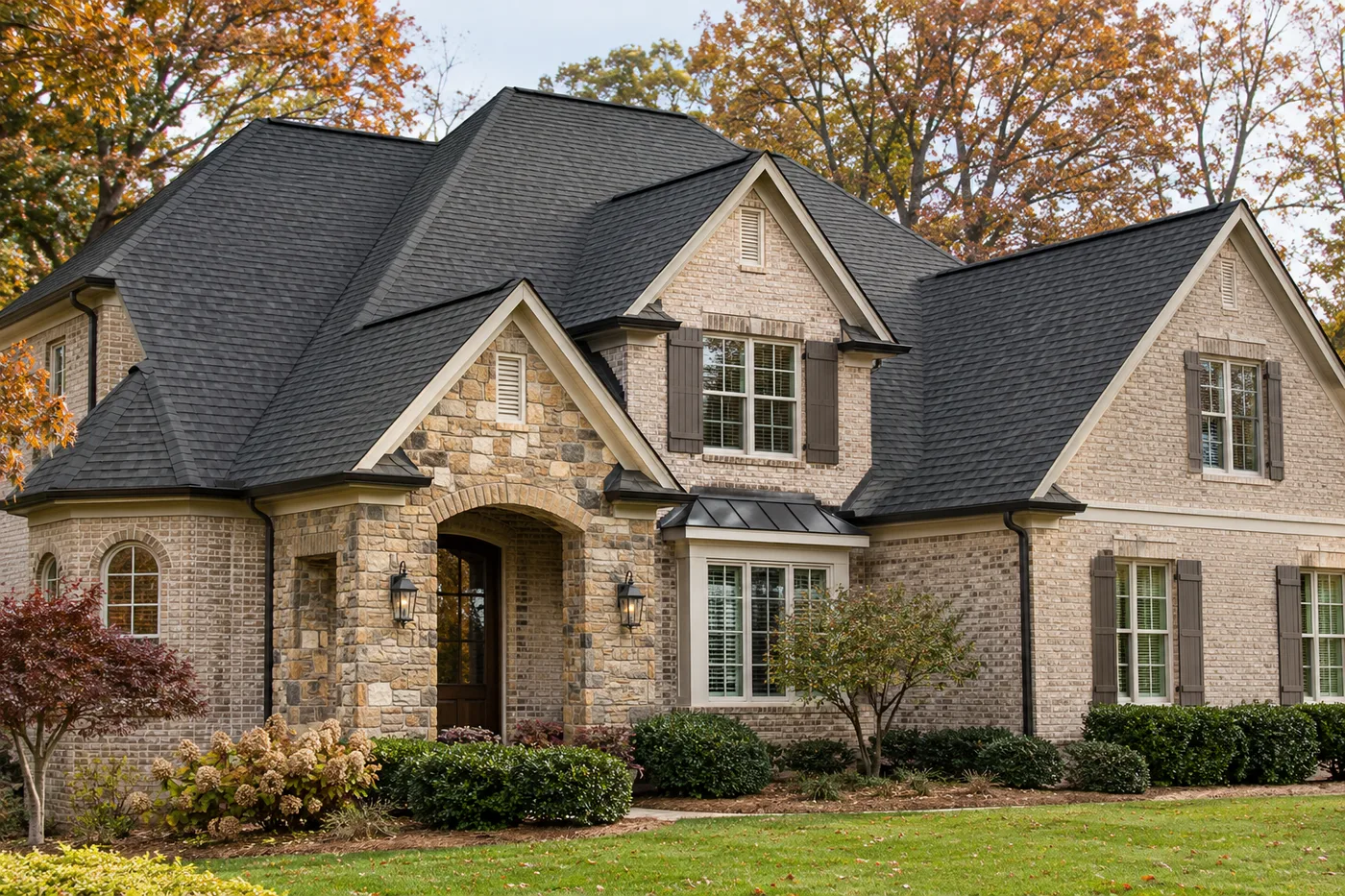
Understand what the exact credential can show
Manufacturer programs are not all the same. Some recognize completion of product and installation training. Some add business, insurance, experience, reputation, or program-participation requirements. Some have several levels with different warranty eligibility. A generic statement that a contractor is “factory certified” leaves out the name of the manufacturer, current tier, covered product category, expiration or standing, and practical homeowner benefit.
GAF says its certified contractors must be insured and licensed where required, and that it considers roofing experience and customer reviews. CertainTeed describes credentialing as recognition for successful completion of specialized training and connects certain credentials with extended-warranty options. Owens Corning lists Preferred and Platinum Preferred levels plus separate training badges. Those descriptions show why the exact program and level matter more than the word “certified” by itself.
A credential can therefore narrow the search and help confirm product familiarity. It can also matter when a homeowner wants an enhanced manufacturer warranty that only an eligible contractor can offer. It is not a substitute for reviewing the roof that will actually be installed.
Do not turn a credential into a guarantee the manufacturer does not make
GAF states that contractors in its certification programs are independent businesses and that GAF does not control or supervise them. Owens Corning likewise identifies contractors in its directory as independent and says it does not guarantee the quality of work they perform. That distinction is central: a manufacturer defines its program and products, while the roofing company controls the estimate, crew, supervision, property protection, installation decisions, communication, and closeout on a particular home.
Certification also does not prove that every worker on the roof completed the same training, that the credential is current, that the proposed system qualifies for an enhanced warranty, or that the installation will follow every product instruction. It does not decide whether a roof needs repair or replacement. For example, today's guide to tree-sap-affected shingles in Indian Trail requires an inspection of the actual shingle condition; a badge cannot replace that evidence.
The useful question is not “Is this badge good?” It is “What did the contractor have to do for this exact credential, is it current, what does it make available for my selected roof system, and how will this company control the work at my address?”
Verify the business and credential independently
Start with the exact legal business name on the proposal. Search that name in the manufacturer's current contractor directory rather than relying on a logo in an advertisement. Match the city, phone number, website, and credential level. If the company is missing, appears under a different entity, or claims a higher tier than the directory shows, ask the manufacturer to clarify before signing.
Then verify the ordinary contractor controls separately. The North Carolina Licensing Board for General Contractors advises homeowners to compare detailed estimates, check references, verify a state license when required, obtain proof of liability and workers' compensation coverage, and use a detailed written contract. The board currently states that a general-contractor license is required when the total project value is $40,000 or more. A manufacturer credential neither creates nor replaces that government requirement.
Request current insurance evidence tied to the same legal business and ask who will perform the work. Confirm the named project contact, onsite lead, subcontractor arrangement, and change-approval process. A directory listing may help identify a company, but it does not tell you who will supervise your roof tomorrow morning.
Compare the actual roof scope, not the badge collection
A responsible roof replacement proposal should identify the field shingle, starter, hip-and-ridge material, underlayment, leak-barrier locations, roof-edge work, flashing, penetrations, ventilation, decking process, tear-off, cleanup, progress photos, change orders, payment schedule, and closeout documents. Product names and quantities should be specific enough to compare with the manufacturer's eligible-system and warranty requirements.
Ask how the contractor turns those words into field control. Who verifies the delivered products? Who checks the deck after tear-off? Who reviews fastening, valleys, flashing, roof-to-wall details, penetrations, ventilation, and final cleanup before those conditions disappear or the crew leaves? Which photographs will connect concealed work to a recognizable roof location?
For a focused roof repair, ask an equally important question: does the manufacturer program apply to repairs, or is it primarily connected to qualifying replacement systems and warranties? Do not assume a replacement-oriented certification gives a project-specific answer about shingle matching, brittle access courses, existing flashing, or a repair warranty.
Separate product coverage, enhanced coverage, and contractor workmanship
Ask for the exact warranty name—not “lifetime warranty” or “certified warranty.” Read the current sample or legal document for covered products, system-component requirements, installation eligibility, registration, owner and property limits, transfer terms, exclusions, claim process, remedy, and whether workmanship is included. Marketing summaries can help compare options, but the issued document controls the actual coverage.
Also obtain the roofing contractor's workmanship warranty as a separate document. It should identify the issuing company, covered work, term, claim contact, and process. Kaliber Roofing provides a 10-year workmanship warranty on roof replacements and a 1-year warranty for the repair work Kaliber performs. Those terms are separate from any manufacturer material warranty, and the written project documents control the actual coverage.
Do not assume that buying through a credentialed contractor automatically registers an enhanced warranty. Confirm which party submits the registration, what information and deadline apply, what proof the homeowner receives, and what happens if the selected roof system or project scope does not qualify.
Use a short evidence stack for the final hiring decision
- Verify the exact contractor entity and current credential on the manufacturer's own site.
- Confirm what that level requires and which warranty options it can offer for the selected system.
- Check any required North Carolina license, current insurance evidence, and recent relevant references separately.
- Compare detailed written scopes, not only prices, badges, review totals, or warranty headlines.
- Name the onsite supervisor, inspection points, photo record, change process, and closeout documents.
- Read the manufacturer warranty and contractor workmanship warranty as separate obligations.
This method gives certification the weight it deserves without asking it to prove things it cannot prove. Kaliber Roofing serves Indian Trail first and nearby Union County communities with documented, repair-first inspections and same-day or next-day availability subject to scheduling. The inspection and written proposal should make the roof decision understandable even before warranty and credential questions are added.
Common questions
Is a manufacturer-certified roofer employed by the shingle manufacturer?
Usually not. Major manufacturers describe listed contractors as independent businesses rather than manufacturer employees or agents. The homeowner still contracts with the roofing company and should verify that company, its insurance, written scope, supervision, and warranty terms.
Can manufacturer certification affect roof warranty options?
Yes. Some enhanced manufacturer warranties are available only through contractors at a qualifying credential level and only when eligible products, system components, installation requirements, registration, and other terms are satisfied. Ask for the exact warranty name and current sample document before signing.
How do I verify a roofing certification?
Use the manufacturer’s own contractor directory or verification tool, search the exact legal business name, confirm the location and current credential level, and ask the manufacturer directly when the listing is unclear. A badge on a truck, proposal, or website is not independent verification.
Does certification replace checking a North Carolina contractor license?
No. Manufacturer credentials and government licensing answer different questions. North Carolina currently requires a general-contractor license when the total project is valued at $40,000 or more. Verify any required license through the state board and separately request current insurance evidence.
Should I reject a roofer who is not certified by my shingle manufacturer?
Not automatically. First decide whether a particular credential or enhanced warranty matters for the roof system you are buying. Then compare the contractor’s verified business identity, insurance, references, inspection findings, written scope, product instructions, supervision, workmanship warranty, and closeout process.
Sources and editorial notes
- GAF homeowner guidance on certification requirements, independent-contractor status, levels, and enhanced-warranty eligibility
- GAF contractor-certification verification directory
- Owens Corning contractor directory, program levels, badges, and independent-contractor quality disclaimer
- CertainTeed explanation of contractor training credentials and extended-warranty options
- North Carolina Licensing Board for General Contractors homeowner guidance on licensing, insurance, references, estimates, contracts, and records
- Federal Trade Commission guidance on contractor verification, estimates, insurance, contracts, payments, and records
Prepared from current manufacturer, North Carolina, and federal consumer guidance plus Kaliber's verified service and workmanship-warranty terms. Written with AI assistance and editorially reviewed by Sage. No human approval is claimed. General homeowner guidance; not a manufacturer certification decision, warranty interpretation, legal advice, licensing determination, insurance opinion, or project-specific installation approval.