Yes, one missing shingle can cause a roof leak if it leaves a seam, fastener, damaged underlayment, or the top edge of the shingle below exposed to rain. It may not leak during the first shower, but that does not make it safe to ignore. Stay off the roof, photograph the spot from the ground, and arrange a prompt Monroe roof-repair inspection before wind or another storm opens a larger section.
It often starts with a small clue: a shingle in the yard, a dark rectangle on one roof plane, or a patch that suddenly looks a different color. From the lawn, the gap can seem too small to matter. On the roof, though, each shingle is part of an overlapping water-shedding system. Remove one piece and the layers below have to do work they were not meant to do by themselves.
There is no need to panic over every loose tab. There is a good reason to get the area checked soon.
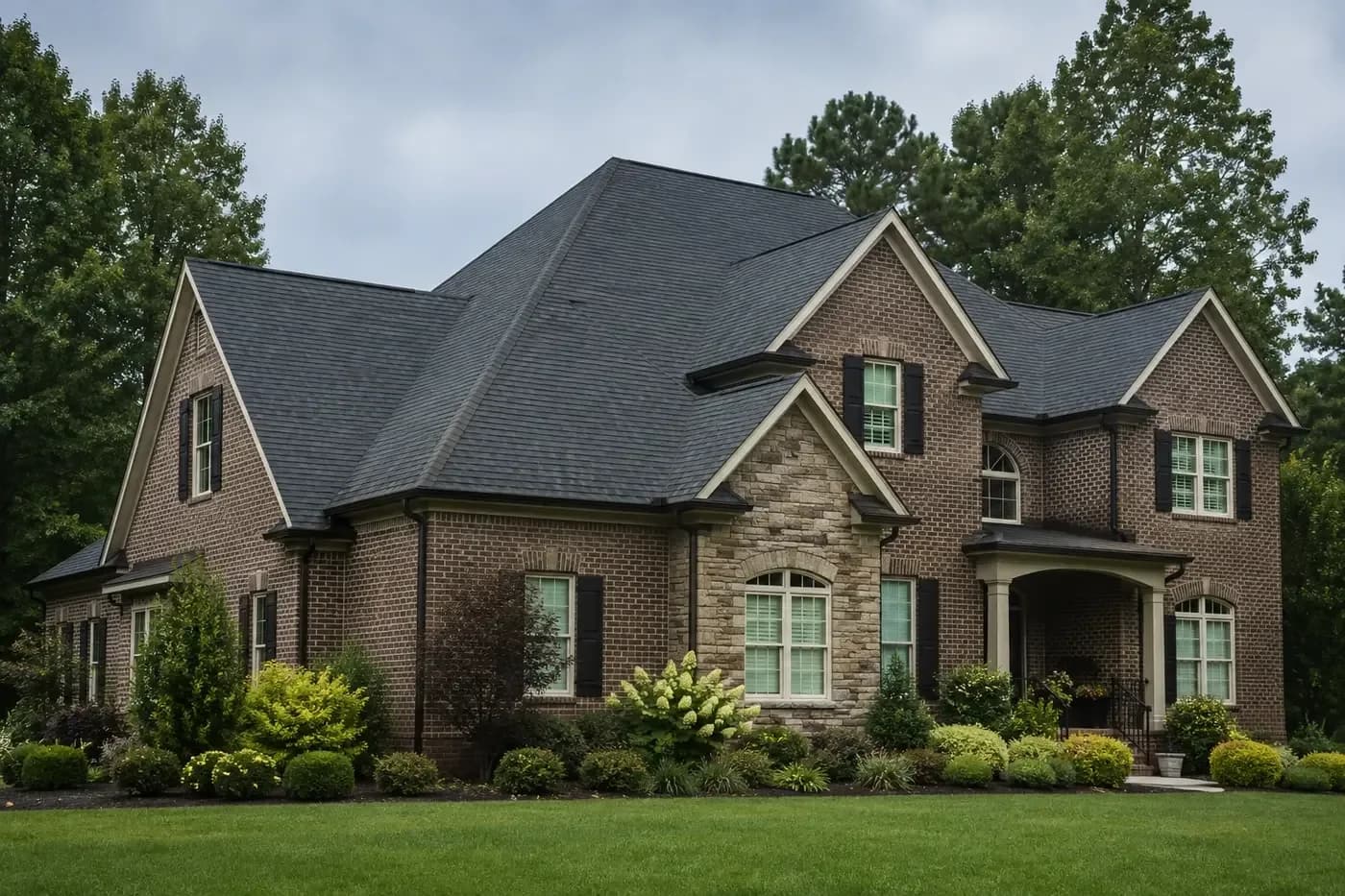
When Can One Missing Shingle Let Water In?
Asphalt field shingles overlap in both directions. The shingle above covers the fasteners in the course below, while staggered joints keep runoff from finding a straight path to the deck. A missing piece interrupts that pattern. The risk is highest when the opening exposes a vertical joint, a nail head, a torn lower shingle, or underlayment already weakened by age or an earlier repair.
Location matters too. A missing shingle close to a valley, wall, chimney, vent, or dormer may sit near a place where water is concentrated or redirected. On an open field of shingles, the layers below may buy some time. At a transition, a small opening can connect with a much busier drainage path.
Then there is wind-driven rain. A calm shower mostly runs downhill. A Union County thunderstorm can push water sideways and uphill beneath a loose edge. That is why a roof may stay dry through one rain and leak during the next one, even though the visible gap looks unchanged.
The missing shingle may not be the only damage. Wind can break the seal on neighboring tabs without carrying them away. They settle back down and look normal from the yard, but another gust can lift them again. The inspection has to check beyond the empty spot.
What Should You Do Right After Finding a Shingle?
Start inside. Look at ceilings and exterior walls below the affected roof plane. If attic access is safe, check for damp insulation, dark decking, shiny water tracks, or fresh drips. Do not touch wet wiring or fixtures. If water is near electricity, move people away from the area and address the electrical hazard first.
Outside, stay on firm ground. Use phone zoom from more than one angle and take one wide photo that identifies the roof plane plus a closer photo of the suspected opening. Check the yard for other pieces. A single fragment, several tabs, and a complete shingle tell different stories.
Keep the material if you can pick it up without entering a hazardous area. Do not climb onto the roof to match it to the gap. A brittle or storm-damaged roof can be slick even when it looks dry, and stepping near a loose section may cause more damage.
If an active leak is underway, place a container beneath the drip and protect belongings without standing under sagging drywall. Do not puncture a ceiling bulge or attempt a rooftop tarp in bad weather. Tell the roofer what you can see, when you found it, and whether more rain is expected so the response can be prioritized correctly.
What Should a Monroe Missing-Shingle Inspection Check?
The obvious opening comes first. The inspector should document what is exposed, where the shingle tore or released, whether nail heads remain, and whether the underlayment or deck shows damage. A clean release at the seal strip points in a different direction from a shingle ripped through around overdriven fasteners.
Next, the roofer should check the neighboring courses. Loose seals, crease lines, raised corners, backed-out nails, prior face-nailing, and brittle tabs can extend the real repair area beyond one rectangle. The goal is not to inflate the job. It is to avoid attaching a new shingle to material that has already lost its hold.
Roof geometry gives the finding context. Monroe homes range from simple gable roofs to larger hip roofs with valleys, porch tie-ins, dormers, and several short slopes. Neighborhoods around Unionville-Indian Trail Road, Rocky River Road, Wesley Chapel, and the Monroe Bypass also differ in tree exposure and wind direction. The report should identify the exact slope and nearby roof details rather than calling everything “storm damage.”
Inside evidence matters as much as the exterior photo. Water can run along underlayment, decking, rafters, or a pipe before appearing on drywall. A complete inspection compares the suspected opening with attic and ceiling clues instead of assuming the stain sits directly below the missing shingle.
Kaliber serves Monroe from nearby Indian Trail. Homeowners can also review the company's Indian Trail roof-repair hub for the same repair-first inspection approach used across Union County.
How Is One Missing Shingle Repaired Properly?
A lasting repair begins by loosening enough of the courses above the opening to reach the hidden fasteners without breaking sound tabs. The roofer removes damaged material, checks the underlayment and decking, and installs a compatible replacement with the correct exposure and fastener placement. The lifted shingles are then resealed as appropriate for the roof system and conditions.
Sometimes the repair is larger than one shingle. A neighboring tab may be creased, an exposed nail may have enlarged its hole, or the underlayment may be torn. Those items should be repaired together. Simply sliding a scrap into the gap and smearing roof cement around it can trap the symptom while leaving the failed layers underneath.
Color matching is practical, not perfect. Even the correct shingle line can look different after the existing roof has weathered for years. A close match is usually possible, but performance depends on compatibility, overlap, fastening, and condition—not whether the patch disappears from the curb on day one.
Does a Missing Shingle Call for Repair or Replacement?
Most isolated missing-shingle problems belong in the repair column. If the surrounding roof is flexible, well attached, and free of widespread damage, there is no responsible reason to turn one opening into an automatic replacement pitch.
The decision changes when the missing piece is one clue among many. Widespread cracking or curling, repeated shingle loss on several slopes, large areas of broken seals, soft decking, recurring leaks, or material too brittle to lift for a tie-in can make a small patch unreliable. In that case, the inspection photos should show why the scope grew.
Look for a written recommendation that draws a clear boundary: what failed, what must be removed to complete the repair, what is still sound, and what would trigger additional work after the area is opened. That is more useful than a vague “repair” line item—and much more useful than a replacement recommendation with no roof-wide evidence.
Found a shingle in your Monroe yard?
Kaliber Roofing can document the opening, inspect the neighboring shingles and hidden layers, and explain the smallest responsible repair scope.
Schedule a Free Roof-Repair InspectionFrequently Asked Questions
Will one missing shingle definitely make my roof leak?
Not always. The shingles and underlayment below may still shed water for a while, but the missing piece can expose a joint, fastener, or weakened shingle edge. The actual risk depends on where the shingle came from, what is exposed, and whether nearby shingles were lifted or creased too.
How soon should I repair one missing roof shingle?
Arrange an inspection promptly rather than waiting for an interior stain. Wind and rain can enlarge the exposed area, and a small repair is easier to document before neighboring shingles loosen. If water is already entering the home or more rain is coming, tell the roofer that the roof may need temporary protection.
Can a roofer replace only one missing shingle?
Often, yes, when the surrounding shingles remain flexible and serviceable, the deck is sound, and a compatible replacement can be integrated without damaging a larger area. The repair may need to include adjacent creased shingles, exposed fasteners, underlayment, or flashing if the inspection finds related damage.
Should I nail or glue the loose area myself?
No. Walking on a steep, wet, or wind-damaged roof creates a fall risk, and face-nailing or smearing roof cement over the surface can create a short-lived patch that complicates the proper repair. Take ground-level photos and leave the roof work to a qualified roofer.
Does one missing shingle mean I need a whole new roof?
No. One missing shingle is commonly a repair issue, not proof that the entire roof needs replacement. A broader scope becomes more reasonable only when the inspection finds widespread brittleness, repeated wind failures, many damaged slopes, soft decking, or several failing roof details.
Does Kaliber Roofing repair missing shingles in Monroe NC?
Yes. Kaliber Roofing provides repair-first inspections in Monroe and nearby Union County communities. The inspection documents the missing area, surrounding shingles, underlayment, decking, roof penetrations, and any interior moisture clues before recommending the smallest responsible repair scope.