Sometimes. A few scuffed, cracked, torn, or unsealed asphalt shingles can often be replaced when the surrounding roofing is still flexible and the underlayment, decking, flashing, and fastener locations remain serviceable. The scope becomes larger when a walking path crosses several roof details, granule loss or broken seals repeat across a broad area, brittle shingles break during controlled access, or the traffic exposed damage in the layers below. Document the route and reason for the roof access, then have the affected area inspected before anyone coats, seals, or walks it again.
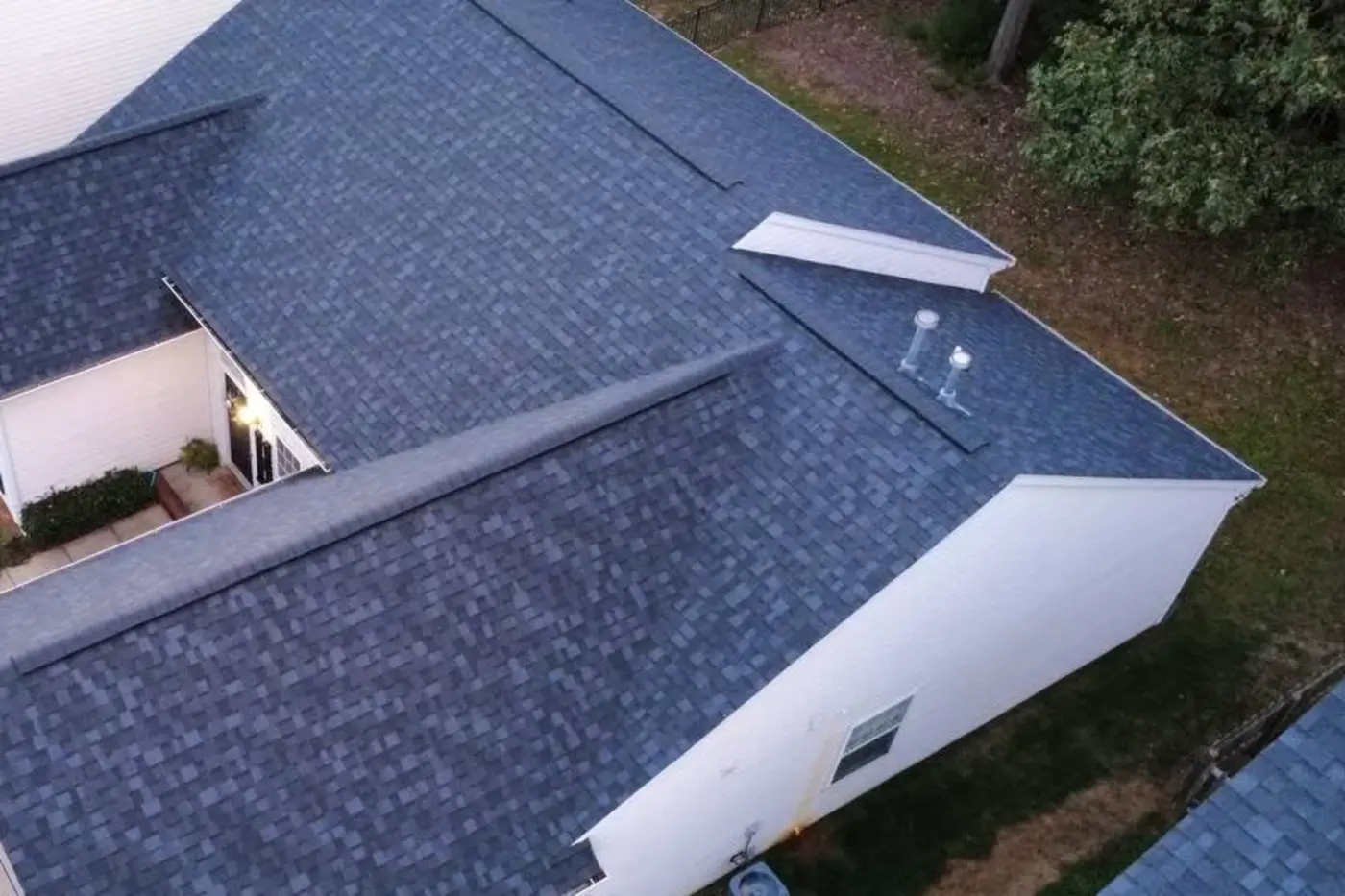
Foot traffic can leave more than one kind of shingle damage
Asphalt shingles have a mineral-granule surface over an asphalt-and-fiberglass body. A shoe can scuff granules away, especially when someone pivots or drags a foot. It can also crease or crack a shingle over an uneven spot, catch and lift an edge, disturb the factory seal between courses, or press against flashing and accessories near the walking route.
Temperature and roof condition change the risk. ARMA warns that asphalt coatings soften in hot weather, making shingles more susceptible to scuffing. In cold weather, shingles and their sealant bonds can be less flexible and more vulnerable to breakage underfoot. GAF similarly notes that hot shingles are more easily damaged by foot traffic and recommends soft-soled footwear to reduce scuffing during necessary work.
One footprint-shaped mark does not establish that the roof leaks, and loose granules in a gutter do not identify who caused them. The useful question is whether the traffic changed the shingle surface, mat, edge, seal, fastener support, flashing, or lower roof layers enough to affect the water-shedding assembly.
Map the access route before deciding what needs repair
Start with why someone was on the roof: an HVAC visit, chimney service, gutter work, solar work, satellite removal, inspection, storm response, or another repair. Record the date, weather, roof areas accessed, equipment carried, and where a ladder or staging point was used. Existing photos from before the visit can help separate new marks from older wear without forcing a conclusion that the evidence does not support.
Wide photos should show the complete route across each slope. Close photos can document scuffs, bare asphalt, exposed fiberglass, cracks, tears, lifted corners, broken seal strips, displaced cap shingles, punctures, or bent flashing. The inspector should also check roof edges, valleys, ridges, walls, and penetrations crossed along the route because concentrated steps near a transition can affect more than the open shingle field.
When attic access is safe and relevant, compare the roof route with fresh dampness, stained decking, wet insulation, or visible fasteners below. A dry attic does not make a damaged shingle sound, while an interior stain does not prove foot traffic was the entry source. Rain timing, roof geometry, and other possible openings still matter.
When a focused shingle repair may be enough
A focused repair may be practical when the affected route is short, individual damaged shingles can be identified, adjacent courses can be opened without cracking, and the deck and lower layers remain sound or locally repairable. Scuffed appearance alone should be distinguished from a torn mat, exposed asphalt or fiberglass, a broken seal, or a shingle that no longer lies and fastens correctly.
Damaged shingles are normally removed and replaced rather than painted or covered with a broad layer of roof cement. The repair may require releasing the sealed courses above, removing affected fasteners, inspecting underlayment and decking, installing compatible replacement shingles, restoring abandoned fastener locations appropriately, and hand-sealing every course disturbed for access according to the product instructions.
The written scope should identify the mapped repair boundary, the number or area of shingles expected to be replaced, how hidden damage will be handled, and how a color difference may look. Kaliber Roofing provides a one-year workmanship warranty for the roof-repair work it performs; that coverage is separate from manufacturer material terms and from roof areas outside the defined work.
When the repair boundary needs to expand
A small repair becomes less dependable when scuffs, exposed mat, cracks, or open seals continue across much of a slope, when a repeated service path crosses valleys or several penetrations, or when the surrounding shingles break as they are carefully lifted. Widespread age-related brittleness can leave no sound material for the new work to join even when the visible footsteps occupy a narrow route.
Damage beneath the shingles can also change the scope. A punctured or soft deck, torn underlayment, displaced flashing, or moisture that traveled beyond the surface mark must be addressed with the roof covering. The recommendation should connect every added area to documented conditions rather than using the fact that someone walked on the roof as an automatic reason for full replacement.
If responsibility or insurance coverage may be disputed, preserve the service agreement, work order, before-and-after photos, access notes, invoices, and written communication. A roofing inspection can document current conditions and likely repair boundaries, but the contractor, property owner, insurer, manufacturer, or other involved party determines responsibility under the applicable agreement.
What Indian Trail homeowners should do next
Do not climb back onto the roof to recreate the route or test a shingle with your foot. From dry ground, photograph all visible roof planes and check for pieces of shingle or unusual fresh granules near downspout outlets. Note when the roof was accessed and whether a leak, mark, or displaced shingle appeared before or after comparable rain.
Ask the roofer to separate three findings: surface appearance that can be monitored, physical shingle or flashing damage that supports repair, and broader conditions that prevent a dependable tie-in. Request overview and detail photos plus a scope that states what remains untouched. That makes the recommendation reviewable and reduces the chance of treating every scuff as a failed roof—or dismissing a torn shingle as cosmetic.
Kaliber Roofing serves Indian Trail first with repair-first, photo-documented inspections and same- or next-day availability subject to scheduling. The goal is to identify the smallest responsible repair that restores the affected water-shedding layers without inventing certainty about cause or replacing serviceable roofing without evidence.
Related guidance
Common questions
Does walking on an asphalt-shingle roof always cause damage?
No. Necessary, careful access may leave no functional damage, but heat-softened, cold, brittle, aged, raised, or already damaged shingles are more vulnerable to scuffing, cracking, broken seals, and torn edges. Inspect the actual route and condition instead of assuming either no damage or automatic failure.
Can scuffed-off shingle granules be put back?
Loose granules cannot be field-applied in a way that recreates the factory shingle surface. The inspection should determine whether the mark is limited and serviceable or whether the affected shingle needs replacement.
Can one cracked shingle from foot traffic be replaced?
Often, yes, when the damage is isolated and nearby shingles, underlayment, decking, and fastener locations support a reliable tie-in. The cracked shingle itself and every course disturbed for access should be restored correctly.
Should I walk the roof to photograph possible damage?
No. Roof access creates fall risk and can change the evidence you are trying to document. Use ground-level zoom photos, safe window views, prior records, or a qualified roof inspection.
Does foot-traffic damage mean the whole roof needs replacement?
Not automatically. A focused repair may work when damage is confined and the surrounding roof is serviceable. Broad damage, brittle shingles with no sound tie-in, or lower-layer damage can justify a wider scope, but that conclusion should be supported with mapped evidence.
Sources and editorial notes
- ARMA guidance on hot-weather shingle softening, footwear, and scuffing
- ARMA guidance on cold-weather brittleness, sealant bonds, and roof traffic
- Owens Corning roof-maintenance guidance on limiting traffic and avoiding granule loss, lifting, and cracking
- GAF technical guidance on temperature extremes and foot-traffic damage
Prepared with AI assistance and editorially reviewed by Sage. General homeowner guidance; not an on-site diagnosis, causation or liability determination, insurance or manufacturer warranty decision, structural conclusion, code interpretation, or substitute for evaluation by the appropriate qualified professional.