Yes—one or a few asphalt shingles torn at the nail line can often be handled with a focused roof repair when the surrounding shingles remain serviceable and the roof deck still holds fasteners. The torn shingle itself normally should be replaced, not glued around the damaged nail holes. A dependable repair opens enough overlapping courses to remove the failed piece, checks whether the fasteners pulled through because of wind, incorrect placement, weak decking, or brittle material, restores any damaged underlayment, installs a compatible replacement in sound fastening locations, and hand-seals every shingle whose original bond was disturbed. Several torn courses, widespread fastening problems, or a deck that will not hold nails can require a larger scope, but one torn nail line does not by itself mean the whole roof needs replacement.
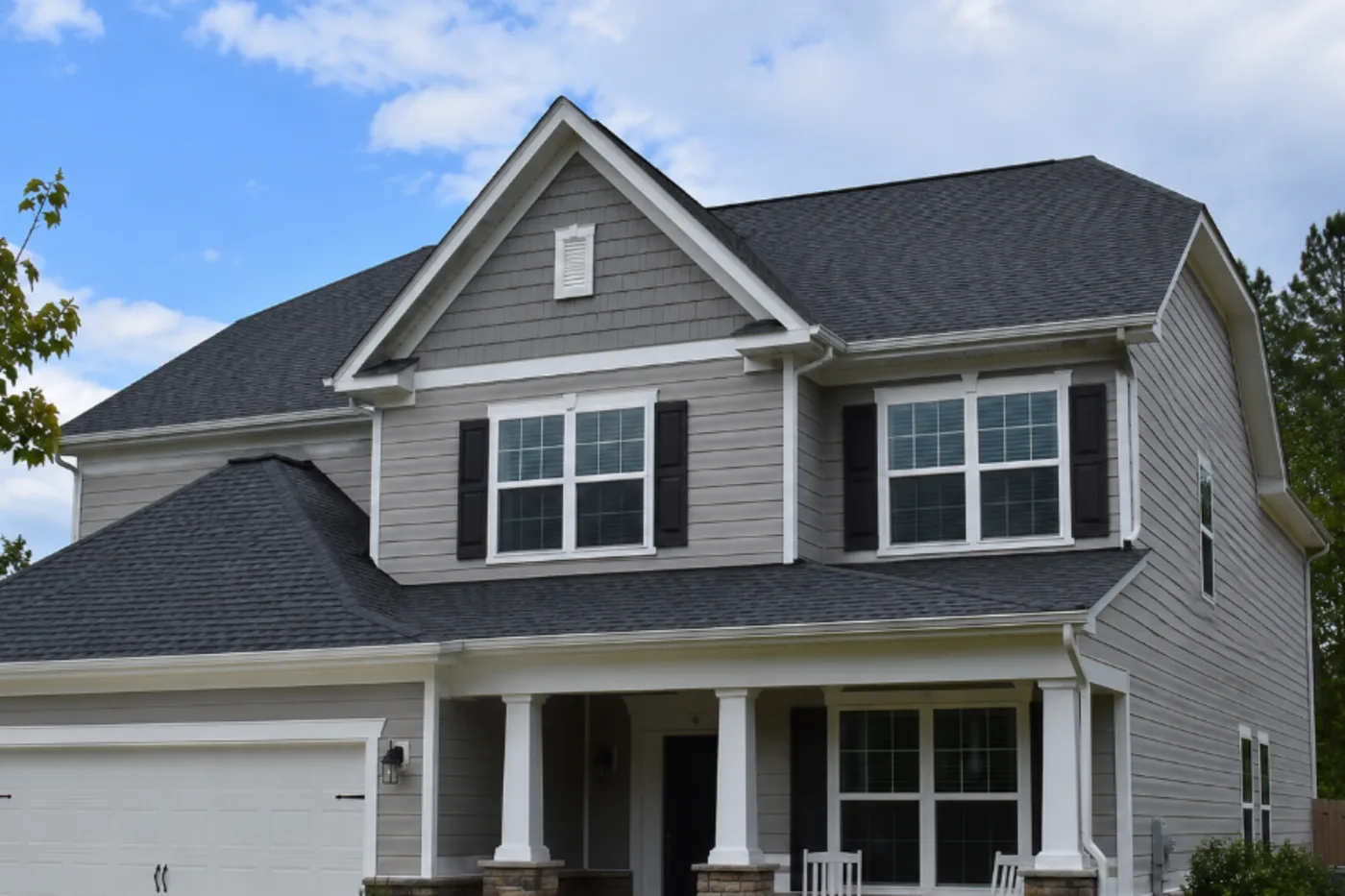
What a nail-line tear looks like and why it matters
Asphalt shingles are fastened through a defined nailing zone, then covered by the course above. A nail-line tear happens when the shingle mat splits, stretches, or pulls over one or more fastener heads. The lower portion may slide, lift, flutter, or disappear while the concealed upper portion remains under the next course. From the yard, the clue may look like a crooked shingle edge, a low tab, a gap between courses, or part of a shingle on the lawn after wind.
The tear is different from an intact tab with only a broken seal. Hand-sealing can restore the bond of a sound shingle in appropriate conditions, but adhesive cannot rebuild fiberglass mat that has ripped around a nail. It is also different from an overdriven nail discovered before the shingle tears. Once the fastener has pulled through or enlarged the hole, the damaged piece no longer has its intended attachment.
Do not lift the course or walk the roof to confirm it. ARMA advises that roof work should be performed by trained professionals because a sloped roof is hazardous and careless access can damage adjacent shingles. Ground-level overview and zoomed photos are enough to start the inspection.
Why the shingle tore around its fasteners
Wind uplift can pull against an unsealed or exposed edge until the shingle mat tears around the nail heads. A limb or other impact can displace a shingle in a similar way. Tears can also follow fastening problems: nails placed outside the specified zone, fasteners driven too deeply through the mat, nails left high enough to interfere with the overlying course, or too few fasteners for the installed product and conditions.
The shingle condition matters too. Material that has become brittle may split when wind lifts it or when a previous repair opens the sealed courses. If the deck is soft, delaminated, broken, or too damaged to hold a replacement fastener, the nail may move even when its original placement looked reasonable. The visible tear therefore identifies the failed piece, but it does not establish the cause by itself.
Product instructions control the required fastening zone, quantity, and method. Owens Corning, for example, publishes shingle-specific fastening patterns and requires nails to penetrate the wood deck as specified. The repair should identify the installed product when possible and follow applicable instructions rather than copy a generic nail pattern onto every roof.
Why roof cement alone is not a permanent repair
Roofing cement may belong beneath certain shingle edges for manufacturer-approved hand-sealing, but smearing it over a torn nail line does not restore the missing mat, original fastening zone, or sound attachment to the deck. An exposed patch can also hide whether a fastener hole is open or whether the lower piece continues to move in wind.
ARMA explains that asphalt-shingle roofs are repairable because sealed courses can be carefully separated and individual damaged components replaced. Its guidance also distinguishes temporary protection from long-term repair. That supports removing the torn shingle and rebuilding the overlap rather than asking surface sealant to perform as both shingle and fastener.
If rain is expected before permanent work can be completed, temporary protection may be appropriate. The written record should identify it as temporary and show what permanent work remains. Any added fastener holes or shingles disturbed by temporary protection must be included in the final repair boundary.
What a focused nail-line repair should include
The roofer should first locate every displaced or torn piece on the affected roof plane and check the neighboring courses for broken seals, creases, enlarged holes, high or backed-out nails, and earlier patches. The overlapping shingles then have to be released far enough to reach the concealed fasteners without creating new tears. A brittle neighboring shingle may need replacement if it cannot be opened and returned to serviceable condition.
After the torn shingle is removed, the exposed underlayment and deck should be checked. A dark mark alone does not prove that wood has lost strength, but softness, swelling, delamination, an open seam, or failure to hold a correctly placed fastener changes the repair. Damaged lower layers should be restored before the replacement shingle hides them.
GAF guidance for individual storm-damaged shingles says removed fasteners should be replaced and surrounding shingles whose bonds were broken should be hand-sealed. The compatible replacement must follow the selected product’s exposure, offset, nailing, and sealing instructions. The finished roof should lie flat without exposed repair cement, abandoned nail holes, or a new joint directly over the failed attachment.
When the repair boundary needs to expand
One torn shingle often remains a small repair. The scope becomes wider when several shingles tore along the same course, nail heads have pulled through repeatedly across a slope, the surrounding material cracks during controlled access, or the deck cannot hold fasteners in the intended locations. A tear beside a valley, wall, ridge, vent, or roof edge may also require opening that adjoining detail so the repair does not stop inside a critical drainage transition.
Matching material affects appearance and compatibility, but a visible color difference alone does not make the repair unsound. Owens Corning notes that damaged, torn, or missing shingles in an isolated area can usually be replaced. The contractor should identify the closest compatible product and explain any expected color or profile difference before installation.
A larger recommendation should be supported by mapped photos and the reason a smaller tie-in would fail. It should not turn one torn shingle into an automatic replacement pitch. The useful decision is the smallest scope that reaches sound shingles, underlayment, decking, and fastening locations.
What Indian Trail homeowners should document
From dry ground, photograph the whole roof plane and then the suspected area with phone zoom. Save any shingle pieces found in the yard without claiming they came from a specific location until the roof is inspected. Note when the condition appeared, whether wind or impact preceded it, and whether a stain or drip developed inside. Keep clear of wet electrical fixtures and do not enter an attic without a safe walking surface.
Ask the repair estimate to identify the affected slope, number of shingles expected to be opened or replaced, material match, fastening and hand-sealing method, treatment of underlayment or decking, concealed-condition process, photo documentation, cleanup, price, and written coverage. Kaliber provides a one-year warranty for the repair work it performs; that workmanship coverage applies to the defined repair scope and is separate from manufacturer material warranties or unchanged areas of the roof.
Kaliber Roofing serves Indian Trail first with repair-focused, photo-documented inspections. Same-day or next-day appointments are available subject to scheduling. The inspection should distinguish an isolated torn fastener line from a broader attachment or deck problem before work is approved.
Related guidance
Common questions
Can a shingle torn around a nail be glued back down?
Roofing cement cannot restore a shingle mat that has torn around a fastener. The damaged shingle normally should be replaced, while compatible cement may be used only for product-approved hand-sealing of sound surrounding shingles disturbed during the repair.
Does a torn nail hole mean the roof deck is damaged?
Not automatically. Wind, misplaced or overdriven fasteners, impact, or brittle shingles can cause a tear over sound decking. The exposed deck still should be checked for softness, delamination, open seams, enlarged holes, and its ability to hold correctly placed replacement fasteners.
Can one torn shingle be replaced without replacing the whole slope?
Often, yes. A focused replacement is practical when neighboring shingles can be opened without breaking, compatible material is available, lower layers are serviceable or locally repairable, and the new fasteners can be placed in sound decking.
What photos should I receive after the repair?
Useful documentation includes a wide photo locating the damage, a close view of the tear, an opened-area image showing the deck and underlayment, progress photos of any lower-layer repair and fastening, and a final view of the restored shingle courses.
Sources and editorial notes
- Asphalt Roofing Manufacturers Association guidance on repairable asphalt-shingle systems and roof safety
- GAF technical guidance on replacing individual storm-damaged shingles, fasteners, and disturbed seals
- Owens Corning guidance on isolated damaged, torn, or missing shingle replacement
- Owens Corning product-specific shingle fastening and installation instructions
Prepared with AI assistance and editorially reviewed by Sage. General homeowner guidance; not an on-site diagnosis, product-specific installation approval, code determination, insurance decision, warranty interpretation, or substitute for evaluation by a qualified roofing professional.