Sometimes, but not when the repair depends on concealed fasteners, underlayment, flashing, or shingles that overlap from above. Asphalt shingles work as a layered water-shedding system. A dependable repair often requires carefully opening one or more courses above and beside the visible damage so the failed material can be removed, the layers below can be inspected, and the replacement can be fastened and resealed correctly. The goal is the smallest opening that permits a complete repair—not the fewest disturbed shingles at any cost.
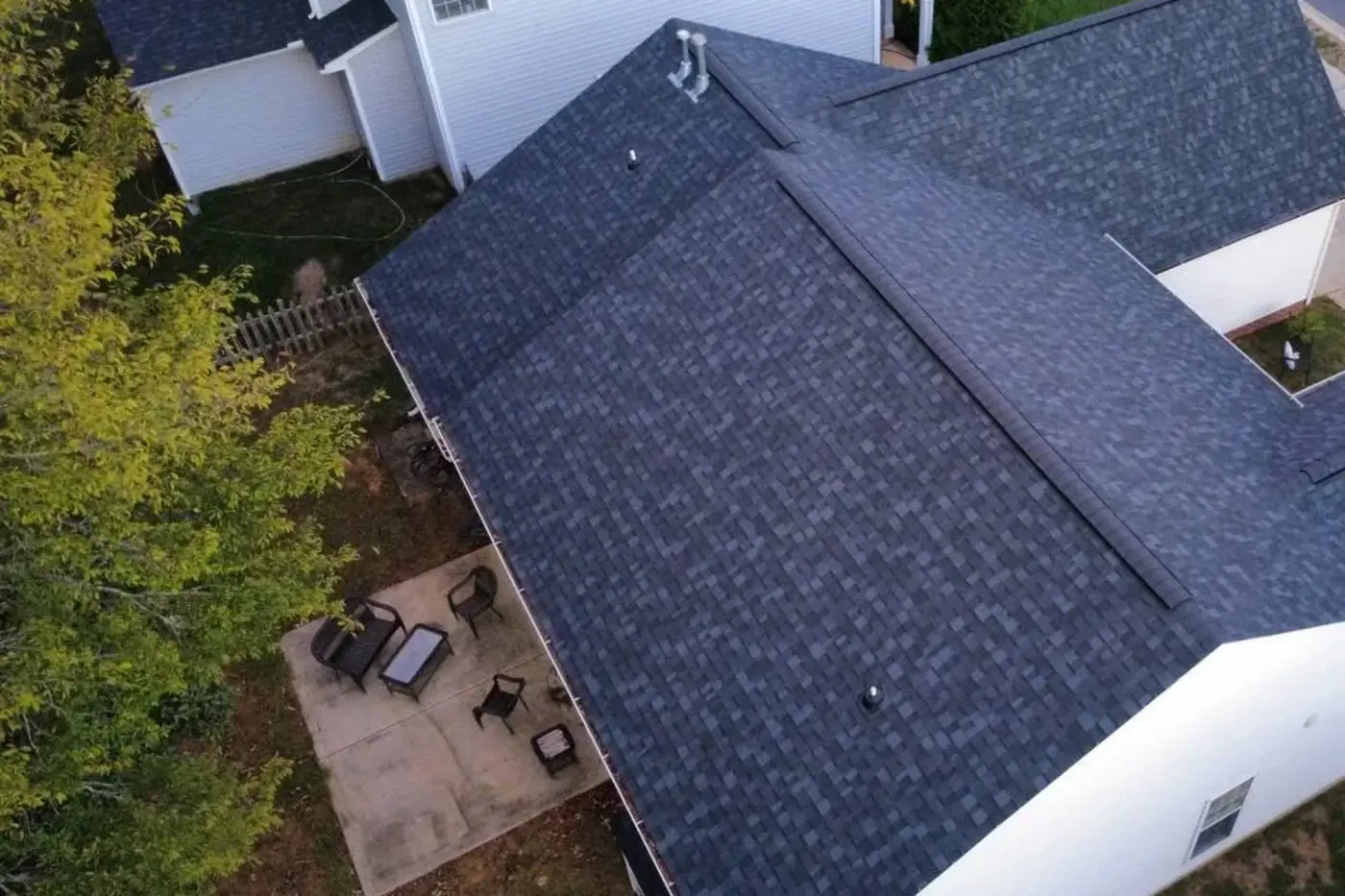
The visible defect may not be the full repair area
A cracked shingle, exposed nail, or drip near a vent can look like a one-piece problem. The fasteners are normally concealed by the course above, though, and water may have crossed underlayment or traveled along the deck before it became visible. The repair boundary has to follow the roof assembly rather than only the stain or damaged corner seen from the ground.
Asphalt shingles are installed from the eave upward so each course overlaps the one below it. Flashing and underlayment use the same water-shedding principle. Reaching a hidden nail line or replacing a flashing flange can therefore require lifting or temporarily removing serviceable shingles upslope of the defect.
Controlled access is different from tearing off an entire slope. A useful written scope identifies the expected opening and explains which findings—such as wet decking, torn underlayment, brittle shingles, or a longer flashing failure—could make it larger.
When the correction may stay close to one shingle
A correction may stay close to the visible area when an intact shingle only needs product-approved hand sealing, an accessible fastener or accessory detail can be restored without breaking the layered drainage path, or the applicable instructions specifically allow work at that location. The shingle still has to remain correctly positioned, serviceable, and securely attached.
Exposed roof cement is not a substitute for opening the roof when a shingle is torn through its body, a concealed fastener has failed, underlayment is damaged, or flashing is layered incorrectly. Smearing material over the surface can hide a symptom while leaving the failed attachment or water path underneath.
Ask what will be removed, what will remain, and how the contractor will verify the lower layers. A small repair is valuable when it is complete, not merely because fewer shingles appear on the invoice.
What happens when the courses above must be opened
The roofer first maps the affected area and checks whether surrounding shingles can be handled without cracking. Sealed tabs may need to be released carefully. Fasteners in the courses above are then exposed so the damaged shingle, flashing, or lower layer can be removed without cutting through adjacent roofing.
Once the area is open, the deck, underlayment, nearby fastener holes, and connected flashing can be inspected. Components included in the repair are restored in the proper sequence. Replacement shingles are fastened in sound locations, and every course disturbed for access is resealed as required by the product instructions and current conditions.
Manufacturer instructions matter because shingle dimensions, nail zones, sealant placement, and repair details vary. GAF repair guidance, for example, describes releasing surrounding shingles, removing nails, installing the replacement, renailing lifted courses, and applying roofing cement beneath disturbed tabs. The installed product should determine the method—not a universal shortcut.
Why opening nearby shingles can change the scope
A focused repair needs a sound tie-in. If neighboring shingles are brittle, split as they are lifted, or cannot be resealed reliably, the opening may have to extend farther. Widespread deterioration can eventually leave no dependable boundary for a small patch even when the original defect looked isolated.
Conditions below the shingles matter too. Soft decking, torn underlayment beyond the expected area, or failed flashing that continues up a wall or around a penetration can expand the work. North Carolina residential-code provisions require asphalt shingles to be fastened to solidly sheathed decks, while manufacturer instructions require an acceptable prepared surface. New shingles should not conceal a base that cannot support them.
A larger opening is not automatically a whole-roof replacement. Ask for overview and close photos, the reason each additional course must be opened, and the point where the work will end in sound shingles, underlayment, decking, and flashing.
What Indian Trail homeowners should ask before approval
Start with the access plan: How many courses are expected to be opened? Which shingles are being replaced versus temporarily lifted? How will removed fasteners and abandoned holes be handled? What happens if surrounding shingles crack or the deck is wet? The estimate should answer those questions or explain how a change will be documented and approved.
Useful closeout photos show the original problem, exposed lower layers when relevant, restored flashing or underlayment, fastening before it is covered, and the finished roof. Kaliber Roofing provides a one-year warranty for the roof-repair work it performs. That coverage applies to the defined repair and is separate from manufacturer material terms and existing roof areas outside the scope.
Do not lift shingles yourself to inspect underneath. Roof access creates fall risk, and breaking seals or bending older shingles can cause more damage. Kaliber offers same- or next-day inspections in Indian Trail subject to scheduling and can document the smallest responsible repair boundary before work is approved.
Related guidance
Common questions
Does lifting shingles during repair damage them?
Not necessarily. Serviceable shingles can often be released and resealed during controlled access, but age, temperature, brittleness, prior cement, and product design affect whether they can be handled without cracking.
Can one shingle be replaced without touching the course above?
Usually the course above must at least be lifted enough to expose the damaged shingle’s concealed fasteners. The exact opening depends on the product, damage location, nearby flashing, and surrounding shingle condition.
Is exposed roof cement a complete repair?
Only when compatible sealant is an intended part of that specific detail. Cement cannot replace a torn shingle, failed hidden fastener, damaged underlayment, soft decking, or incorrectly layered flashing.
Why can a repair get larger after shingles are removed?
Opening the area may reveal damaged decking, torn underlayment, a longer flashing failure, abandoned fastener holes, or brittle surrounding shingles. The finding should be documented before the scope expands.
Does opening several courses mean I need a new roof?
No. Several courses may need temporary access for a focused repair. Replacement is a separate decision when the roof lacks a sound repair boundary or broader conditions justify it.
Sources and editorial notes
- GAF guidance on replacing damaged shingles and restoring disturbed fasteners and seals
- Owens Corning roofing product installation instructions
- North Carolina Residential Code roof-assembly provisions
Prepared with AI assistance and editorially reviewed by Sage. General homeowner guidance; not an on-site diagnosis, structural conclusion, code interpretation, manufacturer warranty decision, or substitute for evaluation by the appropriate qualified professional.